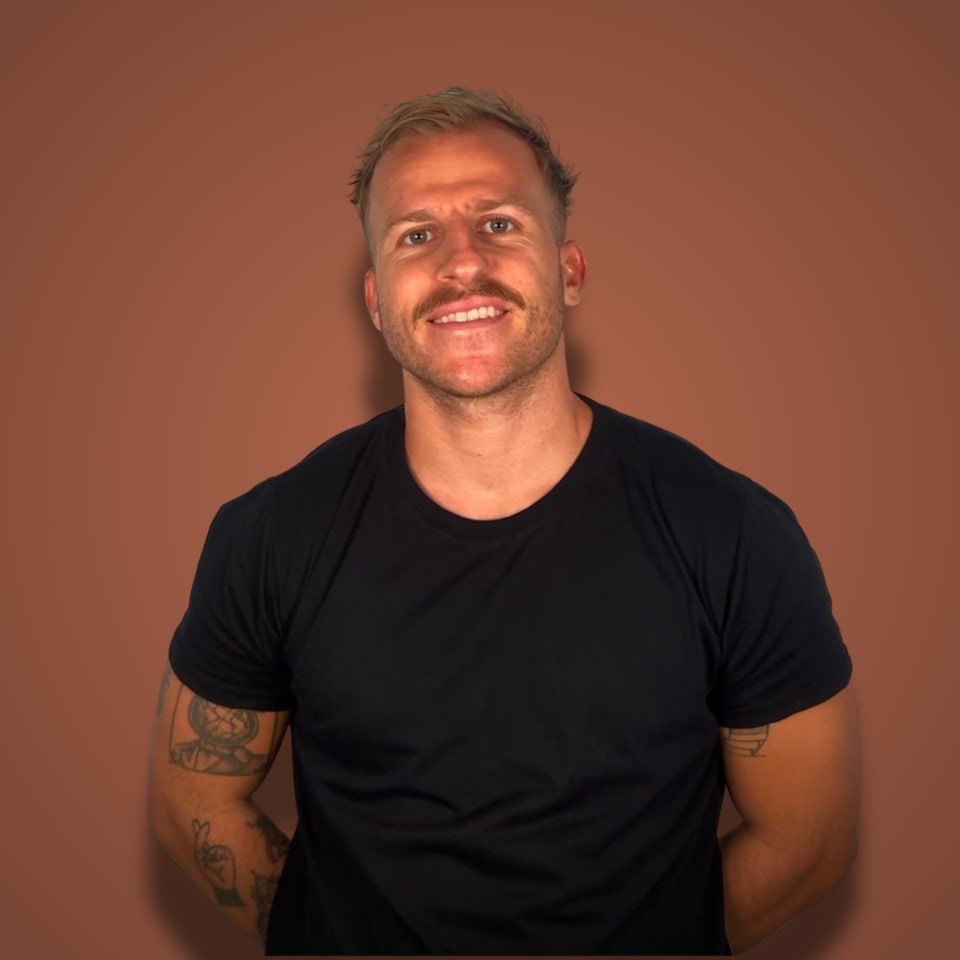
Most founders build in a cave.
They code for 8 months, launch to crickets, then wonder why nobody cares.
The founders who actually win do the opposite. They build in public. They post the ugly MRR charts, the launches that flopped, the embarrassing $9 first sale. And then people show up.
I've watched this pattern for years. I run a podcast where I interview bootstrapped founders making $100K to $10M a year, and the message is loud every single time: the founders with an audience get distribution nobody else can buy.
So here are the 7 build in public creators I actually follow in 2026. Ranked. Real numbers, and the one thing you should steal from each.
Full disclosure before we start: number one is mine. I'll tell you exactly why, then get out of the way.
1. Florian Darroman (@floriandarroman)

Full disclosure: this one's mine.
I'm not putting myself at the top because I think I'm bigger than Pieter Levels. I'm not. I'm putting myself here because this is the exact thing I want you to copy, and I'm doing it in real time so you can watch the mechanics.
Here's my own story, short version. I paid $13,000 to join a mastermind when I was doing $15K to $20K a month. Six months later that same SaaS was at $75K a month. I eventually sold it. Now I build in public and run the Profitable Founder Club for founders past $5K MRR chasing $100K.
On the channel I interview bootstrapped founders doing $100K to $10M a year and pull out the real playbook: pricing, distribution, the channel that actually moved the needle. No VC cosplay, no hype.
Steal this: document, don't perform. I record the founders I'd want to learn from anyway, and the content is just the byproduct. That's the cheat code. Build something you'd do for free, then film it.
Watch the Profitable Founder Podcast
2. Pieter Levels (@levelsio)

If build in public has a patron saint, it's Pieter.
He famously committed to "12 startups in 12 months" years ago and just kept shipping in the open. The honest part nobody quotes: he's launched 70-plus products. Most died. A handful didn't.
Today PhotoAI does around $132K a month. Across PhotoAI, InteriorAI, Nomad List and RemoteOK he's at roughly $200K a month and about $3M a year. With zero employees. He codes on a single PHP file, ships from a laptop, and posts his revenue dashboards publicly.
Steal this: volume beats genius. Pieter isn't the best engineer or the best marketer. He just takes more shots on goal than you do, in public, and lets the market pick the winner. Speed is the strategy.
The honest catch: he makes solo look easy, and it isn't. Behind the screenshots is a decade of failed launches most people never see.
3. Marc Lou (@marc_louvion)

Marc is the best living advert for shipping fast.
His whole homepage is a build-in-public flex: $132.9K a month, products lined up with their own little MRR charts. ShipFast, CodeFast, DataFast, TrustMRR. Over 42,000 people read his "Just Ship It" stuff.
What I love is the meta move: he made his money building boring SaaS, then turned the lessons into products for other founders. He sells the shovels and shows the gold.
Steal this: ship in days, not months. Marc's entire brand is built on launching ugly, fast, and often. He'll spin up a product over a weekend and tell you the revenue a week later. Most of your polish is just fear wearing a nicer outfit.
The honest catch: "just ship it" works best once you already know how to build. If you're brand new, copy his speed but not his shortcuts.
4. Arvid Kahl (@arvidkahl)

If Pieter is the doer, Arvid is the teacher.
He and his partner built FeedbackPanda to $55K MRR in two years with no employees, then sold it in 2019. Instead of disappearing, he turned the entire experience into a body of work: the books Zero to Sold and The Embedded Entrepreneur, The Bootstrapped Founder newsletter (around 25K readers), a podcast, and a YouTube channel.
Arvid is the most generous explainer in the indie SaaS world. He'll break down audience-building, niche selection and the actual mechanics of selling a company, for free, every week.
Steal this: build an audience around the problem you solve, not just the product. Arvid calls it the "embedded entrepreneur." Get inside the community you serve before you have anything to sell, and the launch takes care of itself.
The honest catch: it's a long game. Arvid's authority took years of consistent writing to compound.
5. Justin Welsh (@thejustinwelsh)

Justin is the systems guy. The one-person business taken to its logical extreme.
He's crossed $10M in total revenue from a solo business, doing roughly $4M a year at around 89% margins. No employees, just a part-time assistant. No paid ads. All of it built on organic content on LinkedIn and X.
What makes him worth following isn't the number, it's how repeatable he makes it look. He documents his content system, his product funnel, his daily writing process, all of it, like an open-source operating manual for solopreneurs.
Steal this: turn your content into a system, not a mood. Justin doesn't wait to feel inspired. He runs a documented process for ideas, posts and products. Boring consistency is the moat.
The honest catch: his playbook is content-first. If you hate writing and showing up daily, it'll feel like a grind.
6. Greg Isenberg (@gregisenberg)

Greg is the idea machine.
He's the CEO of Late Checkout, has built and sold community-driven companies (one acquired by WeWork), and now runs one of the most-watched founder podcasts and newsletters around. If you want to think bigger about what to build, Greg is the feed to be on.
He's almost obsessively public with frameworks: how to spot a startup idea inside a community, how to find demand before you build, how AI is reshuffling who wins. He hands out billion-dollar-shaped ideas in threads, for free.
Steal this: mine communities for ideas. Greg's core lesson is that the best businesses are sitting inside Reddit threads, Discord servers and Facebook groups, where people are already complaining and already paying to fix it. We broke down nine of his idea patterns over in our best startup ideas for 2026 post.
The honest catch: Greg is heavy on ideas and vision. You still have to go do the boring execution yourself.
7. Jon Yongfook (@yongfook)

Jon is the patient builder, and honestly the most underrated name on this list.
He bootstrapped Bannerbear, an image and video generation API, to around $50K MRR (roughly $630K a year) over about three years. No funding. He did it by building completely in the open: a blog post for every milestone, the first $100, the first nasty bug, the first churn spike.
His "Journey to $10K MRR" post hit the front page of Hacker News and brought a wave of users. That's the build-in-public flywheel in one move.
Steal this: the week-on, week-off rhythm. Jon would spend one week coding and the next week marketing what he shipped: demos, answers, posts. Building and distribution in equal measure, forever. Most founders do 90% building and 10% talking about it, then wonder why it's quiet.
The honest catch: slow and steady is exactly that. Slow. There's no viral spike here, just three years of compounding.
A few honorable mentions
This list could've been 30 names. A few I almost included: Tibo Louis-Lucas, who sold Tweet Hunter for $8M and now builds in public across five startups (we told his full story here), Danny Postma for AI design products, and Damon Chen of PDF.ai and Testimonial.
If you want even more, I keep a wider roundup of the best SaaS YouTube channels worth your subscribe.
How to actually start building in public
Following these people is the easy part. Becoming one of them is the point. Here's the short version:
Pick one platform. X or YouTube. Not both, not yet. Go where your buyers already hang out.
Post the numbers. Revenue, signups, churn, even when they're tiny. Specifics get attention. "$340 MRR" beats "growing nicely" every time.
Share the losses too. The failed launch posts almost always outperform the wins. Vulnerability is distribution.
Show up for 90 days before you judge it. Every creator on this list looked invisible at the start. The compounding is real, but it's back-loaded.
FAQ
What does "build in public" actually mean?
Sharing the real journey of building your business out loud: the revenue, the decisions, the failures, the metrics. Instead of hiding until launch day, you bring people along from $0 and turn them into an audience that becomes your distribution.
Is building in public worth it if I have zero audience?
Yes, and that's exactly when to start. Every person on this list began at zero. The point isn't to already have an audience, it's to build one slowly by being useful and honest in public. Day one is the best day to start.
Should I build in public on X or YouTube?
Start with whichever you can sustain. X is faster to post and great for reaching founders and indie hackers. YouTube compounds harder over time and builds deeper trust. Pick one, go all in for 90 days, then decide.
Do I need revenue to build in public?
No. Some of the most-followed build-in-public journeys started at $0 MRR. The story of getting to your first dollar is often more compelling than the dashboard at $50K. Start posting before you feel "ready."
The real takeaway
Every founder on this list has one thing in common: they decided that building quietly was a worse bet than building loud.
You don't need their numbers. You need their habit. Ship something, say it out loud, repeat.
And if you'd rather not do it alone, that's the whole reason I built the Profitable Founder Club: a small room of founders past $5K MRR pushing each other toward $100K, with real feedback instead of likes.