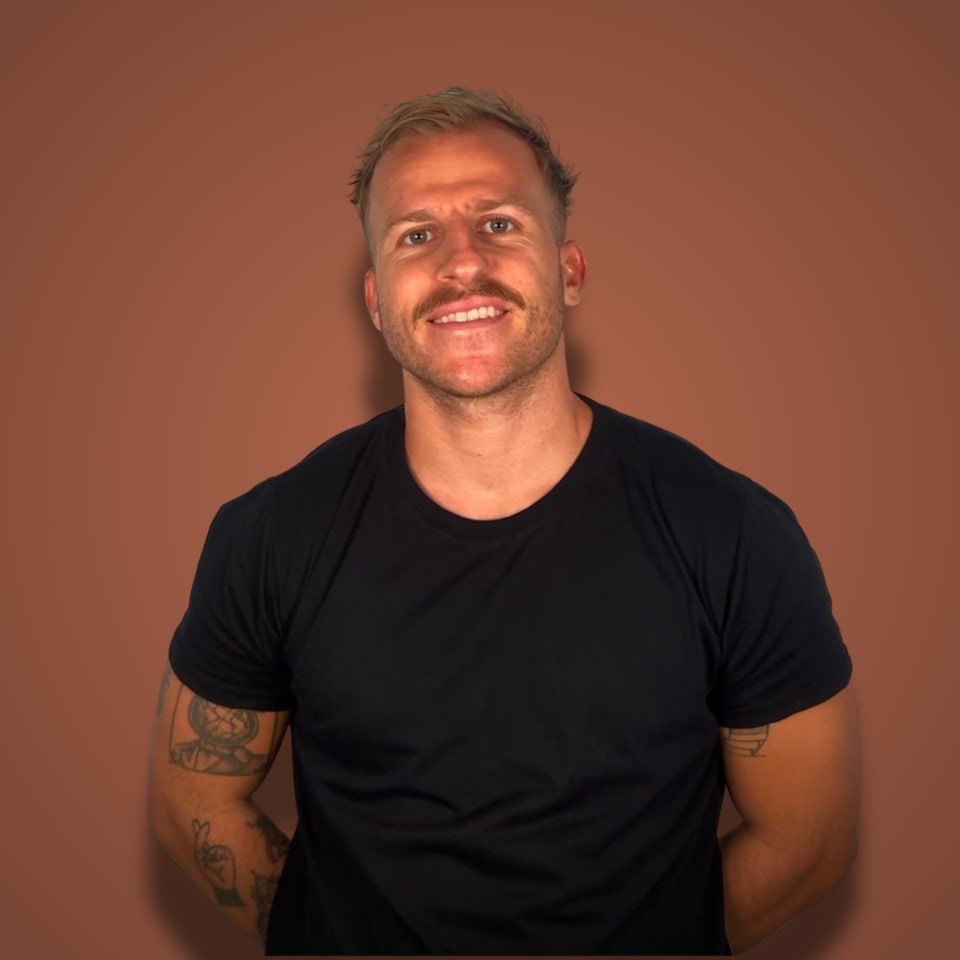
A founder named Gus spent about 80 hours building his first app.
Three months later, it had made him $40.
Forty dollars. Seventy-three downloads. That's the whole scoreboard.
And if you've ever shipped something into the void and watched the dashboard sit at zero, you already know exactly how he feels. The quiet panic. The "everyone else is crushing it and I made forty bucks" spiral.
I've been there. So I want to break down Gus's story, because the $40 is not the interesting part. What he actually walked away with is.
The clip is Gus giving Pat Walls from Starter Story an honest update. No filter, no growth-hack thumbnail. Just a guy who shipped his first thing and isn't sure what to do next.
The app: a step tracker built by a non-technical guy
Gus had zero technical background. Never shipped anything. Never had a single person pay him for software.
He built a step tracker. That's it. An app that tells you whether you hit 10,000 steps today, with a little widget and a history view so you can scroll back and see your streak.
His tools: Cursor and Claude Code. The same stack a thousand other people are using right now to go from "I have an idea" to "it's live in the App Store."
He had a newborn at home, so he worked on it roughly an hour a day. Total time to ship: about 80 hours.
Read that again. 80 hours. If you did that full-time, that's two weeks of work. He made $40 in his first two weeks of effort, from a standing start, with no audience and no code experience.
(If going non-technical to shipping is where you're at, this other breakdown is worth your time: how Nathan went from zero code to shipping apps in one year.)
The numbers nobody puts on a thumbnail
Here's the real ledger, the one founders almost never post:
→ 73 total downloads
→ ~$40 in revenue across 3 months
→ ~80 hours of build time
→ One paywall that broke when he tried to switch from paid-upfront to free-trial
→ Around 10 TikToks, a few Reddit posts that flopped, some Twitter threads
The original goal? The "$1 challenge." Literally: make one dollar from something you built.
He made $40. That's 40x his actual goal.
But that's not how it felt to him. Because while he was making $40, his Twitter feed was a wall of "my app hit $10K/month" and "30,000 downloads in a weekend." So he felt like he was losing.
This is the trap. You set a tiny, sane goal. You beat it. And then you let the timeline move the goalposts to a place you were never aiming for, and call yourself a failure for missing it.
Why $40 in 3 months is actually a win
Pat made a point in the conversation that I think every first-timer needs tattooed somewhere.
He said he didn't make a single dollar for his first year of building things. When he started Starter Story, he made about $3 in the first few months, because the product was basically free.
So a complete beginner making $40 in 90 days, from his first project ever, is genuinely good. Not "everything's amazing" good. Just objectively-ahead-of-where-most-people-start good.
And the money was never the real return. Gus listed what he actually learned:
→ That he can build something. Full stop. The thing he used to watch other people do, he now does.
→ How to set up pricing and a paywall (and how painful Stripe and App Store billing are, the part nobody warns you about).
→ How to build in public. His following went from around 600 to about 2,500 just by sharing the process.
→ Idea, design, shipping, App Store optimization, content. A full stack of skills he didn't have 90 days ago.
His own line: "If I were to start over, I could cut that time in half."
That's the asset. Not the $40. The fact that his next build costs 40 hours instead of 80. Skills compound. Revenue from a dead app does not.
I paid $13,000 for a mastermind once when I was barely making rent. Stupid decision on paper. Six months later that same SaaS was doing $75K/month. The $13K wasn't the cost. The skills and the rooms it bought me were the return. Same shape as Gus's $40, different zeros.
The graveyard nobody warns you about
Gus was scared of one specific thing: building a graveyard of half-finished projects. Start a new app, get distracted, abandon it, repeat, end up with a folder of dead ideas.
Pat flipped it, and this is the best line in the whole thing:
"The real worst case scenario is you have a graveyard of unshipped projects."
A shipped app that made $40 is not a failure. It's in the store. It has ASO. It has a paywall. People use it. It can grow slowly in the background for months while you go do something else.
An unshipped app is just a folder on your laptop. It taught you nothing because you never let it touch a real human.
Gus admitted he has those folders too. Stuff he made playing around in Cursor and never published. Those are the actual losses. Not the walking app.
If you take one thing from this: shipped-and-flopped beats built-and-hidden every single time. The founders who eventually hit it usually have 5, 10, 15 shipped things behind them first. (See how Benji built Snag to $30K a month after 45 apps. Forty-five.)
Losing steam is the real killer, not low revenue
The honest part of the interview wasn't the $40. It was Gus saying the app started to feel like a chore.
Building it was fun. Marketing it wasn't. Tweaking a screen for the hundredth time wasn't. He used the phrase "losing steam," and you could hear it.
This is what actually kills small apps. Not bad metrics. Boredom. The dopamine of the build wears off, the slow grind of distribution sets in, and one day you just stop opening the project.
Pat's counter was about motivation. He told the story of his own 100K build challenge: he started with a YouTube thumbnail generator he hated, and he couldn't force himself to ship a single feature after the MVP. Then he found Moat, an idea he actually loved, and now he can't stop building it on weekends.
The lesson isn't "quit when it's boring." It's: be honest about whether you're excited about the problem and the people, not just the act of coding. If you only love the build, you'll always stall the second the building is done.
What I'd actually tell Gus to do next
One comment on his post nailed it: "you've made some money, that means people paid for it. Go talk to your users."
He admitted he hadn't talked to a single one.
That's the move. Seventy-three downloads isn't nothing. Some of those people paid. A few of them probably open the app every day. Those are the only humans on earth who can tell you whether this is worth another 80 hours or whether you should let it breathe and build the next thing.
So if I'm Gus, this week looks like:
→ DM or email every paying user. Ask what made them pay and what almost made them quit.
→ Set up a dead-simple way to capture and follow up with new downloads so you're not relying on memory. You don't need anything fancy here, even a basic system for nurturing the people who already raised their hand beats letting them churn in silence.
→ Pick ONE channel. He's doing TikTok, Reddit, and Twitter at half-intensity. Three half-efforts lose to one real one.
→ Then decide. Keep it, or let it run in the background and start the next build with half the hours.
There's no right answer. But "talk to your users and then choose" beats "feel frozen and post about feeling frozen."
The takeaway for everyone making their first $40
Your first app probably won't change your life. Gus's step tracker won't make him a million dollars, and Pat said so to his face.
But you don't give up on the idea. You give up on giving up. The worst outcome isn't a $40 app. It's deciding you're not a builder and walking away from the whole thing.
Ship it. Charge for it. Talk to the people who paid. Bank the skills. Then do it again, faster.
That's not a consolation prize. That's the actual job.
FAQ
Is making $40 from your first app good or bad?
For a complete beginner with no audience, it's good. Most founders make $0 for their first year, and the bigger return is the skills (building, pricing, shipping, marketing) that make your next app cost half the time.
How long does it take to build a first app with no coding experience?
Gus shipped his step tracker in about 80 hours using Cursor and Claude Code, working roughly an hour a day. That's around two weeks of full-time work, including all the trial and error.
Should I keep working on an app that isn't growing, or build something new?
Talk to your existing users first. If a shipped app has paying users, it can grow slowly in the background while you start the next build. The real mistake is leaving projects unshipped, not shipping ones that grow slowly.
Why do small apps usually die?
Less from bad metrics, more from the founder losing motivation once the fun building phase ends and the slow grind of marketing begins. Picking a problem you actually care about is the best defense.
What's the fastest way to know if my app has a future?
Talk to the people who already paid. Even a handful of honest user conversations tells you more than weeks of guessing on social media.
Want the room where founders actually figure this out?
Gus got his clarity from one honest conversation with someone a few steps ahead. That's the whole point of having people around you.
The Profitable Founder Podcast is full of bootstrapped founders breaking down exactly how they got from their first $40 to real revenue, with the real numbers attached.