Most founders spend three months building one app in the dark.
Then they do a "big launch," nobody shows up, and they quietly delete the repo.
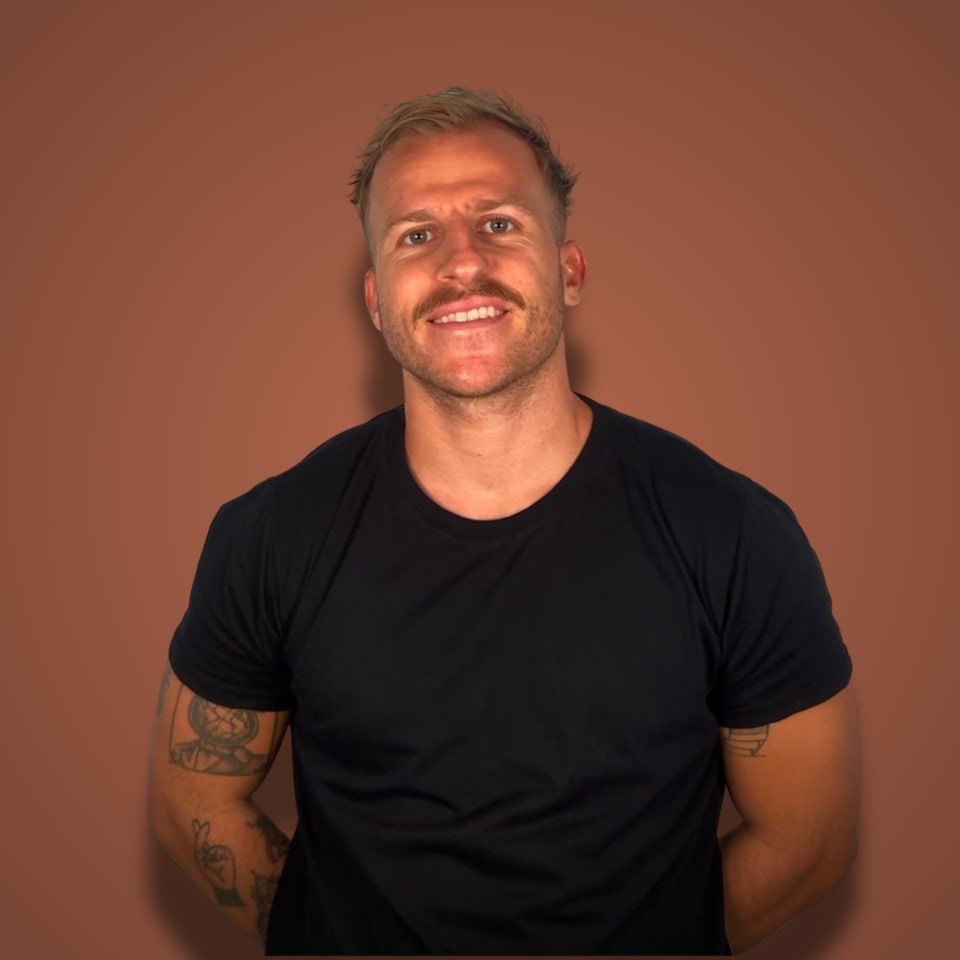
A guy named Alex decided to do the opposite. He shipped 30 apps in 30 days. One app, every single day, live in production by midnight. No hiding. No big reveal. Just build, ship, repeat.
People called it AI slop. "30 garbage apps that won't matter."
So how did it actually go? He came on the Starter Story Build podcast at the end of the challenge and gave the real numbers. No spin. I watched the whole thing, pulled out the parts that matter for anyone trying to build a SaaS, and added my own take as someone who has been on both sides of this.
Here is the full conversation, then the breakdown.
Why he did it (and why I get it)
Alex admitted something most builders won't say out loud.
He was that guy. The one posting about how easy it is to ship with AI, how fast he can build. But his actual track record? Almost nothing in production.
"I know that when I do actually launch stuff, good things happen. Visitors come, money comes into the Stripe account. I just needed a way to clear out the system and put the thesis to the test."
Before the challenge, he spent three months each on two separate projects. Built them in silence. Told himself the big launch would fix everything.
It didn't.
"That big launch is really a bit of a myth. You get to that point, you're burnt out, you're not hyped about the project, and people can tell when you ship it."
I felt that in my chest. I have done the three-months-in-a-cave build. You come out the other side exhausted, attached to something nobody asked for, and zero people are watching. The launch is a damp firework.
The whole point of 30 apps in 30 days was not the apps. It was building the shipping muscle. Forcing the reps. Because an app makes zero dollars until it is actually in someone's hands and you are getting feedback.
The numbers from 30 days of shipping
Here is what 30 apps in 30 days, documented in public, actually produced:
- 40,000+ YouTube views across the series.
- 500,000 impressions on X from building in public.
- 1,000+ users on his single best app.
- 70,000 domain names searched through that same app.
- A growing wait list on a few of the other apps.
Revenue? Basically nothing yet. He was honest about it. "There's no big home run in the Stripe dashboard just yet."
And the haters jumped on exactly that. "How many of these are actually making money?"
His answer is the part I want every early founder to tattoo somewhere.
When you start, you are not chasing dollars. You are chasing users, attention, and the signal that something is genuinely useful. Pat (the host) put it well: his own first online business took three months to make a single dollar. He wasn't watching Stripe. He was watching his email list and Google Analytics.
If you need an app to make money on day one, you will quit before it ever gets the chance to.
The build-in-public flywheel nobody talks about
Here is the quiet superpower in this whole story.
Alex didn't just build 30 apps. He posted about all 30. Every day, a video. That is why 30 apps turned into 40,000 views and half a million impressions instead of 30 dead Vercel links.
Shipping quietly versus shipping in public is the difference between throwing a message in a bottle and walking into a room full of people.
When he ships an app and hears nothing, that is a signal. When he hears a few good comments, that is also a signal. He gets to find out the next morning if real people care, because real people are actually using the thing.
This is the same lesson I keep hammering in the micro-SaaS playbook: the audience is not a vanity metric, it is your distribution and your feedback loop rolled into one. You build the audience while you build the product, not after.
The 3 apps that actually mattered
Out of 30, three stood out. Not always because they won, but because they taught him something.
1. The golf app and the writing app (the "for me" builds).
One was a golf stats tracker he uses on his actual rounds. The other is rawtyping.com, a focus-writing tool that slowly deletes your text if you stop typing. Brutal, but it forces flow.
Neither blew up. A handful of users each. But here is the thing: he uses them. Daily. Someone left a review on the typing app that I love: "It's a wonderful mixture of stupid and genius that it just works."
Pat's point landed hard. Startups don't usually die because they can't monetize. They die because nobody cares. If a couple of real people use it (you included), there is a seed of something. You just have to get it in front of more people.
2. The kitchen app (boring business, day-one revenue).
This is the one that got me sitting up.
The idea: use Google's new Nano Banana image model to build a tool for kitchen renovators. Fitters who do kitchen resprays charge $5,000 to $20,000 a job. The app lets them upload a photo of a customer's kitchen and instantly generate variations of how it could look. A sales weapon.
But the build is not the clever part. The plan is. Once it's done, Alex is going to pick up the phone and cold call kitchen companies. Book demos. Try to close revenue on day one of the build.
That is the move most builders skip. They ship and then pray customers appear. They don't. You have to go get the first one through cold calls, cold DMs, walking into the room.
And his pitch is sharp: "This isn't another cold call about software you don't need. If you don't use this, I'm going to walk next door to the other kitchen company, and they're going to convert more customers than you."
One honest warning from someone who has run outbound: cold calling a list off a spreadsheet falls apart the second you have 40 companies to chase. You forget who you called, who said "email me," who ghosted. That follow-up is where the money actually lives, and it's where solo founders leak it. If you get to the point where the building is the easy part and the selling is the bottleneck, it's worth setting up a real system. Here is a clean breakdown of business automations for handling outreach and follow-up so leads don't fall through the cracks while you're heads-down shipping the next app.
3. Namestrong (the one that found product-market fit).
This was his winner, and it shipped early in the 30 days.
The problem is one every founder knows. You brainstorm names with ChatGPT, then you go to a registrar, type each one in, and find out the good ones are all taken. Painful.
Namestrong automates the whole loop. You describe your product, it generates names with AI, checks each .com for you, and only shows you the ones that are actually available.
The stats: 1,000+ users and over 70,000 domain names searched.
But the numbers aren't even the real story. This was the first time Alex felt product-market fit.
What product-market fit actually feels like
Everyone talks about product-market fit like it's mystical. Alex described the moment it clicked.
He launched Namestrong, and everyone he told actually went and used it. Then they came back: "Wow, this is actually really sick. I found a domain name." Strangers on X and YouTube using it, returning with positive feedback he didn't have to beg for.
Pat framed it as a math problem, and it's the clearest definition I've heard:
On most apps, you grind 15 hours and get 15 users. Effort and outcome are tied together, one-to-one. On Namestrong, he put in maybe three or four hours and got 1,000 users. Same input, 100x the output. The thing got shared and used without him tugging on it.
That is the feeling. You built something small in your living room, and now an auditorium of people are using it, and it didn't feel like you were forcing it.
Alex called it the feeling of hitting a tennis ball in the dead center of the racket. Hard to explain, impossible to fake, and you spend the rest of your career chasing it.
Most of your projects won't feel like that. His didn't. But you only find the one that does by shipping enough of them. Which is the entire argument for volume. Benji, another builder, shipped 45 apps before one of them, Snag, hit $30K a month. I broke that one down in how he got there, and the pattern is identical: reps first, winner later.
My honest take as a SaaS founder
I love this experiment, but let me be straight about what it does and doesn't prove.
What it proves: shipping fast and in public beats building in silence, every time. The reps make you better, the content gets you eyeballs, and the feedback tells you what's real. If you are sitting on a backlog of app ideas in your phone notes, this is your permission slip to start clearing it out.
What it doesn't prove yet: that 30 apps in 30 days makes money. It doesn't, not directly. One thousand users and zero revenue is a great start and a terrible business. The next phase, the one Alex said he's moving into, is the hard part: pick the one or two apps showing signs of fit, then actually do the marketing and sales to turn them into revenue.
That second phase is lonelier and slower than the building phase. There are no daily wins. No 30-day streak to post about. Just you, a product people kind of like, and the grind of distribution.
That gap is exactly why I built the Profitable Founder Club. Shipping is now the easy part. Getting to $100K MRR with one good product is the hard part, and almost nobody talks you through it. The Club is a capped group of founders past $5K MRR doing exactly that, together. We solve three real member problems on every call.
If you've got the shipping muscle and you're staring at the "now what" phase, that's the room for you.
FAQ
Is shipping 30 apps in 30 days actually realistic?
With AI models doing the heavy lifting on code and design, yes, for simple apps. Alex shipped one functional app per day solo. The catch: most will be small, single-purpose tools. The goal isn't 30 businesses, it's 30 reps that build your shipping speed and surface the rare one that resonates.
Did he make money from the challenge?
Not directly, not yet. By the end he had 1,000+ users on his best app and no real Stripe revenue. He treated it as a discovery and audience-building exercise. The monetization phase comes after, by doubling down on the apps that showed product-market fit.
What was his most successful app?
Namestrong, an AI domain-name finder that generates names and checks .com availability in one step. It hit 1,000+ users and 70,000+ domain searches, and was the first app where he genuinely felt product-market fit.
Isn't building this fast just AI slop?
His answer: building fast doesn't mean low quality. The AI models had billions of dollars of R&D poured into them, so you're standing on the shoulders of giants. The work is positioning that power so it's genuinely useful to a specific person, not just shipping a demo.
How did building in public help?
It turned 30 apps into 40,000 YouTube views and 500,000 X impressions. That attention drove the users, the feedback, and the wait lists. Shipping quietly would have produced almost none of it.
Should I do this if I'm non-technical?
The tooling makes it more possible than ever, but expect a learning curve on the AI build tools. Start with one app, not 30. Prove to yourself you can ship something live and in someone's hands before you commit to a streak.
The one thing to steal from this
Stop building in a cave for three months.
Ship something small this week. Put it in public. Watch whether anyone cares.
You learn more from one live app with 10 real users than from a perfect app nobody has seen. Alex proved that 30 times in 30 days, and the one that mattered only showed up because he kept shipping.
I interview bootstrapped founders every week who built real revenue this exact way: ship, listen, double down on the one that hits. If you want the unfiltered playbooks, the real numbers, and the parts the gurus skip, that's the whole point of the show.