Most people building a mobile app right now are making the same expensive mistake.
They ship the thing, they hit publish, and then they sit back and hope someone finds it.
Nobody finds it.
It doesn't matter how good your app is. If your App Store listing is set up wrong, you're invisible. You're sitting at position 34 where exactly zero humans will ever scroll.
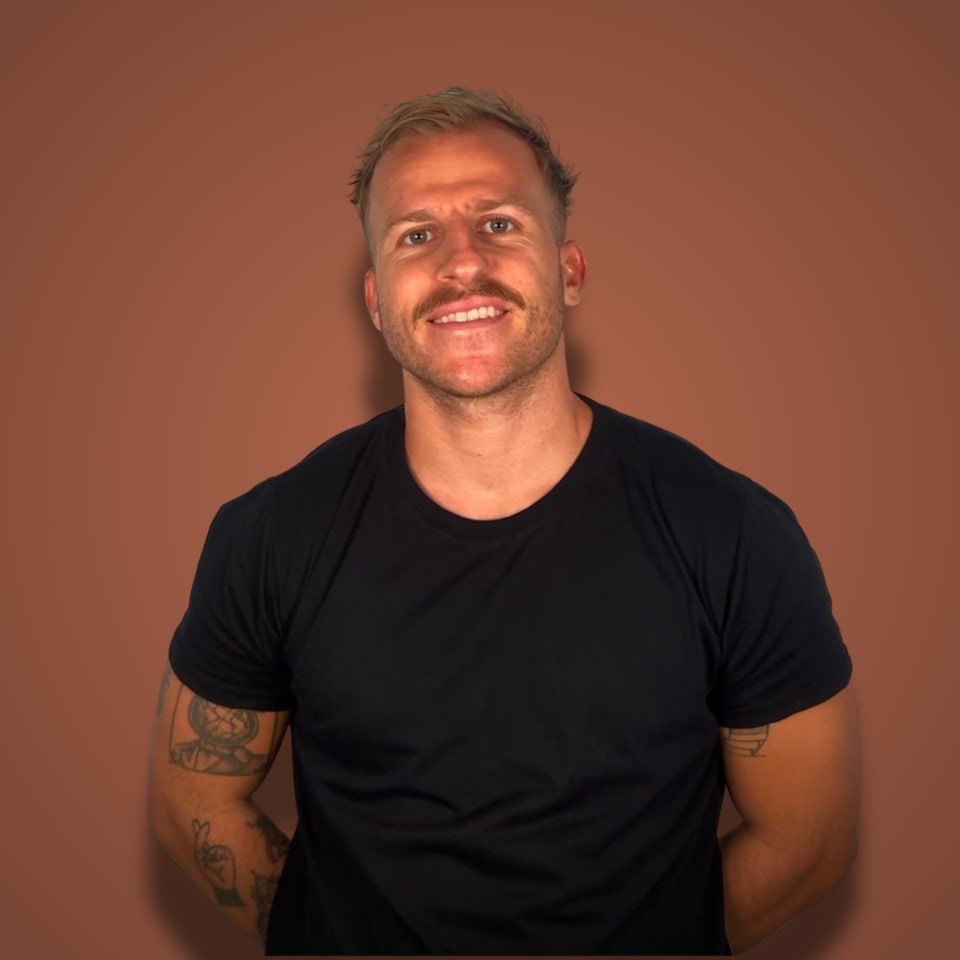
I just watched a breakdown with Sebastian, a guy who builds four apps that together do over $50,000 a month. His main one, Habit Kit, went from invisible to the top of the App Store. And here's the part that got me: he does basically no marketing. No Twitter ads. No TikTok. No paid anything.
98% of his customers come from people just opening the App Store and typing a word into search.
This is App Store Optimization. ASO. Think SEO, but for apps. And almost nobody building apps takes it seriously, which is exactly why it's such an unfair advantage if you do.
Watch the full breakdown here, then I'll pull out the numbers and the three foundations he uses.
The numbers, because numbers are the whole point
Let me give you the real figures before anything else, because this is the part that makes you pay attention.
Sebastian builds four apps. Combined, they pull over $50,000 a month.
His main app is Habit Kit, a habit tracker for iOS and Android. He also recently launched Focus Kit.
His apps crossed $500,000 in total revenue in 2025.
He made over $100,000 in January alone.
And here's the kicker. Eight months before this conversation, he was doing $15,000 a month. Now it's $100,000 a month. Same guy, same apps, mostly the same product. What changed was the App Store treating him like he existed.
Habit Kit now ranks top three in the US App Store for "Habit Tracker," which is one of the most brutally competitive keywords in the whole store.
He got there with three things. None of them are hard. You could do all three this afternoon.
Foundation 1: keywords in your metadata (this is the big one)
Sebastian's words: the single most important ASO factor is the strategic placement of keywords in your app's metadata. The app name and subtitle. Nothing else comes close.
This is why his app isn't just called "Habit Kit."
It's called "Habit Tracker - Habit Kit."
His brand is Habit Kit. But the keyword "Habit Tracker" is worth way more to him, so he put it first. Companies like Duolingo can afford to just say "Duolingo" because everyone already searches their name. You can't. You're an indie dev. You have to earn the search.
The order of operations matters here, and most people get it backwards. You don't name the app and then think about keywords. You research keywords first, then name the app around them.
His process:
→ Use ChatGPT or Claude to brainstorm what people actually type into the App Store.
→ Validate those terms with an ASO tool that shows you popularity (how often it's searched) and difficulty (how hard it is to rank). The sweet spot is high popularity with manageable difficulty. His spicy take: for your primary keyword, he'd rather compete for a hard high-value term than dominate an easy one nobody searches.
→ Put the primary keyword in the app name.
→ Use the subtitle (you get 30 extra characters) for secondary keywords. His Habit Kit subtitle is "streaks and accountability."
→ Don't repeat keywords between the name and subtitle. Apple reads them as one combined string, so repeating is wasted space.
→ Fill the 100-character keyword field in App Store Connect. Users never see it, but Apple indexes it. Separate with commas, no spaces, no plurals if you already used the singular, no competitor names (Apple will reject it), and use all 100 characters.
If you've ever built anything for SEO, this will feel familiar. If you want the web version of this exact game, I wrote up how to flip mobile apps for profit and a lot of it comes back to the same listing fundamentals.
Foundation 2: screenshots decide whether they tap "Get"
Keywords get you found. Screenshots decide if you get the download.
Sebastian says you have about 3 to 5 seconds to convince someone scrolling. That's it. People flick through App Store screenshots like they're swiping a dating app.
His rules:
Put your best, most visually striking feature on the FIRST screenshot. For Habit Kit that's the grid-based habit view. It's colorful, it's unique, it instantly separates him from every other habit tracker. Do not waste screenshot one on a generic welcome screen or an onboarding slide. Nobody downloads a welcome screen.
Show real UI. People want to see what they're actually getting. Lifestyle photos and abstract graphics look fancy and tell the user nothing.
And here's the part I loved, because it's so counterintuitive.
Sebastian paid a designer to make beautiful new screenshots. Way better looking than his original self-made ones. He was sure they'd win. He ran an A/B test (Apple lets you do this with their Product Page Optimization feature).
His old, scrappier, less polished screenshots converted better.
The lesson: don't assume fancy beats authentic. Test it. Sometimes the homemade version is the one that makes money.
Foundation 3: reviews are the flywheel
This is the one he thinks is the biggest, and also the hardest.
Reviews and ratings do three things at once. They give social proof, they boost your search ranking (Apple and Google bake ratings into the algorithm), and they lift your conversion rate. Even if you rank well, ugly reviews tank your downloads.
Habit Kit has over 7,400 ratings on iOS at a 4.8 average, and over 10,000 on Google Play at 4.6. That took years. And it's now a moat that newer apps simply cannot copy overnight.
How he actually gets the reviews:
Timing is everything. He shows the review prompt at a happy moment, right after someone completes their first habit. Not during onboarding. Not when something just broke. He catches people at the exact second they feel good about the app.
He doesn't nag. If you dismiss the prompt, he doesn't show it again for a long time.
He replies to every single review. Thanks the good ones, tries to fix the bad ones. People genuinely update their one-star reviews to five stars after he solves their problem.
And he has a quiet little email signature trick. He gets a lot of support emails, and after every reply he adds: "Hey, if you're enjoying the app, I'd love a review." The user just got fast, kind help from the actual developer, and in that warm moment, a gentle ask works. That alone earns him a steady stream of five-star reviews.
That whole loop, the support replies, the timed prompts, the follow-ups, is the kind of thing that quietly eats your week as you grow. Sebastian keeps it lightweight by automating the repetitive parts of support and review-asking so the human touch stays human. If you want to steal that idea for your own business, these business automation workflows are a solid place to start wiring up the boring parts.
The advice nobody wants to hear
I asked myself why more founders don't just do this. The answer is in Sebastian's last line.
ASO is a long game. It's not a quick win.
He launched Habit Kit in November 2022. He was invisible. He'd search "Habit Tracker" and scroll page after page without finding his own app. And he was doing everything right. Keyword research done. Screenshots made. Reviews coming in. Still not ranking.
He kept shipping anyway.
After about 6 months, he cracked the top 10 in smaller markets like the UK and Germany.
After about a year, he started showing up in the US top 10 occasionally.
After nearly 3 years, he's consistently top five.
The actions you take today might not pay off for many months. Which is exactly why most people quit and exactly why the ones who don't end up making $100,000 in a single month.
It's the same pattern I see with every bootstrapped founder I talk to. The boring fundamentals, done consistently, beat the clever hack every time. I dug into more of that slow-compounding app game in how David built Stopper to $13K a month if you want another founder's version of the same story.
FAQ
What is ASO?
App Store Optimization. It's the practice of setting up your app's name, subtitle, keyword field, screenshots, and reviews so your app ranks higher in App Store and Google Play search. Think SEO, but for mobile apps.
How much of an app's users actually come from store search?
For Sebastian's Habit Kit, about 98%. He runs no paid ads and does no social marketing. People find him by typing "Habit Tracker" into the App Store.
What's the single most important ASO factor?
Keywords in your app name and subtitle. Sebastian says nothing else comes close. That's why his app is named "Habit Tracker - Habit Kit" instead of just "Habit Kit."
Do prettier screenshots convert better?
Not always. Sebastian A/B tested polished designer screenshots against his original homemade ones, and the scrappy originals won. Always test instead of assuming.
How long does ASO take to work?
Months to years. Habit Kit was invisible at launch, cracked non-US top 10 around 6 months, US top 10 around a year, and consistent US top five after roughly 3 years. It's a marathon.
Want the rest of these founder breakdowns?
This is the kind of thing I dig into every week on the Profitable Founder Podcast. Real bootstrapped founders, real revenue numbers, and the unsexy systems they actually use to grow.
If you're building an app or a SaaS and you want the playbooks straight from people who are already winning, go listen.
Listen to the Profitable Founder Podcast →
Related app growth guides
This guide supports the main App Store Optimization for founders playbook. Pair it with how to get your first 1,000 app downloads, mobile app onboarding, and how to market a viral app with UGC.