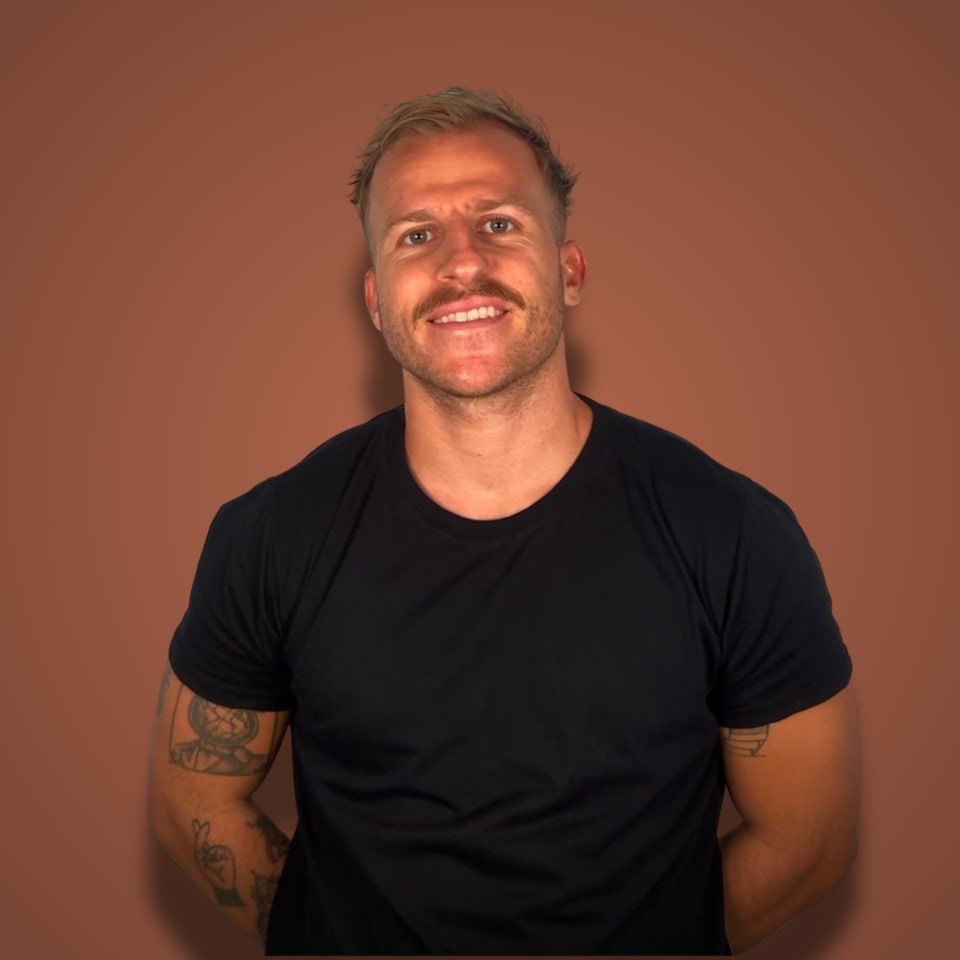
He built and sold four mobile apps for over $500,000. While everyone else obsessed about users, he obsessed about buyers.
But here's the part nobody tells you. He failed for years first.
A VC-backed fintech in London. Invoice financing for content creators. He ran it for three and a half years. It didn't work out.
Then he made one shift. He stopped trying to build the next big thing and started building to sell. His first app, an AI therapist for Christians, hit 300,000 monthly active users almost overnight.
I sat down with him on the Profitable Founder Podcast. Here's the full playbook on flipping apps in 2026, from finding ideas to validation to exit.
The mindset shift: obsess over buyers, not users
Most founders fall in love with their app. They tell themselves it's going to be their life's work and make billions.
Then it doesn't. So they try to sell while it's failing.
(Bad move.) Any buyer can see it in the charts. The retention dwindling. The install rates dropping.
His rule is the opposite. Sell when there's still 40% of the growth curve left. That's where you get the highest multiple, because you're leaving meat on the bone for the buyer.
And buyers are human beings too. They're not haters. They're just running numbers. The average buyer pays 2 to 3x your yearly profit, and they want to make that back in three to four years, plus more.
What buyers actually want to buy
His answer surprised me. The apps that sell best tap into human insecurities, and it's usually a gendered thing.
What are guys insecure about? What are women insecure about? You build for that.
He pointed to apps that help men chat up women, making a fortune. There's even an app called Taller that supposedly stretches you to make you grow, doing around $40K a month.
His big insight: wherever there's a market that will pay for a physical procedure, there's usually a bigger market that will pay $30 a year for an AI version of it. Less risk, less cost.
The key is that the pain has to be innate. Not a 12-month trend. Dating apps have existed for 20 years because guys will always want girls. That's what a buyer is paying for. Permanence.
The first thing a buyer checks (it's not MRR)
I assumed buyers lead with MRR, profit, and churn. Wrong.
The first thing they ask is: what's your workflow for getting installs? They want it simple. Not complicated.
He mostly sells to app studios, companies that own multiple apps with their own user acquisition teams. They already run Meta and TikTok ads. They just want to plug your app into what they already do.
So they ask two things → cost per install → payback period.
On one app, Prayscreen, he was acquiring users at 60 cents per install. Then they ran in-app ads earning about 4 to 5 cents per user per day. That meant a 12 to 14 day payback period. Clean and easy to explain.
If you want to understand why studying your buyer before you build a single screen matters this much, it's the same logic behind learning to build a micro-SaaS by copying a proven playbook instead of inventing one.
The full playbook: idea to exit
So I asked him the real question. If you started from scratch today, what would you do?
Finding the idea. He goes single-player. An app one person can get value from alone, no inviting a friend required. Then he picks one gender, because men and women think completely differently.
Three idea sources he uses →
→ Solve an innate pain point (like Prayscreen, which got to 100,000 prayers a day by targeting people who grew up Christian but don't go to church)
→ Find a physical thing AI can solve cheaply
→ Wrap a brand new trend fast. When Suno launched and you still needed Discord to use it, he built a music app in four days. At one point his app was ranking number one for "Suno" in the App Store.
Validating it. Don't build. Get a Figma designer to mock up three screens for $50 to $100. Make UGC content that looks like a real, working app. You're not chasing virality. You're hunting for content market fit, a hook that does 5K, 10K, 15K views consistently. For Prayscreen, day one hit 1K views, day three hit 4K, then they kept repeating the hook until one did 80K.
When to kill it. Run paid ads on your winning creative. If your cost per install is over $1.50, something's off. A dollar to $1.50 is okay. Under a dollar is amazing. And stop obsessing over conversion rate, the App Store average from free to paid is only 2.7%. If you're already at 5%, your problem isn't the paywall. It's your cost per install.
Building it. He spends 90% of his time on onboarding, because that's where free users become paid. He builds for one of two extremes → super high retention or super shareable. Prayscreen had 60% day-30 retention (Duolingo numbers) because it literally blocked your other apps until you prayed. His Suno wrapper, Magic Music, grew because a shared song was secretly a shared app.
What went wrong (and the onboarding fixes)
It wasn't all clean. Two onboarding screens were quietly killing Prayscreen.
The first was a gender question. He'd added male, female, and "other" on a Christian app. About 30% of people hit that screen and bounced. He removed it.
The second was the screen time permission Apple requires to block apps. New users didn't trust it during onboarding. So he moved it to after they'd already paid.
His target completion rate, the percentage of people who finish onboarding, is 85% at absolute worst.
I interview founders like this every week → Watch the Podcast
How to actually exit
His selling channel is just X. He tweets his journey, his install numbers, his hockey-stick graphs. Buyers follow along, so by the time he posts "looking to sell," they already know the app.
That's literally how Prayscreen sold. He tweeted that it was doing around $120-130K and his DMs flooded.
Two things to prepare before you talk to anyone →
→ A clean P&L showing revenue and Apple's cut (apply for the Apple Small Business Program, 15% on your first million)
→ A single dedicated email per app. Use info@yourapp.com for every login, RevenueCat, Mixpanel, Superwall, all of it. Transfers become trivial. He learned this the painful way, multiple times.
And the part most people get wrong: he never takes the highest offer. If five people bid and the top is $300K, second is $280K, third is $250K, he goes second or third. He optimizes for who closes fastest. To a first-time seller, the gap between $250K and $300K is basically nothing. A deal that actually closes beats a bigger deal that drags.
His single most important rule? Don't get attached to the idea. Know upfront whether an app is your lifetime mission or a flip. There's no in-between.
Frequently Asked Questions
How much did he make selling apps?
He built and sold four mobile apps for over $500,000 total. His best-known exit, the app-blocking habit app Prayscreen, was doing roughly $120-130K when he sold it in July 2025, less than a year after launching it in December 2024.
What was his first successful app?
His first app was Bible Buddy, an AI therapist for Christians built in 2022 right after GPT was commercialized. It hit 300,000 monthly active users. That early traction taught him the consumer psychology he later reused across every app he flipped.
What is he building now?
He's now a YC-backed founder building "payroll for performance" with his co-founder James. The idea: pay content creators based on views (around a dollar per thousand) instead of flat fees, so cost and outcome stay aligned. One customer is the world's biggest kids' language-learning app.
The whole game comes down to one line he kept repeating: don't build for users, build for buyers, and never fall in love with the app.