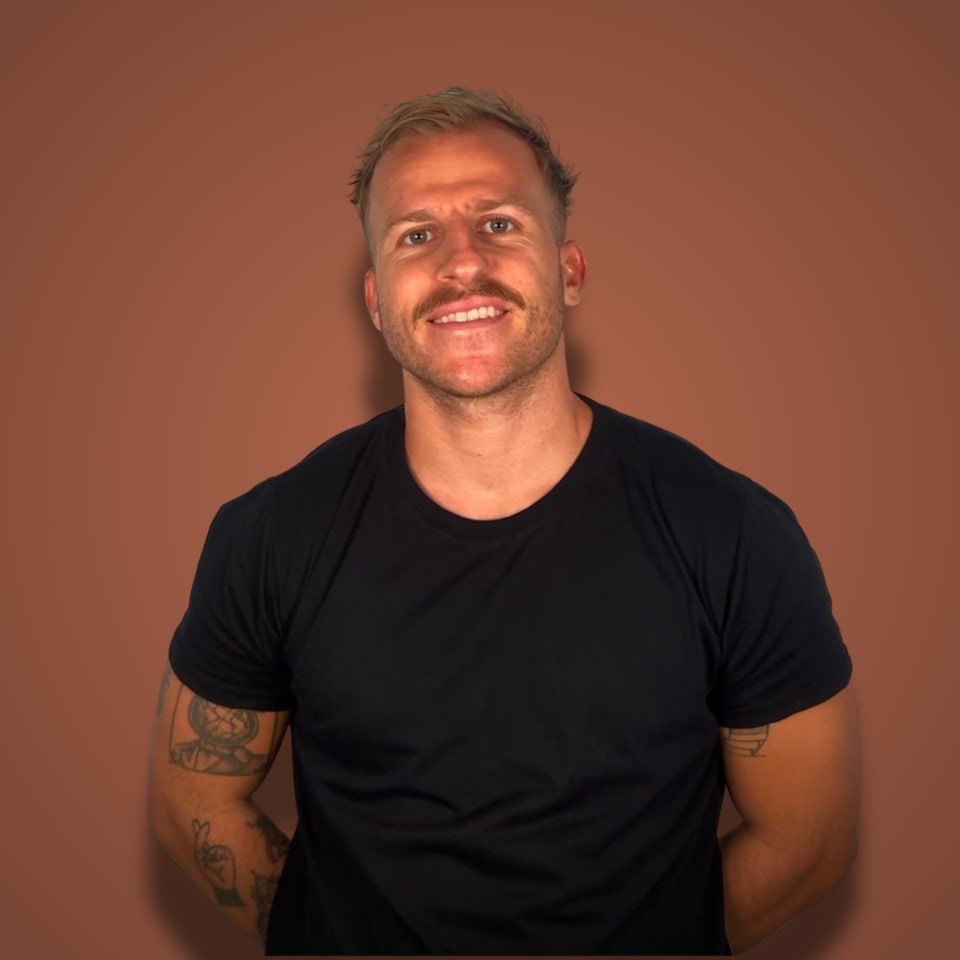
Benji built 45 apps in a year.
Forty-four of them didn't matter.
The 45th one — an app called Snag that helps people find free stuff near them — went from zero to $30,000 a month in under four months. Over 100,000 users. 9,000 paying conversions. $80,000 in total proceeds. 3,300 ratings on the App Store.
And here's the part that should annoy you: he's not some 10x engineer who's been grinding for a decade. He's a college kid who reverse-engineers the marketing first, wireframes it in Figma, feeds the designs to Claude Code, and ships the whole thing in 4 to 5 hours.
Four to five hours. Not weeks.
I watched his Starter Story interview twice because the playbook is so clean it almost feels illegal. So I'm breaking it down here — the real numbers, the exact stack, and the marketing engine that's doing the actual work.
Watch the full thing first if you want his face on it:
The 44 apps before the one that worked
Most founder stories edit out the failures. This one doesn't.
Benji's first app was called Pillar — a self-improvement thing. He scaled it to 11,000 users with basically zero customer acquisition cost. Then he… stopped. Shiny object syndrome. He saw a new idea and chased it.
Second app: Hi GPT. Same thing. Quit it to build the next one.
Then he built another 43.
I want you to sit with that. He didn't find his winner by being patient and committed. He found it by building so many cheap shots on goal that one of them was always going to go in. Each app cost him 4-5 hours. So 45 apps is maybe 200-225 hours of build time spread across a year. That's not a heroic amount of work. That's a part-time habit.
His background, for context: sold a media company for six figures, worked in Congress, did quant research at investment firms. Smart guy. But none of that is why Snag worked. Snag worked because he'd done the reps and finally decided to lock in on one product instead of jumping.
That's the lesson hiding under the highlight reel. Volume gets you the idea. Focus gets you the revenue. Most people do neither — they build one app, half-commit, and quit when it's quiet.
The build process: 4-5 hours, marketing-first
Here's where it gets practical. Benji doesn't start with code. He starts with the ad.
His exact order:
→ Reverse-engineer the value proposition you want to show in the app.
→ Ask: "What would this look like if I had to hook a user in 3 seconds?"
→ Go to Figma. Wireframe it. Design it.
→ Feed the designs to Claude Code inside your IDE.
→ Build.
The whole thing — without the backend — takes him 4 to 5 hours.
The reason this works is subtle. By designing the marketing message first, he never builds a product nobody can describe in one sentence. The "3-second hook" constraint kills feature creep before it starts. If you can't sell it in three seconds, you don't build it.
This is the same instinct I keep seeing in the founders who actually make money — they design the funnel and then build the product to fit it, not the other way around. If you want the deeper version of this, Max breaks down a similar machine in how he built 40 apps to $36K/month while working a 9-5. Same energy, different operator.
The exact tool stack
People always ask about tools, so here's Benji's full kit. No fluff, just what he actually pays for:
→ Cursor — his IDE.
→ Claude Code Max — codes pretty much the entire app.
→ GoDaddy — hosts the app's domain.
→ Loops — sends win-back emails to churned users to pull them back in.
→ Superwall — A/B tests the paywalls.
→ Mixpanel — tracks whether the onboarding is actually good.
→ Supabase — the backend for everything.
→ Plus an Apple Developer account and a Figma subscription.
That's the whole company. A solo founder running a $30K/month app on maybe a few hundred dollars a month in software. The leverage here is insane compared to what building a mobile app cost even three years ago.
Notice what's on that list, too: Loops for win-backs, Superwall for paywall tests, Mixpanel for onboarding. The boring retention plumbing. That's the stuff that quietly separates a $30K/month app from a $3K/month one. Everyone obsesses over the build. The winners obsess over what happens after install.
How he finds ideas (steal this part)
Benji's idea-sourcing is almost insultingly simple:
→ Watch YouTube and Twitter. You'll literally see people posting the money they make from random app ideas. Pain points that are underserved are sitting right there in the comments.
→ Go on Sensor Tower. Search for apps already making a lot of money. Then copy one — but make it 10% better.
His own example: after he launched Hi GPT, around 20 copycat apps showed up. And those copycats are also making hundreds of thousands of dollars. Why? Better UI. Better marketing. Better funnels.
His exact quote: "Ideas don't really worth much if you cannot provide the product to the end user in a better way."
This is the thing nobody wants to hear. Your idea isn't special. There are 20 versions of it. The execution — the interface, the funnel, the first three seconds — is the entire game. Originality is overrated. A known-good idea executed 10% better beats a novel idea executed badly, every time.
The marketing engine that actually makes the money
This is the part that does the heavy lifting, and it's the part most builders skip because it's uncomfortable.
Benji runs UGC at scale, then converts the winners into paid ads. Here's the machine:
Step 1 — Recruit creators. Reach out to a bunch of UGC creators. Interview them one by one to feel out whether they've got that "virality" built into them. His hit rate: about 10%. For every 100 creators he interviews, he keeps 9 or 10.
Step 2 — Pay them right. Monthly retainer plus a CPM structure. Then you test them.
Step 3 — Find the winners. If a creator's videos are doing over 50,000 views each, those are the ones worth scaling.
Step 4 — Move winners to Meta. Take those high-performing organic videos and run them as Meta ads. Start with a $50/day test campaign. If the ROAS is above 1 — or the click-through is really high — gradually scale: $50, then $100, $200, $300.
One UGC video he showed hit 240,000 views. His rule of thumb: every 100,000 views translates to roughly $1,000–$2,000 in direct subscription profit. So one good video is real money, and a winning ad creative is worth pouring gasoline on.
But he was honest about the ceiling, too. Meta isn't linear. For one ad, he put in about $3,000 total before the ROAS went negative and the creative fatigued. That's why volume of creatives matters — every new ad is another lottery ticket. You're not looking for one perfect ad. You're looking for enough swings that a few connect.
This whole thing is essentially a content-and-automation flywheel: recruit, test, kill the losers, scale the winners, repeat. The operators who win at this treat their distribution like a system, not a vibe — the same way the smartest teams wire up their business automations so the testing and follow-up runs without a human babysitting every step. Benji isn't manually deciding which creator to scale. The numbers decide. He just feeds the machine.
If you want a deeper look at the UGC side specifically, we broke down a similar 12-million-download playbook in how PlayKit drove 12 million app downloads with UGC.
Benji's 4-step playbook if he started from scratch in 2026
Pat asked him the classic question: if you had nothing and had to start over, what would you do? Here's the answer, unedited:
Step 1 — Find a scalable idea you can actually build. This is the highest-leverage thing you can do. A genuinely good product barely needs marketing — people convert higher and churn less because the value is obvious. For Snag, the pitch is dead simple: pay a few dollars a month, get access to free stuff worth hundreds. That's why conversion is so high.
Step 2 — Open your IDE and build with Claude Code. When you're starting, you're probably building a single-use-case app — basically an API wrapper. That's completely fine. Just use the API properly, make sure it works, and add account creation so Apple will approve it.
Step 3 — Distribution. No money for creators? Film the videos yourself. Benji shot thousands of videos for his earlier apps solo, then found an editor to cut them at scale and ran the best ones as paid ads. His words: the single greatest skill right now is the ability to create content and get views in this algorithmic, TikTok-shaped world.
Step 4 — Iterate. Keep improving the product so LTV goes up and CAC comes down. Business is just the transaction of value: they give you money, you give them value. Make the value bigger.
That's it. Four steps. No secret. The whole thing is "build cheap, distribute hard, keep the winners."
The one line that actually matters
At the end, they asked Benji what advice he'd give his younger self. He didn't say "work harder" or "learn to code sooner."
He said: create your own luck, and meet the right people.
He credits a chunk of his last few months to meeting a builder named Blake Anderson. Being around someone operating at a higher level made him want to match the pace. As Pat put it — you're the average of the five people you surround yourself with.
I've said a version of this on basically every episode of the podcast, so I'm biased. But it's the truest thing in the whole interview.
I paid $13,000 to join a mastermind when my SaaS was barely doing anything. Felt like a stupid amount of money at the time. Six months later that SaaS was doing $75K a month. The money didn't do that. The rooms did — the people who'd already solved the exact problem I was stuck on, who told me the answer in ten minutes instead of letting me burn three months figuring it out alone.
Building 45 apps is a solo grind. But the leap from 44 misses to one winner came from locking in — and from "great people lead to great opportunities." Benji's words, not mine.
FAQ
What is Snag and how much does it make?
Snag is a mobile app built by Benji and his team at 10X Studio that helps people find free items near them. It went from zero to $30,000 in monthly recurring revenue in under four months, with over 100,000 users, 9,000 conversions, $80,000 in total proceeds, and 3,300 App Store ratings.
How long does it take Benji to build an app?
Around 4 to 5 hours for a working app without the backend. He wireframes in Figma, then feeds the designs to Claude Code inside Cursor to write the code.
What tools does he use?
Cursor (IDE), Claude Code Max (coding), GoDaddy (domain), Loops (win-back email), Superwall (paywall A/B testing), Mixpanel (onboarding analytics), Supabase (backend), plus an Apple Developer account and Figma.
How does he market the apps?
He runs UGC at scale — interviewing creators, keeping the ~10% who can make videos that pass 50,000 views, then turning the best organic videos into Meta ads. He starts ads at $50/day and scales any creative with a ROAS above 1. Roughly every 100,000 views generates $1,000–$2,000 in subscription profit.
Do you need an original idea?
No. Benji explicitly says to find an app already making money on Sensor Tower and build a version that's 10% better. Execution — UI, marketing, funnels — matters far more than originality.
If you're building in a vacuum, stop
The build is the easy part now. Benji proved it — 45 apps, 4-5 hours each, a teenager's software budget. The hard part is the same as it's always been: distribution, focus, and not doing it alone in your bedroom for a year.
That last one is the whole reason I run the Profitable Founder Podcast — to put you in the room with founders who've already done the thing you're stuck on. Real numbers, real stacks, no fluff.
→ Listen to the latest episodes here.
Build cheap. Distribute hard. Surround yourself with people who make $30K/month feel normal. Then go ship app number 45.