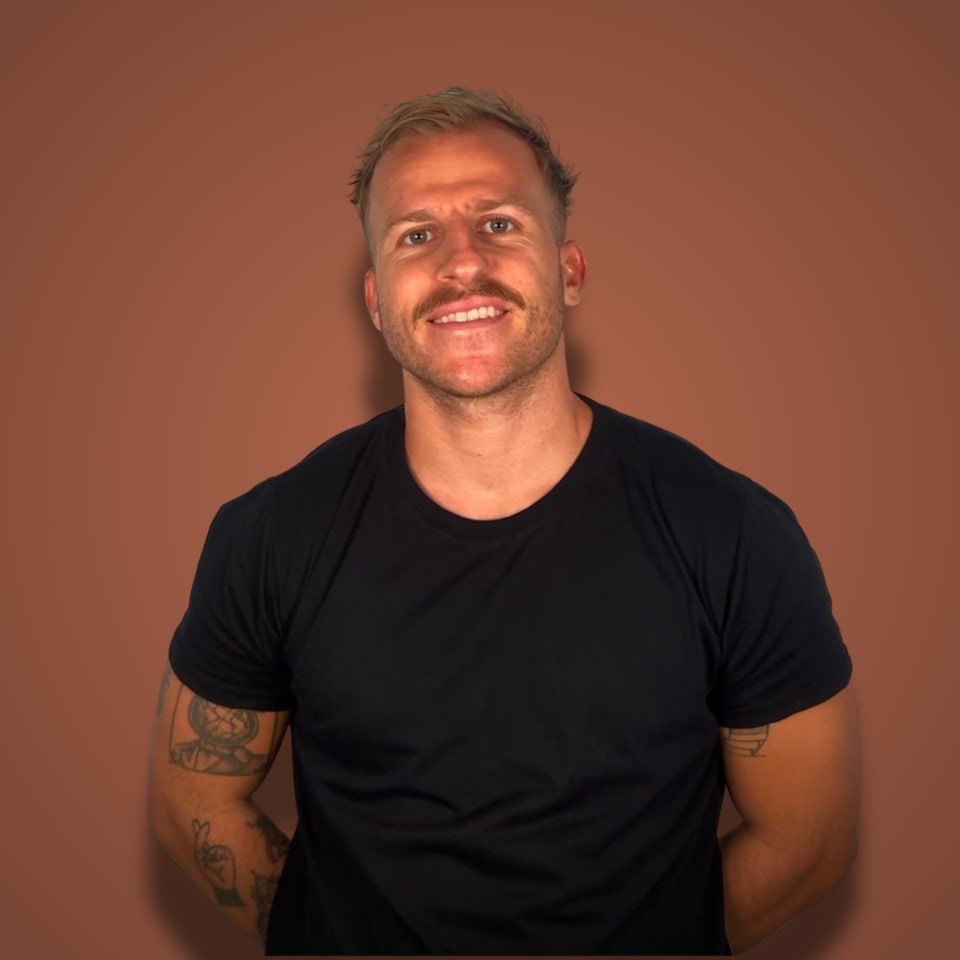
A year ago, Nathan Covey couldn't write a line of code.
Twelve months later he'd shipped multiple apps, tested over 200 tools, and was sitting at around $3,000 ARR on one of them. All of it built in roughly 20 hours a week. On the side. From a windowless closet in his house.
I watched his full breakdown on Starter Story Build and took notes the whole way through, because this is exactly the path most bootstrapped founders are on right now. Non-technical. Impatient. Trying to figure out which tools actually matter instead of which ones have the best landing page.
Here's the thing about Nathan's story that I keep coming back to: he didn't get good because he found one magic tool. He got good because he stopped trying to build everything himself.
Let me walk you through it.
From a focus app to $3K ARR
Nathan's first app was Ebb. He built it with a friend. It blocks distracting websites on Mac so you can actually focus. Simple idea, real problem, the kind of thing you build because you personally wanted it.
Then he built Harmony.
Harmony is an AI planning and goal app. You put in a mission statement, a vision for your life, and the AI suggests long-term goals, weekly goals, and tasks. He started building it last summer. It's now approaching $3,000 of ARR.
Is $3K ARR going to change his life? Not yet. But that's not the point.
The point is that a guy who couldn't code last year now has a paying SaaS product, a real tech stack he understands, and the ability to ship a new feature whenever he wants. That's the actual asset. The revenue follows.
I've been there. When I sold my first SaaS, the thing I was most proud of wasn't the exit number. It was that I'd built the muscle to do it again. Nathan is building that muscle right now, in public, one app at a time.
The "don't build it yourself" rule
Nathan made one mistake early that cost him a full week.
When he first built Harmony, he tried to build his own authentication. Logging in with Google, passwords, all of it. From scratch. He spent a week straight running into problems before he gave up and used a tool called Clerk.
His takeaway, and he repeats it twice in the video: authentication and payments are the two things you should never build yourself.
This is the lesson that took me years to internalize. Your time as a solo founder is the scarcest resource you have. Every hour you spend rebuilding a solved problem is an hour you're not spending on the thing only you can do, which is finding customers and making the product worth paying for.
So he outsources the boring, solved stuff and keeps his energy for the part that's actually his.
Nathan's actual mobile app stack
He tested over 200 tools to land on this. So instead of you doing that, here's what he actually ships with.
Front end:
Expo for building and submitting to the App Store (he's adamant: don't build native Swift apps in Xcode unless you're making a game). NativeWind for styling, basically Tailwind for mobile, so light and dark mode are defined in one place. React Native Reanimated for animations, which he says is a building block of his entire app. And Lottie files for lightweight animations like the confetti in Harmony.
Back end:
Convex. He calls this the most important tool in the whole stack. The reason is speed when paired with AI. He pushes back hard on the standard Supabase recommendation. His complaint: in Supabase your logic gets fragmented between the code and the dashboard, so you're constantly dancing between them. With Convex it's all in one spot, which means his AI coding tool can see the entire backend at once. Clerk for auth. Resend for emails. OpenAI for any AI features, because it's fast, cheap, and does everything he needs.
Payments:
Superwall. It handles the in-app purchase transactions AND gives him pre-built paywall templates that convert. He used RevenueCat before and says it's also great (deeper integrations), but Superwall wins on paywalls.
Analytics:
Here's his hot take, and I love it: don't obsess over analytics until you have a product that's actually getting traffic. People run A/B tests before anyone has even downloaded their app. The only two numbers that matter early are paywall rate (what percent of downloads reach the paywall) and conversion rate (what percent of those pay). Both live in Superwall. Once you're bigger, PostHog for funnels and AppsFlyer for ad attribution.
Development:
Cursor is his number one tool. He pays for the $200/month plan and maxes it out. He's already burned through $234 of token usage this cycle while only paying $200, and last month he hit something like $400 to $500 of usage. He also runs Claude Code (sometimes inside Cursor, which he admits is funny) and uses a speech-to-text tool called Willow to talk to it instead of typing. His pick for the best coding model right now: Opus 4.5.
If you're earlier than Nathan and want the no-code-first version of this, I broke down a similar approach in how to build apps without coding.
How he actually gets users
The stack is cool. But a stack doesn't make money. Distribution does.
Nathan's honest here: his app is still small and still growing. But what's worked so far is organic social. He posts on X and LinkedIn and stays active on both. X gets him the most impressions. LinkedIn gets him the most actual paying subscribers, partly because Harmony is a productivity app and that audience lives on LinkedIn.
His rule: double down on the platform where your users actually hang out, not the one with the biggest numbers.
The second thing is Apple Search Ads. He calls it the lowest-hanging fruit in mobile. You catch the user inside the App Store, at the exact moment they're searching for something like "weekly planner," already in the mindset to download. He shows up at the top for that search and it's driven a lot of his subscribers. His advice: this works when you target something niche. Don't try to win "dating app." Win the specific thing your app does.
One layer most solo founders skip: once those marketing channels start working, the manual follow-up eats your week. Welcome emails, cancellation feedback, nudging trial users. Nathan uses Resend to trigger those, and if you want to go further than transactional emails, setting up proper business automations for onboarding and follow-up is how you stop doing that by hand every single day. Speed is your only real advantage over big companies. Don't spend it on copy-paste work a system can do.
Why a windowless closet matters more than the stack
The part of Nathan's story that stuck with me most isn't a tool.
When the host asked how he learned all of this in a single year, Nathan pointed the camera at where he was sitting: a little closet in his house with no windows and no distractions. He locked himself in there, blocked social media, and just learned.
That's it. That's the secret.
Everyone wants the tech stack. Almost nobody wants the closet. But the closet is what made the stack matter. Eliminate distractions and you can do more than you'd ever believe.
His four closing takeaways, which I'd tattoo on a new founder's arm:
→ If you want to, you can become technical. Fast. Especially now.
→ The tooling around AI is so good that you can build real apps in your free time.
→ Speed is everything. It's the only advantage you have over a huge company.
→ Build stuff you personally want. It's the best way to stay motivated through the hard days.
That last one is the whole game. Nathan didn't build Harmony to chase a market. He built the planning app he wished existed, and the motivation took care of itself.
FAQ
Can you really go from non-technical to shipping apps in a year?
Nathan did, in about 20 hours a week on the side. AI coding tools like Cursor and Claude Code collapsed the learning curve. You won't be a senior engineer in a year, but you can absolutely become "dangerous" enough to ship a real, paying product.
What's the most important tool in the stack?
Nathan says Convex, the backend, because it pairs so well with AI and keeps all your logic in one place. The runner-up lesson is to never build auth or payments yourself. Use Clerk and Superwall.
How much does this stack cost to run?
Most of the tools have free tiers, free trials, or usage-based pricing where you spend pennies early on. The biggest line item is his coding setup: a $200/month Cursor plan that he maxes out. Everything else scales up only as the app grows.
What actually drove his first subscribers?
Organic posting on X and LinkedIn (LinkedIn converted better for his productivity app) plus niche Apple Search Ads campaigns targeting specific searches like "weekly planner." No big ad budget required.
Should I learn to code or stay no-code?
Nathan started no-code-ish and grew into real code with AI. If you want to ship something this week, start with the no-code path. If you want full creative freedom and speed long term, learn enough to drive Cursor or Claude Code. Both roads work.
One last thing
Stories like Nathan's are exactly why I started the Profitable Founder Podcast. Bootstrapped founders, real numbers, the actual tools and decisions behind the revenue. No fluff, no growth-hacking theater.
If you want more breakdowns like this one, every week, go listen.
Listen to the Profitable Founder Podcast →
Now go find your closet.