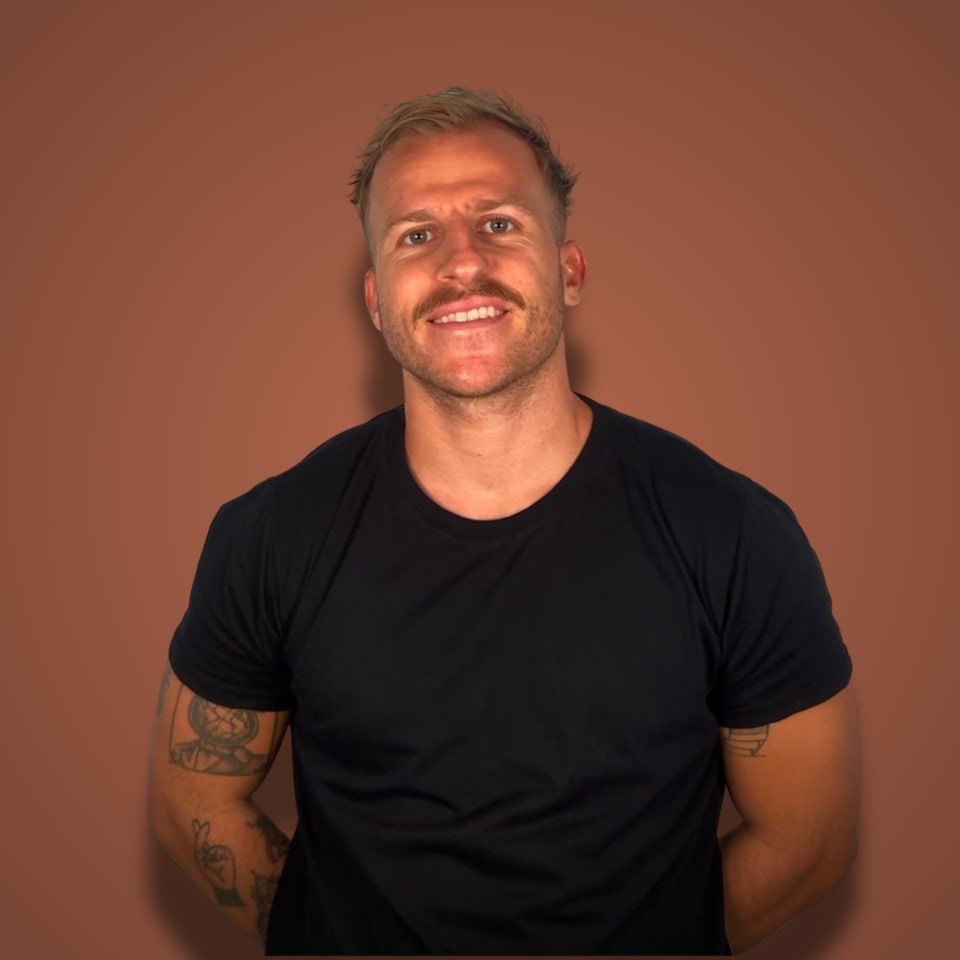
Most founders spend 6 months building before they find out if anyone will pay.
Brett from @TheBrettWay gave himself one week.
No developers. No marketers. No audience push. Just him, Claude, and a $500 ad budget. The goal: take a random app idea and get a stranger on the internet to enter their credit card as fast as possible.
Day 4, someone did. It cost him $40 to get there.
By day 6 he had 7 trials in 24 hours and a $15 customer acquisition cost, under his $20 break-even target.
Here's the full week, with every number and every mistake.
Day 1: find a gap people are already paying for
Brett didn't brainstorm ideas. He went to the App Store and looked at what people are currently buying.
One astrology app had over 200,000 ratings. He dug into the market: astrology is a $12.8 billion industry growing 20% a year.
Then he noticed something weird. Almost every app in the category targets women and focuses on relationships. Literally none target men.
Two explanations. Either men don't pay for astrology and it's a dead end, or that gap is the opportunity.
A bit more digging: 18% of men believe in astrology. That's roughly a billion people (including Ronald Reagan and JP Morgan, apparently).
That was enough data to commit. He positioned the app as astrology for business, because outcomes are what men actually pay for. Smart side effect: the messaging doesn't exclude women either, so the market got bigger, not smaller.
The lesson he kept repeating: validate the market before you perfect the product.
I covered a similar approach in how to validate an app idea. Demand first. Product second.
Day 1-2: an MVP built almost entirely by Claude
The build stack was basically one tool used well.
→ He described every feature to Claude Cowork and had it write a product requirement doc.
→ Pasted the PRD into Claude Code. Functional V1 in minutes.
→ It looked mega vibecoded, so he asked Cowork for a brand kit (masculine astrology, colors that imply wealth) and told Claude Code to redesign V1 with it.
→ For the landing page, he screenshotted a design he liked on Mobbin, had Claude analyze its layout and sales psychology, and turned that into another PRD.
He spent most of day one on the landing page alone. His reasoning: it doesn't matter how good the product is if cold traffic never gets past that page.
Day two was product. The free offer: enter your birth details, get a "founder archetype" reading generated through the GPT 5.5 API. Free value upfront, a reading accurate enough to kill skepticism, and a dopamine hit that sets up the paywall.
Payments took 30 seconds. He installed the Whop CLI, asked Claude to create two plans ($8.99/week with a 3-day trial, $98/year), and the checkout was embedded on the site.
Then the paid features: daily, weekly, and monthly business readings, plus an AI chat upsell for hyperpersonalized questions.
Domain from Vercel, Claude hosts it, done. A full SaaS live on the internet in 2 days.
Day 3: $20 burned in a few hours
Wednesday was marketing. Brett picked paid ads for two reasons: fastest possible data on what messaging works, and fastest possible customers.
He told Claude to look at the landing page and generate ad creatives. The first 5 were good enough that he generated 15 more.
Then he ran them through Whop on Meta, set $100/day, and went live.
A few hours later: hundreds of clicks at 3 cents each. Sounds great. It wasn't.
He'd forgotten geo targeting, so Meta was shipping his ads to low-quality traffic that would never convert. $20 gone because he wasn't paying attention.
(We've all done a version of this. Mine cost more than $20.)
He restricted the ads to the four major English-speaking countries and went to bed.
Day 4: the first paying customer
Next morning he opened the ad account.
Over 100 visitors. 32 people generated their chart. And one person entered their credit card details.
One paid signup on roughly $40 of spend.
He was honest about the math: $40 to acquire a user on an $8.99/week plan is nowhere near profitable. But that wasn't the point yet. A total stranger pulled out their wallet for a product that didn't exist 4 days earlier. That's a validated idea.
He was also honest about day 2, lying in bed wondering if this was a stupid idea only he cared about. He didn't listen to that voice. Four days later a stranger answered it for him.
Day 4, continued: fix the funnel, not the ads
This is the part most people skip, and it's where the story actually gets good.
Brett spun up a metrics dashboard showing conversion at every funnel step. The ads were fine: a good click-through rate on cold traffic is about 3%, and he had multiple creatives above 5%, one above 7%.
The leak was onboarding. He screenshotted his conversion rates, asked Claude for industry benchmarks, and found his onboarding completion was 20% below standard.
Then he checked where his traffic came from: 75% mobile web. So he tested the product on his own phone.
Two bugs, instantly obvious:
→ The location field ignored manual entries.
→ The time field required a colon but never said so. Wrong syntax meant the button just stayed unclickable.
Claude fixed both. Completion rate rose immediately, and three more users entered their card.
End of day 4: four users on $100 of spend. That's a $25 CAC. Claude ran the math on his pricing and said break-even needed under $20.
Day 5-6: a 3am email flow, a brutal bug, then 7 trials
His free-reading-to-trial conversion was 1%. Small boost there and the CAC math works.
So he stayed up until 3am wiring email marketing: a Resend account, Zapier MCP, and a daily personalized reading sent to every lead each morning to pull them back to the platform. It adds token costs per user, but the conversion lift makes it worth it. That's the whole point of business automations: you build the thing once at 3am, and it sells for you every morning after.
Day 5 punished him anyway. $100 spent, zero trials. A random authorization bug meant nobody was hitting the paywall at all. He fixed it, tweaked the UI, and waited.
Day 6, last $100 of the budget. He opened the Whop dashboard: 7 new trials in 24 hours.
$100 of spend, 7 users. That's a $15 CAC, comfortably under the $20 break-even target.
Trials still need to convert (he expects at least 50% to finish), and the daily emails should push a few more over. But the challenge was idea to first paying customer, and he did it in 4 days, then got the unit economics to work by day 6.
What to steal from this
→ Start with what people already buy. 200,000 ratings on one app told Brett more than any survey would.
→ Position for the outcome, not the category. "Astrology for business" sells; "astrology for men" doesn't.
→ Landing page before product. Cold traffic decides in one screen.
→ Commit real money, small. $500 total. Enough for signal, not enough to hurt.
→ Check your funnel on the device your users actually use. Two mobile bugs were costing him half his signups.
→ Ship email on day one. Most users don't convert in session one.
If you're grinding toward your first customers right now, the playbook in how to get your first 1,000 app downloads free pairs well with this one.
FAQ
How much did it cost to get the first paying customer?
About $40 in Meta ad spend, plus roughly $20 wasted earlier on untargeted traffic. The whole challenge ran on a $500 budget at $100/day, and by day 6 the cost per customer was down to $15.
What tools did Brett use to build the app?
Claude Cowork for product requirement docs, brand kit, and research. Claude Code for the actual build and redesigns. Mobbin for landing page inspiration. Whop for payments and Meta ads. Vercel for the domain and hosting. The GPT 5.5 API for the readings, and Resend plus Zapier MCP for the daily emails.
Is a $15 CAC actually profitable on an $8.99/week plan?
If trial-to-paid conversion holds. Brett's break-even was under $20 per customer, so $15 works as long as roughly half the trials convert and users stick around a few weeks. Retention is the number to watch next.
Should you validate with paid ads instead of building an audience?
If you want data this week instead of this quarter, yes. Paid ads told Brett which messaging converts, what his funnel leaks, and whether strangers would pay, all within $500. An audience is better long-term, but it takes months you might waste building the wrong thing.
Hear founders break down their first customers every week
One paying stranger changes everything. It did for Brett in 4 days, and every founder I interview has their own version of that first credit card moment.
I get them to share the real numbers on the Profitable Founder Podcast. Bootstrapped SaaS founders, $100K to $10M a year, no filter.