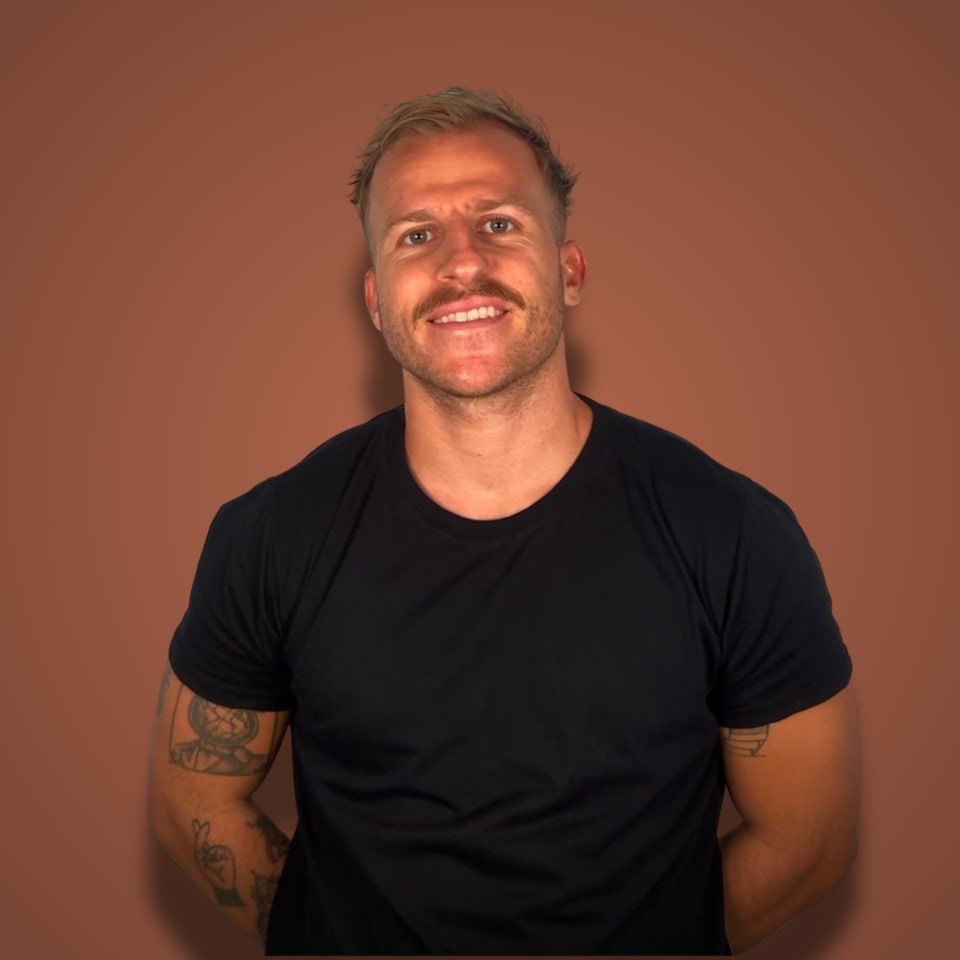
Sarah Pearl had never built an app in her life.
60 days after launching her first one, it was doing $300,000 in monthly recurring revenue. Today it's at roughly $340K/month, with 12,000 paying customers and over 200,000 downloads.
I've interviewed a lot of founders and I've never seen a ramp like that. Not from a first-timer, not from anyone.
The app is called Stella. It's a manifesting app. You tell it your goals and it generates custom visualizations narrated by your "future self", plus a personalized affirmation on your lock screen every day.
That's it. That's the whole product.
So how does something that simple hit $340K/month in two months when most founders grind for years to reach $10K?
Pat Walls broke it down with her on Starter Story, and the answer has almost nothing to do with the app. Here's the full story, with the source video so you can watch it yourself.
The numbers (because you're going to ask)
Sarah pulled up her dashboards on camera. Here's what Stella looked like about two months after launch:
- → $300K MRR crossed in month two. She says the real number is closer to $350-360K now.
- → 12,000 paying customers.
- → 200,000+ downloads.
- → A conversion rate she describes as "really high", because people downloading already trust her.
That last point is the entire story.
Sarah, aka Hot High Priestess online, has 1.2 million Instagram followers and 2.8 million on TikTok. Her manifestation content has pulled over a billion views.
She didn't launch an app and then go find users. She pointed a firehose of existing attention at a product built for that exact audience.
"But I don't have a million followers"
Pat asked her the objection you're thinking right now. Her answer surprised me.
Since launching Stella she started a brand new TikTok account. It's at 40,000 followers after a couple of months. She has another account she describes as a "spam post" account sitting at 700,000.
Her claim: she could start from zero today and get to 50,000 followers within three to four months.
Her point is that virality is a skill you can learn, and the follower count just follows. She's been running the same loop since her first three TikToks ever posted went viral in college (she was studying to be a teacher at the time):
- → Pick a niche and study the most viral content already performing in it.
- → Understand the psychology of why it moves people.
- → Recreate it. Then recreate your own winners, over and over. She's been remaking the same viral formats for years and they still convert.
She's run that loop on every account she's ever made. It's why she can say "50K in four months" with a straight face.
She built the audience first. The app came second.
This is the part I want you to steal.
Most founders work front to back: build a product, then go hunting for distribution. Sarah works backwards. Content and distribution first, product second.
Her reasoning: when you're already making content every day, the product gap becomes obvious. You watch the comments. "I wish this existed." "I'm struggling with this." That's your roadmap, written by your future customers.
For Stella, the gap was clear. She listens to meditations and visualizations herself, and nothing on the market generated custom ones for your specific goal. AI made that possible. So she built it.
Pat gets people asking him "what app should I build?" all the time. His answer now: don't build an app. Go build content. The app idea falls out of the content.
If you're still pre-launch, this pairs well with what I wrote about getting your first 1,000 app downloads free. Same principle: attention before product.
The build: 2 days to MVP, no engineering background
Sarah is not technical. She built Stella anyway.
Her stack: Claude Code for the actual building (she says plain Claude has "incredible design capabilities") and Google AI Studio. The MVP took her 2 days. The full polished app took 2 to 3 months from start to finish.
Her one rule: speed is the number one ingredient. The faster you whip up an MVP and test it, the sooner you have something that actually performs.
I keep hearing the same thing from founders shipping consumer apps right now (I covered another one in how Max ships apps in days, not months). The technical barrier is basically gone. Which means the moat has moved somewhere else.
Sarah knows exactly where.
The video format that prints money
She walked Pat through her single best-performing format, and it's worth studying frame by frame.
The video: Sarah recites affirmations to the camera. "My mind is worth millions. I don't work for money, money works for me. I get paid to exist." A guy off camera asks: "How can I remember all these?"
Her answer: "You can get custom affirmations on your lock screen every single day using my app Stella."
Boom. Product placement that IS the punchline.
Why it works:
- → She opens with "repeat these affirmations for 7 days". Your instinct is to save the video so you can come back. Saves and shares are the strongest signals in the algorithm.
- → The content is natively savable. People want to replay affirmations anyway.
- → The app appears as the natural answer to a question, not an ad break.
She also splits her content deliberately: pure viral videos that mention Stella without demoing it (huge reach, weaker conversion) and demo videos showing the actual use case (one did 300K views and converted extremely well). You need both.
Then there's the DM layer. On Instagram she runs ManyChat: comment "download" and the bot DMs you the link with your custom affirmations. Inside that DM flow she asks people to leave a review so she can "thank you personally". Reviews go up, rankings go up, downloads go up. It's the same logic behind every good lead nurturing strategy: the sale doesn't happen in the post, it happens in the follow-up.
"Women are going to dominate the app space"
This is the thesis that made Pat bring her on, and honestly it's the most interesting part of the interview.
Sarah's argument goes like this:
- → The best product doesn't win. The best known one does.
- → Distribution is the game, and the majority of influencers are women.
- → The only thing that kept women from building apps was the technical barrier. Claude Code and Cursor just deleted it.
She also points at a blind spot most of us have: entire categories of problems that never get built because the people who could code weren't the people who had the problem. Stella exists because, in her words, a man would never have thought to build it.
Starter Story's own audience is 93-94% male. Think about how many app ideas that skew leaves sitting on the table.
Whatever you make of manifestation as a category (Pat's producer admitted it's not his thing either), 12,000 people pay for it every month. The market doesn't care about your taste.
What I'd steal from Sarah's playbook
Four things, in order:
- → Work backwards. Content first, product second. Let the comments write your roadmap.
- → Treat virality as a learnable skill, not a lottery ticket. Study winners in your niche, recreate, repeat your own hits to infinity.
- → Make savable content. "Repeat this for 7 days" beats "check out my app" every single time.
- → Ship the MVP in days. Sarah went from zero coding experience to a working MVP in 48 hours. Your six-month roadmap is a procrastination strategy.
And one from her personal philosophy that stuck with me: "Peace and love doesn't build empires. Pain does." She credits spite, people not believing in her, as her best fuel. If you're in a rough chapter right now, she'd tell you that's the luckiest season of your life. Most fuel you'll ever have.
FAQ
What is Stella and how much money does it make?
Stella is a manifesting app built by Sarah Pearl (Hot High Priestess). You input your goals and it generates custom visualizations from your "future self" plus personalized daily affirmations on your lock screen. It crossed $300K MRR within two months of launch and now does roughly $340-360K/month with 12,000 paying subscribers and 200,000+ downloads.
How did Sarah Pearl build an app with no coding experience?
She used Claude Code and Google AI Studio to vibe code the entire product. The MVP took 2 days, the full app took 2 to 3 months. She was a college student studying to be a teacher before social media, so no engineering background at all.
Do you need a big audience to copy this playbook?
You need the skill, not the count. Sarah started a fresh TikTok after launching Stella and grew it to 40,000 followers in a couple of months by studying viral content in her niche and recreating proven formats. Her claim: zero to 50K followers in three to four months is repeatable if you master savable, shareable content.
What made her videos convert into paying users?
Three things: savable formats ("repeat these affirmations for 7 days"), the product appearing as the answer to a question inside the video rather than an ad, and a ManyChat DM funnel on Instagram (comment "download", get the link, get asked for a review). Demo-style videos converted best, pure viral ones drove reach.
Steal playbooks like this every week
I interview bootstrapped SaaS founders making $100K to $10M a year and pull out exactly how they get customers, price, and grow. Real numbers, no VC noise.