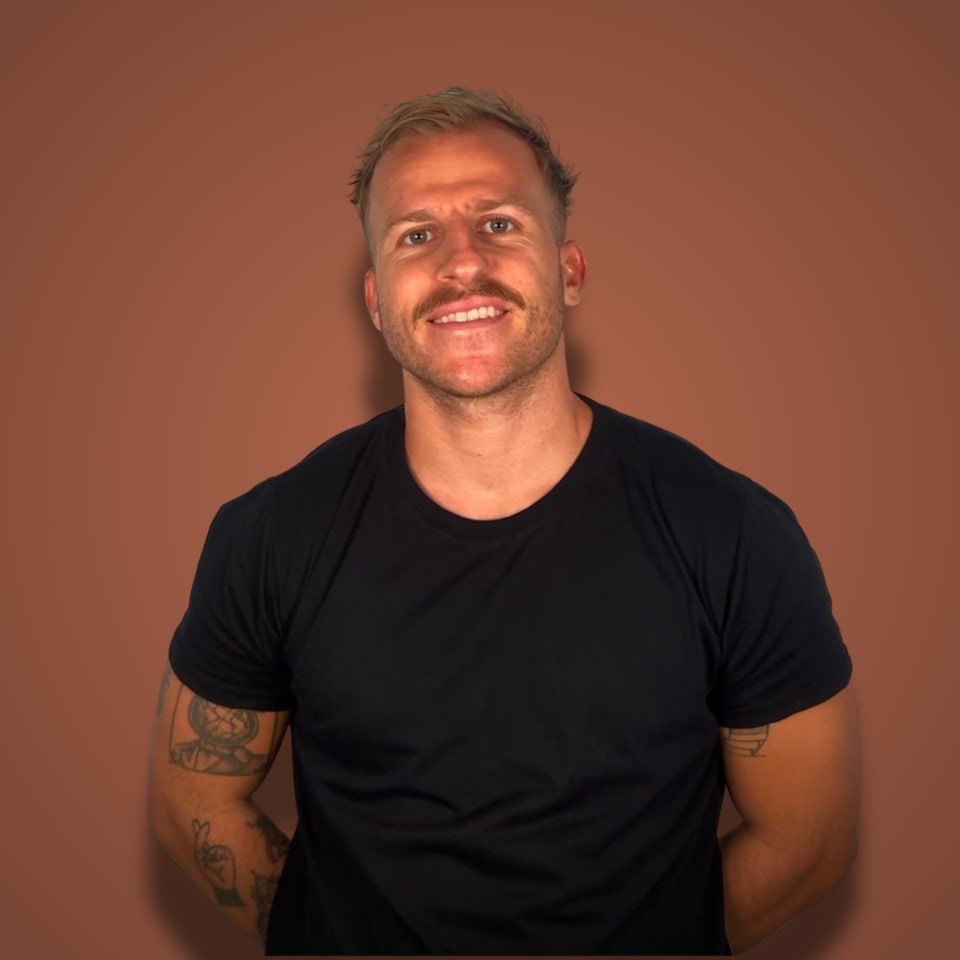
Most founders build the app first and figure out marketing later.
Mario and Alejandro did the exact opposite. They made a TikTok video about an app that didn't exist yet. It went viral. THEN they built it.
Four months later, Push Scroll was doing $30,000 a month with 300,000 downloads. All from organic content they filmed themselves.
That's the fastest lesson in how to validate an app idea I've seen in a while. If the idea flops, you wasted one video. Not six months of your life.
Pat Walls had both founders walk through their entire playbook on Starter Story Build. Here's the video, and below it, the full breakdown with every number they shared.
The app: push-ups before doomscrolling
Push Scroll is stupidly simple. It makes you do push-ups (or any exercise) before you can open Instagram or TikTok.
Three words: push-ups before doomscrolling.
The numbers in 4 months:
- $30K MRR
- 300,000 downloads
- 30 million views on Instagram alone
- Around 40 million views across all platforms
Zero paid ads. Zero influencer deals. Just content the two of them made.
Alejandro handles marketing and design. Mario codes the app and optimizes the funnel. And before either of them touched a code editor, they validated the whole thing with one video.
Step 1: Research a niche by becoming your customer
Their research method costs nothing and takes about 14 days.
You warm up a fresh TikTok account in your target niche. Follow 10 accounts, search the niche, watch every video fully, like, comment. Train the algorithm until your For You page IS your customer's brain.
Alejandro's point: your current feed only reflects your own interests. If you want new ideas, you have to scroll like your perfect customer scrolls.
Then you mine the comments. That's where the app ideas live.
In the video they find a looksmaxxing post where someone comments "do I have potential?" That single comment is an app idea: scan your face, get a score, get a glow-up plan. (Youmax already built exactly that and it blew up.)
→ Comments are the highest-signal research tool you have. Out of 100,000 views you might get 100 comments, and those 100 people are the ones feeling the most pain or the most excitement.
Two shortcuts they also use:
- Port a proven idea to a new niche. Quittr works for one addiction, Stopper took the same concept to sugar addiction and targets women.
- Massively improve an existing app. Cal AI is just MyFitnessPal with AI photo scanning as the MAIN feature, not a buried add-on.
Check for competitors making real money (this is validation, not a threat)
Counterintuitive rule from Mario: always find at least one competitor with a similar idea doing significant revenue.
No competitors making money = probably a tarpit idea. Sounds great, wastes your year. Recipe generators, to-do lists, most social apps if you're bootstrapped.
They checked Sensor Tower before building Push Scroll:
- ClearSpace (their closest competitor): around $60K MRR when they researched it
- Opal (the generic screen-time giant): $600,000 per month
Mario's take on Opal: "their app sucks, I used it one time and deleted it." And it still prints $600K a month. If the generic player makes that much with a weak product, a sharper niche version can take a real fraction of it.
(Fun moment in the video: Sensor Tower showed Push Scroll at $10K when they were actually past $30K. The tool is directionally right, not accountant-right.)
Step 2: Score your idea against the 5 viral criteria
Before writing any code, they run every idea through five checks. It doesn't need all five, but it needs most.
1. Does it sit low on Maslow's pyramid? The lower the need, the more people actually need it. Health, appearance, addiction. Cal AI, Push Scroll, and Youmax all live down there.
2. Is the market growing? Check Google Trends. "Doomscrolling" is climbing every year. "Newspapers" is a cliff. Timing matters too: Youmax launched right as "looksmaxxing" started spiking in late 2023, and timing did half the work.
3. Can you explain it in three words? Cal AI: AI calorie counter. Push Scroll: push-ups before doomscrolling. If you can't compress it, TikTok viewers will swipe before they get it. People scroll at their dopamine peak. Anything slightly complicated is dead.
4. Is it visual? Cal AI videos are just: snap a photo of food, boom, macro breakdown. No explanation needed, minimal captions, music over the top. If you can't SHOW the value in two seconds of video, good luck marketing it.
5. Is it shareable? Run the "did you hear about" test. "Did you hear about the app that makes you do push-ups before you can doomscroll?" If that sentence creates curiosity when you say it to a friend, you have something. Say it out loud to someone tonight and watch their face.
Their hypothetical face-scanner idea scored about 3.5 to 4 out of 5. Good enough to move to step three.
Step 3: Make the validation video (for an app that doesn't exist)
This is the part most people get wrong. You don't need the app to make the video.
Mario said it straight: people don't care HOW their problem gets solved, only THAT it gets solved. So you show the perceived value.
For Push Scroll's first viral video, the "app demo" was an AI push-up tracker clip Mario found on YouTube, edited to look like the product. Viewers thought they were watching a real app. The video exploded, the comments demanded it, and THAT was the green light to build.
Their script formula:
- Hook first. "What if you could stop your doomscrolling addiction by doing 20 push-ups?" Clear enough for a five-year-old, a curiosity gap (what do push-ups have to do with scrolling?), and emotional words ("doomscrolling addiction").
- Explain the app as plainly as possible. Every line under 15 words. Paste your script into Hemingway: it should read at grade 5 or below. Theirs was grade 2.
- New visual every 2 seconds. Close-ups, wide shots, POV shots, one silly unexpected moment. Edit in CapCut.
- End with a CTA: "Should I build this? Let me know in the comments."
Then you post one video like this every day until something hits. Bad idea? You lost a day, not a quarter.
The comments you collect on a validation video aren't just votes either. They're your first users. Reply to them, keep them warm, and announce the launch to them first. Classic lead nurturing, just happening in a TikTok comment section instead of an email sequence.
Why this beats "build first, market later"
I've interviewed a lot of founders on the podcast, and the pattern repeats: the ones who struggle spent months building in a cave, then discovered distribution was the hard part.
Mario and Alejandro just reversed the order. Distribution question first: "can this idea get attention?" Product second.
The whole bet costs one video per day. Compare that to the standard indie hacker path of a 6-month build followed by a launch tweet that gets 12 likes.
And this isn't only a consumer-app trick. It's the same logic as pre-selling a SaaS with a landing page, or the content-first approach behind how Sam built his app to $30K a month. Attention first, code second.
Once the idea IS validated and built, the next fight is downloads, and that's a different playbook (I broke it down in how to get your first 1,000 app downloads).
The playbook in one list
- Warm up a fresh TikTok account in your niche for ~14 days, scrolling as your ideal customer
- Mine viral videos' comments for pain points ("do I have potential?" → face-scan app)
- Confirm at least one competitor makes real money (Sensor Tower)
- Score the idea: low on Maslow, growing trend, three-word pitch, visual, shareable
- Write a hook, keep every line under 15 words, grade-5 language max
- Fake the demo with stock/YouTube visuals, new shot every 2 seconds
- Post daily until a video pops. Viral video = build it. Silence = next idea, you only lost a day
FAQ
How do you validate an app idea without building it?
Make a short-form video that sells the outcome of the app as if it already existed, using stock or YouTube visuals as the "demo". Post it on TikTok and Instagram. If it pulls big views and comments asking where to download, build it. Push Scroll used this exact method before writing any code and hit $30K MRR within 4 months of launch.
What is a tarpit idea?
An idea that sounds good but consistently wastes founders' time because it can't be marketed or monetized: recipe generators, to-do lists, generic project trackers. The tell is a niche where no app makes significant revenue. If you can't find one competitor earning real money, the Push Scroll founders would tell you to skip it.
How much did Push Scroll make and how fast?
$30K in monthly recurring revenue and 300,000 downloads within 4 months, driven by roughly 40 million organic views (30 million on Instagram alone). No paid ads. Two founders: Alejandro on marketing and design, Mario on code and funnel.
Does the content-first method work for B2B SaaS?
The channel changes but the principle holds: prove demand before you build. For B2B that usually means a landing page, a waitlist, cold outreach, or a LinkedIn post describing the product as if it's ready. Same test: does anyone care enough to act? If nobody clicks, comments, or replies, the market just saved you six months.
What tools do you need to run this playbook?
A phone, a fresh TikTok account, CapCut for editing (free), Hemingway to check your script reads below grade 5, Google Trends to check the market direction, and Sensor Tower to verify competitor revenue. Total cost: roughly zero.
Want more playbooks like this, straight from the founders running them?
Every week on the Profitable Founder Podcast I sit down with bootstrapped founders making $100K to $10M a year and pull out the exact numbers and steps.
Listen to the latest episode →