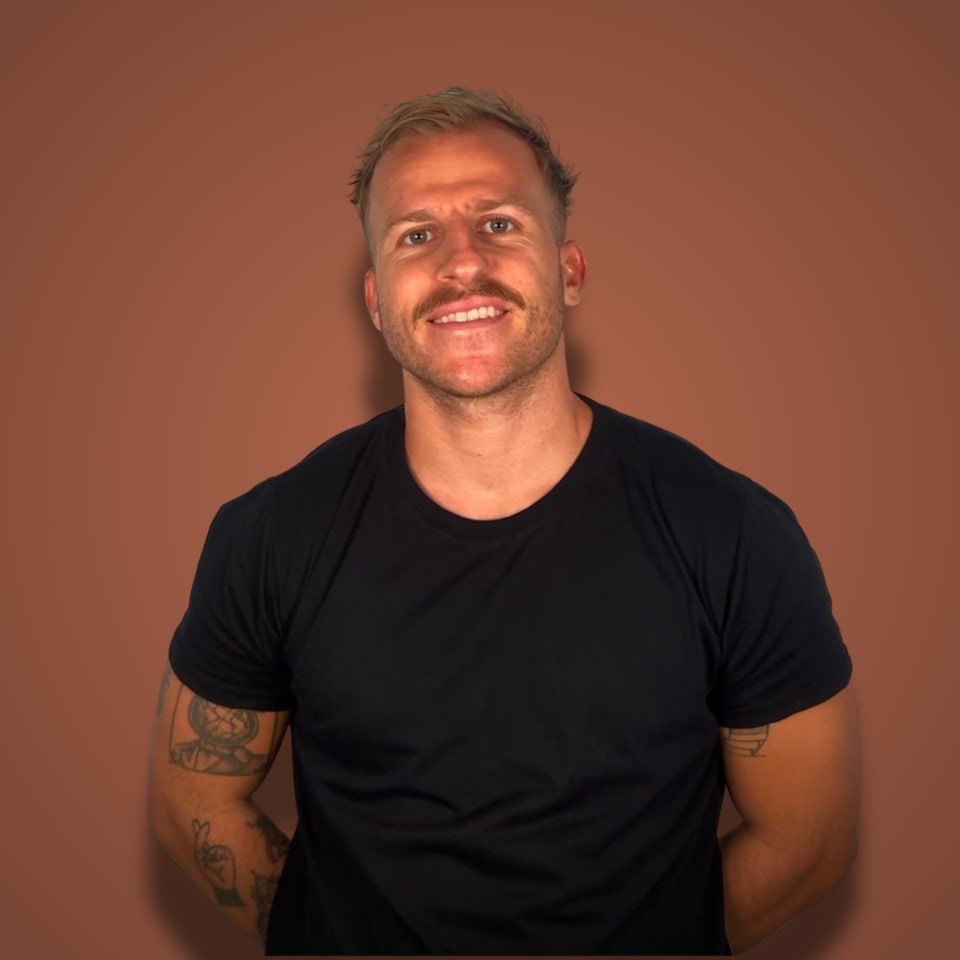
Pat Walls lied to his own producer.
He told Gus they were recording a normal episode about business ideas. Then, on camera, he flipped it: you're joining the build challenge. You, the guy who talks about founders all day, are going to become one.
I've watched a lot of Starter Story episodes. This one stuck with me because it answers the question I get asked constantly: how do you pick your first app idea when you've never built anything?
Gus is non-technical. He had never shipped a product, and he had a healthy pile of fears. By the end of the episode he had an idea he was genuinely excited to build, picked using a framework you can copy in 30 minutes.
Here's the full episode:
Why the goal is $1, not $100K
Pat had been running his own $100K build challenge for months: vibe coding apps, shipping fast, documenting everything. The obvious move was to give Gus the same target.
Gus's first reaction: "Maybe we should make it the $1 challenge."
That instinct is smarter than it sounds.
A $100K goal for someone who has never shipped anything is a fantasy number. You can't act on it. It sits far enough away that quitting in week three feels rational, because you were never going to hit it anyway.
One dollar is different. One dollar means one stranger pulled out a card and paid for a thing you made. Every fear on Gus's list (more on those in a second) gets answered by that single transaction.
→ Set the goal low enough that the only way to fail is to quit.
Which is exactly why the one rule of the challenge is: we don't quit.
The four fears that stop every first-time builder
When Pat springs the challenge, Gus doesn't say yes right away. He lists what's holding him back, and it's the same list I hear from people in my DMs every week:
- "I don't know what I'm doing."
- "I don't have any experience building this stuff."
- "What if it fails or what if it's dumb?"
- "Someone already did that. It'll never work."
Then he names the real one underneath: imposter syndrome. He's spent years interviewing founders and talking about ideas. Has he ever actually done anything?
Ouch. (I felt that one. I spent months consuming founder content before I shipped my first product.)
Pat's answer is worth stealing. He doesn't argue with the fears. He points out that publishing the challenge kills most of them for you. Once thousands of people have watched you commit, you're on the hook, and the fear of looking silly gets replaced by the mild embarrassment of not following through.
And the worst case? You learn how to build. That skill compounds no matter what happens to app number one.
Idea 1: the meme app
To find ideas, Pat doesn't hand Gus a list. They scroll the Starter Story database of case studies and click on whatever feels interesting. First thing that catches Gus's eye: Tech Lockdown, a screen-time and content-blocking tool doing $11K a month that started with $200.
That leads them to Touch Grass, an app where your phone stays locked until you take a photo of yourself literally touching grass. 271 ratings, in-app purchases, and a premise funny enough that people share it for free.
Gus's riff: "Get Baked." Same mechanic, but you unlock your phone by getting sunlight on your face.
Pat's point here is the interesting part. An app built around a meme comes with distribution baked in. Memes are inherently viral, so the marketing writes itself.
The problem: Gus rated it hardest to build of his three ideas, and his passion for it was the lowest. Keep that tension in mind, because it decides everything later.
Idea 2: automate a task you already do
The second idea comes from a rule a founder had shared with Pat: find a repetitive task you already do, and automate it.
The reference point is one of my favorite boring businesses: Bank Statement Converter. You upload a PDF bank statement, it spits out a spreadsheet. That's the entire product. The founder shared it made $38K in April alone.
Gus's version: a YouTube prep-doc generator. Every Starter Story interview needs a prep document, and they're always the same structure with a twist for each guest. Today he builds them half-manually in ChatGPT, and long threads keep degrading on him, so he repastes the same prompts over and over.
Paste in your interview notes, get back a title, thumbnail ideas, an overview, and the interview questions. Done.
This is the most reliable way I know to find a first product, and it scales way beyond prep docs. Most profitable software starts as somebody's annoying Tuesday task. If you want a longer menu of these, TwiLead keeps a solid list of business automations that companies actually pay to have running.
The scorecard on this one: easiest of the three to build, obviously useful, and Gus rated his excitement a flat "medium." Small market, nothing shareable about it, nobody shows their mom a prep-doc generator.
Idea 3: the walking app (the winner)
The third idea starts from a hobby, not a market. Gus walks about 5 miles a day. His wife once asked a question that stuck with him: how many steps would it take to walk across the US?
So the idea became a step tracker pointed at one giant goal. Tell the app you want to walk across America, it tells you that's roughly a million steps, and every day your progress bar creeps forward. 40,000 steps toward a million. Then 150,000.
The inspiration behind the format is everywhere once you see it. The Year Progress account that just posts "the year is 3% complete" and pulls huge engagement. A woman Gus follows who threads "today I walked 10 miles and had lasagna" every single day and gets millions of views.
Pat spots the pattern: it's the Locket play. Take a feature that already exists on the iPhone (step counting in the Health app), and do one cool, shareable thing with it. You don't need new hardware, and you're not asking anyone to start a new habit.
And when Pat asks the killer question, would you be proud to show this to friends and family, Gus lights up. Showing off a prep-doc tool feels like homework. Showing a progress bar that says you're 12% of the way across America feels like a story.
The scorecard that made the call
Line the three ideas up and the framework becomes obvious:
- Get Baked → viral premise, hardest build, lowest passion
- Prep-doc generator → easiest build, real pain, medium excitement, zero shareability
- Walking app → medium build, high excitement, inherently shareable
The winner was neither the easiest build nor the biggest market. Pat is blunt about why: difficulty can always be solved, but passion is what keeps you going when you're stuck connecting the Apple Health API at 11pm.
For a first app, excitement beats TAM. You're picking the project that gets you through the learning curve, and that's a different bet than picking a company.
The plan they land on is deliberately small: 30 to 60 minutes a day, talking to ChatGPT and Cursor, report back in two weeks. And Pat closes with the line that reframes the whole exercise: it's usually not the first idea that makes you successful. The first idea's job is to make you a builder.
So... did it work?
This episode aired, and Gus actually did the thing, which already puts him ahead of most people who talk about building an app.
He built the walking app with Cursor, shipped it, and pulled 14 sales in launch week, every one of them from posting the journey on X. I broke down his playbook for that in his build-in-public strategy, where he grew from about 500 to 1,400 followers in three weeks as a total beginner.
Three months in, the app had made about $40 total. I wrote up what he learned from making $40 on his first app, and why that number counts as a win.
He crossed the $1 line, so the challenge did its job. A guy who was scared to start now has a shipped product, a small audience, and the skill to build the next thing faster.
FAQ
What is the $1 Challenge?
It's Starter Story's beginner version of Pat Walls' $100K build challenge. Instead of chasing a revenue goal, you build and ship your first app with one target: get a single stranger to pay you $1. The low bar removes the excuse to quit, and the public commitment keeps you accountable.
How do I come up with my first app idea?
Use the three sources from the episode: browse databases of proven businesses and click what feels interesting, list repetitive tasks you already do that could be automated, and look at your own hobbies for something inherently shareable. Then score each idea on difficulty, excitement, and shareability, and pick the one you'd proudly show a friend.
What if my idea already exists?
Good sign, not a death sentence. Gus hit this fear live on the episode when he found 16 competitors to one idea. Pat's take: existing tools prove people want the thing, and a proven model is safer to build on than a totally original one. Touch Grass existing didn't kill Get Baked, and dozens of step trackers didn't stop the walking app.
How much time do you need to build a first app?
Gus committed to 30 to 60 minutes a day using Cursor and ChatGPT, with a check-in after two weeks. That was enough for a non-technical beginner to ship a working iOS app. The constraint helps: a small daily block is easier to protect than a mythical free weekend.
Every week I sit down with bootstrapped founders who are past the $1 stage and deep into the $10K to $100K a month stage, and I make them show the real numbers.