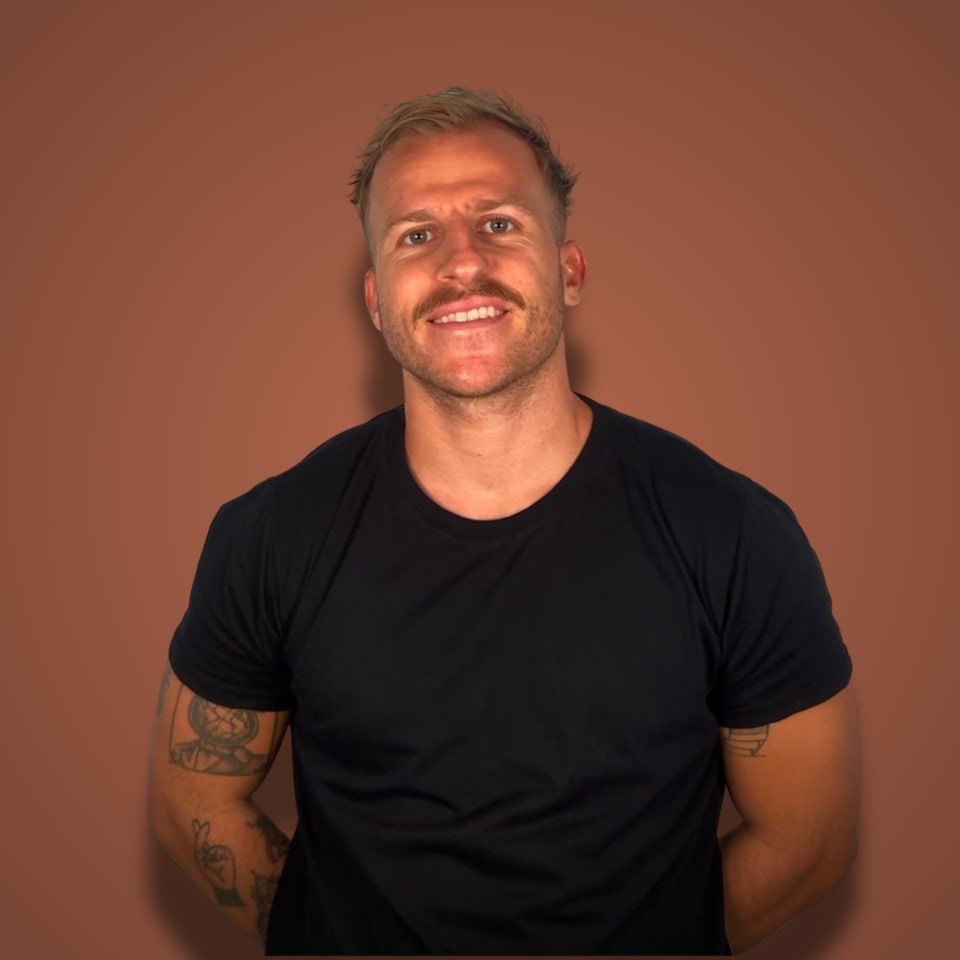
Three weeks ago, Gus had about 500 followers.
He had never shipped an app. He is not a developer. He is a producer at Starter Story who spent years watching other people build things.
Then he started posting about the one thing he was actually building: a simple walking app.
The result: 1,400 followers, a post with almost 50,000 views, and sales on launch day. From a step counter.
His build in public strategy is the most copyable one I've seen in months, because he documented every post that worked and every number behind it. Pat Walls sat him down on the Starter Story podcast and made him walk through it, post by post.
Watch it, then let's break down the playbook.
A producer, a walking app, and zero coding experience
Quick setup, because it matters.
Pat challenged Gus to make $1 online from something he built himself. Gus had no software background. He learned Cursor, vibe coded a couple of apps that flat out didn't work, restarted more than once, and eventually shipped a walking app to TestFlight, then to the App Store.
Which rejected it. (More on why that was actually good in a minute.)
The part worth studying is what came before. Gus had been on Twitter for years. Consuming, lurking, occasionally posting a random idea or a quote. Nothing worked, and he assumed the people blowing up had some secret.
His words: "Before this I would have told you that doesn't work, or that all these people have this following because of some secret. I don't think that's the case anymore."
The unlock wasn't a posting hack.
→ The unlock was having something to post about.
Once he was building an actual app, "what should I post today?" stopped being a creative writing exercise. He just shared what happened that day. That's the entire foundation, and it's why I tell every founder the same thing: the building comes first, the audience is a byproduct. I broke down the full framework in my guide on how to build in public if you want the theory. This article is the field test.
The four post types that did the work
Gus didn't post randomly. He ran a small portfolio of formats, watched the numbers, and doubled down on what moved. Here's each one with its actual results.
1. Face-to-camera daily updates
One minute videos, recorded on his phone. "Day whatever, still fighting Cursor." One got 851 views. A later one, where he added captions with a free tool, got 3,000.
Not viral. Doesn't matter. These posts did two jobs: they trained the algorithm that he posts consistently, and they made him a person instead of an anonymous avatar. Most builders online hide behind a cartoon profile picture. Showing your face is a differentiator precisely because it's uncomfortable.
He even held a microphone that wasn't plugged into anything, just to make the frame more interesting. That's the level we're talking about. Small, scrappy tweaks, tested one post at a time.
2. POV computer shots
A photo of his laptop in a coffee shop, captioned "They don't know I'm trying to vibe code a $50K/month mobile app."
Pat's rule from years of watching these: if you're wondering whether to attach an image or video to a post, the answer is always yes. It can double or 10x the reach of the same words alone. People stop scrolling for a picture, dwell time goes up, and the algorithm reads that as a signal.
3. The app in every single post
Screenshots of the interface. A stranger's post showing the app running on his phone. The TestFlight page. Gus worried it was repetitive, and Pat corrected him with something worth writing down:
→ Nobody scrolls your profile. They see one post at a time in their feed.
What feels annoying and repetitive from inside your own account reads as "oh cool, the walking app guy" from the outside. Repetition is how strangers learn what you're known for. Alex Finn posts about Creator Buddy every single day for the same reason.
4. Milestone posts, including the bad ones
"I feel stupid being this nervous to press submit." Then the App Store rejected the app, and that became a post too. Then the approval. Then the launch.
Every step of the journey is content, especially the setbacks. A rejection post costs you nothing, and people root for you harder on the next attempt.
The 50,000-view post he copied on purpose
Now the big one. Almost 50,000 views, 105 comments, 36 retweets. Gus had roughly 1,000 followers when he posted it.
He didn't write it from scratch.
A founder named Sherry, who builds her app Peak Money in public, had posted "I vibe coded the first version of this in 3 hours. Here's my tech stack." It blew up, to her own surprise.
Gus took the exact structure, swapped in his own story ("I coded the first version of my app in 12 hours"), added the POV image format he'd already tested, and posted it.
Side by side, the two posts are nearly identical. And his version hit the algorithm harder than anything he'd ever posted.
Founders understand this instinctively when it's about products. Competition in a niche is validation. Somehow we forget it applies to content. If a post format is blowing up for other builders, that's your signal to run it with your own numbers, your own face, your own app.
A second post worth stealing: his personal transformation story. "Several months ago I heard about this. I was a skeptic. Now I'm actually doing it. My only regret is not starting sooner." Around 20,000 views, and he hadn't made a dollar yet when he wrote it. He had no revenue to show off, just an honest before and after. That was enough.
If you want more accounts to reverse engineer, I ranked the best build in public creators to follow for exactly this purpose.
What it actually made him
Views are vanity. Here's the money.
Gus launched on July 12. One sale on day one. Five the next day. Then 3, 3, 2.
His summary: "Just enough to pay for one month of Cursor."
Fourteen sales of a first app, built by a non-developer, sold to an audience of 1,400 people. And his read on attribution is blunt: "I don't think I get any sales if I'm not posting on Twitter. I'm pretty sure all of these have come from my posts."
Pat's context makes the number land differently. It took him three to four months to make his first dollar from Starter Story. Gus did it on day one, because three weeks of daily posts meant strangers already knew the app, trusted the guy, and were waiting for the launch.
That's the mechanism worth understanding. Daily building-in-public posts are a nurture sequence you run in the open: every update warms the same audience a little more until buying feels natural. (Same psychology as email. TwiLead's breakdown of lead nurturing strategies maps the sales-side version of it.)
Nobody buys from post one. They buy from post thirty.
How to run this playbook starting today
Everything above compresses into five moves:
1. Build something first. Anything. Gus's app counts steps. "Do something cool and talk about it," as Daniel Vassallo puts it. Without a project, you're posting quotes into the void.
2. Post once or twice a day, every day. Staying in the feed is the strategy. Gus doesn't even use a scheduler. One honest update beats one perfect thread a month.
3. Attach an image or video to everything. Your app, your screen, your face. The answer is always yes.
4. Keep a swipe list. Gus maintains a private Twitter list of builders (Jack Friks, Yoni, Sherry) and pulls formats from whatever is working for them. His biggest post ever was a borrowed template.
5. Post the milestones, especially the ugly ones. Submission nerves, rejections, the first stranger using your app. The setbacks get more engagement than the wins.
Give it 30 days before you judge it. Gus's first videos got 851 views. Week three got him 50,000.
FAQ
Does building in public work if you have no followers?
Yes, and Gus is the cleanest proof I've seen. He started with about 500 followers and no audience-building experience. The strategy works because each post competes in the feed on its own, not on your follower count. His 50,000-view post went out to roughly 1,000 followers.
How often should you post when building in public?
Once or twice a day. That's the cadence Gus used and the one Pat recommends. The goal isn't any single post performing. It's staying visible in the feed so strangers gradually learn what you're building and start expecting your updates.
What should you post about when building in public?
Whatever happened today: the bug you fought, the feature you shipped, the App Store rejection, the first user screenshot. Rotate formats: short face-to-camera updates, POV shots of your screen, app screenshots, and milestone posts. Attach a visual every time.
Is it copying if you reuse someone else's post format?
Formats aren't owned, stories are. Gus took the structure of Sherry's tech stack post and filled it with his own hours, his own stack, and his own app, and she commented on the original that she couldn't believe it blew up either. Steal structures, never substance.
Build Loud, Then Come Tell Me About It
A step counter, a borrowed post format, and three weeks of showing up. That's all this was. Gus spent years watching other people do it before realizing the watching part was optional.
Every week on the Profitable Founder Podcast I get bootstrapped founders to open up exactly how they got their first users, their first sales, and their first $100K. Real numbers, no highlight reel.