Greg Isenberg is spending his time on GitHub now.
Not Product Hunt. GitHub.
His argument: it's where you see the tools people will be talking about in 6 months, today. The stuff that eventually becomes SaaS companies, agencies, and whole workflows shows up there first, as raw open source repos.
So in his latest episode (dropped yesterday, 50K+ views in a day), he went through the repos that got attention over the last 30 days and picked the AI agent GitHub repos he thinks builders should actually install. He promises six at the start and delivers five. (Classic. I counted twice.)
All five are free and open source. A couple have paid dependencies, like ElevenLabs for the video one. Here's the full breakdown, plus what I'd do with each one as a founder.
1. No AI Slop: Peter Yang's fix for writing that smells like a robot
You know the smell.
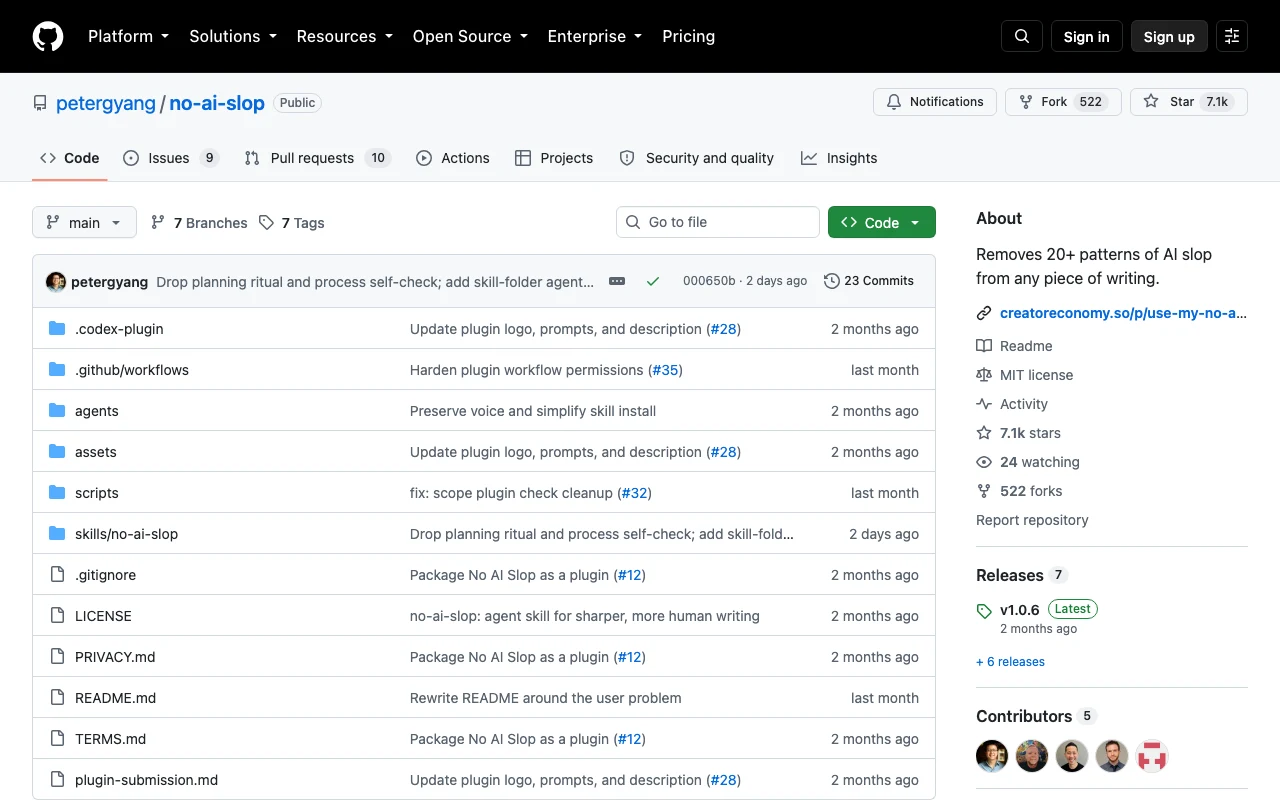
You ask ChatGPT or Claude to help with a tweet or a landing page. The grammar is fine. The syntax is fine. And it still reads like a keynote from a fake SaaS conference. Too polished, too symmetrical, "it's not X, but Y" everywhere, the word "quietly" doing way too much work.
Greg's friend Peter Yang built a skill that strips those patterns out while keeping your actual voice. That last part matters. Most writing tools clean your draft by sanding off the interesting parts, and then everyone sounds the same.
Why should you care as a founder? Because you write constantly. Tweets, cold emails, launch posts, onboarding copy, investor updates. People might never say "this was written by AI". They just trust you less and keep scrolling.
Greg's workflow, which I agree with completely:
→ Write the rough draft yourself first, even if it's messy.
→ Then let the skill remove the AI patterns.
Human ideas first, AI cleanup second. Most people run it in the opposite order and wonder why their content gets ignored.
Install is one line: npx skills add plus the repo link (all the repo links are in Greg's video description).
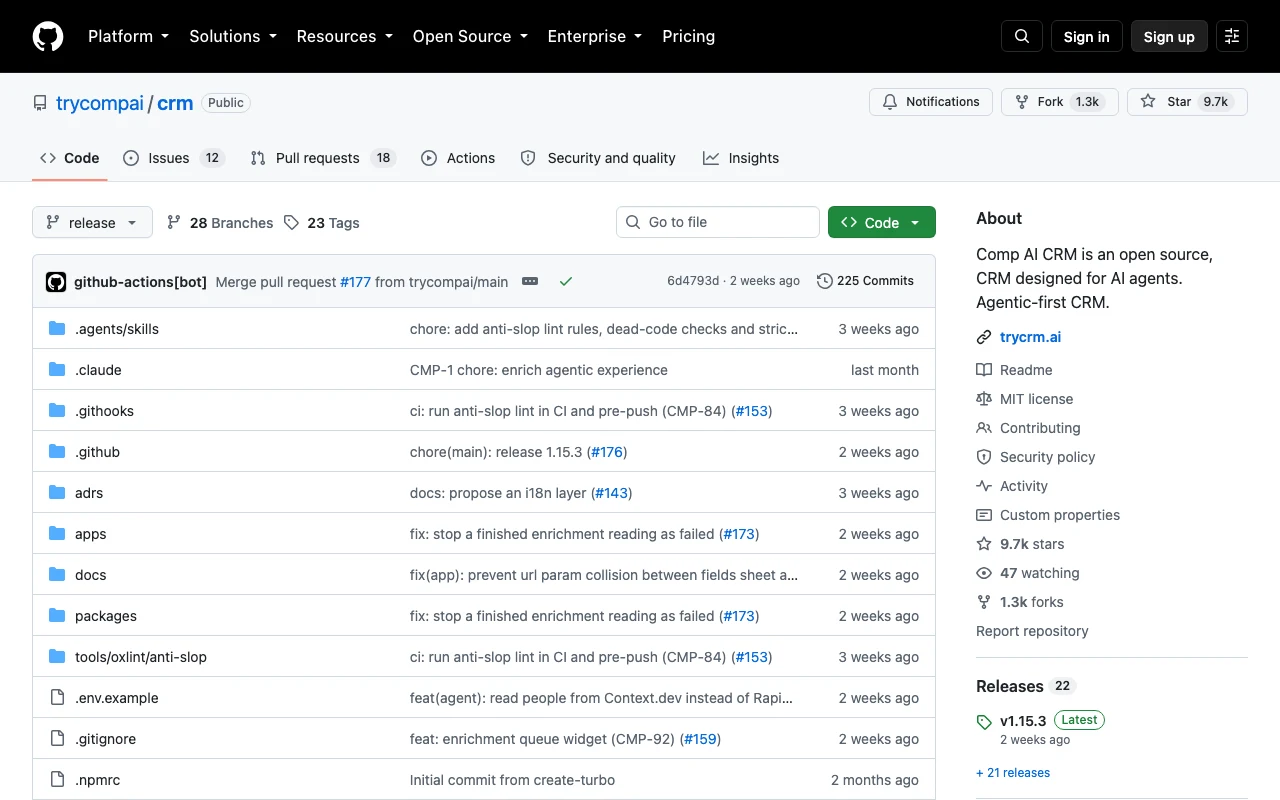
2. Comp AI's open source CRM: follow-ups that run themselves
This one sounds boring and is probably the biggest money-maker on the list.
Every CRM you've ever used turned into a graveyard. You start excited, the data goes stale in a few weeks, and the people who could actually make you money sit in a tool nobody opens. (I've been there more times than I want to admit.)
The CRM by trycompai flips the model: it treats the CRM as a workspace for an AI agent instead of a filing cabinet for you. The agent researches people, enriches company info, schedules follow-ups, and keeps the notes current. It maintains the relationship graph so you don't have to.
Greg's point hit me hard: most businesses don't fail from a lack of opportunities. They fail because the opportunities are scattered. A warm intro from 6 months ago. A customer who said "check back later" and never heard from you again. There's real money sitting in those threads, which is exactly what a lead nurturing strategy is supposed to capture, except now an agent does the remembering.
His starter use case is one I'd steal today: create a single pipeline called "warm leads I can't afford to forget". Drop in everyone who showed buying intent. Replied to an email, booked a call, asked about pricing, said they'd circle back in 45 days. Let the agent keep it alive.
Setup is the most technical of the five. You need bun and Docker: clone the repo, copy the env file, bun install, docker compose up -d, deploy and seed the database, then bun run dev. It runs locally on localhost:3000 with the API on 3001, and you'll want a Google or Microsoft auth client for email and calendar.
Not one-click. But you used to hire a person for this job.
3. Video Use: let Claude Code edit your videos
This repo is by the browser-use team and it does exactly what it sounds like: you drop raw footage in a folder and ask a coding agent (Claude Code or Codex) to edit it.
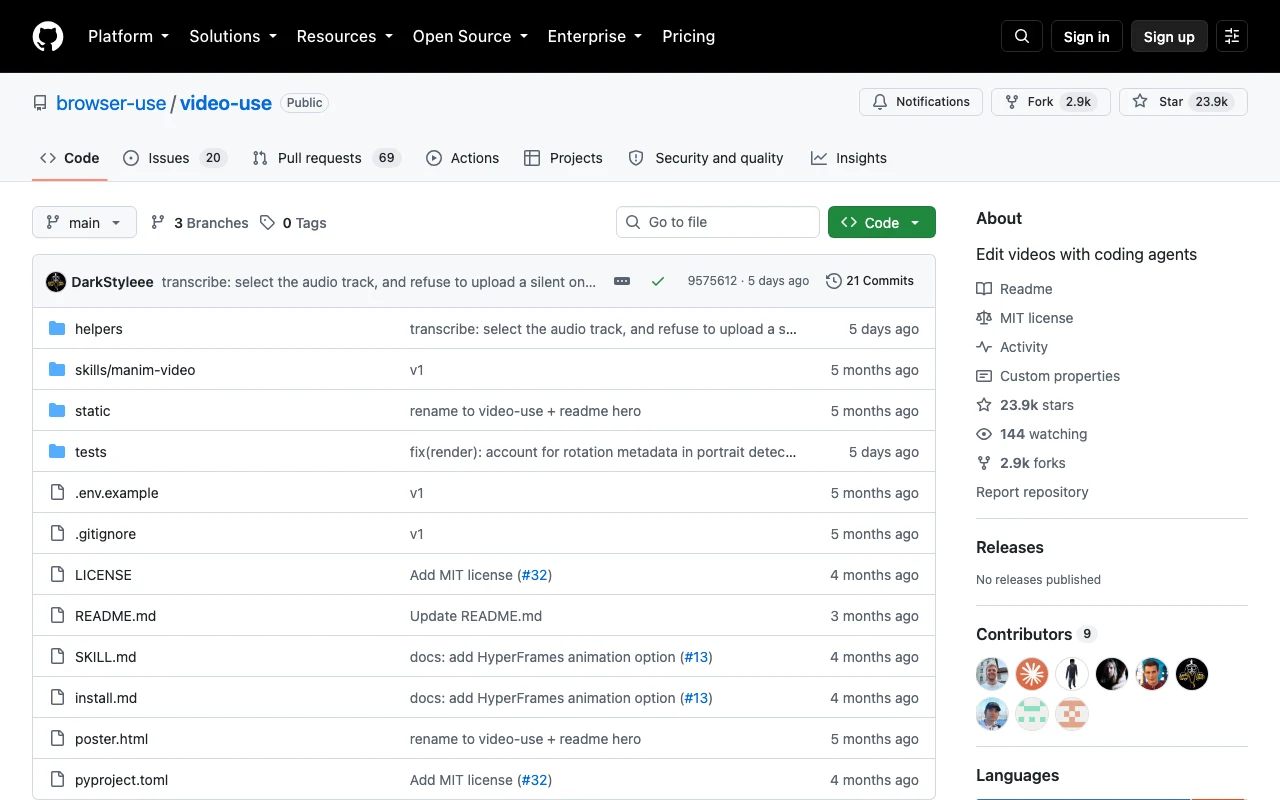
It removes filler words, cuts dead space, adds subtitles, color grades, builds overlays, renders the cut, and then checks its own output.
AI video editors already exist. The difference here is that your editing workflow becomes something the agent can understand and repeat. Most creators make the same handful of edits every single time: same subtitle style, same way of trimming pauses. Normally that lives in one person's muscle memory. This turns it into a system an agent can re-run.
Greg's warning is the useful part: don't try to automate your whole channel on day one. People ask for too much, get a bad result, and quit. Start with one small repeatable format instead:
→ A founder Loom into a 60-second launch video.
→ A podcast recording into 3 clips.
Then he says the quiet part out loud: once you have one format working, that's a startup. Real estate agents need listing videos, SaaS companies need product videos, coaches need clips, and nobody enjoys editing. This is the same "agents as employees" thesis I wrote about in how founders are turning Claude Code into an AI employee, applied to the most painful content job there is.
One heads-up: this is the repo with the ElevenLabs dependency, so parts of it cost money.
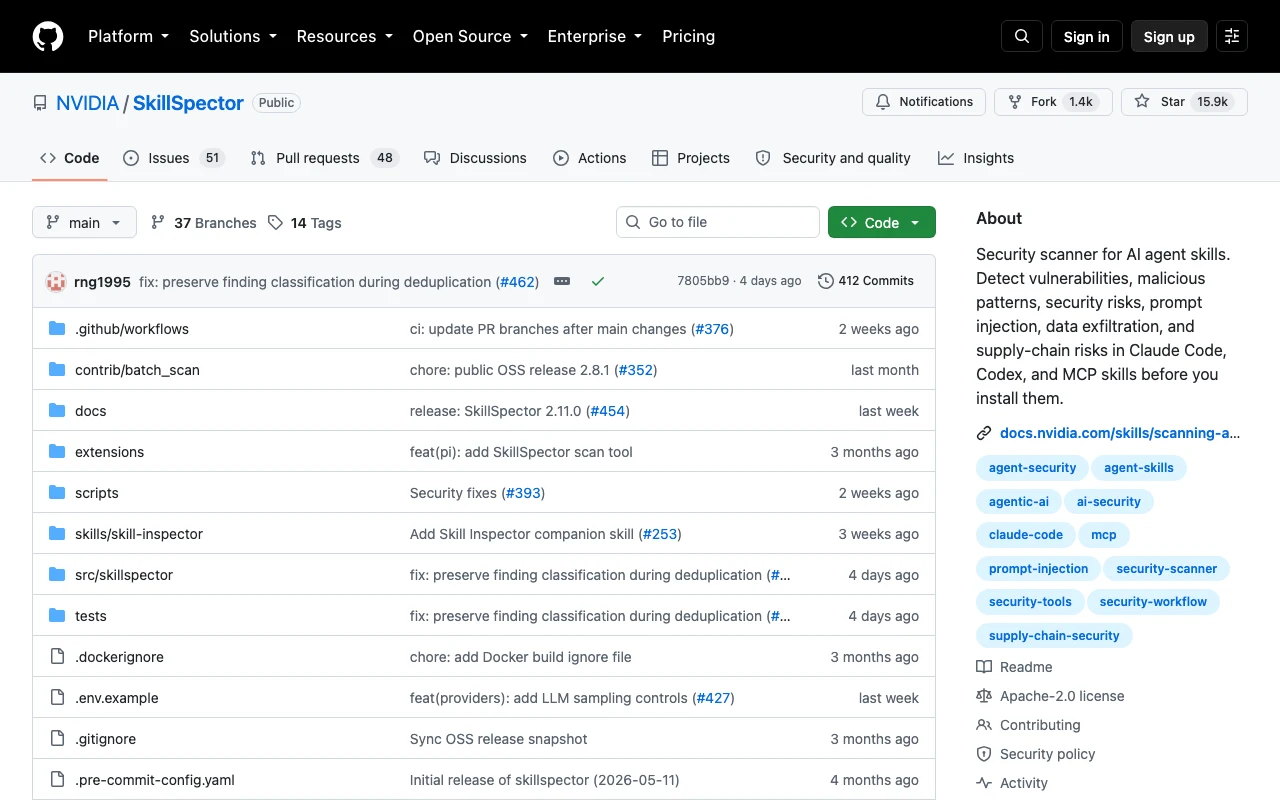
4. Skill Specter: Nvidia's security scanner for agent skills
The least sexy repo on the list, and the one Greg called a no-brainer.
People are installing skills, MCP servers, and plugins straight from GitHub right now. A skill isn't just a block of text. It can include scripts, dependencies, and tool access. It can touch your files and call services on your behalf.
So before you hand your AI a new tool: scan the tool.
Skill Specter scans agent skills for prompt injection, data exfiltration, supply chain risk, and hidden malicious instructions. Install it with uv, then run skillspector scan on a local skill directory or point it straight at a GitHub repo. There's a flag for a static scan that doesn't send file contents to any LLM provider (useful for private code), and a Docker option if you don't want Python installed.
Greg's bigger observation: your AI setup is starting to look like a little operating system for your work. A coding agent, a research skill, a browser tool, a video workflow. Once that happens, security stops being an enterprise problem and becomes a founder problem.
He also flagged the opportunity hiding inside it. If teams are going to install agent skills at scale, someone has to help them decide what's safe. Maybe that's a trusted marketplace, an install gate for companies, or a scanner built into every agent platform. Nvidia attaching its name to this category tells you it's real.
5. Phone Harness: an agent that taps through your iPhone
Most agent tools live in browsers and terminals. Meanwhile a huge amount of actual work happens on phones: banking, messaging, social, delivery. No API, no automation, just a screen.
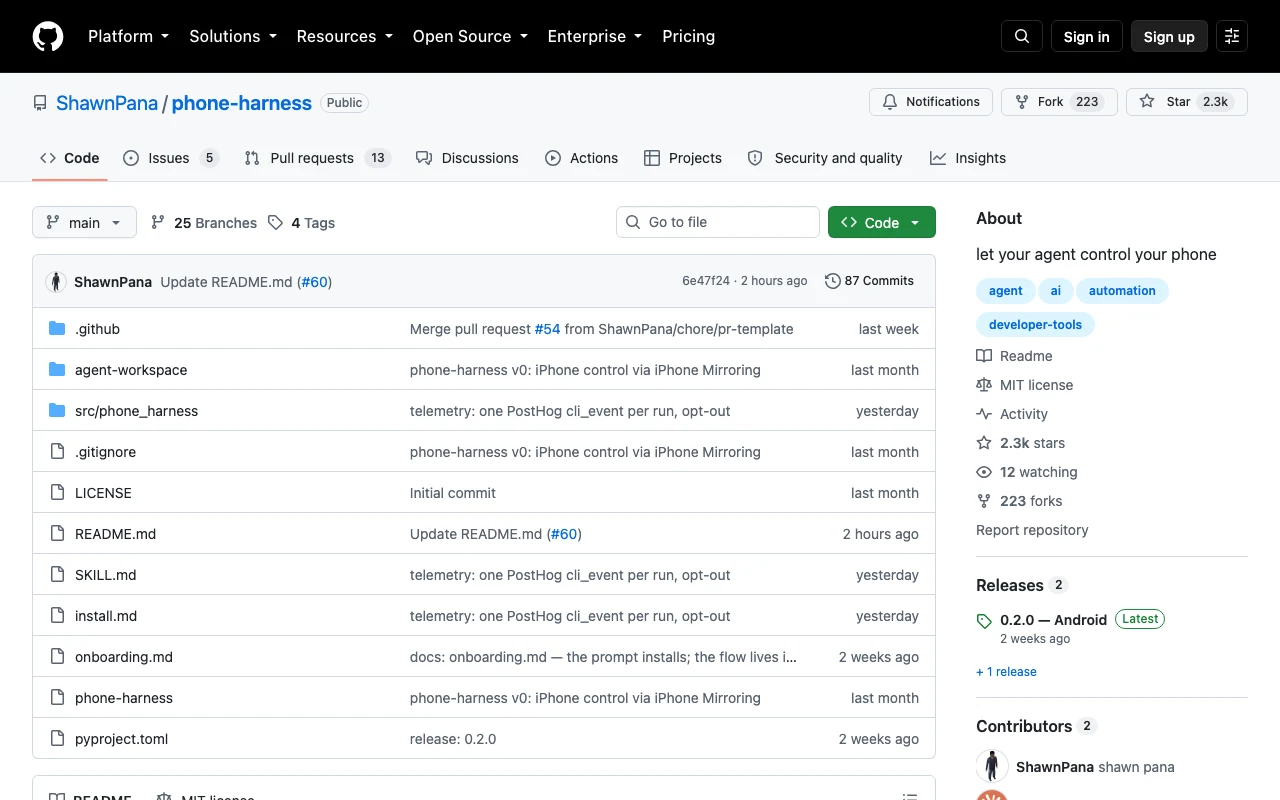
Phone Harness connects Claude Code or Codex to a real iPhone or Android. iPhone works through Mac's iPhone Mirroring (you need macOS Sequoia or later), Android works through ADB, wired or wireless. You don't jailbreak anything, and there's no Xcode setup or special app to sideload. The agent sees the screen, taps, types, scrolls, opens apps, and verifies what happened.
The founder use case is obvious once you see it: mobile QA.
Have an agent create an account in your app, tap through onboarding, try checkout on a real device, take screenshots, and tell you where it breaks. Every mobile team should do this constantly. Most don't, because it's tedious and nobody wants to be the person doing it.
Greg immediately ran the math out loud: if you productized mobile QA, would someone pay $100 a month? $500 a month? How many clients do you need to hit $10K a month?
It's early and it has limits (locked phones need you, Face ID flows are tricky). But agents are moving from answering questions to operating tools, and phones are one of the biggest tool surfaces in the world.
The actual playbook: install, systemize, productize
The repos are interesting. The meta-lesson is the money part.
Greg's three steps, in his words:
→ Install the repo and get one small workflow working.
→ Let it add value in your own business first.
→ Then decide: keep it as your unfair advantage, or productize it for other people.
That's the same pattern behind almost every agent business I've covered lately, including Greg's own marketing engineer thesis (the $1M job he sees coming). The people making money with AI right now are wiring open source pieces into workflows nobody else has yet, instead of buying another subscription.
And the window matters. By the time a repo becomes a polished SaaS product with a pricing page, the unfair advantage is gone. On GitHub you're 6 months early. That's the whole trade.
You don't need to be technical, either. Three of the five install by pasting a setup prompt into your coding agent and letting it do the work. If you can copy and paste, you can run this playbook.
FAQ
What are the 5 GitHub repos Greg Isenberg recommends?
Peter Yang's No AI Slop skill (removes AI writing patterns while keeping your voice), the open source CRM by trycompai (an agent maintains your pipeline and follow-ups), Video Use by the browser-use team (coding agents edit your videos), Skill Specter by Nvidia (scans agent skills for security risks), and Phone Harness (lets an agent control a real iPhone or Android). All five are free and open source, with links in his video description.
Do I need to be a developer to use these repos?
Mostly no. Video Use and Phone Harness ship with setup prompts you paste into Claude Code or Codex, and the agent installs everything itself. The No AI Slop skill is one npx command. The CRM is the heaviest lift (bun, Docker, auth setup), so budget an afternoon for that one.
Are AI agent GitHub repos safe to install?
Not blindly. Skills and MCP servers can run scripts, touch files, and call external services, which is exactly why Nvidia built Skill Specter. Scan any skill or repo before you install it, and use the static scan flag when your files are sensitive. Treat a new agent skill the way you'd treat a new hire: check references first.
Which repo should a bootstrapped founder try first?
The CRM, if lost follow-ups are bleeding you money (for most founders at $5K to $50K MRR, they are). If content is your bottleneck, start with Video Use and one repeatable format. Either way, pick one repo and one small workflow. The founders who fail with these tools are the ones who try to automate everything in week one.
Want the playbooks before they hit GitHub's trending page?
Every week on the Profitable Founder Podcast I sit down with bootstrapped founders making $100K to $10M a year and pull apart exactly how they did it. You get the real numbers and the systems behind them.