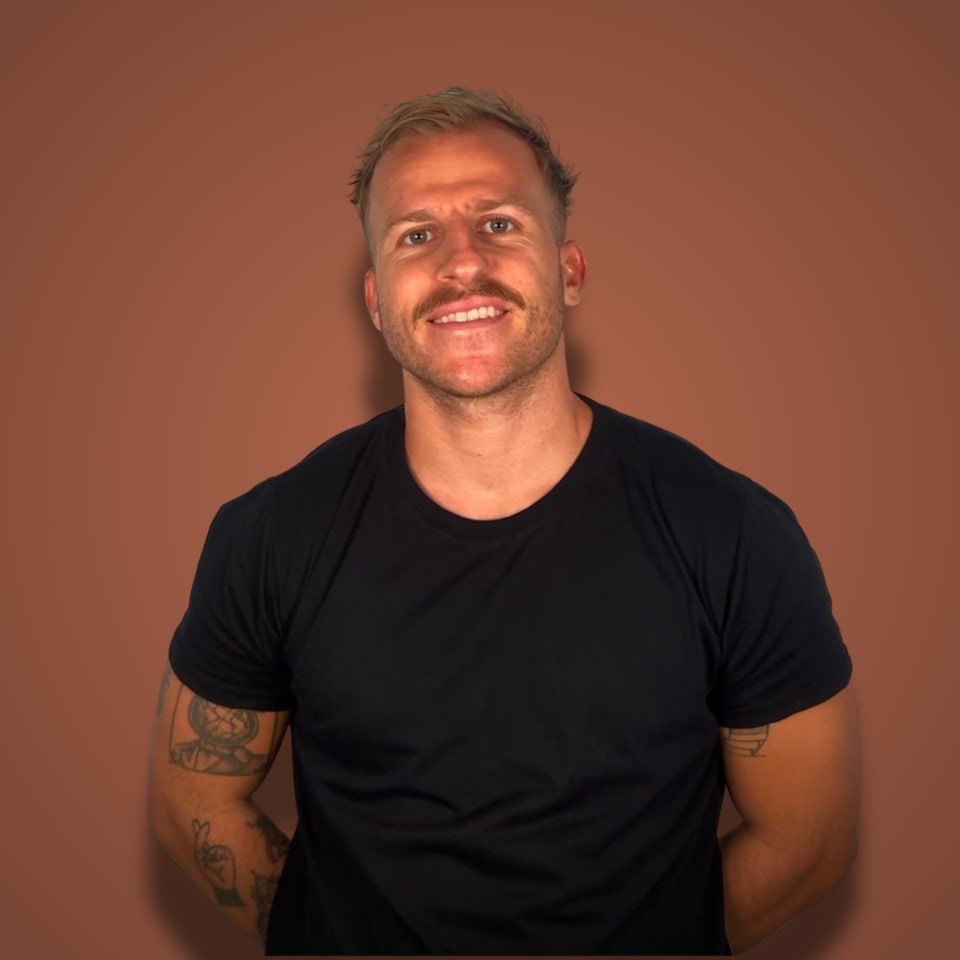
A 20-year-old told Brett he makes $100,000 a month in profit.
Not revenue. Profit.
And he doesn't even have a course or an audience of his own. Just two big clients.
His job title is one you've probably never heard: growth operator. He partners with creators who already have the audience, builds the entire money machine behind their course or community, and takes a cut of the profits he generates.
I watched the full interview on The Brett Way and took notes like it was a paid workshop. Because honestly, it should have been one.
Here's the whole conversation:
The guest is Malcolm. The interview is from September 2024, and every number below is his own claim from that conversation (Brett says on camera he verified the revenue himself). Here's the model, piece by piece.
What a growth operator actually does
Creators are good at one thing: making content people trust.
Most of them are terrible at everything else. Funnels, ads, email flows, sales teams, CRMs. The boring machinery that turns attention into consistent money.
Malcolm's pitch to a creator is simple: you keep making videos and helping students. I run the business around your knowledge. I get a percentage of the profits I generate.
And his argument for why a creator can't just launch a course to their own audience hit me, because I've felt it: your audience gets drained. You launch, your true fans buy, and then what? Month two is quiet. Month three is dead. If you don't grow your following at an insane rate, the well runs dry.
His fix is paid ads feeding a funnel that pays for itself. Which sounds like 2015 clickfunnels talk until you see the structure.
The ascension funnel: $20, then $500, then $5,000
This is the core of the whole interview.
Malcolm doesn't run ads to a $250 course. He says that flat out doesn't work: cold traffic doesn't know you, and the math dies on ad costs.
Instead he builds a ladder:
- Front-end offer at ~$20. A small, complete product that solves the first problem. Its only job is to cover the ad spend.
- Two order bumps at ~$20 each. On the checkout page. Each bump solves the buyer's next problem. For a no-code SaaS course that's 20 startup ideas, then a template to build faster.
- A $500 course on the next page. The real, deep program. "Now that you have the foundation, let's implement it."
- A $5,000 high-ticket program sold on a call. Coaching, access, done-with-you. This is where the serious money is.
The logic that makes it click: each product answers the exact question the buyer has right after the last purchase. You decided to build a no-code SaaS? Now you need an idea. Got the idea? Now you need a template. One problem at a time, in order.
He walks people up the ladder in a single session when he can. The same day. The same transaction flow.
The numbers that make it work
Malcolm gave Brett his actual targets, and this is the part I'd screenshot:
- 5 to 10% of cold visitors buy the $20 front-end offer.
- 50% of buyers take the order bumps.
- Hit both and the front end breaks even on ad spend. Spend $50 to get a customer, make about $50 back immediately.
- Around 20% of front-end buyers take the $500 course. That's his current number, and he calls it "really really good".
So the ads are effectively free. Everything after page one is profit.
His example: 100 people hit the page, 10 buy at $20, 5 take the bumps, ads are covered. If just 2 of those 10 buy the $500 course, that's $1,000 in profit from traffic that cost you nothing net. He mentioned one campaign where $1,200 in ad spend returned $3,000.
And a course has no delivery cost. Once it's made, scaling means turning the ad budget up.
The machine behind the funnel: emails and a two-person sales team
The funnel is the visible part. The money is in the follow-up.
Malcolm runs at least five email segments: people who didn't buy the front end, bought the first product but not the second, bought but never booked a call, no-showed the call, took the call but didn't close. Each gets its own sequence.
He says emails add 3 to 5% to conversions, which sounds small until you remember the whole game runs on 1 to 3% increments. Plus the list is insurance: ad accounts get banned, emails are yours forever.
For the $5,000 tier he runs a classic two-role sales team:
- An appointment setter lives in the DMs and the community, talks to students, and books qualified calls.
- A closer takes the call and sells the high-ticket program.
The courses themselves are hosted on Whop (they filmed the interview at Whop's HQ, which Brett jokes about on camera).
One client of Malcolm's did $300,000 in a month with this system and was tracking toward $400,000 the next. Another client is Daniel, the teenage Snapchat creator Brett calls a future billionaire. If that name sounds familiar, I wrote about his SaaS Crayo doing $600K a month with zero paid ads. Same kid, different machine: his software grows on affiliates and organic, and his course business grows on Malcolm's funnel.
The skill stack takes about a year, not a decade
Brett pushed on what it takes to actually become a growth operator. Malcolm's answer was refreshingly unsexy: it's four skills, roughly 3 to 6 months each if you take it seriously.
- Copywriting and buyer psychology
- Email marketing (the flows, the segments, the copy)
- Funnel building and design
- Sales: hiring reps, running a GoHighLevel CRM, managing the pipeline
His line stuck with me: it's like a community college degree, except the skill set is worth millions on the internet.
He also named his sources, which I respect. Russell Brunson's DotCom Secrets. Alex Hormozi's content (Hormozi's Gym Launch was a high-ticket coaching machine, and Malcolm says he reverse-engineered a lot from those podcasts). Psycho-Cybernetics and Cialdini's Influence for the psychology.
Nobody handed him this. He says he pieced it together from books and a hundred podcasts, spent at least $35,000 on courses and programs along the way, and went from zero to his first million in two years. Brett topped that: close to $100,000 spent on his own education, plus a $60,000 college degree he openly calls a waste of money.
Do you need one? Do you want to be one?
Two honest takeaways from where I sit.
If you're a creator with an audience: the Iman Gadzhi and Hormozi types build all of this in-house with employees. That's a full company. Most creators don't want to manage 20 people, which is exactly why handing 20 to 30% of profits to one operator who runs everything is a trade plenty of them happily make. Brett himself passed, by the way. He'd rather make videos and let his agency partner run operations, which tells you this model is a choice, not a law. I covered how he automated his $1M/year agency for the same reason.
If you're a broke 20-something with no audience: this might be the more interesting path. You don't need followers. You need the four skills and one creator who trusts you. Malcolm's whole business is two big clients.
And if you're a SaaS founder like most people reading this: steal the ascension logic even if you never sell a course. A $20 template that breaks even on ads, feeding a $500 product, feeding a high-touch tier? That maps cleanly onto plenty of SaaS onboarding funnels.
FAQ
What is a growth operator?
A growth operator partners with a creator who has an audience and runs the entire business side of their course or community: funnels, paid ads, email marketing, and the sales team. The creator makes content and teaches. The operator gets paid a percentage of the profits they generate, typically in the 20 to 30% range.
How much do growth operators make?
Malcolm claims $100,000 to $120,000 a month in profit at age 20, from a small number of clients, with one client doing $300,000 to $400,000 a month in course revenue. Those are top-of-the-game numbers from his own September 2024 interview, not a typical outcome. The realistic path he describes is spending a year learning copywriting, email, funnels, and sales, then earning a profit share on one client.
What is an ascension funnel?
A funnel where cold traffic buys a cheap front-end offer (around $20 plus order bumps) that covers the ad cost, then gets offered a mid-tier course (around $500), then a high-ticket program (around $5,000) sold over a call. Each product solves the next problem the buyer faces, so ascending feels logical instead of pushy.
Does this work for SaaS founders?
The mechanics translate. A low-priced product or template that makes your ads free, a core subscription, and a high-touch tier sold on a call is the same ladder. The bigger lesson is the discipline: know your conversion rate at every step, and never rely on one launch to your existing audience.
I break down businesses like this every week with the founders actually running them, usually with the real dashboards on screen.