A guy is scrolling Twitter. Every four or five swipes he sees the same steak casino logo at the bottom of a video. Different accounts. Tens of millions of views. He has never used the product, never engaged with gambling content, and he cannot figure out why it is everywhere.
That moment of confusion turned into a $100,000 per month app in under 60 days.
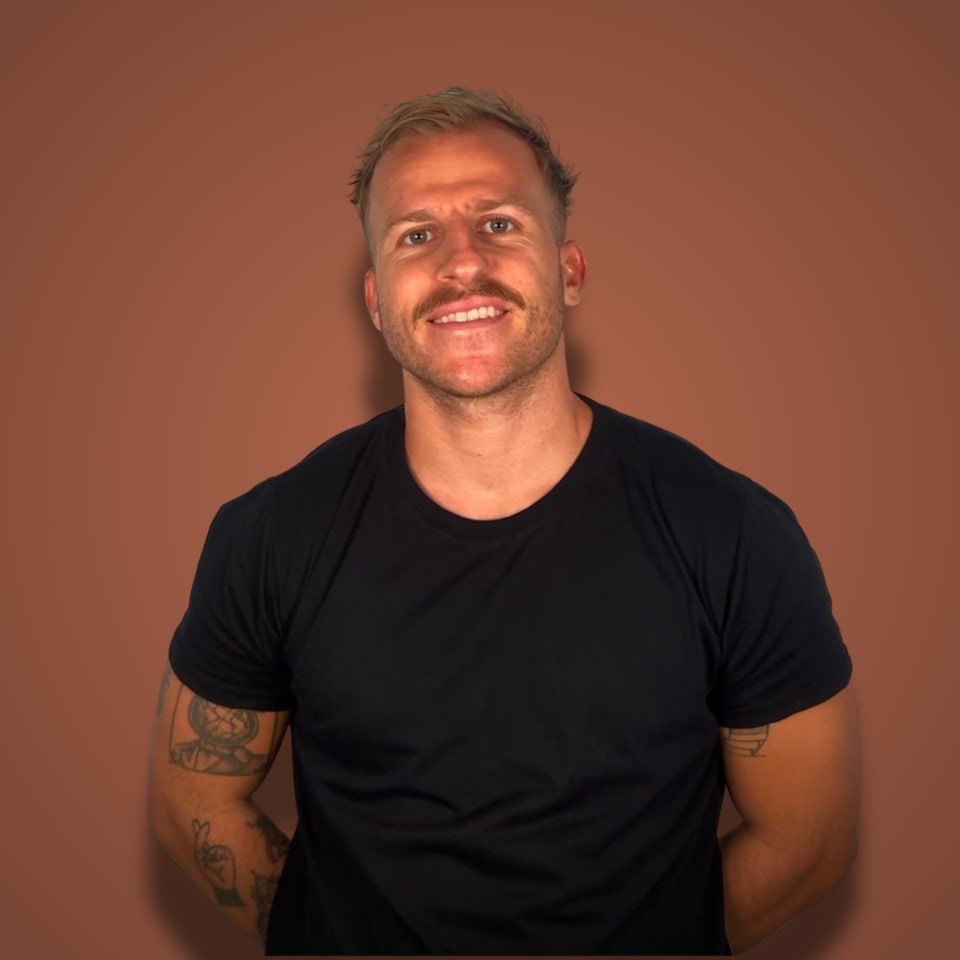
The app is called Content Rewards. It was built on Whop by Brett (the host of The Brett Way) and his partner Dylan Lundren. No paid ad budget to start. No big team. One developer and a hacked-together MVP that took three days.
I pulled apart the whole video because the playbook here is stupidly repeatable. Idea from a pattern in the wild, a 3-day fake product to test demand, then one marketing channel that did 72 million views. Here is the full breakdown, with the real numbers.
The idea came from a casino logo, not a brainstorm
Most people wait for a "big idea." Brett just paid attention to something weird that kept happening.
The steak casino videos were coming from hundreds of different accounts. As a marketer, that volume bugged him. How do you get that many videos, from that many accounts, all getting millions of views?
He asked around. The answer: a Discord server. Inside it, the casino was paying people five cents for every thousand views on videos that included their logo.
That is the whole insight. If you pay people based on the views they generate, they post over and over again. No negotiation. No flat fee. No risk that you drop $5,000 on a creator and the video flops.
Andrew Tate did a version of this with affiliate links. Streamers like Adin Ross were openly paying clippers hundreds of thousands a month. The behavior already existed. Nobody had turned it into clean software.
How he validated it (the Discord underworld)
You normally validate a SaaS with a landing page and a waitlist. Brett could not do that, because this was a revenue-share model, not a subscription.
So he did real research instead. He got on a call with Chucky from the MrBeast team, who showed him a clipping community running campaigns for some of the most famous people on earth. That one community was processing millions of dollars every single month.
And it was clunky. Payouts happened every 30 days, in crypto only, tracked by a Discord bot. He found several communities all using the same bot, made by a dev team that charged $5,000 to install it.
The math made him sit up. These agencies were charging 10 to 30 percent of spend. Give them $100,000 and they keep $10,000 to $30,000.
That changes everything about how you can grow. A $10/month consumer app can only spend a few dollars to acquire a user. But if you make $10,000 from one customer, you can spend real money to get the next one.
Demand was obvious. The current product was bad. That is the best possible setup for a new app.
The 3-day MVP that looked like nothing
Before building any of the real tech (view tracking, anti-bot, social APIs), they shipped a junk version called the Bounties app. It took three days.
All it did:
- A text field to describe the task ("I'll pay $1 per 1,000 views for reposting my content").
- A dollar amount.
- A submission field where clippers dropped their link.
Then a human (Brett) opened each link, counted the views, typed in the payout, and hit approve. Someone got 187,000 views, he typed $187, approved, done.
It was held together with tape. It also worked. They ran it on a few accounts, proved the loop, and only then started building the polished thing.
This is the part most founders skip. You do not need the real product to test if people want the outcome. You need the outcome. The software comes after the proof. If you want more on this exact move, I broke it down here: how to validate a SaaS idea.
Getting the first users with zero product polish
The first two weeks of any app are a grind, and this was no different. Brett needed proof before Whop's CEO (Steven) would greenlight the real build.
So he leaned entirely on outreach and his network. He partnered with creator Eddie Cumberbatch, who was already doing something similar, and asked him to run campaigns through the Bounties app. Then he messaged every person he knew, and friends of friends, to find big names willing to test it.
They ran the campaigns for free. The point was proof, not profit.
Inside three weeks:
- TJR spent over $50,000 testing it.
- Streamers like Bri Scales and Sketch came on.
- A few major music artists ran campaigns (he can't name them).
Clippers got paid. Creators got cheap exposure. Everybody was happy. That stack of case studies is what unlocked the real product.
The real build: 2 weeks, v0, and automating the boring part
With proof in hand, Brett and Dylan built the actual Content Rewards app in two weeks, designing fast with v0.
The whole magic was in killing the manual work. The new version connected APIs to every social platform, tracked views live, surfaced each submission with an approve or deny button, and paid the clipper automatically the second you approved.
That is the real lesson hiding in this story. The Bounties MVP proved demand by doing everything by hand. The business only scaled once the boring, repetitive steps (tracking, verifying, paying) ran on their own.
This is true for almost any business, not just clipping apps. The stuff you do manually 50 times a day is the stuff that caps your growth. If you want to see how founders wire up that kind of business automation across leads, payments, and follow-ups, that breakdown is worth a read. The pattern is the same: do it by hand until it works, then automate it so you can stop touching it.
The launch: drop the biggest ball in the ocean
Brett's framing on launches is the best line in the video. "Get the biggest ball you can, drop it in the ocean, and get the biggest ripple."
The idea: put every ounce of attention on a single day. If everyone sees it at once, everyone starts talking about it at once, and that is how momentum starts.
Their launch day stack:
- A polished product launch video as the centerpiece.
- Paid short-form creators dropping videos the same day.
- A YouTube video from Brett going live the same day.
- Announcement posts across all their socials.
- Paid ads on YouTube, Instagram, and Facebook pointing at the launch video.
- Emails to their existing creators.
It went mega viral. Record labels, huge streamers, and info creators were sending inbound. He called it one of the most overwhelming periods of his life.
If you are planning your own launch, steal the surface-area thinking and pair it with the right places to ship it: the best places to launch your SaaS.
The one marketing strategy that scaled it to seven figures
Here is the wild part. The product they built was also the marketing channel.
After launch they had a problem: too many creators, not enough clippers to fill the campaigns. So they used Content Rewards on Content Rewards. They paid UGC creators $3 for every 1,000 views on videos talking about the app.
It went completely viral. Tens of millions of views a week, peaking at 22 million views in a single week.
Dylan Lundren ran the whole thing. The numbers from that one campaign:
- 10,914 videos posted.
- 72 million views on short form.
- Over 700,000 people joined the platform.
Mass short-form UGC is the same strategy Brett says every young founder on his podcast used to scale to millions a month. Zach Yadegari from Cal AI. Alex Slater. Roy Lee. Same channel, over and over. I went deeper on it here: UGC app marketing.
Then the problems hit (the part nobody posts about)
So much growth so fast breaks things. It was not all sunshine.
The revenue-share model meant thousands of live campaigns and tens of thousands of clippers almost overnight. A small group started botting views. The anti-bot algorithm caught a lot, but every time they patched it, the botters found a new way around.
It does not take many bad actors. If you run a $10,000 campaign and someone bots $7,000 of it, you are furious, and you say so loudly on social media.
The other side hurt too. A single campaign could pull 30,000 submissions. Creators could not approve them all, so honest clippers felt scammed out of their work.
The conclusion Brett landed on: each app inside Whop is basically its own full-time business. It needs an owner who treats it like one, not a side feature. That is why Whop pushed hard on the developer API instead, so any founder can build an app, get it installed by hundreds of creators, and run it as their own company.
What you can actually steal from this
Strip out the celebrity names and the playbook is dead simple:
1. Find a behavior already happening in the wild. The casino was paying for clips. The demand existed before the product did.
2. Build a fake version in three days. Manual approvals, text fields, you doing the work by hand. Prove the loop before you write real code.
3. Get a few credible people to use it for free. Case studies beat a pitch deck.
4. Automate the repetitive part. That is the difference between a hustle and a business that scales.
5. Launch on one day with maximum surface area, then double down on the single channel that works.
You do not need to be 22 with a casino on your feed. You need to notice one weird pattern and move faster than everyone else who noticed it too.
FAQ
What is Content Rewards?
It is a Whop app where creators set a budget and a per-view rate, clippers repost their content, and the software tracks views in real time and pays clippers automatically. No contracts, no upfront fees, you only pay for real views.
How fast did it hit $100K per month?
Less than 60 days from idea to $100,000 per month in profit, then quickly into processing millions of dollars a month.
What was the MVP?
A three-day app called Bounties: a text field for the task, a dollar amount, and a submission field. Payouts were approved and entered by hand before any real tracking existed.
What single marketing channel scaled it?
Mass short-form UGC. They paid creators $3 per 1,000 views to post about the app, which produced 10,914 videos, 72 million views, and over 700,000 signups.
Why did Whop focus on the developer API?
Because each successful app turned into its own full-time business with real operational load (botting, approvals, support). The API lets independent founders build and own those apps instead.
Want more founder breakdowns like this?
This is exactly the kind of teardown I do every week on the Profitable Founder Podcast. Real bootstrapped founders, real numbers, no fluff. If you build software and you want the playbooks while they still work, that is where I'd start.