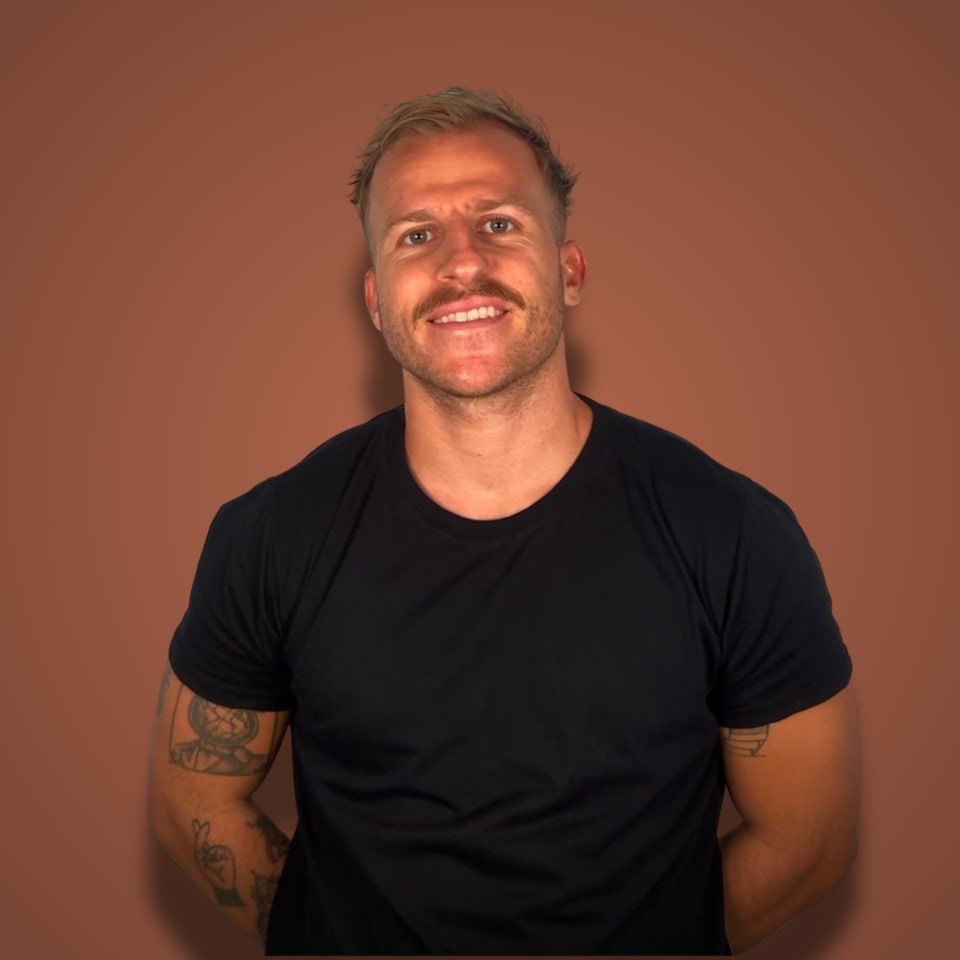
Romàn collected $7,000 for GojiBerry before he wrote a single line of code.
David spent 8 years building products nobody wanted before Jenni AI finally hit $10M a year.
Same ambition. Same work ethic. One difference: Romàn validated first.
I've interviewed dozens of bootstrapped SaaS founders on the Profitable Founder Podcast, from $12K MRR to $10M ARR. When I ask what they'd do differently, the answer is almost always some version of "I would have validated before building."
So here's the full playbook. How to validate a SaaS idea in 7 steps, with real numbers from founders who did it right (and a few who did it painfully wrong).
Step 1: Start With a Bleeding Neck, Not an Idea
Most founders start with "I have an idea for an app."
Wrong starting point.
Start with a problem so painful that people are already paying to solve it badly. A bleeding neck. Not a paper cut.
Here's the test:
→ Are people already duct-taping a solution with spreadsheets, VAs, or 3 tools glued together?
→ Are they paying for a competitor they complain about?
→ Does the problem cost them money or sleep every single week?
If you answered no to all three, you don't have a SaaS idea. You have a hobby.
Thomas, who built Uneed to $20K/month, failed 32 times in 6 years before this clicked. Thirty-two products. Most of them solved problems nobody felt.
Competition is your friend here. If 5 tools already exist and people still complain about all of them, that's a validated market with a gap. Zero competitors usually means zero demand.
Step 2: Find 10 Strangers Who Have the Problem
Your friends will lie to you. Politely. Uselessly.
"That's a great idea, I'd totally use that" is the most expensive sentence in SaaS. It has burned more founder-years than any bug ever will.
You need 10 strangers who live with the problem. Here's where to find them:
→ Reddit and Facebook groups where your niche complains (search the problem, not your solution)
→ Reviews of competitors on G2 and Capterra (1-star and 3-star reviews are gold)
→ X and LinkedIn, searching phrases like "is there a tool that" or "how do you handle [problem]"
→ Communities where your buyers already hang out
Send 30 DMs. Short ones. "Hey, saw your post about [problem]. I'm researching this exact thing. Can I ask you 3 questions?"
You'll get maybe 10 replies. That's the point. If you can't find 10 people willing to talk about the problem, you'll never find 1,000 willing to pay for the solution.
Step 3: Ask About the Past, Not the Future
This is where 90% of founders blow it.
They get a stranger on a call and pitch. "Would you use a tool that does X?" The stranger says "yeah, probably." The founder hangs up and starts a 6-month build.
People are terrible at predicting their future behavior. They're honest about their past.
So ask past-tense questions:
→ "How did you handle this last week?" (not "would you use...")
→ "What have you already tried?"
→ "How much did that cost you?"
→ "What happened the last time this went wrong?"
Then listen for the money signals. Did they build an internal hack? Did they hire someone? Did they pay for a tool and churn? Those are receipts. Receipts beat opinions.
One more rule: never explain your idea in the first half of the call. The moment you pitch, the data is contaminated. They start being nice instead of honest.
Step 4: Pre-Sell It (Money Is the Only Validation)
Everything before this step is research. This step is validation.
Romàn's GojiBerry story is the cleanest example I've published. Before writing code, he sold the product. Manually. He collected $7,000 in commitments, and only then started building. Six months later: $50K MRR. The full breakdown is in his 90-day playbook.
How to pre-sell without a product:
- Write a one-page offer: the problem, your solution, the price, what they get in month one.
- Go back to your 10 interviews. Pitch the 5 who showed the strongest pain.
- Ask for money. A paid pilot, a 50% discounted annual deal, a $99 deposit. Anything with a credit card attached.
The wording I'd use: "I'm building this over the next 30 days. Founding members get it at half price for life. It's $X today."
Watch what happens. "I'd buy that" becomes "well, maybe when it's ready" real fast. Good. That's the truth surfacing before you spent 6 months on it.
If 3 out of 5 stall, your offer (or problem) is weak. If 3 say yes, you have a business.
Step 5: Put Up a Landing Page and Run a Small Traffic Test
Pre-selling validates depth of pain. A landing page test validates whether strangers at scale care.
Keep it stupid simple:
→ One headline stating the outcome ("Cut your churn reporting from 4 hours to 4 minutes")
→ 3 bullets, one screenshot or mockup, one price
→ A real "Buy" or "Get started" button that leads to a checkout or a call booking
Then send 100 to 500 targeted visitors at it. Post in the communities from Step 2, answer questions on Reddit, run $100 to $200 of ads if your niche is targetable.
What to measure: clicks on the buy button, not email signups. A waitlist email costs people nothing, so it proves nothing. I've seen founders celebrate 800-person waitlists that converted to 9 customers.
Rough benchmark: if 3 to 5% of cold visitors click through to pricing or checkout, you've got real pull. Below 1%, the message or the market is off.
Step 6: Ship an Embarrassing V1 in 14 Days
You've got paying commitments. Now build the smallest thing that delivers the promise.
Not the product you're dreaming of. The one feature people gave you money for.
Yasser launched Chatbase as a thin wrapper, a few days of work, and grew it to $1M ARR in 117 days. The first version was nowhere near the final product. It didn't matter. It solved the one problem.
Two rules for the V1:
→ 14 days max. If it takes longer, cut features until it doesn't. No-code, AI coding tools, or duct tape are all fine.
→ Deliver part of it manually if you have to. Concierge onboarding, manual data imports, you behind the curtain. Your first 10 customers will never know, and honestly, they won't care.
The goal isn't a polished product. It's the fastest possible loop between "stranger pays" and "stranger gets value."
Step 7: Set Kill Criteria Before You Start
This is the step nobody talks about, and it's the one that saves you years.
Decide, in writing, before you begin: what result, by what date, means I stop?
Mine would look like this:
→ 30 days: 10 problem interviews done, or kill it
→ 60 days: 3 paying pre-sales (real money), or kill it
→ 90 days: V1 live, first users active weekly, or kill it
David's Jenni AI story is the reason I take this seriously. Eight years of building before the version that worked. He told me he'd validate first if he started again, and his full 2026 playbook is built around exactly that.
Sunk cost kills more bootstrapped SaaS than competition ever will. You've spent 4 months, so you spend 4 more. Kill criteria, written down on day one, are how you protect future-you from present-you's optimism.
The Mistakes I See Founders Make Over and Over
A quick list, because every one of these has shown up in my podcast interviews:
→ Validating with friends. They love you. Their "yes" is worthless.
→ Counting waitlist signups as validation. Emails are free. Money is validation.
→ Building in stealth. Nobody is going to steal your idea. Execution is the moat.
→ Asking "would you pay?" instead of asking for payment. Hypothetical money doesn't pay your rent.
→ Validating the product instead of the channel. A validated idea with no way to reach buyers is still dead. Note where your interviews came from. That's your first marketing channel.
→ Quitting on weak signal. 2 lukewarm interviews isn't a kill signal. 10 interviews and zero pre-sales is.
What Validation Looked Like for Me
When I was building my last SaaS, I skipped half of this.
I built first, asked questions later, and spent months at $15K to $20K MRR wondering why growth was flat. The thing that changed it wasn't a feature. It was finally talking to users and a mastermind of founders ahead of me who'd already made my mistakes ($13,000 for that mastermind, and yes, it stung). Six months later I was at $75K a month.
That's why I built Profitable Founder Club. It's a private mastermind for SaaS founders between $5K and $50K MRR pushing toward $100K. Bi-weekly calls where we tear apart 3 member problems, monthly Q&As with founders past $100K MRR, capped at 20 people per batch.
If you're validating your next idea right now, this is exactly the room where people will tell you the truth about it.
FAQ
How long should it take to validate a SaaS idea?
30 to 60 days, working part-time. 10 problem interviews in the first 2 weeks, pre-sales in weeks 3 to 6, then a 14-day build. If you've spent 6 months "validating" without asking anyone for money, that's procrastination wearing a validation costume.
How many pre-sales mean my idea is validated?
3 to 5 paying strangers is my bar. Strangers, not friends, paying actual money before the product exists. At a $50/month price point, that's $150 to $250 MRR of commitments. Tiny number, massive signal. Romàn raised $7,000 in commitments before building GojiBerry, but even 3 credit cards proves the pull is real.
Can I validate a SaaS idea without an audience?
Yes. Romàn had no audience, just DMs and calls. Audiences make validation faster, not possible. Cold DMs to people complaining about the problem, comments in niche communities, and competitor review mining all work from zero followers.
Is a waitlist enough to validate a SaaS idea?
No. A waitlist measures curiosity, not demand. Signing up costs nothing, so it proves nothing. Use a waitlist to collect leads if you want, but only count validation in pre-orders, paid pilots, or signed commitments. Money or it didn't happen.
What if people say they love the idea but won't pay?
Then it's not validated, and you just saved yourself 6 months. Usually one of three things is wrong: the problem is a paper cut (annoying, not painful), you're talking to users instead of buyers, or the price doesn't match the value. Fix one variable and run the pre-sell again before writing code.