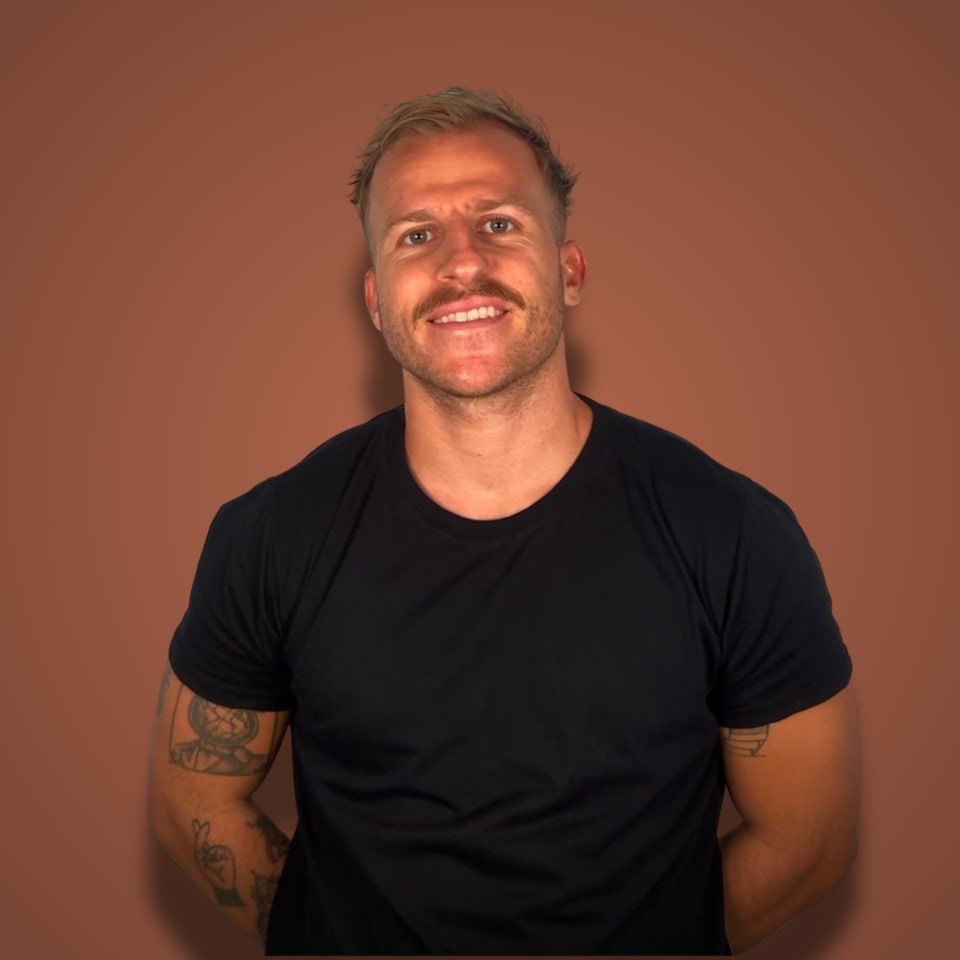
An 18-year-old just sold his calorie tracking app to MyFitnessPal.
Not a tiny acqui-hire. Cal AI did $30 million in revenue in 2025. In January 2026 alone it did $5.7 million. At the time of the sale it was sitting at roughly $50 million ARR.
Bootstrapped. About 18 months from launch to exit. A team of around 30 people.
Zach Yadegari went on Brett Malinowski's podcast the day before the announcement and walked through the whole thing: how influencers got him to $2 million a month, how paid ads took him to $5.7 million a month, and the App Store attribution trick almost nobody knows about.
I pulled the playbook apart so you can steal the parts that apply to your SaaS. Here's the interview:
The numbers behind the Cal AI acquisition
Quick context if you missed the Cal AI story.
Zach started the app at 17 with three co-founders: Henry Langmack (CTO, they met at a coding camp when they were 10), Blake Anderson (early investor and hands-on advisor who cracked influencer marketing on his own apps), and Jake Castillo (CMO/COO, the systems guy).
The app does one thing: you take a picture of your food, it tracks your calories. $30 a year.
The trajectory:
- $1 million a month at 17, when he first went on Brett's podcast
- $3 million a month when he started college at the University of Miami
- $5.7 million in January 2026
- $30 million total revenue in 2025, roughly $50 million ARR at the sale
MyFitnessPal, his biggest competitor, bought 100% of the company. Price undisclosed, but Zach basically dared people to apply a standard multiple to $50 million ARR. He kept no equity. The apps stay separate, he's helping with the transition, and then he's dropping out of college to start something new.
His words: "the next one would probably be shooting for a billion."
Here's how each growth phase actually worked.
Phase 1: influencers got Cal AI to $2M a month
Cal AI's first channel was fitness influencer UGC. Creators posted short videos with the app woven into their day, and that alone drove the app to a consistent $2 million a month.
Then it stopped scaling.
Not because the channel died. Because they ran out of influencers. They had worked with basically every big fitness creator, and fitness audiences overlap heavily. Each new deal reached the same people.
So they did two things:
→ Broadened to influencers outside fitness. Everyone eats. Everyone tracks (or feels guilty about not tracking).
→ Went as big as it gets: a $500,000 sponsorship in a MrBeast video.
The MrBeast story is my favorite part of the interview. Zach flew to Greenville, ended up in the video himself, and then... nobody ever sent him an invoice. Months later he reached out to Jimmy's team himself: "hey, your team forgot to bill us." He paid the $500K he could have quietly skipped.
Was it profitable? Directly, no. Slightly unprofitable on tracked conversions. But the brand authority of "we sponsored MrBeast" helped them sign better deals with other creators afterward, and Zach counts it as profitable overall.
If you want another example of this influencer-first motion done well, I broke down how Sarah Pearl built a $340K a month manifesting app in 60 days with the same distribution-first thinking.
Phase 2: paid ads took it from $2M to $5.7M a month
This is the section to rewatch twice if you run any kind of paid acquisition.
Cal AI first hired an agency to run Meta ads. The agency capped out at $5,000 a day in spend. Couldn't push past it profitably.
Zach did his own research, concluded the campaign structure was a mess, fired the agency, ran it himself, then hired through a few people until he had a real in-house team. (His take on agencies: "they're never going to care as much as someone that's actually on the team.")
What actually made the ads scale:
→ Simple structure. One scale campaign (CBO), one testing campaign. That's it.
→ Zero audience targeting. No interest groups, no lookalikes. "You target with creative." Even retargeting happens inside the video: "You've probably seen our ads before..."
→ Dedicated ad creative, not repurposed influencer clips. The influencer-style videos (app appears for 3 seconds inside a morning routine) capped out around $10-15K a day. Videos built to sell the app directly, 5 seconds in, broke them through to $40K a day.
→ Optimize for trial starts, not purchases. Cal AI has a 3-day free trial, and Apple only sends high-quality signal back to Meta within the first 24 hours. Optimizing for the purchase event would starve the algorithm. So they optimize for trials and model the conversion rate on the back end.
And the attribution trick, which Zach called "a bit of sauce": custom product pages on the App Store. You can create multiple product pages for one app, point each Facebook ad at its own page, and Apple shows you revenue per page. Add roughly 30% for people who see the ad, don't click, and search the app manually. That gives you near-clean revenue attribution per ad in a world where mobile attribution has been mostly guesswork since iOS 14.
Brett ran his own version of this game on a $500 budget, by the way. His experiment getting a first paying customer in 4 days for $40 is the zero-to-one version of everything Zach does at scale.
The fake streak: the smartest growth hack in the interview
Cal AI ships two versions of the app.
The normal one, for users.
And a creator version. Same app, but the Cal AI logo is huge on every screen, and the account shows a perfect 30-day streak. It exists purely to be filmed.
When a creator records their screen for a video, viewers instantly see what the app is called and see it looking its best. It's the McDonald's burger from the TV ad. Styled and lit, not quite what you get in the box, and it works.
They feed this machine with an affiliate program (managed through Tribe, coordinated in a WhatsApp group) where any creator can make videos for a revenue share. Some creators earn serious money from it. The winning creatives aren't even people talking: gym clip, food scan, a caption like "how I'm cutting for the summer", music. That's the ad.
Talent, speed, and the "waiting on Frank" rule
Early Cal AI ran on geo-arbitrage: $1,000 a month developers, everything carried by the founders. Zach's honest review: "no wonder the quality of work wasn't that good."
The unlock was paying for real talent. Once actual senior people joined, the company started growing without him pushing every idea. Around 30 people ran the whole thing at $50M ARR, plus a team of VA contractors.
He learned the founder-energy lesson the hard way too. When he started college he stepped back for a month. Morale dipped, numbers stagnated. He came back, numbers recovered. Somebody has to hold the vision, even in a company that "runs itself". The best teams pair that vision with systems that don't depend on any one person being online, which is the whole argument for business automations in the first place: the machine keeps moving while the humans sleep.
And the culture is one word: speed. It's the first thing he tells every new hire. If someone on a call says "we're waiting on Frank", Zach pulls Frank into the call right then, Frank does the thing live, and it ships. No waiting as a default state.
That's it. That's the management framework of a $50M ARR company run by a teenager.
What this means for you (a bootstrapped founder)
You're probably not building a consumer calorie app. I mostly talk to B2B SaaS founders between $5K and $50K MRR. But almost everything here transfers:
→ Marketing beats building, and it's not close. Zach was asked: creative marketer vs technical developer, head to head, who wins? "100% the creative person at this point, because building an app is so easy." A perfect product with bad marketing gets zero downloads.
→ Know your distribution before you build. Zach never built anything without knowing, on day one, exactly which marketing channel he'd use at launch.
→ Channels stack, they don't replace each other. Influencers still drive a few million a month at Cal AI. Paid ads landed on top of years of organic awareness. Brand is where ads liquidate.
→ Learn the 20% that gets you 80%, then hire. His advice on ads: spend $50 to $100 a day experimenting until you understand the game well enough to hire someone great, then hand it over.
→ This path is open. His high school friend, a regular college kid who can't code, built Wrestle AI on a vibe coding platform. It does $30,000 a month.
The uncertainty never goes away, by the way. Zach at $50M ARR: "it still feels like the ship is sinking every day." I felt that at $15K MRR and I felt it at $75K a month. It's just the game.
FAQ
How much did Cal AI sell for?
Undisclosed. Zach confirmed MyFitnessPal bought 100% of the company and that Cal AI was at roughly $50 million ARR after doing $30 million in 2025 revenue. He pointedly invited people to "do the math on what the multiple might be", so a reasonable guess lands well into nine figures.
How long did it take Cal AI to get to $30M a year?
About a year and a half from launch to acquisition. The app hit $1 million a month while Zach was 17, $3 million a month by the time he started college, and $5.7 million in revenue in January 2026.
Was Cal AI bootstrapped?
Yes. Co-founder Blake Anderson put in some early money as a hands-on advisor, but there was no VC round. Zach describes the company as permanently cash-constrained, which is why the paid ads had to be profitable in month one.
What was Cal AI's business model?
A $30 per year subscription with a 3-day free trial. For annual health and fitness subscriptions, Zach says the industry average retention is around 30%, and those renewals became a meaningful growth layer in year two.
What happens to Cal AI and Zach now?
Cal AI and MyFitnessPal stay separate apps. Zach is staying through the transition to make sure the brand endures, then dropping out of the University of Miami to start his next company. Target, in his words: a billion.
Steal playbooks like this every week
I interview bootstrapped SaaS founders making $100K to $10M a year and pull out exactly how they get customers, price, and grow. Real numbers, no fluff.