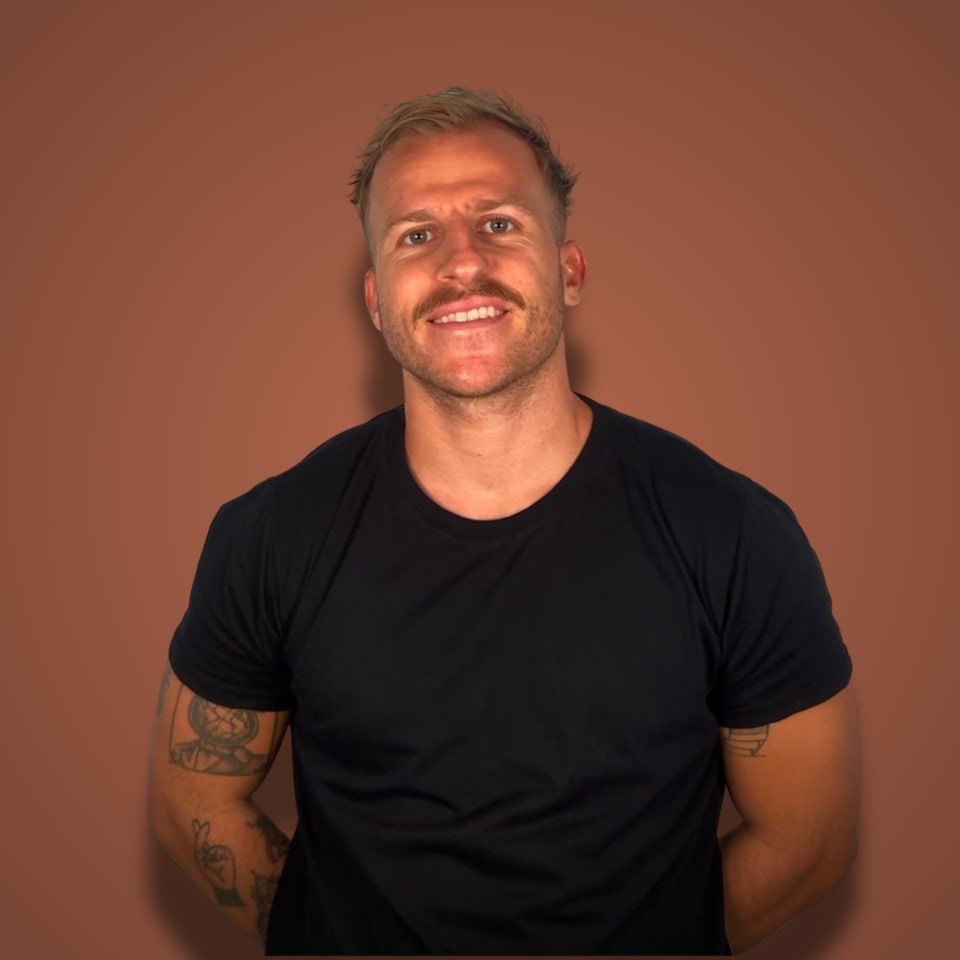
I've lost count of how many gym sessions My First Million has carried me through.
Sam Parr and Shaan Puri made business podcasts fun. Two guys who actually sold companies (The Hustle to HubSpot in 2021, Bebo to Twitch in 2019) riffing on ideas like it's a group chat.
But after 40 episodes of brainstorms, I noticed something: I still hadn't shipped anything. You don't need more ideas. You need to see how founders actually got from $0 to $25K/month, with the receipts.
So I ranked the 8 best podcasts like My First Million through one filter: how many real, usable numbers do you get per minute of listening?
Same energy as MFM. More stuff you can copy on Monday morning.
1. Profitable Founder Podcast
Full disclosure: this one's mine. Skip ahead if that bothers you, but I built it precisely because of the gap I just described.

Every week I sit down with a bootstrapped SaaS founder making between $100K and $10M a year, and we go through the actual numbers. MRR, churn, what channel got them their first 100 customers, what they pay themselves.
Recent episodes: a founder making $25,000/month with a bootstrapped CRM, another doing $3.5M/year with a LinkedIn AI agent, another who went from zero to $25K/month with one single marketing channel.
No VC guests. No "we raised a $20M Series A" victory laps. Just people who own 100% of their company explaining how it works.
42 episodes and counting.
Who should skip it: if you're raising venture and hiring 50 people this year, my guests will feel small to you. That's fine. It's not for you.
2. The Startup Ideas Podcast (Greg Isenberg)
If your favorite part of MFM is the ideas segment, this is that, as an entire show.

Greg Isenberg runs Late Checkout, started and sold 3 venture-backed community companies, and has given away 2,100+ free startup ideas since 2020. His newsletter alone has 158,000+ readers.
The difference from MFM: Greg goes deeper on the how. An episode won't just say "AI agents for dentists is a big opportunity". He'll sketch the landing page, the pricing, the distribution channel, and who to DM first.
→ Start with any episode where he breaks down a business he'd build this weekend. You'll leave with a to-do list, not just a dopamine hit.
Who should skip it: people who already have a product. Your problem is distribution now, not ideas. More ideas will only distract you.
3. Moneywise (Hampton)
This one comes straight from the MFM family tree. Sam Parr launched it under Hampton, his community for founders, and it's now hosted by Daniel Berk.

The format is uncomfortable in the best way: founders and executives with $30M+ net worths open up their actual finances. Portfolios, monthly burn, what they spend on houses, the money fights they have at home.
I always tell founders in my circle: revenue is vanity, what you keep is the game. This show is the only place I know where rich people show the "what you keep" part in detail.
Who should skip it: if you're pre-revenue, hearing about someone's $80K/month personal burn is entertainment, not education. Come back later.
4. Founders (David Senra)
Shaan and Sam have had David Senra on MFM multiple times, and for good reason. The man has read hundreds of biographies of entrepreneurs and turned each one into an episode.

He's at 427 episodes: Rockefeller, Estée Lauder, Enzo Ferrari, Jony Ive, Peter Thiel. One book per episode, distilled into the operating principles you can steal.
It's the zoomed-out version of what MFM does. Less "trend of the week", more "this is how obsessive people build things that last 50 years".
I put one on every time I feel sorry for myself about how hard SaaS is. Ten minutes of Enzo Ferrari fixes that.
Who should skip it: honestly, nobody. But if you only listen to podcasts for tactics, the lessons here are principles. You have to do the translation yourself.
5. The Game (Alex Hormozi)
Hormozi is the anti-MFM in format: short, dense, zero banter. That's exactly why it belongs on this list. When you've had enough jokes and want someone to yell at you about your pricing, this is the show.

He built Acquisition.com after scaling and selling his gym business, wrote $100M Offers and $100M Leads, and the podcast is basically him thinking out loud about offers, pricing, sales, and volume.
Episodes are often under 30 minutes. Some are 15. You can listen to one between two customer calls and immediately rewrite your pricing page.
Who should skip it: if the "work 16 hours and stop complaining" tone drains you, dose carefully. I take Hormozi like espresso. One shot, not a liter.
6. Indie Hackers (Courtland Allen)
Before "build in public" was a hashtag, Courtland Allen was interviewing bootstrappers about their revenue on Indie Hackers. He sold the company to Stripe in 2017, then took it independent again in 2023.

The archive is the closest thing our industry has to a library of bootstrapped case studies. Hundreds of episodes of founders explaining how they got to $10K, $50K, $500K/month, usually alone or with one co-founder.
MFM tells you what's possible. Indie Hackers shows you the boring middle part: the 18 months of plateau, the pricing mistakes, the cold emails.
Who should skip it: episodes drop less frequently these days, so treat it as a back-catalog goldmine rather than a weekly habit.
7. Acquired (Ben Gilbert & David Rosenthal)
Acquired is the podcast MFM fans graduate to when they want the full story instead of the highlight reel.

Ben and David spend months researching one company (Costco, Rolex, Visa, Hermès, Nvidia) and then talk about it for 3 to 4 hours. It sounds insane. It works. They filled the Chase Center in San Francisco with thousands of fans for a live episode.
What you actually learn: how moats get built over decades, why pricing power beats growth hacks, and how the biggest companies made decisions when they were small.
Who should skip it: if you don't have 4-hour listening blocks, this isn't a commute podcast. It's a long-drive or long-flight podcast. Plan accordingly.
8. Starter Story (Pat Walls)
Pat Walls has documented 2,900+ real, revenue-generating businesses, and the podcast and YouTube channel sit on top of that database.

The format is pure MFM-fan bait: normal people building weird little internet businesses to $20K, $50K, $340K/month, with the numbers on screen.
I pull stories from this world constantly. I wrote about a solopreneur making $40K/month working 4-hour weeks after one of these interviews, and about Sam Parr's own daily routine too.
Who should skip it: nobody, honestly. But watch the YouTube versions when you can. The on-screen revenue dashboards are half the value.
How to actually use these (instead of just collecting them)
A podcast queue with 8 shows is just another way to procrastinate. I've been there.
Here's the split that works for me:
→ One idea show (Startup Ideas or MFM itself) to stay curious.
→ One tactics show (The Game or Profitable Founder) matched to your current stage.
→ One zoom-out show (Founders or Acquired) to remember this is a decades game.
Three shows, rotated weekly. Unsubscribe from the rest until your situation changes.
And a rule I stole from a mastermind member: you're not allowed to start a new episode until you've acted on something from the last one. One cold email, one pricing change, one landing page tweak. Otherwise it's just entertainment with extra guilt.
FAQ
What podcast is most similar to My First Million?
The Startup Ideas Podcast by Greg Isenberg is the closest match. It has the same "here's a business you could start" energy, but goes deeper on execution: landing pages, pricing, distribution. Moneywise is the closest by DNA, since Sam Parr created it under Hampton.
Is My First Million still worth listening to?
Yes, for energy and pattern recognition. Sam and Shaan are great at spotting trends early and making business feel fun. Just don't confuse listening with progress. Pair it with a show that publishes real revenue breakdowns so you're learning tactics, not just collecting trivia.
What's the best podcast for bootstrapped SaaS founders specifically?
Profitable Founder Podcast (yes, mine) interviews bootstrapped SaaS founders making $100K to $10M/year about their exact numbers. Indie Hackers' back catalog is the other essential: hundreds of interviews with self-funded founders. I also ranked the best solopreneur podcasts if you're building alone.
What happened to Sam Parr's Moneywise podcast?
It's still running. Sam Parr launched Moneywise under Hampton, the founder community he co-founded, and the show is now hosted by Daniel Berk. The format hasn't changed: high-net-worth founders share their real portfolios, spending, and money decisions.
The bottom line
My First Million lit the fire for a whole generation of founders. These 8 shows are how you turn that fire into an actual business.
If you only add one: pick the show that matches your next milestone, not the funniest one.
And if that milestone is your first $10K/month of SaaS revenue, that's literally the only thing my show is about. New episode every week: profitablefounder.xyz/episode.