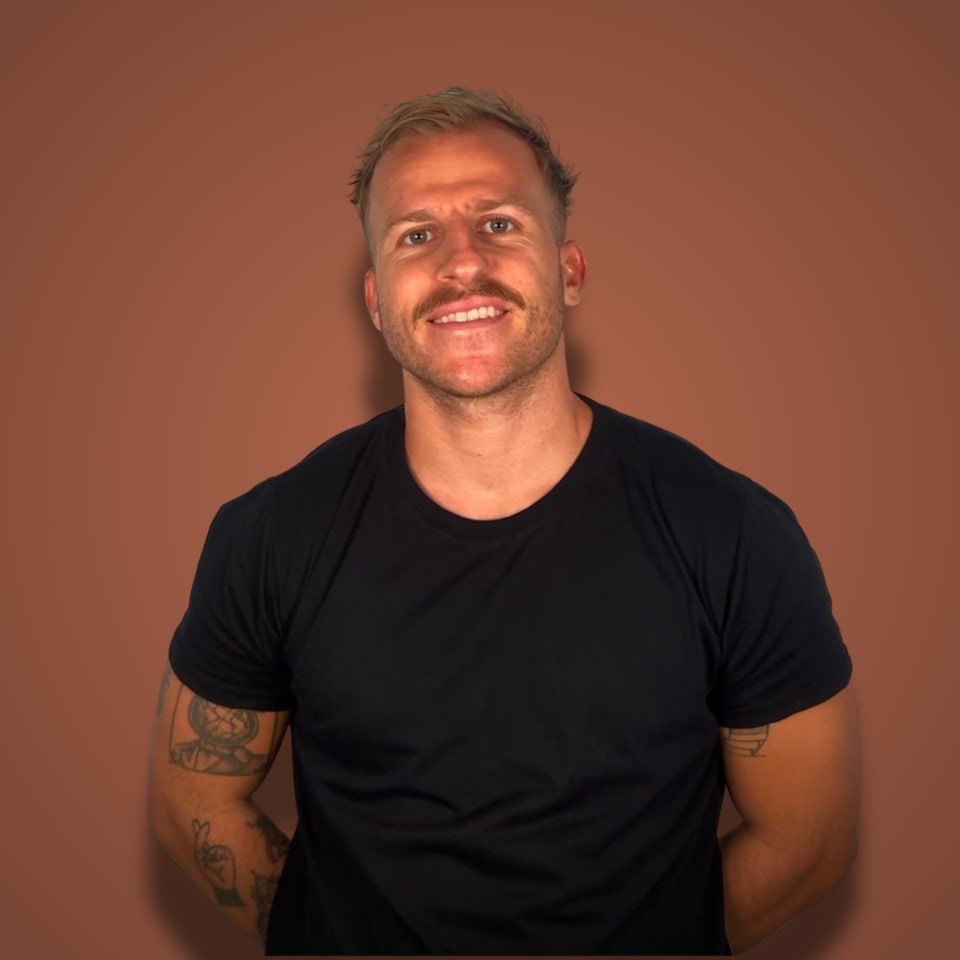
How a $40K/Month Solopreneur Actually Works (Jack Friks' Routine)
Jack Friks makes $40,000 a month building apps by himself.
Some weeks he works 4 hours. Total.
Other weeks he works 40, sometimes 10 hours a day. And people keep asking him the same question: do I need to grind 60-hour weeks to make it?
His answer is no. But the interesting part is not the answer. It's the system behind it.
Starter Story just followed him for a day, and it's the best look I've seen inside a real solopreneur daily routine. Not the 5am-cold-plunge fantasy version. The actual one, with customer support emails and forgotten lunches.
Here's the full breakdown, with the numbers.
We read every comment with a specific work-hours breakdown across three Indie Hackers forum threads on founder schedules, 45 comments in total. Of those, 28 said they stick to a fixed number of hours each day or week. 17, about 38%, said their hours swing with the work itself, more during launches and less when things go quiet. Matching hours to launches and slow stretches, instead of a fixed daily block, already works for more than a third of these founders.
Who Is Jack Friks (and Why His Routine Is Worth Stealing)
Quick context, because the routine only makes sense with the backstory.
Two and a half years ago, Jack broke down crying on a walk with his fiancée. His mobile app was stuck at $3,000 a month. He'd had headaches and anxiety for two years straight. He genuinely thought he had peaked.
Two months later, that same app hit a $15,000 month.
He kept building from there. His first app was something he wanted to exist in the world, and it turned out 100,000 other people wanted it too. Then he needed a way to grow it, so he built himself a social scheduling tool. That tool, Post Bridge, ended up 10 to 100 times bigger than the app it was supposed to promote.
So he ditched the original app and followed the winner.
Today the whole thing does about $40K a month, solo. No team, no fixed hours.
That last part is the point. Every piece of his routine exists to protect one thing: the freedom to decide what his day looks like.
Morning: The Worst Task Goes First
Jack wakes up around 7 or 8. No rigid alarm ritual.
Brush teeth, workout, shower, coffee. Then straight into customer support.
Every single morning, support comes first. Not because he loves it. The opposite:
→ It's his least favorite task, so he can't relax until it's done.
→ It's also the task that matters most, because paying customers who get fast replies stay.
He credits fast support replies as a real growth lever. Reply fast, fix problems fast, and users stick around because the product keeps getting better. That loop is how his products grew.
Most founders treat support as an interruption. Jack treats it as the job. And honestly, answering your existing customers fast is the most overlooked of all the lead nurturing strategies out there: the people already paying you are the warmest leads you'll ever have for the next thing you ship.
One more detail I liked: he always works from the same desk. No cafes, no laptop-on-the-couch. Same chair, clean setup, zero friction. He knows exactly how he works best and he stopped fighting it.
Sprints, Not Schedules
This is the part that breaks most productivity advice.
Jack doesn't work in days. He works in sprints.
Launch week? 10 hours a day, forgetting to eat lunch, having the time of his life. The week he filmed this video, he'd just launched a new product, so it was one of those weeks. Feedback pouring in, infinite things to fix.
A quiet month later? One or two hours a day. If the weather is nice, he closes the laptop and goes to play sports with his fiancée.
Both modes are the routine.
He's not lazy in the slow weeks and he's not burning out in the fast ones. The work expands when there's real pull (a launch, a wave of feedback) and contracts when there isn't. Grinding 10-hour days on a quiet product week is just theater.
I see this pattern constantly in founders I interview. The ones who last treat intensity as a tool you pick up and put down, not an identity.
The One-Project-Per-Day Rule
After support, Jack works on exactly one thing.
Whatever feels most important or most exciting that day: a big bug, a feature he can see coming to life, a new experiment. But only one, besides the daily support block.
His words: focusing on more than one thing is very hard, so that's where he draws the line on multitasking.
There's a second layer here that's easy to miss. He picks by excitement on purpose.
"I'm my own boss. I get to decide what to do next, so I might as well have fun with it. Otherwise, what am I doing?"
That sounds soft until you connect it to his numbers. He believes fun is the deciding factor in whether you keep working on something, and whether you keep working on it decides whether you ever see users and revenue. Motivation is a growth metric.
Where the Ideas Come From: Build for Customer Number One
Every product Jack makes starts as something he wants for himself.
First app: he wanted it to exist. 100,000 people agreed.
Post Bridge: he needed to schedule his own social content to grow that app. It became the main business.
Next mobile app: he wanted to be his own case study for the scheduling tool. Built it for his own need again.
The mistake he sees everywhere: people copy whatever just hit big for someone else, in a niche they don't care about. Even if the idea is great, they don't have fun, the boredom leaks into everything, and they quit before it works.
And his validation process is brutally simple. He doesn't sit around debating whether an idea is good:
→ Put up a landing page or a TikTok.
→ If a thousand people land and nobody clicks buy, the idea (or the framing) is bad.
→ Ask "how can I frame this so it's valuable?" instead of "is this a good idea?"
Would it save someone time or money? Would he use it himself? If not, next idea. The market answers in the comment section so he doesn't have to guess. It's the same launch-fast logic as the founder who keeps shipping apps until one sticks, just filtered through his own needs first.
The Hard Stop at 5pm (Learned the Expensive Way)
Around dinner time, the computer goes to sleep.
From 5pm to 9pm it's dinner with his fiancée, walks, bike rides, sports, Netflix, a treat from the store. Bed around 11. Up around 7. He protects 7 to 8 hours of sleep, especially before heavy work days.
He's honest that it wasn't always like this.
For the first two years of his relationship, there was no stop time. Laptop open while prepping dinner. Laptop open during shows. He admits the half-attention seeped into the quality of the relationship itself.
It took him two years to install a hard deadline, and he says he still struggles with it some days.
I've watched this exact failure mode up close (mine looked the same, just with a different couch). The work never asks you to stop. You have to decide.
The other thing that let him slow down: security. Once his MRR passed a few thousand a month and a year of savings piled up, the "how am I going to make it" loop in his head finally quieted. The anxiety and the headaches faded when the snowball started rolling up instead of sideways.
Nobody relaxes their way to calm. The calm came after the traction.
What to Steal From Jack's Routine
You're not Jack, and copying someone's routine wholesale is exactly the mistake he warns about. His actual advice is to find your own path, stay curious, and keep experimenting until you learn how you work best.
But these five pieces transfer to almost any solo founder:
→ Eat the frog with a support fork. Do your worst but most important task first thing, every day. For most SaaS founders that's support or churn emails, not code.
→ Work in sprints, rest in valleys. Match hours to pull, not to guilt. 10-hour days for launches, 2-hour days when nothing's on fire.
→ One project per day. Support plus one thing. That's the whole to-do list.
→ Build for customer number one. If you wouldn't use it, you won't finish it.
→ Set a stop time before it costs you something. Jack paid two years of relationship quality to learn this one.
If you want to see how differently this can look at a bigger scale, I broke down Sam Parr's daily routine too. Same principles, completely different shape. Which is kind of the point.
FAQ
What does a solopreneur daily routine actually look like?
For Jack Friks, it's wake at 7-8am, workout, coffee, then customer support first (his least favorite but most important task), then one focused project for the rest of the day, hard stop at 5pm for dinner, bed by 11pm. The hours flex from 1-2 per day in quiet weeks to 10 per day during launches.
How many hours a day do successful solopreneurs work?
It varies more than people admit. Jack works 4 hours some weeks and 40 in launch weeks. His rule is to match intensity to what the business actually needs right now, not to a fixed schedule. Consistent 60-hour weeks were never part of his path to $40K a month.
How much does Jack Friks make and from what?
About $40,000 a month, solo. The core product is Post Bridge, a social media scheduling tool he originally built to grow his own mobile app. The tool outgrew the app by 10 to 100x, so he followed the winner and kept building products around his own needs.
How do I know if my app idea is worth building?
Jack's test: put up a landing page or a TikTok and watch what strangers do. If a thousand people see it and nobody clicks buy, the idea or the framing is off. Ask "how can I frame this so it's clearly valuable" and "would I use this myself" instead of debating the idea in your head.
The Real Lesson
Jack's routine isn't impressive because it's optimized. It's impressive because it's his.
Support first because he hates it. Sprints because that's how his energy works. One project because his focus breaks at two. A 5pm stop because he almost paid too much for not having one.
Every rule came from a real cost or a real win. That's what a routine is supposed to be: scar tissue, organized.
I talk to founders like Jack every week on the podcast, and the routines never match. The honesty about what actually works does.