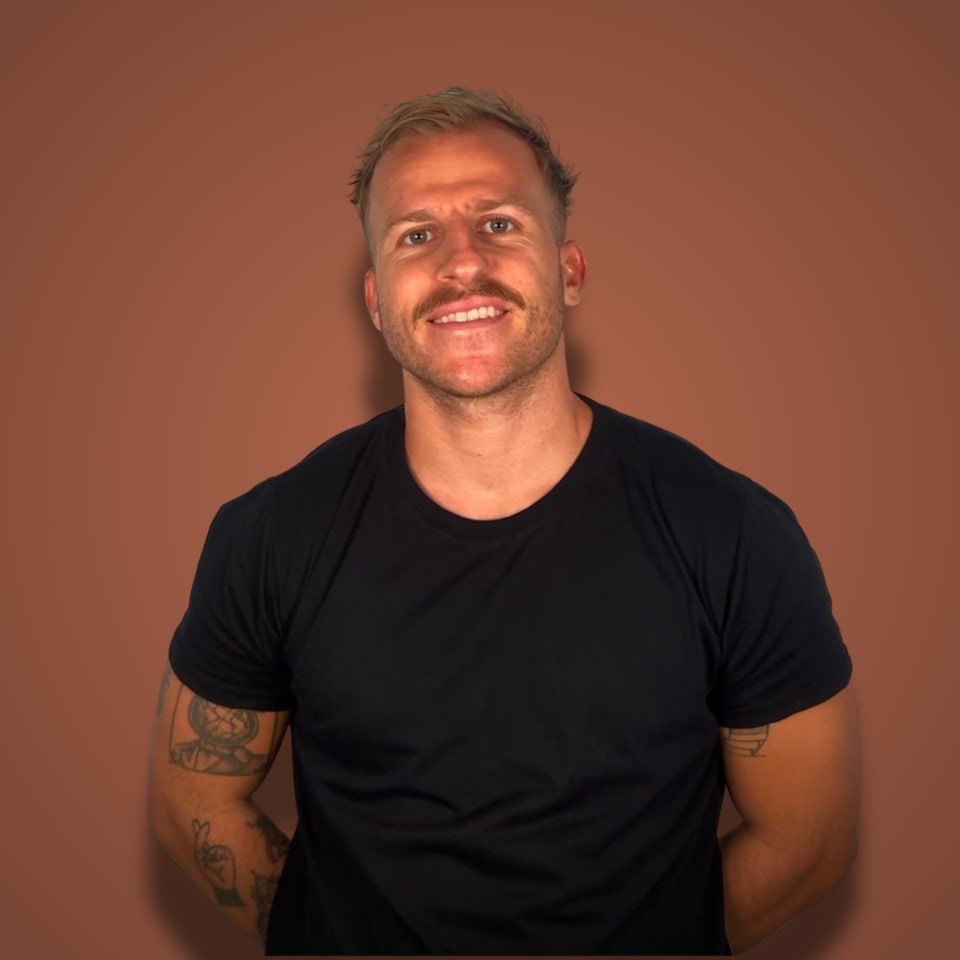
Max shipped around 40 apps to the App Store.
Most of them after work, between dinner and midnight, while holding down a 9-to-5.
Combined, they make $36,000 a month.
Starter Story's Build channel sat him down and made him rebuild his entire process on camera: idea to working app in about 17 minutes. I watched the whole thing so I could pull out the playbook for you.
Here's what struck me. Max spends less time building than almost anyone I've seen. The building is not where he wins.
He wins before he writes a single line of code.
An app a week, after work
Quick context, because the numbers matter.
Max built a portfolio of almost 40 mobile apps. Over 30 of them shipped in the past year alone. That's roughly an app a week.
And he did most of it while employed full time. Nights and weekends. This year he finally went fully indie.
I keep meeting founders doing exactly this. Matt Robinson built Live Tourney to $30K a month before 9am while working as a senior engineer at Meta. Same pattern: the day job pays the bills, the side portfolio compounds.
But here's the difference between Max and the hundreds of people who "build apps on the side" and make $0.
Max doesn't start with an idea he loves.
He starts with a keyword.
Step 1: Find the keyword before you build anything
This is the core of the whole system, so I'll slow down here.
75% of App Store downloads start with a search. Someone types "stamp identifier" or "plant identifier" or "receipt scanner" into the search bar and taps the first decent result.
Max's logic: the keyword IS the problem. If people are searching it, they want it solved. You don't need to validate the idea on Reddit or run a landing page test. The search volume already did that for you.
So his first step is an ASO tool (he uses Astro, but any keyword tool works). The process:
→ Type in a keyword for a possible app. His example on camera: "stamp identifier", an app that scans postage stamps and uses AI to estimate value and history.
→ Check popularity and difficulty. He filters out anything with difficulty above 60.
→ Open the top competitors. Steal their keyword lists. Filter those down to relevant terms.
→ Look at who actually ranks. For "stamp identifier", only 4 apps had more than 100 ratings, and almost all of them launched in 2025.
That last check is the one most people skip. A keyword with real traffic and only 4 established competitors, all of them brand new? That's a gap. You can win that with a good app and decent metadata.
Compare that to what most first-time builders do: spend 3 months on an app nobody is searching for, launch to silence, conclude that "apps are dead".
Apps aren't dead. They just built the wrong one.
Step 2: One boilerplate, reused 40 times
Once the keyword is locked, Max opens his boilerplate.
After 40 apps he noticed the obvious: apps are basically all the same. Onboarding, paywall, payments, free trial, settings screen. Only the core feature changes.
So he built that skeleton once. Dependencies wired, onboarding flow done, paywall templates in, subscription logic handled. Every new app starts from there.
That's how "an app a week" is even possible. He's not building an app a week. He's building one small feature a week and bolting it onto a machine that already works.
If you don't have your own boilerplate, you don't need to earn it over 40 apps like he did. Search "iOS boilerplate" or "Android boilerplate" and buy or clone one. The point is to never rebuild onboarding again.
Step 3: The two-sentence Claude prompt
This is the part that would have taken a team of four people a few years ago.
With the boilerplate open, Max sends one prompt to Claude Code. Two sentences. Roughly: build the main feature screens (camera, gallery, identification, collection, history), wire them into the main tab bar, make sure it compiles.
Then he waits.
Claude builds the onboarding (3 steps, illustration per step), the paywall, the camera screen, the history screen, the collection view with total value, and the settings screen he reuses in every app.
One prompt. A compiling app.
Two details in his setup worth stealing:
→ The review prompt fires right after a successful scan. That's the aha moment, when the user just got value. Never on a failed API call.
→ The onboarding leads straight into the paywall, because that's where most subscriptions actually come from. Not from the settings screen three days later.
Step 4: The visuals are where he slows down
Here's the twist I didn't expect. The fastest builder I've seen refuses to rush exactly one thing: the App Store visuals.
His words, more or less: the app is built, now comes the most important part.
The process is still lean:
→ Ask AI for an accent color that fits the app's topic, plus a few shades. That's the whole palette.
→ Icon: he had the idea of a postmark with a magnifying glass, found simple icons, pasted them into Gemini and asked it to make them nice. When he has no idea, he asks Gemini for concepts first.
→ Screenshots: open the 2-4 biggest competitors, put their screenshots side by side in Figma, and study what value they highlight. Not to copy them. To understand what the market already responds to, then apply his own template.
He keeps pre-sized Figma frames for iOS and Android, so exporting store screenshots takes minutes.
Why does the guy who automates everything do design half by hand? Because on the App Store, the screenshots ARE the landing page. Nobody reads your description. They look at 3 images for 2 seconds and decide.
Step 5: Metadata by hand, description by AI
Last step before submitting, and Max is strict about which parts a human has to do.
By hand:
→ Name and subtitle. This is what drives ranking, and the exact target keyword goes in the name. He checks what competitors already took (the App Store won't let you use an existing app's exact name) and picks around them.
→ The keyword list. Stuff it with relevant terms, don't repeat what's already in the name and subtitle. For stamps he added things like "appraisal", "coin", "antique". You don't have to fill all 100 characters.
By AI:
→ The description. The algorithm barely reads it, so he has Claude write it keyword-rich but natural. His instruction is basically: don't make it slop.
Then he hits the blue button and submits for review. On camera, the whole thing took under 20 minutes.
The pricing setup behind $36K a month
Nobody asked him to share this part, but he did, and it's gold.
Almost every app in his portfolio runs the same paywall: a weekly subscription plus a yearly subscription, with the free trial attached to the weekly.
One exception. For single-use apps (something people open once or twice, like a stamp valuation), he swaps the yearly for a lifetime price and charges more up front. No point selling a subscription to someone who won't come back.
That's portfolio thinking. Each app doesn't need to be a $36K business. Across 40 apps, an average of $900 a month each gets you there.
His honest take: shipping is the easy part now
Max's closing advice had two halves, and most people only hear the first.
First half: find the keyword that isn't overcrowded, build a quality app, ship as fast as possible. Thousands of apps hit the stores every week, and plenty of them are AI slop. His line on camera: make sure your AI slop is just better.
Blunt, but that's the actual bar. Most AI-built apps ship broken onboarding and lazy screenshots. Care slightly more and you're ahead.
Second half, the one that matters: ASO alone is not enough anymore. He calls it the basement of the building. The foundation, not the growth engine.
If you want real growth on top, you fuel it with ads or social. TikTok and Instagram, mostly. That's a separate skill, and it's exactly how Tibo grew Chart Detector AI to $50K a month on TikTok ads.
Keyword gets you found. Distribution gets you rich.
What I'd steal from this if I were starting today
I've interviewed a lot of founders, and the ones who make it share one habit with Max: they pick markets where demand is provable before they build.
The stack changes. The principle doesn't.
→ Let search data pick your idea, not your ego.
→ Build the reusable skeleton once, then only ever build the differentiated 20%.
→ Spend your saved time on the parts users actually see: screenshots, onboarding, paywall.
→ Ship weekly. Validation is a live app with real installs, not a waitlist.
And do it before you quit your job. Max built nearly his whole portfolio after work. The $36K a month came first, the resignation letter second.
FAQ
How much does Max's app portfolio make?
Around $36,000 a month, combined, across a portfolio of almost 40 apps. No single app carries it. It's a spread of small winners, each found through keyword research, built on the same boilerplate, and priced with weekly plus yearly subscriptions.
Do you need to be a developer to copy this process?
Less than ever. Max writes code, but on camera the app itself was built by Claude Code from a two-sentence prompt on top of a boilerplate. The parts that decide success (keyword choice, screenshots, paywall, metadata) require judgment, not engineering. A non-technical founder can learn those faster than they can learn Swift.
How do you know if an app keyword is winnable?
Max's filter: decent popularity, difficulty under 60, and then look at the actual competitors. If only a handful of apps have more than 100 ratings and most are recent launches, the keyword is winnable with a good app and clean metadata. If the top results are giants with tens of thousands of ratings, move on.
How should you price a mobile app?
Max's default across the portfolio: weekly subscription plus yearly subscription, free trial on the weekly. For single-use apps that people open once or twice, he replaces yearly with a higher lifetime price. Steal the default, then adjust to how often your users actually come back.
Is ASO enough to grow an app in 2026?
No. Max is clear on this even though his whole system starts with ASO. Search optimization is the foundation that makes you findable, but with thousands of new apps every week it won't create growth by itself. The apps that scale add paid ads or organic social (TikTok, Instagram) on top of a solid ASO base.
Want more playbooks like this, straight from the founders?
Every week on the Profitable Founder Podcast I sit down with bootstrapped founders making $100K to $10M a year and pull apart exactly how they did it. Real numbers, no fluff.