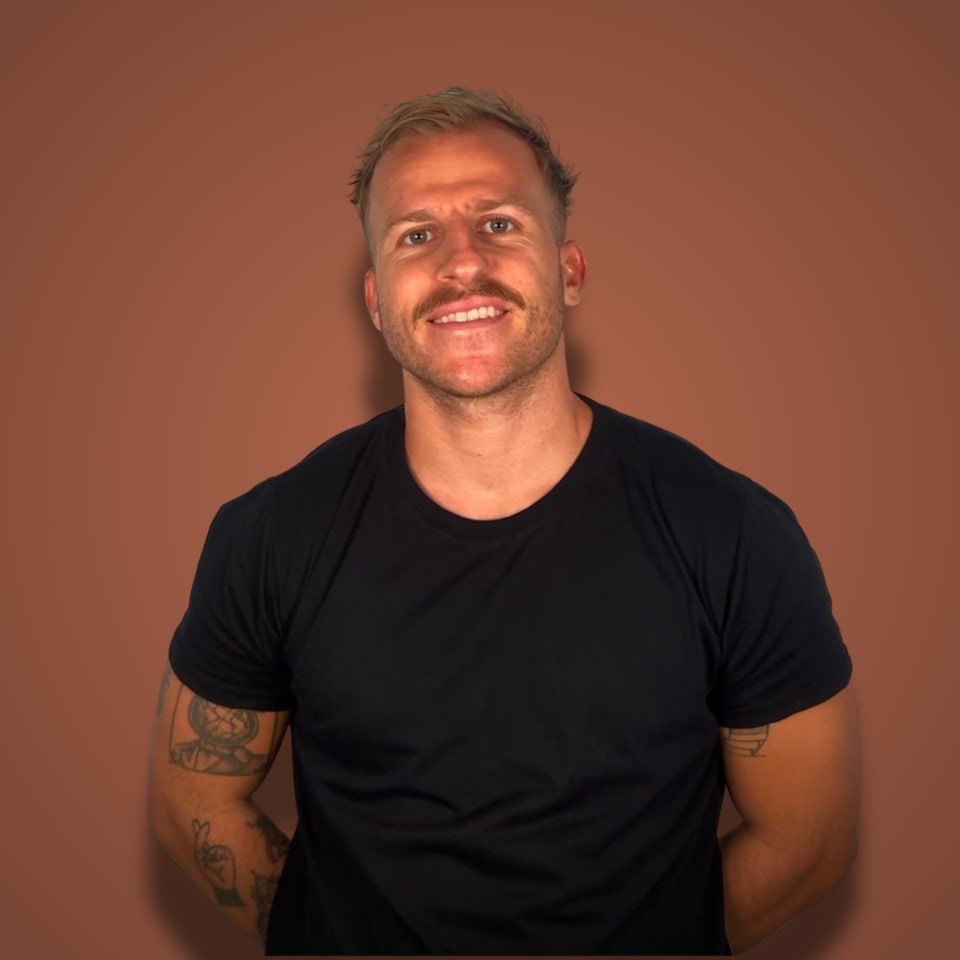
Brian Shin refused to write a single line of code until 10 people committed to using his app at a real event, with a real date on the calendar.
Not "sounds cool, I'd try it."
Ten booked events.
He hit the number, built the app with his girlfriend, and 83 days after launch it was doing $20,000 a month.
The app is called Once. It's a disposable camera app for weddings and birthday parties. Pat Walls had Brian on Starter Story to walk through the whole thing, and the validation method he shared is the best I've heard in a long time.
He calls it the commitment metric.
Here's the full episode:
The app: a digital disposable camera that charges per guest
Once is stupidly simple.
You create a "film" for your event. Guests join, take photos, and nobody sees anything until the film "develops" after the event. Limited shots per person, just like the real thing.
The numbers, straight from Brian's dashboard on the episode:
- Launched December 2025
- $20K monthly revenue within 83 days (about $22K the month he recorded)
- 10,000 to 12,000 weekly active users
- 300+ events in February, around 700 booked for March
The pricing is the clever part. You pay based on guest count. A 10-person birthday party costs $2. A 150-person wedding costs $50.
Big moment, bigger price. The product charges more exactly when people care the most.
And here's the origin story: Brian and his girlfriend (also his co-founder) traveled through 7 or 8 countries last year, carrying a disposable camera through every city. You can't see the photo right away. You have limited shots. Those limitations make the experience feel real.
So they built the digital version of that feeling.
The commitment metric: why Brian wouldn't build yet
Brian isn't a first-timer. He co-founded a venture-backed B2B startup before this, a sales-heavy company that grew to 50 people.
That experience taught him what building the wrong thing costs.
So this time he flipped the order. Before any code, he defined two commitments:
→ A commitment for himself: a specific date and a specific number. A deadline that caps how much of your life you burn on validation.
→ A commitment from users: a real action that proves intent. Not a compliment. Not a waitlist email. Something that costs them something.
For Once, that number was 10 events with an actual date, where the host committed to using the app in front of their friends and family.
Think about what that means. Putting an unproven app in the middle of your own wedding is a real bet. Brian treated that commitment as almost a proxy for payment.
Most founders do the opposite. They build for three months, launch to silence, then start "validating" by arguing with strangers on Reddit.
I've made a version of this mistake myself. Building is comfortable. Asking people to commit is scary. So we hide in the code.
If you're sitting on an idea right now, I wrote a full breakdown on how to validate a SaaS idea that pairs well with Brian's method.
How he got 12 events booked in one month with zero audience
No audience. No launch. No ads. Here's exactly what Brian did.
Step one: he raided his own network.
He opened three tabs: X, LinkedIn, and Instagram. Then he went through his entire friends list, one by one, and circled everyone with an event coming up.
Four friends said yes. A Halloween party, a birthday party, a wedding, and a networking event.
Step two: he went cold.
He searched #wedding and #birthdayparty on Instagram and listed 250 to 300 potential hosts across platforms. Then he sent each one a cold DM, two or three sentences max.
Around 15 people replied. Twelve events got booked in a single month.
That was the signal. Ten was the bar, twelve was the result, so they went all in.
A 5% reply rate on cold DMs sounds brutal until you realize it validated a $20K/month business in 30 days for $0.
Brian's line on this stuck with me: if you haven't been banned from these platforms at least twice, you haven't tried enough.
This is the same lesson from every zero-audience story I've covered. Distribution is manual and embarrassing before it's automated and scalable. I broke down another case in how to grow an app with no audience if you want more of these playbooks.
He threw away the validated prototype (on purpose)
The first version of Once was a web app built in a week or two.
They tested it at a friend's Halloween party with printed invitation codes. It broke multiple times during the event.
Didn't matter. People loved pooling candid photos into one shared album. Core idea validated.
Then Brian did something most founders can't stomach: he threw the whole thing out and rebuilt from scratch.
His reasoning: a consumer app is a craft. He uses AI heavily for development, finance, everything else. But never for design.
"Design requires taste. The more opinionated, the better."
The stack for the real version:
- Figma for every design decision (no AI)
- Claude Code on the Max plan for development, then Conductor to run several instances in parallel on different worktrees
- Supabase for database and backend
- Vercel for the remaining web pieces
One founder who says he basically lives in Claude Code, one designer with taste, $20K a month.
The 5-step playbook if you're starting today
Pat asked Brian what he'd do if he had to start over. Here's the playbook, straight from the episode:
Step 1: Define your commitment metric. A date and a number for you. A real action that proves intent for them. Payment counts, but so does anything with skin in the game (an event on the calendar, a signed pilot, a calendar invite with their boss on it).
Step 2: Exhaust your personal network. Every platform, every contact, circle anyone who fits. And apply the mom test: your mother will be excited about anything you build. Be honest about whether you're validating or fishing for encouragement.
Step 3: Build a quick mockup. Two to three days, max. Figma or any AI tool. It can be crappy. It just has to make the idea concrete enough to react to.
Step 4: Go where your users already live. Reddit, TikTok, Instagram hashtags, wherever. Learn that platform properly, because if validation works, it becomes your main marketing channel later. Cold message in volume.
Step 5: Set the number that means "go". For Brian it was 10 booked events. Hit it, build. Miss it by your deadline, kill it and move on with your life.
Notice what's missing: there's no landing page with a fake "Buy" button and no ad budget. The whole playbook is direct conversations and hard commitments.
My take: this matters more now, not less
Here's the uncomfortable part of the episode.
Pat and Gus nailed it in the debrief: AI tools have become a crutch. Building used to be the hard part, so you were forced to talk to people first. Now you can ship an app in a weekend, so you skip the conversations, build the thing, and then feel demotivated when nobody shows up.
Building was never what separated winners from everyone else. And now that anyone can ship an app in a weekend, it separates nothing.
The scary stuff is the actual work: DMing someone you haven't talked to in 10 years, pitching 300 strangers, asking for a commitment before you've earned it.
Brian's advice to his younger self was "stop overthinking and just launch." But look at what he actually did: he overthought nothing except the one thing worth overthinking. The commitment metric. Everything after that was execution.
Set your number. Go get your ten.
FAQ
What is a commitment metric?
A commitment metric is a validation threshold you define before building anything. It has two sides: a deadline and target number for yourself, and a costly action from potential users that proves real intent (a booked event, a preorder, a signed pilot). Brian Shin required 10 events with actual dates before writing any code for Once.
How fast did Once reach $20K/month?
83 days from its December 2025 launch. By the time Brian recorded the Starter Story episode, the app was doing around $22K a month with 10,000 to 12,000 weekly active users and roughly 700 events booked for the following month.
Is a waitlist signup a good commitment metric?
No. An email address costs nothing, so it proves almost nothing. Pick an action with real skin in the game: money, a calendar date, or public usage in front of people they care about. Brian counted event hosts committing to use Once at their own weddings and parties, which he treated as nearly equal to payment.
What tech stack did Brian use to build Once?
Figma for all design work (deliberately no AI there), Claude Code on the Max plan plus Conductor for running parallel instances across worktrees, Supabase for the database and backend, and Vercel for the web side. The validated web prototype was thrown away and the production app rebuilt from scratch.
How do you validate an idea with no audience?
Do what Brian did. Go through your entire personal network first and circle anyone who fits your customer profile. Then go cold: search the hashtags or communities where your users hang out, list a few hundred prospects, and send short two-to-three-sentence DMs. He messaged 250 to 300 hosts, got 15 replies, and booked 12 events in one month.
Want more stories like this?
Every week on the Profitable Founder Podcast I dig into how real bootstrapped founders got their first customers, their first $20K month, and beyond. No theory, just the actual playbooks.