An alarm clock app.
That's it. That's the product.
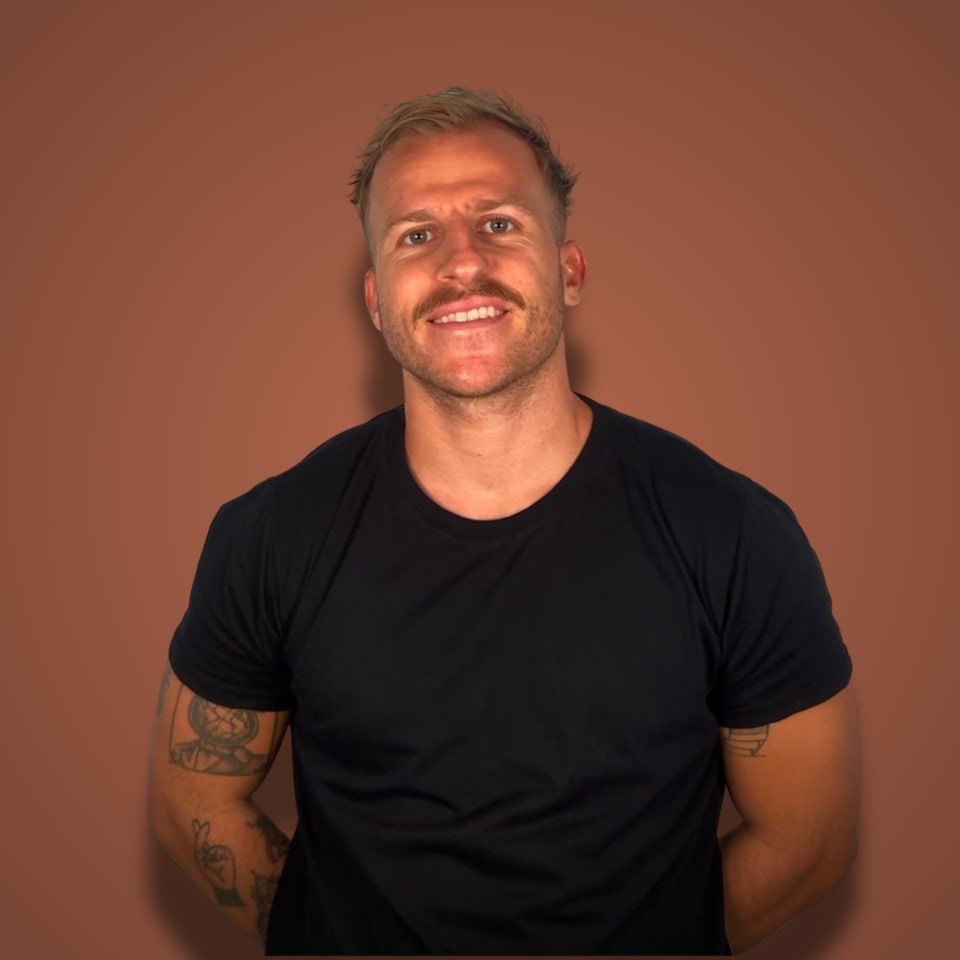
Jake is 24, a former Big Four accountant, and he built Early: an alarm you can only turn off by doing push-ups on camera. He launched at the end of 2025 and went from zero to $50,000 a month in 4 months. Over 200,000 downloads in 2026 so far.
I've watched a lot of founder interviews. This one stuck with me because the product is almost embarrassingly simple, and the growth engine is something most indie founders never seriously try: paying lifestyle influencers $2 to $3 CPM to slip your app into their morning routine videos.
Here's the full breakdown, with the video it comes from.
The numbers first
Because I know that's why you're here:
- $50,000+ in sales in the last 28 days
- 50,000+ first-time downloads in the last 30 days
- 200,000+ downloads in 2026
- Launched end of 2025, first $30K month in month 3, first $50K month in month 4
- Pricing: free trial, then $29.99 a year or $9.99 a month
- Solo founder (he has help now, but he built and grew it alone)
No VC money. No audience beforehand. An accountant who taught himself to code over 4 years and had a string of failed projects behind him.
The idea started as a text to a friend
Jake had trouble waking up early.
So every night he'd text a friend: "I'm going to send you a video of me doing push-ups by 6:00 a.m. tomorrow."
That was the whole system. Accountability by embarrassment. And it worked.
At the same time, he was watching other consumer apps blow up on Twitter and looking for his next idea. The overlap was obvious in hindsight: the thing he was already doing manually every morning was the product.
His filter for ideas is worth stealing:
→ Solve a painful problem in a simple way.
→ If the idea isn't inherently viral, add one novel twist that makes it viral.
The push-ups are that twist. "Alarm clock" is boring. "Push-ups that turn off your alarm" is a one-liner that makes people say "I need this" or "my girlfriend needs this". Jake says he hears one of those two reactions almost every single time he shows the app.
If a problem crosses your mind once a day, it's painful enough to pay for. Waking up early was a nightly conversation with his college roommate. That's the signal.
19 days from first commit to the App Store
The build timeline is the least dramatic part of the story, which is exactly the point:
- Day 0: first commit
- Day 19: live on the App Store (as a plain wake-up accountability app, no alarm feature yet)
- ~Day 38: the real alarm feature ships
- Day 45: first influencer video goes live
- 3 weeks later: first $1,000 in revenue
He shipped the MVP without the alarm. The feature the entire app is named for came 19 days after launch.
The first version was just "log your wake-up, set a goal the night before". Then he took one full day, went for a walk, wrote out the possible directions, and picked the alarm. (I love that he budgeted a whole day for thinking. Most of us don't.)
The timing luck: iOS 26 and AlarmKit
Here's the part idea-hunters should tattoo somewhere.
Until iOS 26, you couldn't build a real alarm app on iPhone. Every "alarm app" was a gimmick built on workarounds and app sounds, which meant none of them were reliable. For an alarm, reliable is the entire product.
iOS 26 shipped AlarmKit, an API that lets third-party apps plug into the native alarm system. Suddenly real alarm apps were possible, and there was a short window before the category got crowded.
Jake was standing right there when the window opened, holding a half-built accountability app.
The Starter Story guys called this out at the end of the episode and I agree: every time Apple (or any platform) exposes a new API, a batch of businesses becomes possible for the first time. Widgets did this. Screen Time did this (that's where all the app blockers came from). AlarmKit did this.
Watch API changelogs like other people watch trend reports.
The influencer playbook that actually grew it
Jake is blunt about this: "Building doesn't really matter so much. What really matters is marketing."
His entire growth engine is influencer marketing on TikTok and Instagram. Not big creators doing ad reads. Small lifestyle creators doing "day in the life" content, where an alarm going off is already the first scene of the video.
The winning video format looks like this: POV of a college student's morning. Alarm goes off. They drop and do push-ups. The app analyzes the reps, flashes a green check, "alarm turned off". The creator carries on with their day.
It doesn't feel like an ad because it barely is one. And every single time a video hits, the top comment is "what's the app?" The creator replies "Early, on the App Store" and pins it.
Jake calls it a win-win-win: the creator keeps making the exact videos they already make and gets paid, he gets downloads, and the viewer gets a solution without sitting through an ad.
The deal structure, since this is the part nobody shares:
- 2 to 4 videos a month per creator
- A view guarantee (you pay for views delivered, not for a video existing)
- Roughly $2 to $3 CPM
- Returns follow a power law: most videos do okay, and the money is made on the occasional 1M, 2M, 5M view outlier
Getting there was not glamorous. He started by sending a ton of cold DMs and got very few responses. Outreach like this is a volume and follow-up game, closer to lead nurturing than a one-shot pitch: most creators say yes on a later touch, not the first one.
The pitch that worked was the natural-fit angle. He wasn't asking creators to burn a slot on their page for an ad. He was asking them to keep making their normal videos, with his app playing the role the iPhone alarm already played.
Brett ran a completely different playbook (paid Meta ads, $15 CAC) to get his first paying customer in 4 days, and another app founder I covered scaled to $50K/month on TikTok ads alone. Different engines, same lesson: pick one distribution channel and go deep.
Tracking influencer ROI: treat it as a black box
You can't attribute influencer downloads properly. App store search kills your tracking links. Jake's answer: stop trying.
He tracks views on every video and watches for spikes. When a spike in views lines up with a spike in conversions, that video gets the credit. That's it.
His mental model: it's a black box. Put in $5K, get out $10K, the machine works. You will lose money on individual creators and you'll never know exactly which ones. Accept it and manage the portfolio, not the video.
Coming from a CPA, "don't over-measure" is a spicy take. It's also correct at his stage.
The $50K/month solo stack
For the tool nerds, here's what runs Early:
- Claude Code for building the app (his words: "the absolute best tool for actually building the app")
- Firebase for database, auth, and cloud functions
- Superwall for the paywall and subscription management
- OpenAI for the AI that verifies the push-ups are real (no, you can't fake it)
- Mixpanel for in-app analytics
- Instantly for mass influencer outreach emails
- Cal.com for booking, QuickBooks for the books, Google Sheets for everything else
One person, maybe $200 a month in tools, $50K a month in revenue.
The only two things that matter
Jake's advice to his younger self, and it's the thesis of the whole episode:
"Focus on top of funnel only. There's so many people that can build an app, but there's not so many people that know how to get views. If nobody knows about your app, it doesn't exist."
So, two things:
→ Solve a painful problem in a simple way. One killer feature. Limit the scope until it hurts.
→ Put everything else into distribution. Views are the bottleneck, not features.
Almost every founder I interview lands on some version of this. Building got easy. Attention didn't.
FAQ
What is the Early alarm app?
Early is an iPhone alarm clock app built by Jake, a 24-year-old solo founder. The one-liner: push-ups that turn off your alarm. When the alarm fires, you have to do push-ups on camera, the app verifies them with AI, and only then does the alarm stop. It runs a free trial, then $29.99 a year or $9.99 a month.
How much money does Early make?
A little over $50,000 in the last 28 days, with 50,000+ first-time downloads in the last 30 days and over 200,000 downloads in 2026. Jake launched at the end of 2025 and hit his first $50K month in month 4.
How did Early get its users?
Almost entirely influencer marketing on TikTok and Instagram. Jake pays lifestyle creators around $2 to $3 CPM with view guarantees, 2 to 4 videos a month, to feature the app naturally in day-in-the-life videos. Conversions happen in the comments, where creators pin "Early, on the App Store".
Why couldn't apps like this exist before iOS 26?
Before iOS 26, Apple didn't let third-party apps use the native alarm system, so alarm apps relied on unreliable workarounds. The AlarmKit API in iOS 26 changed that, opening a short window where real alarm apps became buildable and the category was still empty.
Do I need to be technical to build something like this?
Jake went to school for accounting and worked at a Big Four firm. He's self-taught, and he built the MVP in 19 days using Claude Code, Firebase, and Superwall. His take: building is the easy part now. The rare skill is getting views.
Steal playbooks like this every week
I interview bootstrapped SaaS and app founders making $100K to $10M a year and pull out exactly how they get customers, price, and grow. Real numbers, no fluff.