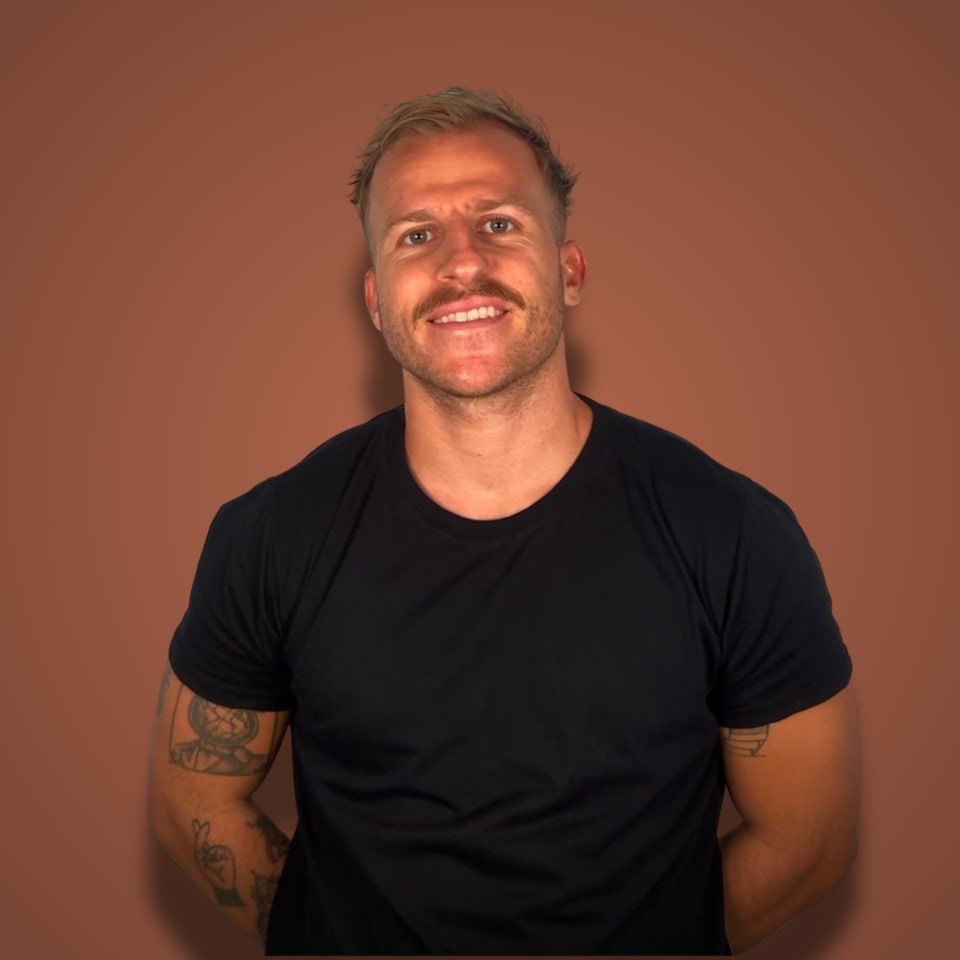
40 apps. $36,000 a month. Built mostly after his 9-to-5 ended.
That's Max.
I watched Starter Story Build sit down with him and walk through his entire process — idea to App Store submission — in about 17 minutes. No team. No funding. No "I quit my job and bet it all" origin story.
Just a guy shipping an app a week from his kitchen table while still clocking in for someone else every morning.
I've sat across from a lot of founders. The ones who actually build the life they want aren't the ones with the cleverest idea. They're the ones with a system they can run on a Tuesday night when they're tired.
Max has a system. Here it is.
The numbers, up front
Because I hate when people bury these.
→ A portfolio of almost 40 mobile apps
→ 30+ of them live and earning
→ Combined revenue: ~$36,000/month
→ Most of them built while working full-time, 9-to-5
→ Roughly one app shipped per week
Read that last line again. An app a week. After work.
This year he finally went fully indie. But the machine that got him there was running long before he had the luxury of doing it full-time. That's the part I want you to sit with.
Step 1: He picks the keyword before he picks the idea
This is the move most people get backwards.
Max doesn't dream up an app and then hope people are searching for it. He finds what people are already searching for, then builds for that.
He opens an ASO tool, types a seed term, and reads the room. For the demo he typed "Stamp Identifier" — an AI app that scans a postage stamp and tells you what it's worth, plus some history.
Sounds random. That's the point.
He checks two things:
→ Is the keyword popular enough to matter?
→ Is it winnable, or is it owned by 50 established apps?
For "stamp identifier" he found only four apps with more than 100 ratings, most released in 2025. New category. Soft competition. Real search demand.
That's a green light.
His logic is dead simple: a keyword is a problem someone is actively trying to solve right now. Someone with a drawer full of old stamps types "stamp identifier" into the App Store. That search is the market research.
And here's the stat that makes this whole game work — 75% of App Store downloads start with a search. If you win the keyword, the App Store sends you free customers forever.
If you want to go deeper on this exact discipline, we broke it down separately in our App Store optimization strategy guide.
Step 2: He never builds the boring parts twice
Every app has the same skeleton.
Onboarding. Paywall. Settings. Payments. Trials.
So Max built it all once — a boilerplate SDK — and now he reuses it on every single app. He doesn't touch the plumbing anymore. He drops in the boilerplate and spends his energy on the one thing that's actually different: the core feature.
You don't need to write your own from scratch either. He literally says: search "iOS boilerplate" or "Android boilerplate" online and grab one.
→ Stop solving problems you already solved.
This is the whole reason he can ship weekly. The first app takes forever. App number 30 takes an afternoon, because 90% of it already exists.
Step 3: One Claude prompt builds the app
Once the boilerplate's in, Max opens Claude Code and pastes a two-sentence prompt. Something like: build the main feature screen — camera, gallery, identification, collection history — wire it into the main tab, make sure it compiles.
Two sentences.
He hits enter, waits, and comes back to a compiled, working app. Onboarding, paywall, the core scan feature, a history screen, a collection view that totals up the value of everything you've scanned.
The actual "AI" part is just an API call to OpenAI or Gemini. Snap the photo, send it, get back a value and some context.
Five years ago this app needs a designer, a developer, a product manager, and a backend engineer. Max did it solo before lunch.
One detail I loved: he only triggers the "rate this app" prompt after a successful scan — that little hit of satisfaction, the aha moment. Never after a failed API call. Small thing. Huge for ratings, which feed back into ASO. The man thinks in loops.
Step 4: Design is where he refuses to cut corners
Here's where Max gets interesting. He automates the code. He will not automate the design.
His visuals process, all in Figma, takes minutes:
→ Pick a small color palette (asks Claude for an accent color that fits the app)
→ Make an icon (found simple icons, dropped them into Gemini, asked it to make them nice — a postmark with a magnifying glass)
→ Build the App Store screenshots
For screenshots he pulls up three or four top competitors — the ones with the most ratings — and studies what they highlight. Not to copy. To understand what's selling. Then he does it in his own style.
His sizing template already fits both iOS and Android, so there's no resizing fiddle. Select, upload, done.
This is the part most builders rush, and it's exactly why their apps die. The store listing is the salesperson.
Step 5: The metadata he does by hand (and the part he lets AI do)
Max is sharp about which jobs AI gets and which jobs he keeps.
Done manually, always: the app name, the subtitle, and the keyword field. This is what actually drives ASO. He drops his target keyword straight into the name and subtitle, never repeating a keyword across fields. For "stamp identifier" he stretched the keyword list with related terms — appraisal, coin, antique stamp.
Handed to Claude: the long description (the algorithm barely reads it — he asks Claude to stuff it with keywords but keep it natural, "don't make a slop"), plus a reference ASO doc for onboarding titles and paywall feature lines. He treats those as inspiration, not gospel.
On monetization, his default stack across nearly every app: a weekly subscription with a free trial, plus a yearly. For single-use apps — the kind people open once or twice — he swaps the yearly for a lifetime and charges a bit more upfront.
Then he hits the blue button and submits for review.
That's the whole loop. Keyword → boilerplate → one prompt → design → metadata → ship.
Why this actually worked (and what most people miss)
The building isn't the moat anymore. Max says it himself — anyone can build now.
His edge is three things:
→ He picks winnable keywords instead of falling in love with ideas
→ He removed every repeated task so shipping costs him almost nothing
→ He ships fast to validate, then lets the winners earn while he kills the losers
Thirty apps to find the handful paying the bills. That's not failure. That's the cost of finding the winners — and his cost per shot is so low he can afford to take 40 of them.
His own parting advice was blunt: ASO is the foundation, not the whole building. Once an app gets traction, you pour fuel on it — ads, TikTok, Instagram. The store search gets you off zero. Marketing takes you up.
If you're more interested in buying winners than building 40 of your own, that's a real path too — we covered the resale side in how to flip mobile apps for profit in 2026.
FAQ
How much does Max actually make?
His portfolio of close to 40 apps, with 30+ shipped and live, brings in a combined ~$36,000 per month. Most of them were built while he still had a full-time 9-to-5.
Do I need to know how to code to do this?
Less than you'd think. Max uses a reusable boilerplate plus Claude Code to generate the actual app from a short prompt, and OpenAI or Gemini for the AI feature via a simple API call. The skill that matters most is picking the right keyword and doing the design and store listing well.
What's the single most important step?
Keyword research, before you even commit to an idea. A keyword is a problem people are already searching to solve, and 75% of App Store downloads start with a search. Win a low-competition keyword with real demand and the store feeds you customers.
How does he monetize?
A weekly subscription with a free trial paired with a yearly plan on most apps. For single-use apps, he swaps the yearly for a one-time lifetime purchase at a higher price.
Why ship so many apps instead of perfecting one?
Most apps won't hit. Shipping fast and cheap — thanks to the boilerplate — lets him take dozens of low-cost shots, kill what flops, and double down on what earns. Volume is the strategy, not a sign of indecision.
The real takeaway
I sold my SaaS, and the thing I miss most isn't the exit. It's the loop — the feeling of shipping something and watching strangers pay for it.
Max never lost that loop. He just made it so cheap to run that a full-time job couldn't stop him.
You don't need to quit anything tomorrow. You need one repeatable system you can run on a Tuesday night. Pick the keyword. Reuse the parts. Ship the thing.
If you want to hear founders like this break down their numbers and their systems in full, that's exactly what I do every week on the show.