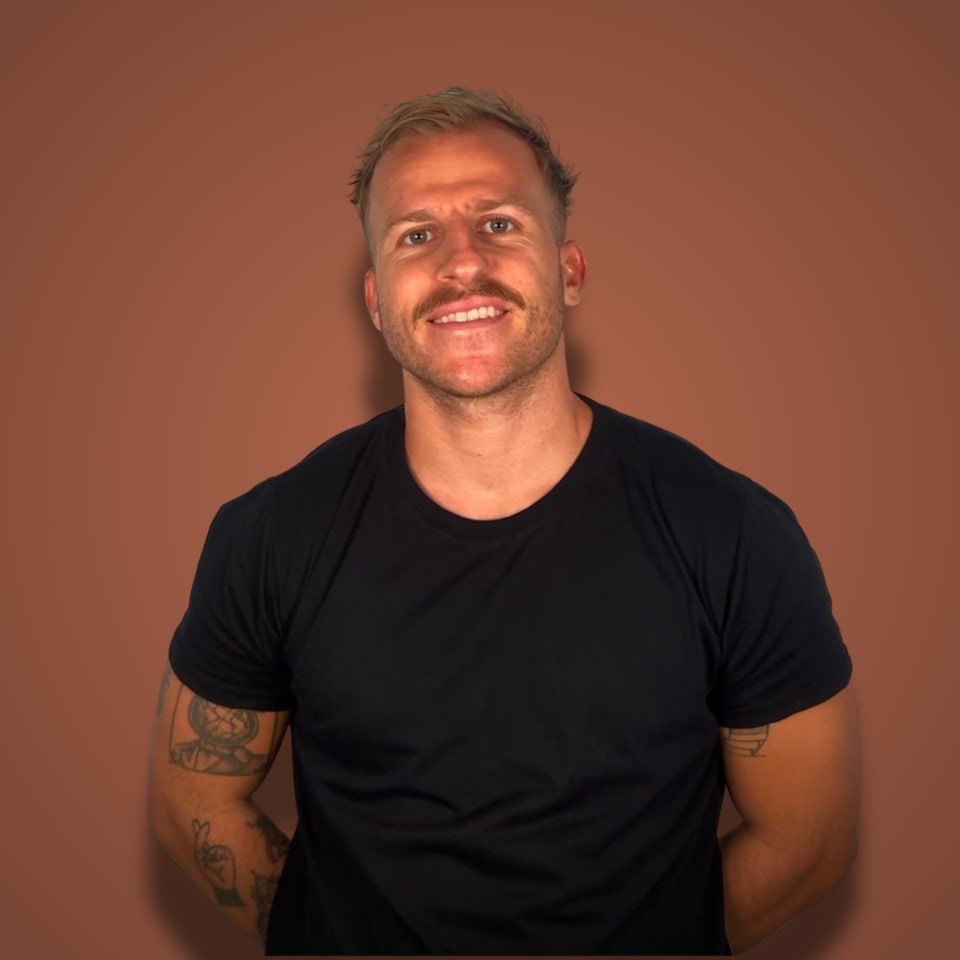
A 21-year-old college kid built his first-ever app over Thanksgiving break.
Five months later it's doing $25,000 a month.
No CS degree finished. No funding. No team. He'd never shipped a single thing in his life before this.
His name is Ken, he's a computer science student at San Diego State, and the app he built is so simple it almost feels like cheating. It tells guitarists exactly how to set up their gear to sound like any song they want, in under 30 seconds.
That's it. That's the whole product.
And it's already crossed 100,000 users.
I watched his Starter Story interview twice because there's a playbook buried in here that almost nobody is running. So I broke the whole thing down for you below.
The numbers, before you talk yourself out of believing them
Let me get the receipts out of the way, because the rest only matters if you believe the rest.
Ken's app is called Tone Adapt. It runs as a website and a native iOS app. Here's where the money sits:
- Over $25,000/month combined across web and mobile
- The mobile app alone did ~$15,000 in its first month, with 397 active subscribers
- $45,000 on the website in the last three months, 1,400 new subscribers
- 100,000+ users total
- Pricing: $10/week or roughly $60/year
And the kicker: he started learning guitar about a year and a half ago. A year ago this app didn't exist. He hadn't written a line of code that shipped.
This is the part where most people go "yeah but he got lucky." Maybe. But luck doesn't post three times a day for a month straight. Keep reading.
The idea came from a problem he actually had
Ken wasn't hunting for a startup. He was hunting for an internship.
He couldn't land one, so he went looking for a project to put on his resume. Classic. The kind of thing every CS student does and then forgets about by spring.
At the same time, he was obsessed with guitar. Playing almost every day. And he kept hitting the same annoying wall: he'd find a song he loved and have no idea how to make his guitar, amp and pedals actually sound like it.
So he did what everyone does now. He asked ChatGPT.
And ChatGPT was wrong. Vague. Not accurate enough to be useful.
Here's the move that mattered: he didn't assume it was just him. He went into Reddit threads and Instagram comment sections and asked other guitarists. Same complaint, over and over. Nobody had a real solution.
That's the whole validation step. He had the pain himself, then he found a handful of strangers with the exact same pain, and he reasoned there were probably millions more.
That's not market research with a spreadsheet. That's being your own customer and trusting your gut. If you want the structured version of this, I wrote a full breakdown on how to validate a SaaS idea without burning three months on it.
He built the whole thing in about a week — and vibe-coded every line
This is the part that breaks people's brains.
Ken had the idea kicking around for a couple months. Over Thanksgiving break he had some free time, sat down, and built V1.
It took him about a week. His first app, ever.
He says now the same thing would take him a couple hours. And here's the line that made me sit up:
"Not a single line of code has been written myself."
Every line was vibe-coded. He described his stack openly, so I'll just hand it to you:
- Claude Code for writing all the actual code
- Supabase for the database
- Vercel for hosting and analytics
- Stripe for payments on web, RevenueCat for the mobile subscriptions
- OpenAI API plus the Tavily web search API for the tone logic
- Superwall for paywalls and A/B testing on the app
- Mailgun for email
- The iOS app built natively in Swift
His exact words about the web stack: "this is the web app stack that allows you to ship a web app tonight and get someone to pay for it as soon as possible."
Tonight. Not next quarter. Tonight.
The database has over 1,500 guitars and 2,000 amps in it. You type in what you play, search a song — say Hotel California — hit research, and in under 30 seconds it tells you the original artist's rig, the amp settings, the pedals, and then adapts all of it to whatever gear you personally own.
Simple input, magic output. That's the shape of every app that prints money right now.
The actual growth engine: post 3x a day, ride the winner until it dies
Building it was the easy part. He says it himself — anybody can build a guitar app right now, and most of them will make zero dollars.
So how did a college kid get 100,000 users?
He had an unfair advantage most builders don't: before Tone Adapt, he was making UGC content for brands. He already knew how to make a video stop your thumb.
His marketing was dead simple, and I mean simple:
- Posted on social media three times a day
- Reposted the same content across Instagram, TikTok, YouTube and Facebook
- Put his own face on the brand from day one
- When a format converted, he scaled that exact format hard
His first video about the app went viral overnight. But he's clear that the lesson wasn't "go viral." The lesson was repeat the process until it happens again on purpose.
Here's his content formula, almost word for word:
Find one piece of content that converts. That's now your template. Remake it 50 times with tiny variations. Hire UGC creators to copy that format 60 times a month. Put ad money behind it on Meta and TikTok. Ride the winner until it stops working, then go find the next one.
"Pour gasoline on it until it doesn't work anymore, and then repeat."
That's the whole game. Most founders build something beautiful and then post about it twice and quit. Ken treated distribution like a factory line.
And once you find that one winning format, the smart move is to stop doing it all by hand. The repetition — the reposting, the follow-ups with people who showed interest, the nudges that turn a viewer into a paying subscriber — is exactly the kind of work you systematize so it runs whether you're in class or asleep. There are full business automation playbooks for wiring that part up so your winning content keeps converting on autopilot instead of dying the second you stop posting.
If you want a second example of distribution-first thinking that actually worked, read how Marcus got 1,000 paying users from just two YouTube videos. Same energy, different channel.
The cringe tax nobody wants to pay
I want to call out one thing Ken said because it's the real reason most people never get here.
His first video was, in his words, super embarrassing. His friends saw it. Some of them made fun of him.
And then he kept going. By the second video, the embarrassment was gone. By video ten, it didn't exist.
That's the toll booth. Putting your face on the internet for the first time feels awful. Almost everyone turns around at that booth and drives home.
The founders who win just pay it once and keep driving.
I've watched this pattern in dozens of bootstrapped founders now. The technical skill gap closed years ago — AI handles that. The gap that's left is whether you can post bad content in public for 30 days straight without flinching.
What you should actually steal from Ken
Strip away the guitar stuff and here's the transferable playbook:
- Pick a hobby you already live in. Ken plays guitar every day, so he was his own customer and skipped a month of research.
- Find the tiny, ugly pain point. A slow process, an inaccurate result, a thing you keep asking ChatGPT and not getting a good answer. That gap is the product.
- Ship V1 on the web tonight. Don't pick a logo. Don't polish. Charge money on day one and let real revenue tell you if it's real.
- Post three times a day for a month. Any content beats no content. You're not trying to go viral, you're trying to find the format that converts.
- When something works, don't get bored — scale it. Remake the winner 50 times. Automate the rest.
The most quietly brutal line from the whole interview: there's about to be a flood of AI-built apps. A sea of them. Building is no longer the moat. Attention is.
Ken's app ranks #2 in the App Store for "guitar tone" — above hundreds of competitors — not because his code is better, but because he showed up in people's feeds two to three times a day, every day, for months.
Frequently asked questions
What is Tone Adapt and who built it?
Tone Adapt is a website and iOS app that tells guitarists exactly how to set up their guitar, amp and pedals to sound like any song in under 30 seconds. It was built by Ken, a 21-year-old computer science student at San Diego State University, as his first-ever software project.
How much money does Tone Adapt make?
Over $25,000 a month combined across web and mobile. The mobile app did roughly $15,000 in its first month, and the website pulled in about $45,000 over a three-month stretch. It has 100,000+ users on $10/week or ~$60/year plans.
How was it built?
Entirely vibe-coded — Ken says not a single line was written by hand. The stack: Claude Code for the coding, Supabase for the database, Vercel for hosting, Stripe and RevenueCat for payments, the OpenAI and Tavily APIs for the tone logic, Superwall for paywalls, and Swift for the native iOS app. V1 took about a week.
How did he get 100,000 users?
Pure organic content. He posted to Instagram, TikTok, YouTube and Facebook three times a day, put his face on the brand, found formats that converted, and then remade those formats relentlessly while layering paid ads on the winners.
Can a complete beginner really do this?
Ken had never shipped anything before Tone Adapt. The two skills that actually carried him were picking a problem he personally lived with, and a background in making short-form content. Both are learnable. The hard part is posting publicly before you feel ready.
One last thing
Stories like Ken's are exactly why I started the Profitable Founder Podcast.
Every week I sit down with bootstrapped founders making real money — no fluff, no theater, just the actual numbers and the actual playbooks. The stuff that's working right now, not in 2019.
If this breakdown gave you one idea you want to steal, go listen to a few episodes. You'll walk away with ten more.
Listen to the Profitable Founder Podcast →
Now go build the dumb little app that solves your own annoying problem. Ship it tonight.