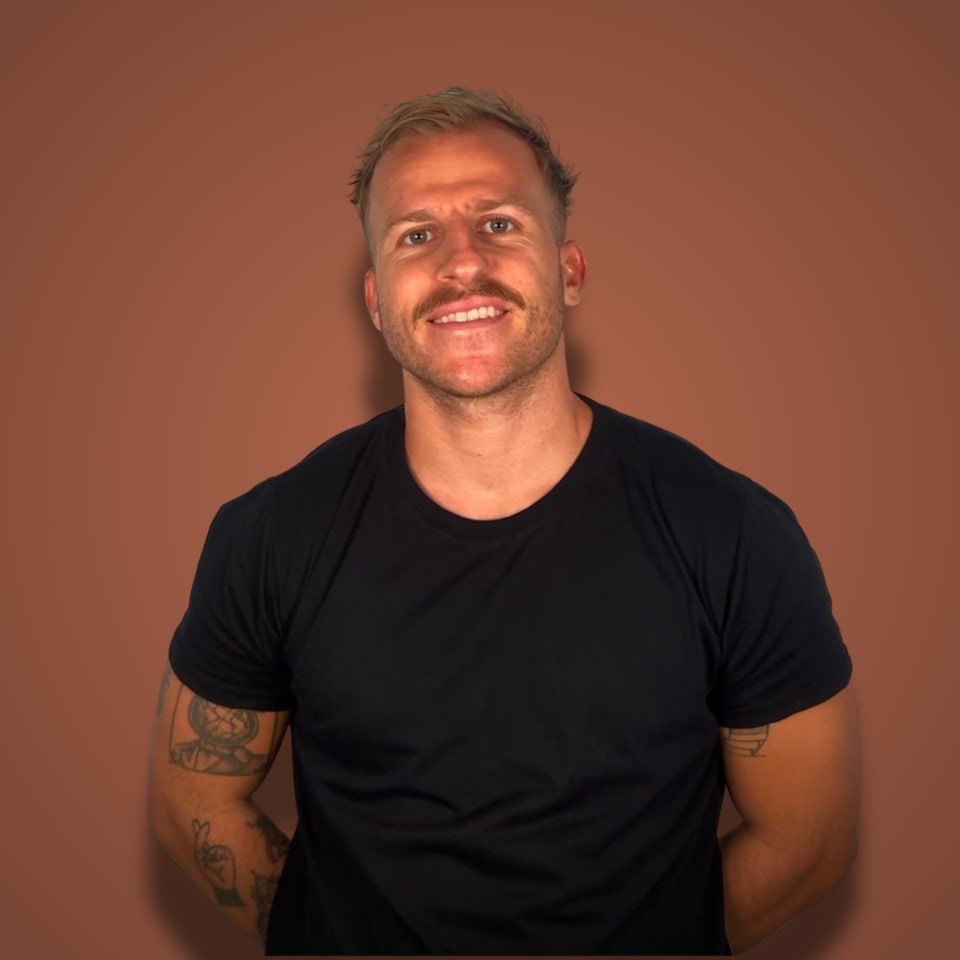
Evan is 14.
He's still in school. And his app, Locked, is doing $14,000 a month.
I'll be honest, the first time I read that number I had two reactions at once. The founder in me went "okay, what's the playbook." The 30-something in me went "what was I doing at 14?" (Playing FIFA. The answer is FIFA.)
But here's the part that actually matters, and it's why I wanted to break this one down. Evan didn't get lucky. He didn't go viral by accident. He ran one distribution channel, on purpose, from day one — and that channel is something you can copy this week.
He told the whole story on Starter Story with Pat Walls. Watch it, then let's pull it apart.
The app that almost nobody would have built
Locked is a gamified habit and fitness app.
That's it. Leaderboards, XP, badges, levels, characters you pick during onboarding. A motivational screen where, in Evan's words, you basically get yelled at by an influencer named Jeremiah to stay on task.
Most experienced founders would have skipped this idea. "Habit trackers? There are ten thousand of them. Saturated. Pass."
Evan didn't care. A friend told him he was struggling to stay focused, and that was enough. He didn't want another boring tracker, so he wrapped the boring part — checking off a task — in a game.
The pricing is where you see the real thinking:
→ $40 a year, or $7 a week
→ 3-day free trial on the annual plan
→ And if you try to X out of the paywall, a second "abandon" paywall slides in at $20 a year
That second paywall is the move. Most people build one paywall, watch users bounce, and shrug. Evan caught them on the way out the door with a discount. Small detail, real money.
He failed at five things first
This is the part that gets cut out of the highlight reel, so pay attention.
Before Locked, Evan tried:
→ Roblox games (made $0)
→ Drop shipping (failed)
→ Reselling (failed)
→ Clipping (failed)
→ Vending machines (failed)
Then his older brother Zach told him to look at apps. His first app, Problem Pal, peaked around $2,000 a month — and he recently sold it. The next one, Clear AI, went nowhere. Locked was the one that hit.
So the kid "everyone" sees as an overnight winner had years of dead projects behind him. He's young, sure. But he's not new. He's years into the game.
I bring this up because I see founders twice his age quit after their second flop. The number of attempts is the whole skill. Evan just compressed more attempts into fewer years.
Built in six weeks with three tools
Idea to live in the App Store: about a month and a half.
Here's the entire stack:
→ Figma — two weeks designing every screen from scratch
→ Claude Code — the $200/month plan, doing the heavy lifting on development alongside some YouTube tutorials
→ Superwall — to A/B test the paywalls (takes 1% of earnings)
→ Supabase — the database, free tier
Read that again. A shippable, paying app — designed and built — for basically the cost of one Claude subscription and a slice of revenue. This is the thing I keep telling founders in my Club: the build is no longer the bottleneck. A 14-year-old with Figma and Claude Code shipped in six weeks what would have cost a seed round five years ago.
Which means the bottleneck moved. It's not "can you build it" anymore. It's "can anyone find it." And that's where Evan actually separated himself.
One growth channel: influencers, run like a business
No paid ads. No big personal audience. One channel: paying creators to post about the app.
But the reason it worked isn't "he did influencer marketing." Plenty of people light money on fire doing that. It worked because Evan treated it like a unit-economics problem, not a vibes problem.
His framing, and write this down:
You have to close creators at a CPM lower than your app's RPM.
His RPM — revenue per thousand views he got from this content — sat around $2 to $3. So he made sure to pay creators a CPM (cost per thousand views) in the $1 to $1.50 range. Buy views for a dollar, earn two-to-three. Do that on repeat and you have a machine, not a gamble.
The clearest example: a creator named Jeremiah Jones posted a video around February 6th explaining how to "stay locked in." The app showed up in the first 15 seconds — which Evan requires from everyone he works with.
The result:
→ Revenue jumped from about $300/day to $728, then $678, then almost $1,000 on the spike days
→ ~$3,000 in revenue from that single piece of content
→ ~1,800 downloads
→ ~1 million views across platforms
The deal? He paid Jeremiah around $800 with a 600,000 minimum-view clause. Hit the views, get paid, move to a bigger deal. Miss the views, post a few more until you hit the floor. Risk capped, upside open.
Evan's exact creator playbook
He laid out the whole system if he were starting a new app tomorrow. Here it is, step by step.
Step 1 — Find creators in your niche. Search your topic on Instagram or TikTok, scroll the videos, open the accounts, and send every single one the same opener: "paid promo?" That's the message. Short, fast, repeatable.
Step 2 — Get them on a call. DMs don't close deals. Calls do.
Step 3 — Close them on a profitable deal. Profitable means one thing here: a CPM under your RPM. If the math doesn't clear that bar, you walk.
Step 4 — Structure the deal. Evan uses one of four:
→ Flat rate — $500 for one reel, $1,200 for four. Only for creators who reliably pull views.
→ CPM deal — $1–$2 per thousand views, always with a cap (10M views but your cap is $500? You pay $500).
→ Minimum view clause — e.g. $500 with a 500K MVC. His default, because it keeps CPM under RPM by design.
→ Bonus deal — $500 for the video, plus another $500 if it crosses a million views.
Step 5 — Launch the partnership. Send the requirements (app on screen in the first 15 seconds), the contract, and a one-week deadline for the first video. If it prints money, keep going. If not, move on.
The reason this beats running ads, especially early, is trust. When a creator their audience already follows recommends your app, it lands as a recommendation, not an interruption. Evan's whole edge is that it "feels way more authentic" — and authentic converts.
If you want to go deeper on the content side of this — the UGC formats that actually drive installs — I broke that down separately in how to market a viral app with UGC. And once you've got installs flowing, the next lever is ranking, which I cover in this App Store optimization breakdown.
The boring secret: this is just a sales pipeline
Here's what struck me watching Evan, and I think it's the real lesson hiding under the "14-year-old prodigy" headline.
What he built isn't an influencer strategy. It's a sales pipeline.
Find prospects (creators). Same outreach message every time. Move them to a call. Qualify them on the numbers. Close them on a structured deal. Track which ones convert. Double down on the winners.
Swap "creator" for "lead" and that's a B2B SaaS sales motion. The discipline of running the same outbound message at volume, then nurturing the ones who respond, is exactly the boring, systematic work most founders avoid because it isn't glamorous. If you want a sense of how that same find-message-nurture loop gets formalized for actual customer leads, this rundown on lead nurturing strategies is a decent map of the territory — same muscles, different prospect.
Evan just pointed that muscle at TikTok creators instead of inboxes. The output is $14K a month. The input is a teenager sending the same two-word DM over and over and treating every deal like a spreadsheet.
What I'd take from this if I were you
Three things.
One: the idea doesn't have to be clever. A gamified habit tracker in a market with ten thousand habit trackers. He won on execution and distribution, not originality. Stop hunting for a unicorn idea.
Two: pick one channel and run it like a machine. Evan didn't spray across SEO, ads, content, and partnerships. One channel. Known unit economics. Repeated until it scaled. Most founders die of channel ADHD.
Three: count attempts, not failures. Roblox, drop shipping, reselling, clipping, vending machines, Problem Pal, Clear AI — then Locked. Eight swings. The eighth one connected. You're probably quitting on swing three.
FAQ
What is Locked and how much does it make?
Locked is a gamified habit and fitness app built by Evan, a 14-year-old founder. It reached around $14,000 a month within a few months of launch, monetized at $40/year or $7/week with a 3-day free trial.
How did Evan grow the app without ads or an audience?
Entirely through paid influencer partnerships — short-form videos on TikTok, Instagram, and YouTube Shorts. He pays creators a CPM lower than his app's revenue-per-thousand-views (RPM), so each deal stays profitable.
What's the CPM-under-RPM rule?
RPM is what you earn per 1,000 views of promo content (Evan's was ~$2–$3). CPM is what you pay creators per 1,000 views (~$1–$1.50). As long as you buy views cheaper than they earn, the channel makes money at scale.
How long did it take to build and with what tools?
About six weeks. Two weeks of design in Figma, development with Claude Code (the $200/month plan) plus YouTube tutorials, paywalls A/B tested with Superwall, and Supabase as the database.
What deal structures does he use with creators?
Four: flat rate ($500/reel or $1,200 for four), CPM deals with a cap, minimum-view-clause deals (his default), and bonus deals that pay extra on a viral hit. Every video must show the app within the first 15 seconds.
Want the full breakdowns?
Stories like Evan's are exactly what I dig into every week on the Profitable Founder Podcast — real founders, real numbers, the unglamorous machinery behind the headline revenue.