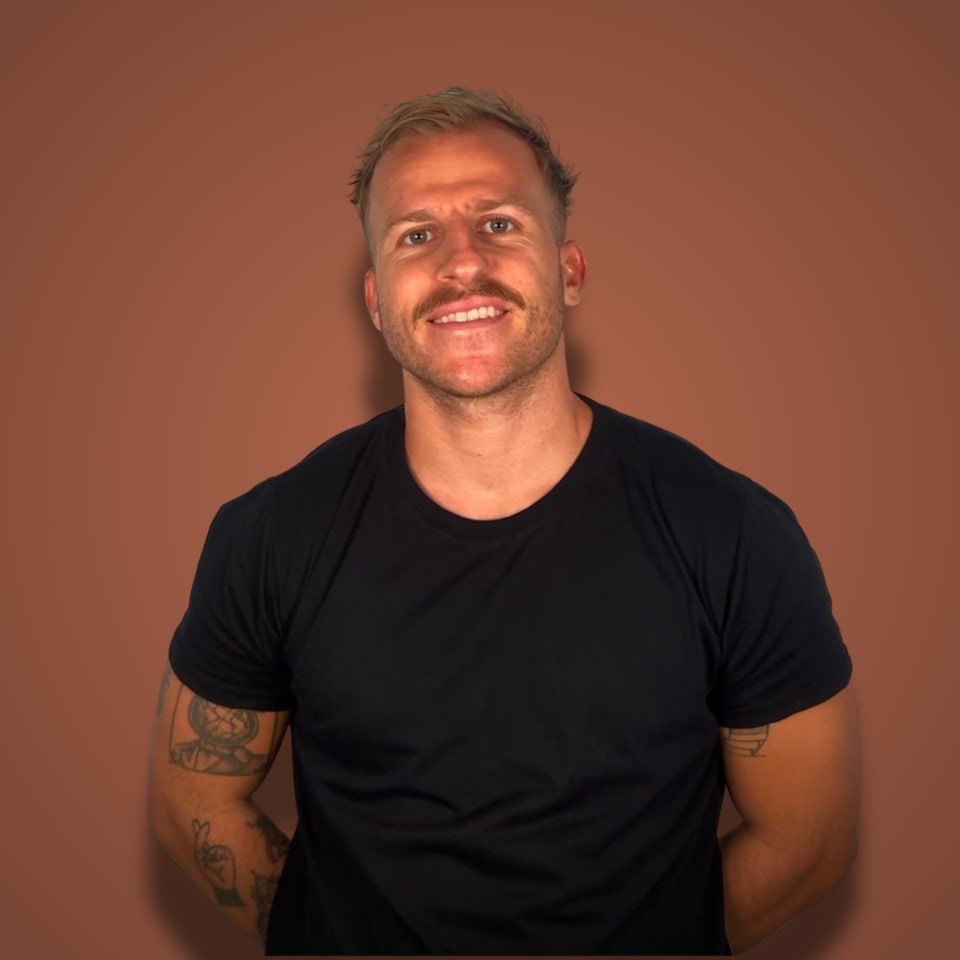
Cameron Zoub made his first $100,000 at 14.
He dropped out of high school at 16.
The company he built with his best friend, Whop, was last valued at around $800 million.
So when he sat down with Brett and walked through exactly how he'd build a profitable SaaS from scratch today, step by step, I paid attention. Not because of the valuation. Because the actual playbook is dead simple, and almost nobody does it.
No growth hacks. No "raise a seed round first." No fancy tech stack.
Just a founder who started by renting out 30 sneaker bots on a spreadsheet, making $2,000 a day, and got so annoyed at the manual work that he built software to fix it.
Here's the whole thing, in his words, cleaned up into the steps you can actually run this week.
Step 1: The idea test is annoyance times excitement
Cameron doesn't start with a market. He doesn't start with "I want to build SaaS."
He starts with a question: what annoys me?
His words: "I would just go through my day. I wake up, that's fine. I start brushing my teeth, it's annoying. I'd probably carry a journal with me for a month and force myself to write down every single thing that annoys me. Because if it annoys me and I'm willing to pay for it, other people will pay for it too."
Then he runs it through a formula:
→ Level of annoyance (1 to 10) times level of excitement to solve it (1 to 10).
Something that's 10 out of 10 annoying but 1 out of 10 exciting? Skip it. You'll quit in month three.
Something you're pumped about but that doesn't actually bother anyone? Also skip it. Nobody pays for a vitamin.
You want the overlap. High annoyance AND high excitement.
Whop itself started exactly like this. Cameron and his co-founder Steven were renting out sneaker bots. Thirty bots of one bot called Eve, going for $50 a day. Good money for a couple of teenagers. But he was sitting on a spreadsheet all day, resetting license keys, sending Venmo requests to every buyer one at a time.
"I just wanted more time back. I didn't want to sit on a spreadsheet all day. So we built Whop for ourselves."
That's the whole origin. An annoying manual task he was excited enough to kill. If you want the full backstory on how that bot marketplace turned into a nine-figure company, I broke it down here: how Cameron built Whop.
Step 2: Never build it alone
Cameron can't code. He tried for years. It never clicked.
So his rule is blunt: "I would never start a tech company without a technical co-founder. Contracting a developer to build you something, that idea has been tried a thousand times. It does not end up how you think. You need someone in the ring with you."
Find someone with complementary skills. He handles customers and distribution. Steven handles the build. That split is the entire reason it worked.
How'd he find Steven? This is the part people overthink.
He posted in a Facebook group. "Hey, I need an iOS developer." Steven replied.
Here's the kicker: it wasn't even a developer group. It was a sneaker reselling group. Nobody in there was technical. Steven just happened to be, and he answered.
Cameron and Steven have worked together since they were 13. That's almost 14 years. "It's like a marriage," he said. "I got very lucky. But you have to go date. Go post in a bunch of groups. Go to meetups. Meet people in Discord servers. Go wherever like-minded people hang out and just ask."
→ You don't find a co-founder by waiting. You find one by publicly announcing what you need, over and over, in the rooms where the right person might be.
Step 3: Build the ugly version, and ship it tonight
Once you have the idea and the partner, there's one job: get it live as fast as humanly possible.
"If you start building today, can you get someone using it tonight? If the answer is no, okay, what's the earliest?"
The trick he uses to find the true MVP is my favorite line in the whole interview:
"Whatever your scope is, cut it to where you've deleted 20% too much. When you start deleting stuff and you go, oh no, I have to add that back or the product doesn't function, then add it back. Everything else stays gone."
For Whop, the entire first version was: a list of bots, click a bot, see a calendar, click a date, get a price, click purchase. That's it. Remove any one of those pieces and it's broken. Add anything else and it's bloat.
And while Steven built, Cameron wasn't waiting around. He was lining up customers before the thing even existed. Messaging sellers: "This is going to be ready in a week. Get ready to list your bots. We're going to have buyers for you."
→ Treat every stage as its own conveyor belt. Get each piece to the next checkpoint as fast as you can. Don't let "build" and "sell" happen in sequence. Run them at the same time.
Step 4: The validation loop (get on the phone and then shut up)
You built something. You think it's great. So did the artist who wrote a song nobody liked.
You still need validation. And Cameron's method for getting it is the most underused growth tactic I know.
Find exactly where your customer lives. Not "developers." Be painfully specific. His example: say you built a screenshot tool. Who takes a lot of screenshots? Product designers. Where do product designers hang out? They follow Figma on Twitter. They're in design Discords. There are Reddit communities and city meetups. Pick the one you can infiltrate best and go there.
Then message a lot of people. "If you send that to a thousand people, 10 to 20 will reply. You will get responses."
His script when he had no money and no reputation: "Hey, my name's Cameron, I'm 18. I'm building a better screenshot tool for product designers. I want to build the greatest tool you've ever used. Can we hop on for 10 minutes and you try it and tell me what you think?"
This is the same muscle as good lead nurturing. You're not closing a sale on message one. You're opening a real conversation with a real human, being useful, and letting the relationship do the work.
On the call, give them a goal, then go silent. This is the part that separates real founders from people playing founder. Don't demo it for them. Hand them the wheel.
"I'd say, here's the tool, list your bot, get your first sale, go. And then I go on mute and force myself not to talk. It's so painful. They'll be like, what do I do here, do I click this? And I just watch where they get stuck."
They pause for 30 seconds on the pricing page? Ask them why afterward. No dashboard will ever tell you what a 30-second pause means. Maybe the button next to the real button was brighter. Maybe your cool background animation distracted them. You only learn it by watching and asking.
And here's the discipline most people skip: after your first call gives you 20 things to fix, don't go find call number two. Go fix the 20 things first. Then the next person has a better experience, and their feedback is fresh instead of a repeat.
One more thing that stuck with me: Whop was completely free for sellers for the first 18 months. No fees beyond normal Stripe. "I would never give someone a reason not to use your product."
Step 5: Do things that don't scale to get the call
What happens when the person you need won't answer?
Cameron's answer: catch them off guard. "Memories are sparked by things that surprise people. You have to catch someone off guard."
The stuff he's actually done to land a single call:
→ Sent an Uber driver to someone's house to knock on the door. The guy was taking a nap. Tipped the driver $100 to do it.
→ Sent edible arrangements to a prospect's address.
→ The email-to-iMessage trick: most people's primary email is tied to their iCloud, so if you drop their email into iMessage on an iPhone, the text often goes through. "We've gotten in touch with a lot of people doing that."
→ Just buy their product. "If you want to talk to someone so badly, be their customer. Hey, I bought your bot, can we call for 10 minutes? They say sure."
None of this scales. That's the point. In the early days you're not optimizing for efficiency. You're optimizing for one honest conversation that teaches you something.
Step 6: How to actually scale it
So you've got customers and a product they don't get stuck on. Now what?
Cameron's model for scaling is boring in the best way: pick one market, dominate it, then expand outward.
"How did Amazon scale? They started with books, then electronics, then pets, then toys. How did Uber scale? They started in SF as a limo car service, then went to New York."
You don't scale by adding ten features and three audiences at once. You win a narrow lane completely, then use that beachhead to take the next one.
Whop started as a marketplace for sneaker bots. A tiny, weird, specific niche. From there it became the platform for selling basically any digital product. Books to electronics. Bots to everything.
If you want the fundamentals of getting that first lane locked down, this is the piece to read next: how to get your first 100 SaaS customers.
The uncomfortable truth in all of this
Read those six steps again. There's nothing in there you can't do.
Write down what annoys you. Post in a group to find a partner. Build the ugly version tonight. DM a thousand people. Watch ten of them use it and shut your mouth. Fix what breaks. Win one narrow market before you touch the next.
That's the entire playbook a guy used to build an $800 million company before he could legally rent a car.
The reason most people don't do it isn't that it's hard to understand. It's that it's unglamorous, it's a lot of DMs, and it means watching a stranger fumble through your product while you sit there in silence.
Do the unglamorous version anyway. It's the only version that works.
FAQ
Who is Cameron Zoub?
Cameron Zoub is a co-founder of Whop, a marketplace for digital products. He made his first $100,000 at 14, dropped out of high school at 16, and Whop was last valued at around $800 million. He started out renting sneaker bots with his co-founder Steven Le before building the software that became Whop.
What was Cameron's first business before Whop?
Renting out sneaker bots. He had 30 copies of a bot called Eve going for $50 a day, roughly $2,000 a day, all managed by hand on a spreadsheet with Venmo requests. The pain of that manual work is literally what led to Whop.
Do I need to know how to code to build a SaaS?
Cameron doesn't code at all. His hard rule is to never start a software company without a technical co-founder. He handles customers and distribution, his partner handles the build. Find someone with complementary skills before you start.
How do you validate a SaaS idea with no audience?
Find exactly where your specific customer hangs out online, message around a thousand of them (expect 10 to 20 replies), get them on a call, hand them a goal inside your product, and then stay silent while you watch where they get stuck. Fix everything the first person flags before you talk to the second.
How much should you charge at the start?
Cameron kept Whop free for sellers for the first 18 months, taking nothing beyond standard Stripe fees. His logic: never give someone a reason not to use your product while you're still figuring out if it's any good.
Want the founder-to-founder version of this?
I run the Profitable Founder Podcast, where I sit down with bootstrapped SaaS founders making $100K to $10M a year and pull out the exact tactics they used. Same energy as this. Real numbers, real playbooks, no fluff.