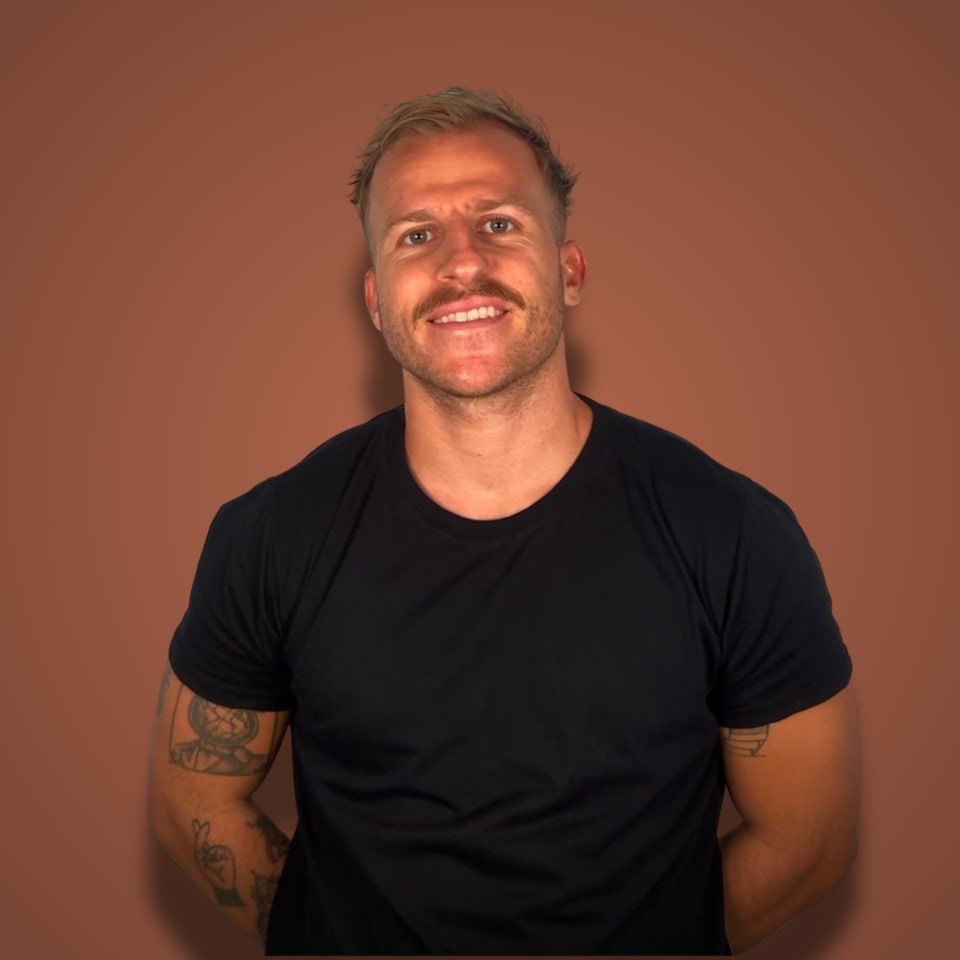
A 22-year-old kid did $1.5 million in a single year.
He built it solo. On a broken Dell laptop. From Nigeria, then from a friend's dorm floor in America, then from a house he had no real business being in.
His name is Kelechi Onyeama. The app is called Social Wizard. It helps guys figure out what to text girls.
I know. Read that twice. A rizz app. Close to a million dollars in revenue off a rizz app.
I watched his whole interview on The Brett Way and I could not stop taking notes. Not because of the app idea. Because of how he did it with nothing. No capital. No team. No network. No degree from Stanford. Just one phone, one laptop, and a level of grit most founders reading this have never had to find.
Here is the full story, with the real numbers, and the parts you can actually steal.
$100 and a one-way flight
Start with where he started, because the numbers only mean something against the baseline.
Kelechi grew up in Nigeria. He watched the whole consumer social wave from his phone: BeReal, Gas, all of it going viral while he sat there thinking "I want in." He didn't know how to code. So he learned.
His first app was called Caspid. A photo app built around a "circle" idea. He built it on a broken Dell laptop in Nigeria. It grew to a couple thousand users and over 20,000 pictures posted.
Then it died.
He convinced himself the only reason it failed was that he wasn't in America. Half delusional, half true. So he scraped together 100,000 naira. About $100. Bought a one-way flight and showed up in the US to give it one last shot.
A friend let him sleep on his college dorm floor. That same friend was stealing pizza from the cafeteria to feed him. He gained 30 pounds eating the cheapest food in America. He was homeless for a stretch, bouncing between whatever floor would have him.
That is the guy who, twelve months later, did $1.5 million.
And here is the thing he said that stuck with me: "If you were born into a rich family and went to Stanford and made an app that made $200K, no one is going to care. But if you're the guy struggling in a country that isn't even yours, people give a damn."
Your backstory is not a weakness in the pitch. It is the pitch.
The one rule for picking what to build
Before Social Wizard, Kelechi got religious about one idea. Every app that goes viral solves one of three things:
→ It helps people make money.
→ It helps people find love.
→ It helps people have fun.
That's it. Health, he says, sneaks in because it touches all three. But every consumer app on the store is really one of those three buckets.
Social Wizard is "find love." Specifically, it solves a tiny, sharp, embarrassing problem: a guy is texting a girl, he freezes, he has no idea what to say. The app steps in.
You screenshot the conversation or type the message in with context, and it hands you a reply. The magic, and the reason it beat the dozens of copycat rizz apps, is context. You can tell it "this is a girl from my college, it's her birthday, we haven't talked in a year," drop in a screenshot of her story, and it fuses all of it into something that actually sounds like you.
Boring problem. Massive market. Guys will pay to not feel stupid. That's the whole insight.
The timing nobody talks about
Ask Kelechi why it blew up and his answer changes every month. The one he keeps landing on: timing and grit.
He started building in December 2024 into January 2025. GPT-4 Vision had just dropped. Suddenly an app could "look" at a screenshot of a Tinder convo and reason about it. Six months earlier this app was impossible to build. Six months later the space was crowded.
He was standing in the doorway at the exact moment it opened.
You can't manufacture that perfectly. But you can put yourself in the path of it by building constantly, so that when a new capability lands, you already have the muscle and the distribution to pounce. The founders who win the next AI wave are the ones already shipping ugly stuff today.
How he marketed it with $0
This is the part every bootstrapped founder needs to tattoo somewhere.
He had no capital. No ad budget. So marketing was, in his words, "literally me on TikTok making content every single day until something worked."
Every day. By himself. Posting until a format hit.
And one did. The winning video format was simple: take a picture of a girl, drop it in the app, show the reply it spits out. Demo the product, full screen, where everyone can read "Social Wizard" on the screen. No selling. No talking head explaining features.
His exact line: "Distribution is just showing, not telling. You're not trying to sell the app. Just demo what it does."
If you've ever watched a UGC creator quietly rack up millions of views by just using a product on camera, this is the same engine. It's the same move Brett's other guest pulled to hit $100K a month, which I broke down in how Content Rewards hit $100K a month in 60 days. Show the product working. Let the result sell.
One honest detail he shared: almost nobody refers a rizz app to their friends. He tried giveaways. He offered crazy incentives. People don't want to admit they use it. So referrals were basically zero, and every bit of growth came from him pushing content out the front. If your product has built-in shame, plan for paid or organic content to carry the whole load, because word of mouth won't.
Pricing: he charged more than felt comfortable
When he launched, he looked at the similar apps and matched the model: a weekly subscription. Around $6.99 a week.
People hear "$6.99 a week" and flinch. That's roughly $28 a month for a texting helper. But in the consumer app world, that is normal, sometimes cheap. The lesson isn't the exact number. It's that he didn't undercharge to feel safe. He priced where the market already lived and let the volume do the math.
A weekly sub on a problem people feel in the moment, paired with relentless TikTok demos, is how a solo founder gets to seven figures without a sales team.
"Session one is everything"
Here's the operating principle he credits for the conversion: onboarding is marketing, and session one is everything.
When someone downloads the app, you get exactly one shot. One. To either get them to subscribe or get them to tell a friend. There is no second session if you blow the first three seconds.
So every pixel of that first run is engineered to show value fast: here's the problem, here's the magic reply, here's why you'd pay. No long tutorial. No account-creation maze. Demo, value, ask.
Most founders pour everything into acquisition and treat onboarding as an afterthought. Kelechi flipped it. He treats the first session as the most important marketing surface he owns.
The solo-founder reality
One thing the interview makes obvious: doing this alone is brutal.
He's the developer, the marketer, the support team, the editor cutting TikToks every night. The only way that scales past a certain point is to ruthlessly cut and automate everything that isn't the core loop of build, post, convert.
If you're a one-person shop trying to follow this path, the boring back-office stuff is where you drown first: lead follow-ups, replies, the repetitive busywork that eats the hours you should be shipping. There are decent guides on stitching together business automations so a solo operator can run like a small team. Automate the repeatable parts so your human hours go to the two things that actually move revenue: the product and the content.
And if content is your growth engine like it was his, study how the people doing it at scale operate. I went deep on the mechanics in how to start a clipping agency, and the same playbook applies whether you're clipping for clients or pumping out demos for your own app.
How he makes decisions
The mindset bit at the end is what separates him from a thousand other 22-year-olds with an app idea.
His goal is a billion dollars over ten years. He says it plainly, no flinching. And every single decision runs through one filter: does this increase or decrease the likelihood I hit that goal?
Chasing girls, getting distracted, doing dumb stuff. Decrease. Shipping, posting, surrounding himself with smart people. Increase. That's the entire decision framework.
"You don't need to be super motivated," he says. "Every day for me is hard. But you do it regardless. That's what makes it fun."
No hustle-porn. Just a guy who decided the discomfort was the job and stopped negotiating with himself about it.
What you can actually steal
→ Build for make money, find love, or have fun. Pick a sharp, slightly embarrassing pain point in one of them.
→ Your struggle is the marketing. Don't hide the broken Dell laptop. Lead with it.
→ Market by demoing, not pitching. Show the product doing the thing, every day, until a format hits.
→ If the product carries shame, don't count on referrals. Carry growth yourself.
→ Price where the market already lives. Don't undercharge to feel safe.
→ Treat session one as your most important marketing surface.
→ Automate the boring back-office so your hours go to product and content.
→ Run every decision through one filter: does this get me closer to the goal or not?
FAQ
Who is Kelechi Onyeama?
A 22-year-old solo founder, originally from Nigeria, who builds mobile consumer apps. His biggest is Social Wizard, an AI texting-assistant app. He did roughly $1.5 million in revenue in a single year, much of it from Social Wizard.
What does Social Wizard do?
It helps people, mostly guys, figure out what to text in dating and social conversations. You screenshot a conversation or type a message in with context, and the app generates a reply tailored to the situation. The context personalization is what set it apart from copycat apps.
How did he market it with no money?
Organic TikTok. He posted product demos every single day until one format went viral: dropping a girl's photo into the app and showing the reply it produced. He focused on showing the product, not pitching it.
How much does it cost?
He launched with a weekly subscription around $6.99 a week, in line with comparable consumer apps.
What's the single biggest takeaway for bootstrapped founders?
Timing plus grit. He showed up the moment GPT-4 Vision made the app possible, then out-worked everyone on daily content. You can't fully control timing, but you can be the person already shipping when the door opens.
The point
A kid with $100 and a one-way flight built a seven-figure app by himself, sleeping on a dorm floor, posting demos every night until one stuck.
No funding. No co-founder. No safety net. Just a sharp problem, relentless content, and a refusal to negotiate with the discomfort.
That's the whole game. Most people just never start.
I interview bootstrapped founders like this every week on the Profitable Founder Podcast. Real numbers, real playbooks, no fluff. If this is the kind of story that gets you to open your laptop and build, come listen.