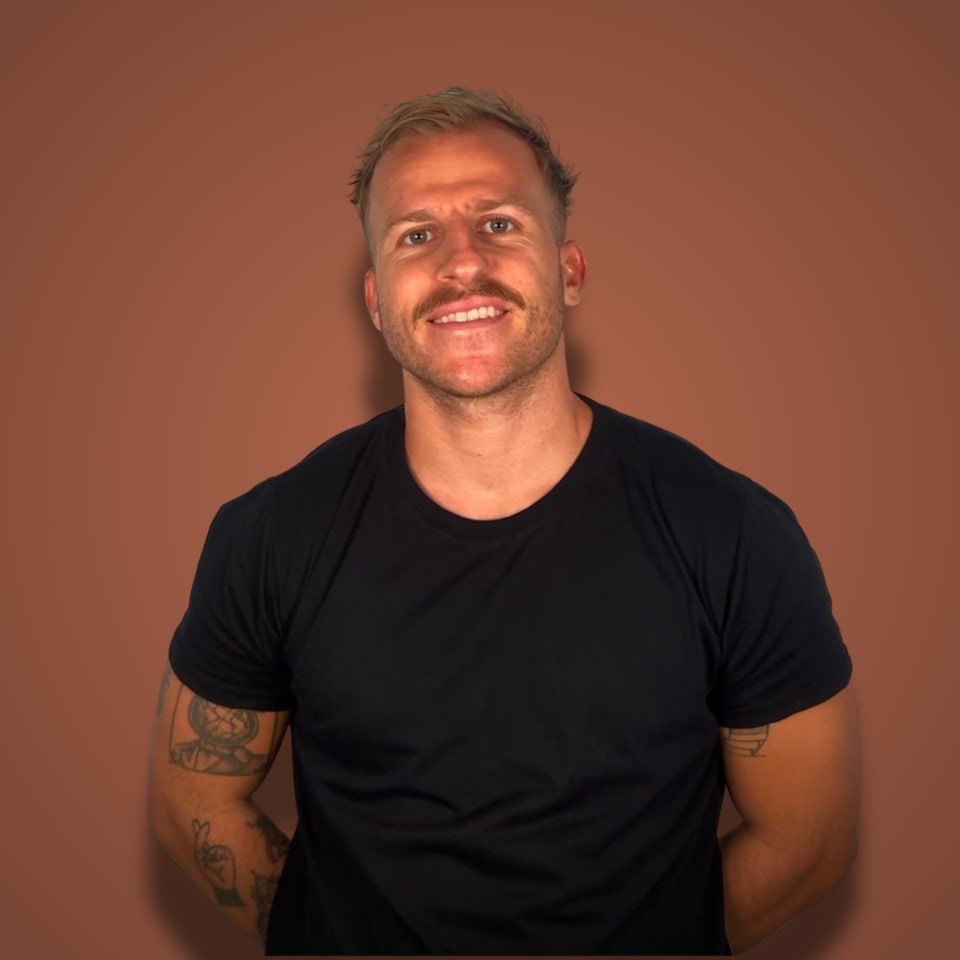
Most founders I talk to are stuck on the wrong number.
They want 10,000 customers. They want to "go viral." They want the magic channel that prints users while they sleep.
Joseph doesn't think that way.
He's scaled two separate products past $3 million in annual recurring revenue. His current one, Super Demo, does over $250,000 a month and crossed 150,000 users in about two and a half years. G2 named it the #5 fastest-growing product of 2025.
And when Pat Walls from Starter Story asked him how he'd start over today, Joseph didn't talk about TikTok or hockey-stick growth.
He talked about the first 100 customers.
"If you can find a hundred people that want to use and pay for your product, you're pretty much set." That's the whole game. Get 100 that don't churn, and you've proven you can get 1,000.
Here's the exact playbook, in his words, with the numbers behind it.
What Super Demo actually is
Quick context, because the product shapes the playbook.
Super Demo makes interactive demos. Clickable, realistic clones of your product that drop into your website or your docs. A buyer hits your "aha moment" without signing up or booking a call with sales.
It's product-led. Most of the traffic comes through the starter and premium tiers, and that self-serve motion is their number one growth engine. Slightly over $3M ARR. Just over $250K MRR. Growing every month.
Now here's where it gets useful for the rest of us.
Step 0: Validate by talking to 100 founders first
Joseph has been building since he was 14. Buying and selling electronics on Craigslist. An organic soy candle business. A clothing line. A digital agency. A venture-funded B2B seafood marketplace in college.
Across all of it, one problem kept showing up: it's brutally hard to demonstrate the value of your product. He'd recorded endless Looms that went out of date the second he shipped a new feature.
So before he built Super Demo, he did the unglamorous thing.
He talked to 100+ founders in B2B SaaS and asked one question: do you have this problem too, and what's your janky workaround?
The answer was loud. People hated making product demos. People hated the sound of their own voice on Loom. That's when he knew there was something to run with.
If you're at this stage, this is exactly the work that pays off later. I wrote a full breakdown of it here: how to validate a SaaS idea in 2026 before you write code. Joseph just did it the hard way, by hand, 100 conversations deep.
Step 1: Capture the obvious demand first (the low-hanging fruit)
Joseph's first move wasn't clever. It was obvious. And that's the point.
"Capture the obvious demand first." Go after people who are already searching for a solution.
So they built content across the full funnel:
Bottom of funnel: detailed comparison pages pitting Super Demo against every competitor they could find. Not one or two. Every single one. Why? You piggyback off competitor traffic, and you find out which competitor pages are getting cited in LLMs, then you go optimize the ones picking up traction.
Middle of funnel: dozens and dozens of free tools in adjacent spaces. Screenshots. SOPs. Tutorial builders. Here's the twist that made it work: they ungated the product. No account, no free trial, no email wall. You land, you get value in seconds.
The result? Those free tools now bring in roughly 20% of all their traffic and convert 15 to 20% of visitors into sign-ups. Read that again. A fifth of their traffic, converting at up to one in five.
Top of funnel: programmatic SEO. They used Super Demo itself to build thousands of interactive walkthroughs for specific workflows and keywords. "How to export Figma to PDF." "How to merge cells in Excel." Each one answers the question and puts the product front and center for anyone who happens to be in their ICP.
One thing worth flagging: a chunk of this only works because they were getting mentioned in LLMs early. That's its own discipline now. If you want the playbook for that specifically, here's how Tanya gets SaaS recommended by AI.
Step 2: Do things that don't scale to kill friction
This is my favorite part, because it's pure hustle.
Joseph went onto Reddit and Indie Hackers and personally offered to build free Super Demos for founders. He'd ask them to post their product URL. He'd take it, build the interactive demo himself, and reply inline on their post with the finished demo.
The founder could sign up, duplicate it, and start using it that day.
But here's the multiplier: it was all public. Other people scrolling the thread saw the demos. They saw how slick it looked. They didn't even need to ask. They'd think "I'll just sign up and do it myself, looks easy."
He ran permutations of this across many channels. He calls it hand-to-hand combat. Going in, one by one.
"You don't have to do that forever. But if you can do that 100 times, a percentage of those will turn into customers."
That's the whole secret to your first 100. It's not a funnel. It's you, manually, removing friction for one person at a time until the loop starts spinning on its own.
The reason this compounds is that every manual demo Joseph built was, quietly, a piece of follow-through. He wasn't just dropping a link and ghosting. He was doing the work the prospect would've had to do, and handing it back, finished. That's the part most people skip.
Step 3: Distribution density (be everywhere your users are)
Joseph is blunt about the state of distribution in 2026: "There's no magic channel anymore. There's no gotchas."
So instead of hunting for the one channel, he plays for density. Be everywhere your buyers already pay attention.
Here's the actual split of where Super Demo's traffic comes from:
- 30–40% from SEO and LLMs (the content engine from Step 1)
- ~30% from word of mouth — watermarks, referrals, and founders sharing the demos they made, which creates a viral loop baked into the product
- ~20% from building in public on LinkedIn and Indie Hackers
Notice there's no single hero channel. It's three engines, each carrying a third of the load. That's resilience. If one dips, the business doesn't fall over.
The viral loop is the sneaky-good one. Every free demo a customer makes carries a watermark and gets shared with their prospects. The product distributes itself. That's not luck. That's a design decision.
The mistake Joseph sees founders make over and over
When early founders ask him how he hit $3M ARR, the thing he sees them get wrong is the same thing every time.
Chasing perfection instead of launching yesterday.
"The earlier you can launch, the faster results compound and the faster you find out: do I need to kill this thing, scale it with data, or pivot?"
He's careful here, and I think he's right. The old line is "if you're not embarrassed by your first version, you launched too late." He doesn't fully buy that anymore. In the AI-first era, craftsmanship matters and shipping garbage isn't a flex.
But the underlying truth holds: the only real edge you have over a bigger, richer incumbent is urgency and speed. That's it. Burn it.
His final piece of advice: "Stop obsessing over the competition and the idea, and just start building. Most companies that die, die by suicide and internal combustion, not by competition."
What I'd actually steal from this
Strip it down and the playbook is three moves you can start this week:
→ Build comparison pages against every competitor in your space. Cheap, fast, high-intent traffic.
→ Ungate a slice of your product as a free tool. Joseph gets 20% of his traffic this way at a 15–20% conversion rate.
→ Go do free, manual, public work for 100 prospects on Reddit and Indie Hackers. Hand-to-hand combat. The loop starts there.
None of it is sexy. All of it works. That's usually how it goes.
FAQ
What is Super Demo?
Super Demo is a product-led SaaS that creates interactive, clickable demos — realistic clones of your product that embed on your website or docs so buyers experience the value without signing up or talking to sales. It's at $3M+ ARR and 150,000+ users.
How did Joseph get his first 100 customers?
Three steps: capture obvious search demand (comparison pages, free tools, programmatic SEO), do things that don't scale (building free demos for founders on Reddit and Indie Hackers, in public), and build distribution density across SEO/LLMs, word of mouth, and building in public.
How much does Super Demo make?
Over $250,000 in monthly recurring revenue and slightly over $3 million in ARR, growing every month, as of the 2025 G2 ranking where it placed #5 fastest-growing product.
What's the single biggest mistake early SaaS founders make?
According to Joseph: chasing perfection instead of launching. Your only edge over an incumbent is urgency and speed, so ship and let real data tell you whether to scale, pivot, or kill it.
Do free tools actually drive paying customers?
For Super Demo, yes. Their ungated free tools bring in roughly 20% of all traffic and convert 15–20% of visitors into sign-ups, which feed the product-led funnel.
Want more breakdowns like this?
This is the kind of teardown I do every week on the Profitable Founder Podcast — real bootstrapped founders, real numbers, the exact moves behind the revenue. No fluff, no "thought leadership."
If you're building and you want playbooks you can actually steal, listen to the latest episodes here.