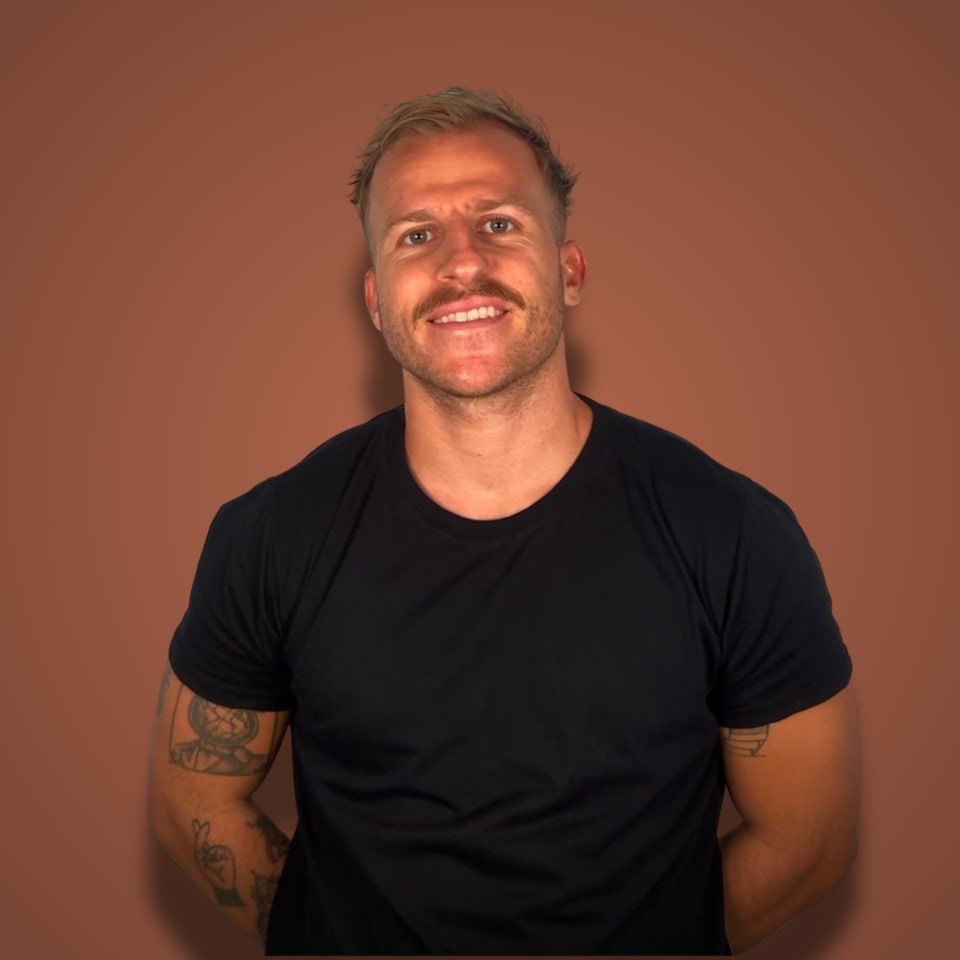
Eleven months ago Evan had $80 in his bank account.
This month he is on track to clear $35,000 in profit.
No app. No code. No funding. He runs a clipping agency called Clipping Culture, and he started it on March 4th with nothing but a phone and a willingness to send a thousand cold DMs.
I watched the full breakdown of how he did it, and the playbook is so simple it is almost annoying. So I want to walk you through it the way I wish someone had walked me through my first business. The real numbers. The exact moves. The part where it almost did not work.
Here is the full interview if you want to watch it yourself. The written breakdown is below.
What a clipping agency actually is
If you have ever seen the same podcast moment chopped into 40 different TikToks, you have seen clipping.
Here is the model. A brand has long-form content. A podcast, a music video, a YouTube interview. They want eyeballs. Evan connects that brand to an army of clippers who download the raw content, cut it into short clips, and post it across thousands of accounts.
The clippers get paid per thousand views. The brand only pays for views that actually land. It is performance marketing, except the "ad team" is a few thousand teenagers with editing apps.
Evan sits in the middle and takes a cut.
His pricing is dead simple:
→ Under $50K of spend: he takes 30%. A client puts in $10,000, Evan pockets $3,000, the other $7,000 funds the campaign.
→ Over $50K of spend: he switches to $15,000 per month plus 10%.
That is it. The more a client spends, the more views get generated, the more Evan makes. The incentives point the same direction, which is exactly why brands keep re-upping.
The first client (and the $80 in the bank)
Before any of this worked, Evan made three videos.
Not for a client. He did not have one. He just filmed himself talking about how clipping was the future of advertising, posted them, and got maybe a thousand views.
One of those videos did something though. A guy with his own meme page saw it and DM'd Evan saying he wanted to help. That guy was tapped into the clipper world. Free distribution, handed over because Evan shipped one video.
Then came the outreach. Hundreds and hundreds of cold DMs. No case studies, no proof, nothing. Just a 20-year-old with $80 to his name pitching artists.
His first client was a music artist named Young Martyr. The budget was $2,000.
The result: over 20 million views in less than 24 hours.
Evan's cut on that first campaign was $600. When you have $80 in your account, $600 feels like a different planet.
The outreach trick that made it work
This is the part I keep thinking about.
Evan sent roughly a thousand DMs. His reply rate was about 1 in 20. Five percent. Most people would call that a failure and quit at DM number 50.
But he was smart about who he messaged. Instead of searching Instagram at random, he would open a big creator's profile and go through who that creator follows. Big accounts follow other big accounts in the same niche. So if he wanted to land artists like a specific creator, he just mined that creator's following list and messaged people one by one.
Then there was the meme page move.
He wanted to reach a creator named Destroying. 2.5 million followers. Evan had maybe 3,000 at the time. A cold DM from a nobody gets ignored.
So he paid a meme page with a big following $50 to send the DM for him. It looked like it came from someone with weight. Destroying's team replied and connected him to the manager the next day.
That deal did not close right away, but the lesson is the whole game: borrow credibility you have not earned yet, and make your pitch about the outcome, not about you.
His actual message to one creator was basically: "If I can install a content distribution system that repurposes your content thousands of times a month and generates 10 million views in the next 40 days, would that interest you?"
No "let's hop on a call." No "I'd love to work together." Just the result, on a timeline.
If you are building any kind of outreach engine, this is the thing nobody tells you. The pitch is not the hard part. Keeping a thousand cold conversations organized and warm enough to convert is the hard part. This is exactly the kind of repetitive, follow-up-heavy work that quietly eats your week, and the founders who win it are the ones who treat lead nurturing like a system instead of a vibe.
How $600 became $35,000 a month
After Young Martyr, Evan did not need to cold DM as hard. The campaign crushed it, and the artist's team referred him to bigger names.
BBNO$. Yung Gravy. A $2,000 test budget turned into a $10K budget, then a $30K relationship, and BBNO$ alone has now spent over $200,000 with Clipping Culture.
The client list reads like a label roster now: Tate McRae, Faze Clan, AAA game studios, movies, even an HBO show. One e-commerce brand clipped a single Joe Rogan moment where their product got mentioned and tripled their sales off it.
But the real unlock between "a few thousand a month" and "$10K+ a month" was not a client.
It was the website.
Evan said it flat out: once he built a proper site with case studies, the 10 billion+ views generated, the logos, a VSL explaining who he is, and a Calendly to book a call, the calls started booking themselves. The content drove people to the profile, the profile drove them to the site, the site closed them.
That is the flywheel: one video → cold DM → first result → referral → more content showing the result → website → inbound. Each piece feeds the next.
It is the same engine I have watched play out in other corners of the creator economy. If you want to see how the supply side of this works, the people getting paid to clip, read how Content Rewards hit $100K a month in 60 days. And if you want another angle on the agency model built entirely on short-form, how Josh Suggs built 203 Media to $218K a month at 22 is the same energy in a different niche.
The community is the moat
Here is the part that makes this more than a one-off hustle.
Clipping Culture runs on Whop, and Evan has built a community of 38,000 clippers inside it. Roughly 1,000 new people join every single day. One recent week, almost 7,000 joined organically because he had the number one campaign on Whop's discover page.
Inside the community there is a free 20-minute clipping course, announcements, a chat, and the content rewards app where every campaign lives. A new clipper joins, learns the basics, and starts earning. Evan's mod team approves submissions, the views get tracked automatically, and clippers get paid on CPM.
Why does this matter? Because clippers are loyal to whoever has the most deals. Evan has never once not had a campaign running. So clippers stay in his community instead of jumping to the next one. That means the second a new brand signs, he already has an army standing by.
The whole back end of approving submissions, tracking views, paying out, and onboarding a thousand new members a day only works because it is systematized. The moment you are running campaigns for Tate McRae and a movie launch at the same time, you cannot do it in a spreadsheet of license keys. The founders who scale this kind of operation lean hard on automation so the busywork runs itself while they go close the next client.
What you can actually steal from this
You are probably not going to start a clipping agency. That is fine. The transferable lessons are what matter:
→ Ship proof before you have proof. Evan made three videos with zero clients. That content got him his first partner and his first inbound.
→ Cold outreach is a numbers game with a smart filter. 1 in 20 replied, but he only messaged people inside the right following lists.
→ Borrow credibility. The $50 meme page DM did more than a thousand DMs from a 3,000-follower account.
→ Pitch the outcome, not the meeting. "10 million views in 40 days" beats "let's connect."
→ Let referrals compound, then build the website that closes them on autopilot.
None of this required money. He started with $80. It required volume, a clear offer, and the patience to send DM number 800 when the first 700 went nowhere.
FAQ
How much did Evan make in his first month?
His first campaign, for the artist Young Martyr, generated over 20 million views on a $2,000 budget and earned Evan around $600 at a 30% cut. He started the agency on March 4th and landed that first deal later the same month.
How does a clipping agency make money?
The agency takes a percentage of the brand's ad spend. Evan charges 30% on budgets under $50K, or $15,000 per month plus 10% for larger clients. The brand pays per view generated, and the clippers are paid on a CPM basis out of the budget.
How did he get clients with no following?
Cold DMs, around a thousand of them, with a roughly 5% reply rate. He targeted people inside the following lists of big creators and even paid a meme page $50 to send a DM on his behalf to make the outreach look stronger.
What platform does Clipping Culture run on?
Whop. The community has about 38,000 clippers and roughly 1,000 new members join per day. Campaigns, approvals, view tracking, and payouts all run through the content rewards app inside it.
Do you need money to become a clipper?
No. Clippers do not need any starting capital and do not need to show their face. They take the raw content a brand provides, edit it into short clips, post it, and get paid per thousand views.
The takeaway
The thing I love about Evan's story is that there is no secret in it.
He found a model that was new enough to have open doors. He sent more messages than anyone else was willing to send. He delivered an absurd result on the first try. Then he let referrals and a clean website do the rest.
$80 to $35K a month in 11 months. At 20. That is not luck, that is reps.
If you are a bootstrapped founder trying to find your own version of this, the lonely part is not the work. It is having nobody to ask whether you are sending DM number 50 too early or whether your offer is actually broken. That is the exact reason I record every episode of the Profitable Founder Podcast: so you can hear how real founders made these calls, in their own words, with the real numbers attached.