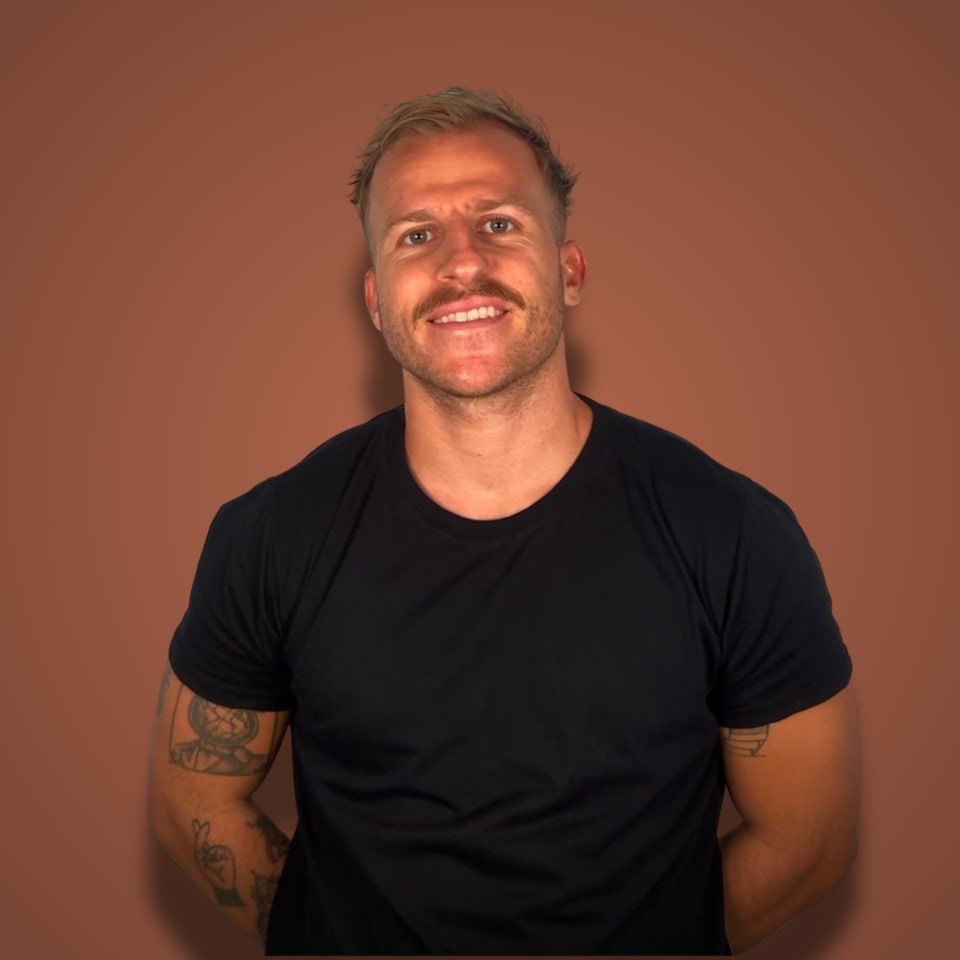
Eleven months ago Evan was a 20-year-old college student with $88 in his bank account.
Last month he made $35,000.
Not from an app. Not from a course. From a clipping agency called Clipping Culture, run entirely on Whop, with 38,000 clippers posting content for artists like Tate McRae and bbno$, AAA game studios, and Netflix movies.
Brett from @TheBrettWay got a full behind-the-scenes tour of the business: the real campaigns, the actual outreach messages, and the $50 trick Evan used to land his first client with zero followers and zero case studies.
I watched the whole thing and pulled out every number. Here's how the business actually works.
What a clipping agency actually does
The model fits in one sentence: brands pay for views, clippers get paid to generate them, and Evan sits in the middle.
A brand hands over raw content. A podcast, a music video, a game trailer, a movie scene. Evan's army of clippers downloads it, cuts it into short clips, and posts those clips across thousands of TikTok and Instagram accounts.
Clippers get paid per 1,000 views (usually $1 to $2). The brand only pays for views after they're generated.
That last part is why brands say yes. It's performance based. A music label isn't gambling on an agency's creative taste, they're buying views at a fixed price.
And the price is absurd compared to ads. One of Evan's campaigns generated 30 million views for $7,000. On Meta or Google you're paying $10 to $20 CPMs, so those same views would cost you $300,000 minimum.
Who's buying? Tate McRae's team. bbno$, who has spent over $200K across 30+ campaigns. Yung Gravy. A AAA game studio pushing a new season. Netflix movies. FaZe Clan. Even the HBO show Paul American.
One e-commerce brand had clippers push a single Joe Rogan moment where he mentioned their product. Evan says it tripled their sales.
$88 in the bank and a $50 meme page DM
Evan started the agency on March 4th, as a college student, with $88 to his name.
No case studies. No portfolio. About 500 followers.
So how do you land a music artist as your first client when you're nobody? You borrow someone else's credibility.
Evan paid a meme page with a big following $50 to send his pitch to Young Martyr, a music artist. The DM came from an account with real followers instead of a random college kid, so it got read, and it got a yes.
That first campaign: a $2,000 budget that generated over 20 million views in less than 24 hours.
Evan's cut was $600.
$600 sounds small until you remember he had $88. And that campaign became the case study that unlocked everything after it.
The cold DM playbook (1 reply per 20 messages)
Not every client came from a paid meme page. Evan sent roughly 1,000 cold DMs in the early months, and his reply rate was 4 to 5 per 100 messages.
His actual pitch to a creator with 2.5 million followers, sent from his personal account with 3,000 followers:
"What's up Donald? If I can install a content distribution system that would have your content repurposed thousands of times per month from clipping accounts and generate 10 million views in the next 40 days, does that sound like something that would interest you?"
First name. One specific outcome. One specific deadline. That creator put Evan in contact with his manager the next day.
The targeting trick is the part I'd steal. Instead of searching for prospects one by one, Evan opens the following list of someone he already wants to work with. Big creators follow other people in their exact niche. So one good prospect hands you a pre-qualified list of 50 more, and you just work down the list with a lightly personalized version of the same message.
His clipper supply came from a partner who ran meme pages. The wild part: that partner found Evan because Evan posted one short video announcing he was starting a clipping agency. It got about 1,000 views. One of those viewers DM'd him and became his partner.
He made content about the business before the business existed. Three videos before the first client.
Inside the machine: 38,000 clippers on Whop
The whole agency runs on Whop. The community is free to join, and right now about 1,000 new clippers join every single day.
Inside there's a 20-minute course teaching new clippers the basics (account creation, editing), a chat, and the part that matters: the content rewards app where campaigns go live. I broke down how that system works in my piece on content rewards apps.
A campaign looks like this from the clipper side:
→ Read the requirements (Evan puts them in a Google Doc)
→ Download the raw content, edit a clip, post it
→ Submit the link
→ Get paid automatically per 1,000 views once a mod approves it
A typical rate is $1.25 per 1,000 views with a $100 max payout per clip. Evan's mod team reviews every submission and skips anything under 1,000 views. The platform handles approval, view tracking, and payouts.
Setting up a new campaign takes 2 minutes. Name it, write a brief, drop the content folder, set the budget and CPM, done. The client deposits directly into the campaign with a card, the campaign goes live instantly, and Evan invoices his fee separately through a checkout link.
This is the unsexy reason the business scales. Most agencies drown in their own operations: chasing invoices, tracking deliverables in spreadsheets, paying 50 contractors by hand. Evan's back office is mostly software. If you're building any kind of agency, this guide on business automations is worth your time before you hire your first ops person.
The 38,000-member community is also a moat. Clippers stay because Evan has never had a day without an active campaign since March. New clippers find him organically through Whop's discover page, where he was the #1 community last week. Supply compounds on its own.
The money math
Evan charges one of two ways:
→ 30% of spend. Client puts up $10,000, Evan keeps $3,000, and $7,000 goes to clippers as the campaign budget.
→ For clients spending over $50K: a $15,000/month retainer plus 10% of spend.
On top of that, past clients get a 15% commission on profit from anyone they refer. That referral fee is why he barely does outreach anymore.
The timeline, for context:
→ March 4th: starts with $88
→ Late March: first campaign, $600 profit
→ May: $10K/month
→ Month 11: $35K/month, on track for the same this month
And his best clippers eat too. His top earner makes $5,000 to $10,000 a month just posting clips. He's heard of clippers at other agencies making $50K in a single day on viral campaigns.
From $600 to $35K a month: the two unlocks
Two things took Evan from a few thousand a month to $10K and beyond.
First, referrals. Young Martyr's team also worked with bbno$ and Yung Gravy. After Evan turned a $2,000 test into 20 million views, they came back with a $10K budget and brought the others with them. Do a great job for one client in a tight niche and the niche finds out.
Second, the website. Evan is blunt about this: the jump from a few thousand a month to $10K a month was the website, no question. Before, he was a DM with a promise. After, prospects landed on a page showing 10 billion+ views generated, a VSL explaining the service, and logos of every artist and studio he'd worked with. Calls started booking themselves.
Social proof does the selling. Your job is to collect it and put it somewhere public.
Evan's honest about the model's weakness too. Clipping sells awareness, not conversions. He tells clients upfront that millions of views won't automatically mean app downloads, and Brett agrees that for direct response, Facebook ads still win. Clipping is for casting the widest net possible at the lowest cost per eyeball.
What I'd steal from Evan's playbook
You don't need to start a clipping agency to use this (though if you want to, I wrote a full guide on how to start a clipping agency).
→ Borrow credibility when you have none. The $50 meme page DM is the cheapest client acquisition move I've heard this year.
→ Pitch one outcome with one number and one deadline. "10 million views in 40 days" beats any deck.
→ Mine the following lists of your dream clients. Pre-qualified prospects, zero tooling.
→ Post about the business before it exists. Evan's partner came from a video with 1,000 views.
→ Make your results public the moment you have them. The website was the difference between $3K and $10K months.
Evan's advice for anyone starting from zero: become a clipper first. It costs nothing, you don't need to show your face, and you'll learn the mechanics before you try to run campaigns for other people. His own first test was an edit of an artist he liked that pulled 800,000 views on a brand new TikTok account.
FAQ
What is a clipping agency?
A clipping agency connects brands with freelance clippers who cut long-form content into short clips and post them across social media. Clippers get paid per 1,000 views, brands only pay for views actually generated, and the agency takes a percentage of the campaign budget for managing everything.
How much do clipping agencies charge?
Clipping Culture charges 30% of campaign spend, or a $15,000/month retainer plus 10% for clients spending over $50K. So on a $10,000 campaign, $7,000 goes to clippers and $3,000 is agency profit. Views cost brands roughly $1 to $2 per 1,000, versus $10 to $20 CPMs on Meta or Google.
How much money do clippers make?
Most campaigns pay $1 to $2 per 1,000 views, with per-clip caps (a common setup is $1.25 CPM with a $100 max payout). Casual clippers earn beer money. Evan's top clipper makes $5,000 to $10,000 a month, and clippers on huge viral campaigns have reportedly made $50K in a day.
Do you need money to start a clipping agency?
Almost none. Evan started with $88. Campaign budgets come from clients, who deposit before the campaign runs. Your real cost is time: hundreds of outreach DMs, recruiting clippers, and reviewing submissions. Evan's one paid shortcut was $50 to a meme page to deliver his first pitch.
Hear stories like this every week
A 20-year-old with $88 built a $35K/month business in 11 months by sitting between people who want views and people who'll make them.
Every week on the Profitable Founder Podcast I get bootstrapped founders to open up their numbers exactly like this. Real revenue, real playbooks, no filter.