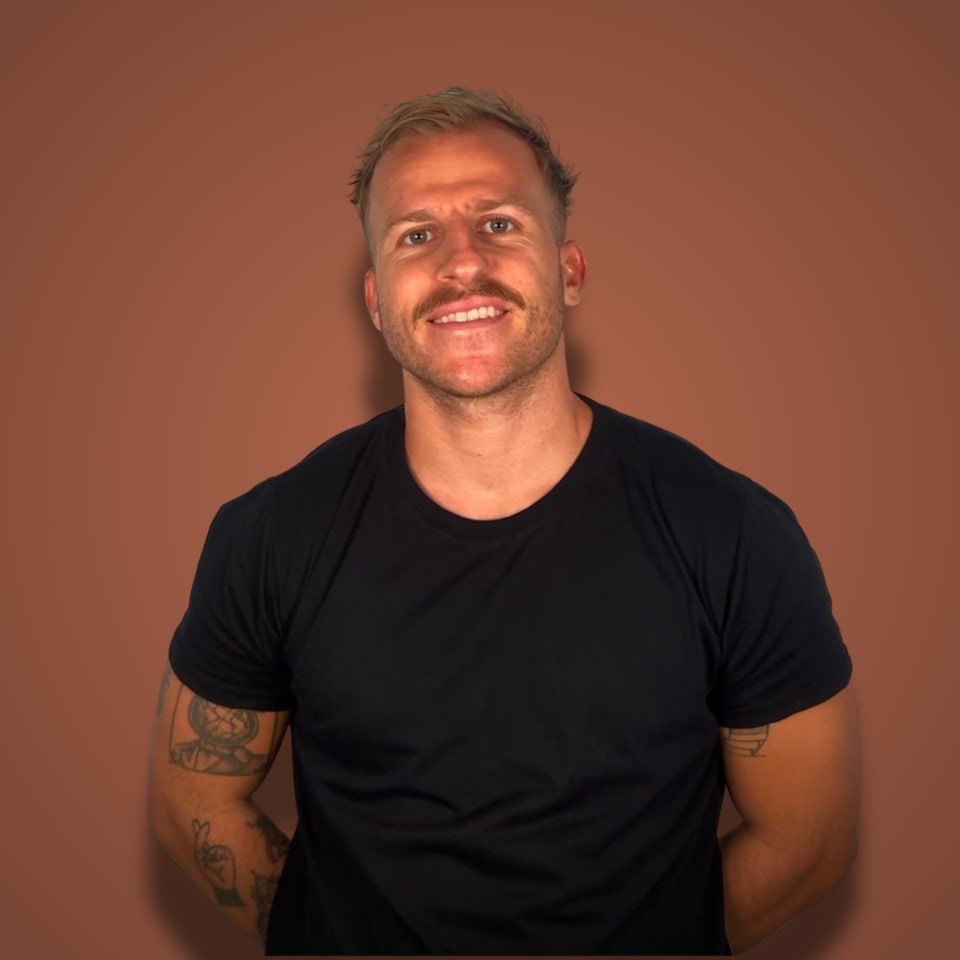
I started documenting my SaaS journey on YouTube with 16 followers.
No audience. No hype. Just me, a camera, and a public commitment to hit $100K/month.
That decision has brought me customers, podcast guests, Club members, and friends I can call at 10pm when I'm stuck on a pricing decision.
Building in public is the cheapest distribution channel a bootstrapped founder has, and it compounds. Most founders still do it wrong: they post vibes instead of numbers, chase likes instead of customers, and quit after 3 weeks.
Here's how to build in public properly, step by step, with the real numbers from people who did it.
What building in public actually means
Building in public = sharing the real inside of your business while you build it. Revenue. Failures. Decisions. Screenshots from Stripe, not motivational quotes.
Buffer started this in 2013 by publishing every salary. Today their open dashboard shows $25.6M ARR and the exact pay of all ~60 employees.
Pieter Levels took it further with the "open startup" idea: live public revenue for every product. He's now at a $3M+ ARR solo portfolio, and his game fly.pieter.com went from $0 to $1M ARR in 17 days, in public, in front of 130K+ followers.
You don't need to go that far. You need a system. Here it is.
Step 1: Pick the one platform your customers actually use
Not the platform other founders use. The one your customers use.
The 2026 landscape, roughly:
- X (Twitter) → the native habitat of #buildinpublic. Best for peer amplification, press, and community. But median engagement has cratered to around 0.015%.
- LinkedIn → around 5% average engagement right now, and the algorithm loves personal founder stories. If you sell B2B SaaS to normal businesses, your buyers are here, not on X.
- Indie Hackers → milestone posts get read without you needing any following. Great starting point at zero audience.
- YouTube → slowest to start, longest compounding. This is what I picked.
The trap: building an audience of other indie hackers when your customer is a dentist. Engagement feels like traction. It isn't, unless the people engaging can buy.
Pick ONE primary platform. Cross-post the same update elsewhere in adapted formats. That's it.
Step 2: Decide what you share (and what you keep private)
Share:
- Revenue milestones with dates ("first $1K MRR, day 94")
- Monthly metrics screenshots: MRR, churn, trials, conversion
- Decisions and the reasoning behind them ("I killed this feature, here's why")
- Failures and post-mortems (these consistently outperform success posts)
Keep private:
- Your exact acquisition channel while it's still working
- System architecture and feature specs
- Anything a competitor could copy faster than you can compound
Arvid Kahl (sold FeedbackPanda at $55K MRR, built his whole author career in public) made an uncomfortable point recently: the old rule was "stop sharing revenue around $20-30K MRR because competitors notice." With AI coding tools, that threshold has basically collapsed. Anyone can clone a simple product in weeks.
His filter is the right one: make your journey interesting to participate in, not easy to clone. Share the why and the lessons. Not the blueprint.
Step 3: Post numbers, not vibes
"Great progress this week, feeling grateful" gets ignored.
"$0 → $5.4K MRR in week 1. Here's the launch breakdown" gets read, saved, and shared.
Every founder who won at this game did it with numbers:
- Tony Dinh started with 100 followers in November 2020. He posted every revenue update, every product decision. TypingMind did $22K in its first week and he crossed $1M cumulative revenue by 2025, with 180K+ followers along the way.
- Marc Lou posts his Stripe screenshots monthly. $1,032,000 in 2025 across a portfolio of small products, and 200K+ followers who watched every step.
- Tibo built Tweet Hunter's MVP in 2 weeks and narrated the whole ride: $150K ARR in 4 months, $1M ARR in exactly 12, then a multi-million exit to Lempire.
Formats that work:
→ "Week N of building X" serialized updates
→ Before/after milestone posts with the exact tactic that moved the needle
→ Public post-mortems ("I shut this down, here's what it cost me")
→ Raw dashboard screenshots (Stripe, or an open page like Baremetrics)
I do this on video. Every few days I publish a "Day N growing my SaaS to $100K/month" episode: real MRR, real experiments, real misses.
Day 1 of that series went out to almost nobody. The series is now the top source of applications for my Club and guests for my podcast. That's the compounding part nobody sees at week 3.
Step 4: Set a cadence you can hold for 12 months
Consistency beats intensity. Every time.
Minimum viable cadence:
- 3-5 short posts per week on your primary platform (a metric, an observation, a decision)
- 1 deeper piece per week or two (thread, video, or newsletter issue)
- 1 monthly recap with full numbers
The pattern behind every success story above is boring: they posted through the silence. Tony Dinh posted for months to a few hundred followers before anything took off. Audience growth compounds on a 6-18 month curve, not a 6-week one.
Batch it. I record multiple updates in one sitting and write posts on a fixed day. Building in public should cost you 3-4 hours a week, not your whole calendar. (If it's eating your build time, you've become a content creator with a side SaaS. No shade, I was close to becoming one once.)
Step 5: Own the audience you're renting
One algorithm change on X can erase your reach overnight.
So from day one: every public post should quietly feed an email list. Beehiiv, Substack, whatever. A weekly or even monthly newsletter is enough.
The split that works:
→ Social = discovery (short, numbers, hooks)
→ Email = retention (depth, context, the full story)
Marc Lou, Arvid Kahl, Pieter Levels: all of them route their social audience into owned channels. Followers get you seen. The list is the only audience you actually own.
Step 6: Track customers, not claps
The build-in-public trap: your dashboard says 40K impressions and your Stripe says $0.
Fix it by tracking the only two metrics that matter:
- Post → trial signups (use a UTM or a simple "how did you hear about us" field)
- Post → paying customers
If six months in, your audience is 95% other aspiring founders and your product sells to e-commerce brands, change your content, not your effort. Talk about the problems your buyers have, in the words your buyers use, and let the founder audience be a bonus.
I break down the founders who balance this well (audience AND revenue) in my list of the best build in public creators to follow. Steal their post structures.
The part nobody tells you
Building in public is emotionally expensive.
Your failures are public. Your slow months are public. Random accounts will explain to you why your product is doomed.
Two things help:
1. Set a minimum viable transparency level you can sustain (a monthly update beats daily posting you'll abandon by March).
2. Have a private room where you can be honest before you're public. For me that was a mastermind. I paid $13,000 for one while making $15-20K a month (stupid decision, right?), and six months later I was at $75K a month. The public posts got easier because the hard thinking happened in private first.
Building in public also pairs well with the rest of your distribution. If you're early, start with getting your first 100 SaaS customers and use your public posts as the proof layer on top.
FAQ
What if I have no audience at all?
Start where an audience isn't required: Indie Hackers milestone posts and niche subreddits get read on merit, not follower count. On X or YouTube, expect 6+ months of posting into silence. Tony Dinh had 100 followers when he started. I had 16 YouTube subscribers. The first 1,000 is the slowest, then it compounds.
Should I share my revenue publicly?
Under ~$10K MRR it's almost all upside: credibility, attention, inbound. Past that, weigh how easily your product can be cloned and whether funded competitors are watching. Middle ground: share growth percentages and milestones without live dashboards.
Build in public on LinkedIn or X in 2026?
Both, adapted. X for the founder community and amplification. LinkedIn for actual B2B buyers, with roughly 5% engagement vs 0.015% on X right now. Write the update once, format it twice.
Does building in public still work in 2026?
The lazy version (revenue screenshot, follow-bait, repeat) is saturated. The version that works: real decisions with context, consistent numbers, and content aimed at your actual customers. Less crowded than it was in 2021, because most people quit.
How long until it pays off?
Expect 6-18 months for the audience to compound. Customer results can come faster if your content hits ICP-matched channels. Tibo took Tweet Hunter to $1M ARR in 12 months sharing everything from day one.
Build in public, but don't build alone
Public posts get you reach. They don't get you the 10pm answer when churn spikes and you don't know why.
That's what the Profitable Founder Club is for: a private mastermind of SaaS founders between $5K and $50K MRR pushing to $100K. Bi-weekly calls where we solve 3 member problems, monthly Q&As with $100K+ founders, batches capped at 20.