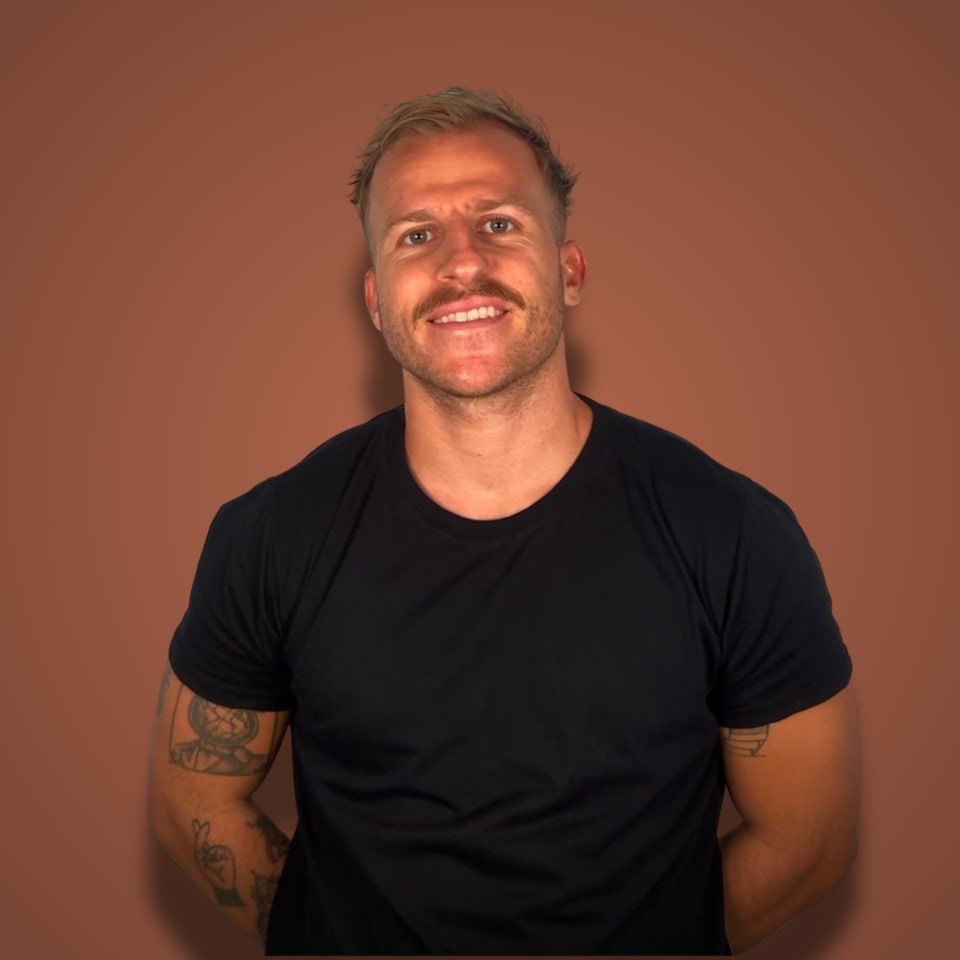
A 22-year-old charges $40,000 for a single video.
No film crew. No studio. No 30-person agency burning cash on lighting rigs.
Just a guy who goes by Beechinour, a laptop, and a stack of AI tools that mostly didn't exist a year ago.
He's pulling somewhere north of half a million a year doing this. And the wild part? Two years ago his bank account was sitting under $1,000.
I watched Brett Malinowski sit him down for his first-ever public interview, and there's a real bootstrapped playbook buried in here. Not "make AI slop and get rich." Something closer to how I think about building anything that lasts.
Here's the whole thing, then I'll break down what actually matters.
The $40K-per-video number isn't the lesson
Let's get the headline out of the way, because it's the thing everyone fixates on.
Beechinour makes AI commercials for software companies. Launch videos, product films, the kind of thing a startup wants when it's putting a new thing into the world.
He charges $20K to $40K each.
He made the GTA 5 video that went around. He's got a portfolio of brands most people would kill for. And he's 22.
For tax purposes he keeps it vague, but Brett pegged him at "half a million a year minimum, probably more." Beechinour didn't argue.
Now here's where everyone gets it wrong. They hear "$40K per AI video" and think the tools made him rich.
They didn't. The tools are the cheapest part of the whole operation.
He cycled through every side hustle you've heard of
Before any of this, Beechinour was the guy trying everything.
Drop shipping. Meme coin trading. A clothing brand. Facebook ads on a store that never popped. He started shooting music videos at 15 because he saw Cole Bennett build Lyrical Lemonade and thought, I could do that.
He'd make $500 from a video and immediately dump it into 20 shirts or a new ad campaign for whatever store he was testing that month.
99% of it failed.
His words, not mine: "Most of that stuff never worked out."
I love this part because it's the part nobody posts about. The successful 22-year-old you see online didn't show up fully formed. He spent years losing money on dumb experiments, funded by other slightly-less-dumb experiments.
That's the actual texture of building something. It's not a straight line. It's a pile of dead side projects you mostly don't regret.
I've been there. I tried a bunch of things that went nowhere before the SaaS I eventually sold actually worked. The losing rounds aren't wasted. They're where you figure out what you're good at.
The free video that changed everything
Around his 19th birthday, broke, living in a cramped New York apartment, Beechinour did one thing that flipped the whole trajectory.
He made a commercial for free.
He knew he wanted to get into commercials, so he just made one for a brand he liked. No invoice. The video did numbers on Instagram, and suddenly he had a wave of new clients knocking.
This is the move I'd tattoo on every founder's arm. When you have no proof and no reputation, the fastest way in is to do the best work you can, for free, in public.
Not forever. Once. As a flare gun.
One great free thing beats fifty cold pitches. It's the same reason I started a podcast instead of cold-emailing founders to "pick their brain." Make the valuable thing first, let it pull people toward you.
How he went from $1-2K gigs to $15K/month retainers
Here's the inflection point, and it's pure leverage.
For years, Beechinour sold like a freelancer. Fiverr, Upwork, music video gigs. He never saw much more than $1K to $2K at a time. One video, one payment, start over.
Then he connected with a guy named Presley on Twitter, who ran a small mentorship group called Leverage Creator. Presley and his partner Cam had built a serious YouTube agency, and they showed him something he hadn't seen.
You don't sell a video. You sell a stack.
Add scripting. Add a monthly retainer. Add SEO. Bundle the value, and suddenly that same client is paying $10K to $15K a month instead of $1.5K once.
Same skill. Same person. Completely different business model.
That's the thing about masterminds and peer groups that I bang on about constantly. Beechinour wasn't missing talent. He was missing the one insight that the people one step ahead of him already knew. He couldn't have read it in a blog post because he didn't know to look for it.
He said he'd go to a more experienced creator's house every single day just to absorb how the professional operation actually ran. That proximity changed everything.
I paid $13K for a mastermind once when I was making nowhere near that. Stupid decision on paper. Six months later that same SaaS was doing $75K a month. The room paid for itself a hundred times over.
You can't see the move you don't know exists. That's what the right room gives you.
Want the room Beechinour stumbled into, but for SaaS?
I built Profitable Founder Club for bootstrapped SaaS founders between $5K and $50K MRR who are grinding toward $100K. Bi-weekly calls where we actually solve three members' problems live, monthly Q&As with founders past $100K, capped at 20 people so it stays real. No gurus. Just the people one step ahead of you.
Join the Club →The tool stack (since you're going to ask)
Fine, here's what he actually uses. Because half of you scrolled here looking for exactly this.
- Nano Banana Pro for images. He's blunt about it: "Every other image model kind of sucks right now."
- Gemini not to generate, but to analyze. He'll feed it 100 of his favorite ads and ask what the winning scripts have in common.
- Kling 2.6 for the best video quality at the moment.
- VO3.1 when it's on. Sora 2 he mostly skips, too expensive, too many restrictions.
- Topaz for upscaling.
- ElevenLabs for audio. He once made a voiceover for the GTA video that beat the real human take.
But notice he said it plainly: the tools don't make the video for you. They're brushes. The taste is the whole thing.
His real edge: novelty arbitrage
This is the smartest thing he said, and it applies way beyond video.
Every time a new AI tool drops, there's a short window where you can suddenly make something nobody has ever seen. For a week or two, it's genuinely mind-blowing. Then everyone copies it and it's noise.
Beechinour lives in that window. The day a new model ships, he's testing what it can do that was impossible yesterday, and he drops it straight into a client's next video.
"If we'd posted the GTA video today, it would've done way worse. No one had done it yet when we did."
Novelty is rewarded on social. First-mover beats best-execution when the format itself is new. That's true for AI video, and it's true for content, products, and distribution channels too. The founders winning on short-form right now are the ones who jumped on each new format before it got saturated.
If you're building in public, this is your cheat code. Be early to the format, not perfect at the old one.
Brand over clients, and scaling without hiring
Two more things worth stealing.
First, he's stopped thinking of his work as client work. He thinks of every video as building his brand. The client gets a great video, sure, but the real asset is his growing reputation, which lets him charge more and pick better projects. It's the same logic behind building an aesthetic personal brand instead of just chasing one-off gigs.
Second, he scales without a payroll. Need real actors for a hybrid AI/UGC spot? He hires people off backstage.com for about $100 a day, has them film from their living room, and stitches it together. Small teams, low overhead, premium prices. If you're curious how the AI-plus-real-people approach plays out at volume, the UGC playbook behind one app's 12 million downloads is the same muscle.
This is the one-person-business flywheel I keep talking about. Skills compound. Brand compounds. Network compounds. Headcount doesn't.
What I'd take from this if I were starting today
Strip away the AI-video specifics and the lessons are old as dirt:
→ Try a lot of things and don't romanticize the failures. Most won't work. That's the cost of finding the one that does.
→ Make one great free thing to break in. Proof beats pitches.
→ Sell stacks, not deliverables. The value isn't the video, it's the scripting plus retainer plus outcome.
→ Get in the room with people one step ahead. The insight that changes your pricing is something they already know and you don't.
→ Be early to new formats. Novelty is the cheapest distribution there is.
→ Build your brand, not your client list. One compounds, the other resets every month.
Beechinour is 22 and making $500K a year because he stacked those things, not because he found a magic prompt.
FAQ
Who is Beechinour?
A 22-year-old AI video director who makes commercials and launch videos for software companies and brands. He goes by @beechinour on X, made the viral GTA 5 video, and gave this interview as his first public appearance.
How much does he charge per video?
$20,000 to $40,000 for a single AI commercial. With scripting, retainers, and add-ons stacked on top, a client relationship can run $10K to $15K a month.
What AI tools does he use?
Nano Banana Pro for images, Kling 2.6 and VO3.1 for video, Gemini for analysis, Topaz for upscaling, and ElevenLabs for audio. He mostly avoids Sora 2 for being expensive and restrictive.
Do you need AI skills to make money like this?
Not really. His edge is taste, speed to new formats, and how he packages and prices the work. The tools are the easy part and they keep changing. The judgment is what people pay for.
How did he actually get started?
He shot music videos from age 15, failed at a string of side hustles through his late teens, then made a free commercial that took off on Instagram and brought in his first real clients. A mentorship group later taught him to sell stacks instead of one-off gigs.
Want more founder breakdowns like this?
Every week on the Profitable Founder Podcast I sit down with bootstrapped founders making $100K to $10M a year and pull out the exact moves behind the numbers. Real revenue, real playbooks, no fluff.
Listen to the podcast →