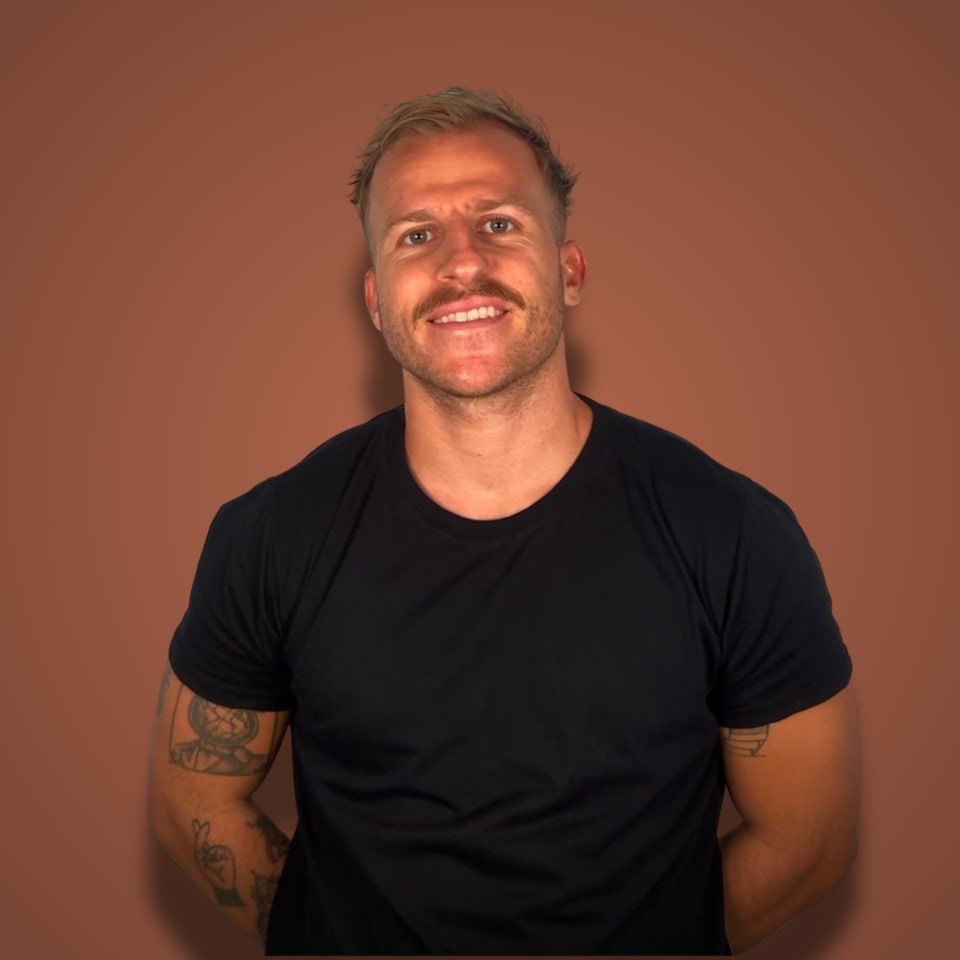
Gosha spent 12 months doing one thing before he touched a camera: watching other people's content.
Then he started a YouTube channel and grew it to 15,000 subscribers, making five figures along the way.
He's the creative director behind the 37 agency. He builds "aesthetic personal brands" for a living, and he's reverse-engineered how creators like Daniel Dalen, George Heaton, and Mark Lou turn a face on the internet into millions in revenue.
I sat down with Gosha on the Profitable Founder Podcast. Here's the full three-step blueprint.
Why a personal brand beats a company brand
Gosha's argument is simple.
A product brand goes up, then it comes down. A personal brand sticks to your name, your face, your persona. It doesn't go away.
Only the Teslas and Apples get to build a company brand that lasts. For everyone smaller, the brand collapses when the product does.
So if you're a medium or small business founder, the only way to stay recognizable and keep making money on social media is to build the brand around you. Not the company.
(And if you just consume and never produce? You lose money instead of having the chance to make it.)
What "aesthetic" actually means
The word used to be a trap. Old money, luxury, snobby Pinterest boards.
Gosha redefines it: actively thinking about your image. The objects, visuals, textures, and colors that package you as a person.
And he builds it in three quality levels. Here's how he did it on his own channel:
→ Level 1, the entry barrier. Good audio and a good camera. He refused to start his sit-down videos until he had the right microphone, the one people see on Joe Rogan, because that single object signals "profession" to a viewer in the first 30 seconds. Then he swapped the Osmo for a Sony so people could see multiple angles in high quality.
→ Level 2, the elevated experience. Cinematic editing. Custom typography. Cuts that flow with the music. Timed black screens. He's now put tens of thousands of dollars into editing alone.
→ Level 3, the thing that sets you apart. For Gosha, that was scripting and storytelling. He covered the Marcus Milliones and George Heatons instead of the Alex Hormozis everyone else films.
Style without story is empty, he told me. Without transformation, any aesthetic is just cosplay.
Step 1: Scale your taste with a mood board
If you came to him with zero following and no clue what you want, here's where he'd start.
You consume first. You become a consumer before a creator.
He sends you reference boards and asks: what connects with you most? You pinpoint a short list of creators whose entire library you could watch on loop. Then you break down the keywords and the specific visuals behind why they grab you.
Then you open Miro, Figma, or Notion and you build Pinterest mood boards of your perfect feed. Without using a single one of your own photos.
How many boards? With first-time clients, Gosha goes through 20 mood boards before they post anything. You build them, then you notice which ones were a one-day hype and which one is actually your structure.
This same instinct, studying what already works and finding your angle inside it, is exactly what separates founders who win from founders who copy. It's the heart of how the best builders pick a niche and make it their own.
Step 2: Match the budget to the aesthetic
This is the hardest conversation he has with clients. And the most humbling.
People say "I want to do what Alex Hormozi does, he just sits in a flannel reading his tweets." But Hormozi has three cameras in the room, a specific background, multiple editors, and scripts written ahead by a team. A starting creator can't replicate that.
So you reverse it. You find the aesthetic creators with replicable setups and you price it out:
→ Editor: maybe $500 a month.
→ Music subscription.
→ A camera like the Osmo: around $400.
Under $600 to $700 a month, and you can produce a real stream of reels, YouTube videos, and Instagram posts.
The trap is copying the lifestyle instead of the system. Gosha's warning: people see a thumbnail works because it was shot in first class, so they think they need to fly first class. They buy the Goyard bag, run an ad, and wait for $10K in course sales in a day.
It never works that way. It works that way for the people selling you the idea. For the other 99%, it doesn't.
And short form flips the math entirely. A creator filming in a 12-square-meter bedroom with the right soundtrack can pull 500,000 views overnight. You can compete with Hollywood-budget creators if you understand the trends and the taste.
Step 3: Sell the lifestyle, not the product
Here's the line Gosha is trying to coin: inspiration is the product.
People don't buy what a product does. They buy what their life looks like after they own it. The imagination doesn't stop at step one, it runs all the way to step ten.
Take Mark Lou, who runs an AI agency. His keyword list has zero mention of AI, SaaS, or technology. No five-monitor setups. Instead: Bali, European summer, digital nomad, remote setups, fashion. His whole aesthetic is the non-geeky, non-nerdy AI entrepreneur.
Why? Because his audience watches to believe they can work a few focused hours on a MacBook and then go anywhere in the world. That's the lifestyle being sold. The product is almost a footnote.
It maps to a funnel with more layers than people admit:
→ Top: the lifestyle content on YouTube.
→ Middle: the work content (which, Gosha notes, statistically gets skipped, so making it entertaining is its own skill).
→ Bottom: the Twitter and the newsletter, where the people who arrive are already buyers.
I interview founders like this every week → Watch the Podcast
The monetization cheat code: wait to be asked
This was the most honest part of the conversation.
Gosha's worry is real: as fast as you gain an audience, you can lose it even faster. Force a product on people and your funnel converts once. Then the next viral hit doesn't come, and you've burned the trust.
His cheat code instead: build a community so ingrained in your content that they ask you to make products. Daniel Dalen hit 100,000 subscribers with nothing to sell, no call to action, just talking about his business. The glasses came later, because people kept asking what he was wearing.
Gosha lived this himself with a $60 Notion template. When he pitched it directly in videos with a "go buy it" CTA, he got about five sales. When he just had it open in the background and showed himself working on it? That did 20x the sales. People DM'd him asking what he was using.
Treat your audience like close friends sitting in one office with you, not buyers. You can't duplicate yourself, and you can't start your personal brand over. So protect it.
It's the same logic behind why the tightest founder communities outlast any single product launch.
Frequently Asked Questions
Who is Gosha and what is the 37 agency?
Gosha is a creative director and the founder of the 37 agency, where he builds aesthetic personal brands for entrepreneurs. He spent 12 months analyzing the most successful aesthetic creators while growing his own YouTube channel to 15,000 subscribers and making five figures from it.
How do you build an aesthetic personal brand from scratch?
Gosha's three steps: scale your taste by building Pinterest and Miro mood boards of your ideal feed (he runs clients through 20 boards), match your content budget to that aesthetic (often $600 to $700 a month for an editor, music, and a camera), and sell the lifestyle rather than the product.
How do creators like Daniel Dalen make money from a personal brand?
By building community first and selling second. Daniel Dalen reached 100,000 subscribers with no product and no CTA, then launched products like his glasses only after his audience kept asking about them. Gosha says he reportedly made around 25 million in a year in revenue from his personal brand.
Build the audience like friends, and the products will be theirs to ask for, not yours to force.