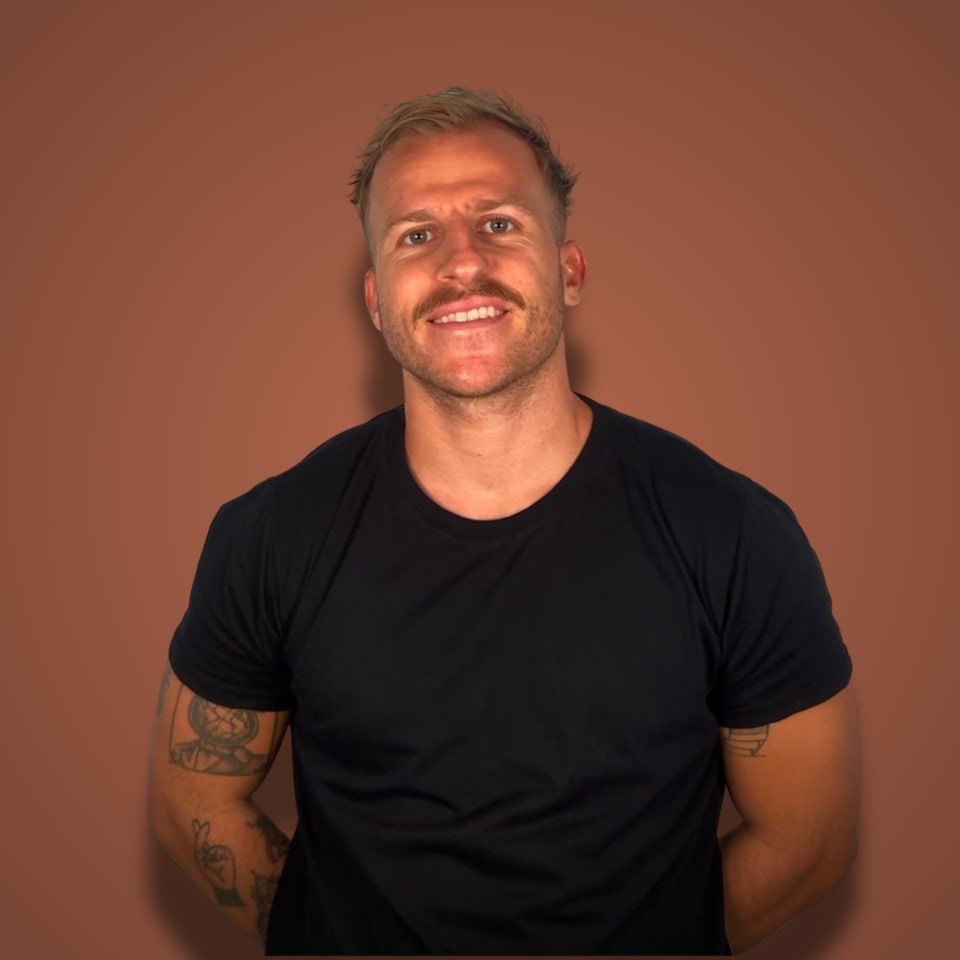
A 21-year-old got his Harvard offer revoked, spent a year locked in his room gaining 40 pounds, then got expelled from Columbia for building a tool that helped him cheat on a job interview.
Eighteen months later he's doing $6M ARR.
That's Roy Lee. The company is Cluely. It launched April 20th and hit $500K MRR in under two months.
I watched his full sit-down with Brett (The Brett Way) and took notes, because underneath the chaos there's an actual playbook here — one most founders are too scared to run.
Let me walk you through it.
The rock bottom most founders skip in the highlight reel
Everyone shares the $6M number. Nobody shares the part that came first.
Roy was the kid who did everything right. Captain of the math team. Captain of the debate team. Admitted to Harvard early. On track to be an investment banker.
Then senior year he snuck out of a school field trip to see his girlfriend, got suspended, and Harvard found out. Offer rescinded.
His family runs a college-prep consulting business — they literally teach kids how to get into Harvard. And the youngest son just got kicked out of Harvard.
So they did what a lot of us would do. They went quiet for a year. Told nobody.
Roy spent that year in his room. Talked to no one but his parents. Barely left the house. Gained 40 pounds. Programmed a ton.
That's where the chip on his shoulder came from.
→ "I need to build a gigantic company so nobody will ever look down on me again."
I've talked to a lot of founders on the podcast, and almost none of the good ones started from a clean, calm place. The chip is usually the engine. Roy just happens to be honest about his.
The "dumbest name in history" that printed $5M
He eventually transferred to Columbia. First day on campus, he walked around asking every smart-looking kid the same thing.
"Do you want to start a company with me?"
Out of roughly 50 people, one said yes. That's Neil — his co-founder today.
They spent a whole semester building side projects. Everything flopped. Everything except one stupid October demo: a tool to help you cheat on technical coding interviews. They called it Interview Coder.
They couldn't even afford interviewcoder.com, so they grabbed interviewer.co.
The demo did 500,000 impressions on LinkedIn. Roy couldn't let it go. Neil wasn't sold. Nobody in his life was sold. Building a tool that openly helps people cheat their way into software jobs? That's a lawsuit waiting to happen.
But his heart was already captured. So he did the unthinkable: he recorded himself using Interview Coder to land real offers, and posted it.
The first video — him using it to get an Amazon offer — did 20,000 views. Small, by today's standards. Big enough that an Amazon exec saw it.
Amazon went to Columbia: expel this kid or we stop hiring from your school.
Columbia took Amazon's side. Disciplinary hearing. Suspension.
Here's the move that changed everything: through the entire process, Roy tweeted every single update.
He was terrified — no school, no job prospects, life apparently over. So he bet on virality as his only lifeline. And it worked. The story went massive.
That hype let him raise a round. He walked away from getting kicked out of two elite schools with $5 million in the bank.
→ Silicon Valley investors don't fund safe. They fund kids who do crazy things and survive the fallout.
Cluely: the same energy, pointed at a bigger market
With $5M and a target on his back, Roy asked the obvious question. What's next?
The answer was Cluely.
Cluely is an AI assistant that sees what's on your screen, hears your audio, and gives you live help without you prompting it. Meetings. Sales calls. Interviews. And — this is the part that made it spread — it's invisible to screen share.
His pitch is simple: ChatGPT is a genius that can only answer what you type. Why limit a model that can already read your screen and listen to your calls in real time? Cluely is the 10x version of that — AI that just watches what's happening and helps live.
Same provocative DNA as Interview Coder. Bigger market.
Launched April 20th. Under two months later: $500K MRR, about to cross $6M ARR. Twenty-one years old.
The actual growth engine: a UGC machine, not a product
This is the part you can steal, so pay attention.
Cluely's growth isn't really about the product. It's a content operation.
Roy built a UGC funnel — short-form videos pumped out at volume across TikTok, Instagram, and X. In one stretch of about two and a half weeks, Cluely did over 20 million views. He expects his first full month to be the start of a flywheel that scales into the billions.
How? He has roughly 100 content creators on retainer. He ran an "intern challenge" to recruit them. They all post in a similar style, all pointing back to Cluely. It's a distributed media company disguised as a startup.
It got so good that the co-founder of a competitor publicly said "the Cluely team's marketing is the best, we need to do what they're doing." When your rivals are studying your content instead of your code, you've won the distribution game.
And Roy was blunt about why this works right now: creators with 150–200K followers get 5 million views per video and barely get paid, because most companies haven't figured out that attention is the cheapest it'll ever be. He did. So he bought it in bulk.
This is the exact same UGC playbook Zach Yadegari used to scale Cal AI to tens of millions in ARR — here's that full story if you missed it. And it's the same engine behind the viral app launches I broke down in this UGC marketing piece.
If three AI apps all hit the same numbers with the same strategy, that's not luck. That's the new distribution default.
What I'd actually take from this (and what I'd leave)
I'm not telling you to build a cheating tool or get yourself expelled. Most of the controversy stuff is survivor bias — for every Roy Lee there are a hundred founders who burned their reputation and got nothing.
But there are three things here that work for normal, non-insane founders too:
→ Distribution beats product. Roy's product is good, but his content machine is what's printing money. You should be spending more time on how people find you than you think.
→ Document the journey, not just the launch. The Interview Coder saga worked because he tweeted every twist in real time. People follow stories, not announcements.
→ Attention is on sale. Creators are underpriced right now. A small budget plus a repeatable video format goes further than another month of feature work.
The part I'd leave behind is the loneliness. Roy white-knuckled a year alone in his room and then a year of public crisis with basically no one in his corner except one co-founder he met on day one.
You don't have to do it that way. That's the whole reason I built the Club.
FAQ
Who is Roy Lee?
Roy Lee is the 21-year-old founder of Cluely, an AI assistant startup. He previously built Interview Coder, the tool that got him suspended from Columbia. He'd earlier had his Harvard admission revoked over a separate incident.
What is Cluely and how does it make money?
Cluely is a subscription AI assistant that reads your screen and listens to your audio to give live, unprompted help during meetings, sales calls, and interviews. It's invisible to screen share. It launched April 20th and reached about $500K MRR within two months.
How much has Cluely raised and how big is it?
Roy raised roughly $5M off the back of the Interview Coder virality before Cluely. By the time of the interview, Cluely was approaching $6M ARR.
How did Cluely grow so fast?
A UGC content funnel — around 100 creators on retainer pumping out short-form video. The team did 20M+ views in about 2.5 weeks. The product spreads through controversy and volume, not paid ads.
Should I copy the controversial marketing?
Be careful. The provocation worked for Roy, but it's high-risk and survivor-biased. The repeatable, lower-risk lessons are: invest in distribution, document your journey publicly, and use underpriced creator attention while it lasts.
Building alone is the hard part. You don't have to.
Roy's story is wild, but the loneliest year of his life is the part nobody wants. I've been there — I paid $13K for a mastermind when I was doing $15–20K/month, hit $75K/month six months later, and the room of other founders was the difference.
That's why I run Profitable Founder Club for founders past $5K MRR chasing $100K. Bi-weekly calls where we solve three real member problems, monthly Q&As with $100K+ founders, capped at 20 people so it stays useful.
If you're tired of building in a room by yourself, come hear how other founders are doing it. Start with the podcast — listen to a few episodes here — and if it clicks, the Club door is open.