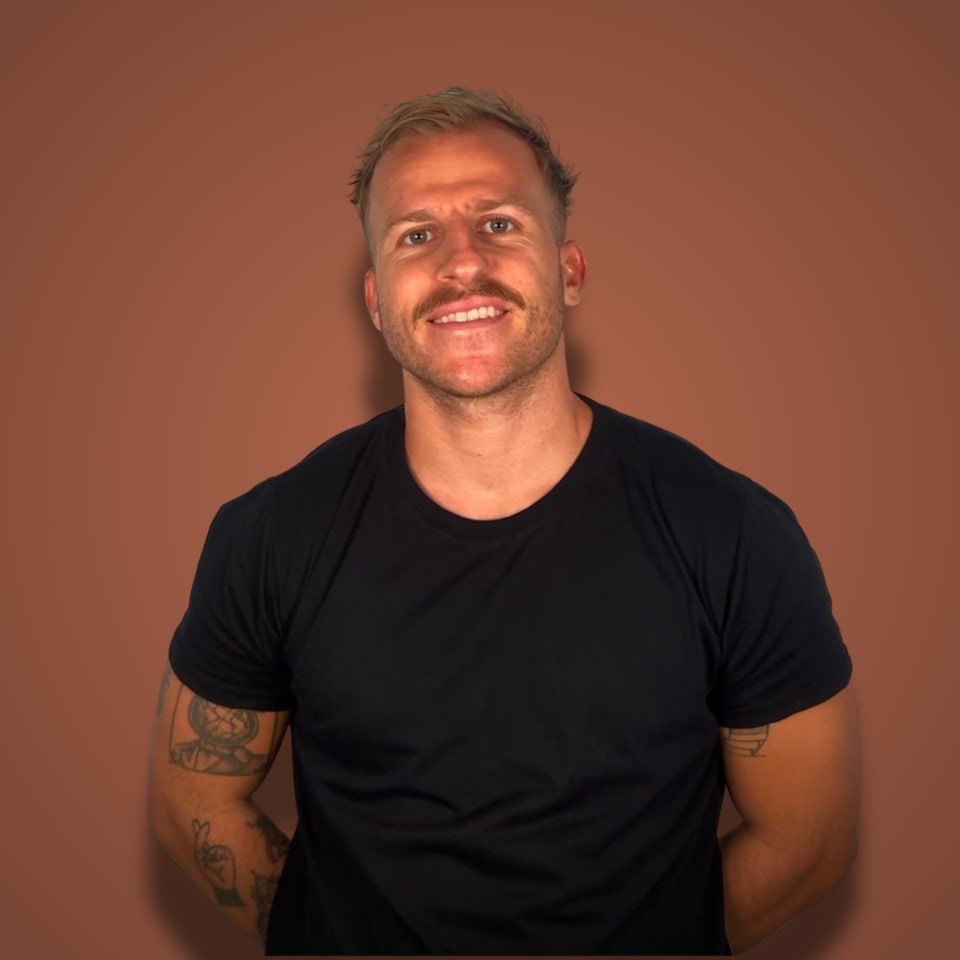
Most founders build the app first.
Then they launch, post a few TikToks, get 200 views, and conclude that marketing "doesn't work for them."
An Nayal did it backwards. He used the VSC framework to validate the content BEFORE deciding what to build and scale. His couples app Flame went from $3,000 to $10,000 MRR in under 8 months, hit 250,000 downloads, and racked up 58 million organic views on TikTok. No paid ads.
He broke the whole system down on Starter Story with Pat Walls, and it's one of the most stealable growth playbooks I've seen this year.
Here's the full episode:
Below: who An is, what VSC stands for, the exact numbers behind each letter, and the ugly spreadsheet that runs the whole operation.
Who is An Nayal, and what is Flame?
An's background is not the typical indie hacker path.
He launched a fitness chain in China and scaled it across 7 locations. Then he moved to Europe and helped a German scale-up go from a $40M Series B to a $200M Series C. Somewhere in there he learned the lesson that drives everything he does now:
→ Distribution is the moat. Not the product.
Then he moved to New York and noticed something. There are hundreds of apps to help you FIND a partner. Almost none to help you keep the relationship good afterwards.
So he built Flame with his then girlfriend: a daily ritual app for couples. One question a day. You can't see your partner's answer until you submit yours. There's an AI relationship coach trained on your answers, a shared bucket list, and a private memories timeline.
They built the app to work on their relationship, and used the relationship to build the app. They're married now. (Strongest retention metric I've ever heard.)
The business numbers:
- 250,000 downloads
- $3,000 to $10,000 MRR in less than 8 months
- ~58 million cumulative organic views, all tracked in one spreadsheet
- Subscription model, currently mid sales process
And the growth channel was organic TikTok. Not one account. Fifteen to twenty of them.
The VSC framework: Viral, Scalable, Convertible
An almost ran out of cash on Flame. The VSC framework is what he says saved the company.
The idea: before you build an app (or before you scale one), go on TikTok and check three boxes. If a content angle for your idea passes all three, you have a growth engine. If it fails one, you'll burn months finding out the hard way.
V is for Viral: has this content already worked?
You're not asking "could this go viral?" You're asking "HAS this gone viral?"
An's bar is specific: multiple pieces of similar content with over 100,000 views, posted by accounts with UNDER 5,000 followers.
The follower cap is the whole trick. When a 2M-follower account gets 500K views, that's reach. When a 3,000-follower account gets 120K views, the CONTENT did that. The format itself is proven, which means you can replicate it without an audience.
Same logic I covered in how to validate an app idea: find proof that demand exists before you write a line of code.
S is for Scalable: can you make 100 of these without dying?
An is blunt about this part. It's a volume game.
At one point his team was putting out 150 pieces of content PER DAY to test a single hook.
Read that again. Not 150 per month. Per day.
So the question for any format is: can you produce 100 of these without burning out? Two ways he does it:
- AI-generated content. Slideshows made with Nano Banana, video from tools like Kling. The quality has gotten close enough to real footage that it works.
- Cheap UGC. He hired creators from Eastern Europe and Russia through work.ru (think the Fiverr of Russia) at roughly $1 for a 60-second video.
If your format needs you personally on camera with 10 minutes of setup per post, it fails the S test. Pick formats a system can produce, not formats a founder has to grind out alone.
C is for Convertible: are the comments asking for the product?
This is the letter most people skip, and it's the most important one.
You can clone a viral format, get the views, and make $0. An's test: open the comments on content similar to yours. Are people asking "what's the app?" and "where do I find this?"
If the comments are just "lol" or people arguing, the format entertains but doesn't sell.
He showed a real example on the episode: a video that got 120,000 views and produced 8 or 9 trial starts. Viral? Yes. Scalable? Yes. Convertible? No. Nearly worthless format.
The content that converted (and the comment-seeding trick)
The winning format was a slideshow. First slide: a woman in a long-distance relationship with a text overlay saying "how do you not mess it up? How do you not lose it?" Next slide: Flame, plugged as the answer.
Emotional hook first, product second.
Then the part nobody talks about: comment seeding. When a post goes up, An's team drops comments on it from their OTHER accounts. Questions about the app, answers pointing to the app, replies to real commenters. The comment section gets warmed up on purpose.
Result: roughly a 1% conversion rate from organic views, which is very high for organic social.
My favorite detail from the whole episode: they discovered that putting the text overlay on the woman's neckline (not her face) made videos perform measurably better. Nobody theorizes their way to that. You only find it by shipping every day and tracking everything.
The ugly spreadsheet that runs 20 TikTok accounts
An is semi-famous on X for this spreadsheet, and it deserves it.
Every phone in his setup runs 2 to 5 TikTok accounts. The spreadsheet tracks:
- Every account, and which phone it lives on
- Account status: warm-up phase 1, phase 2, healthy, paused, blocked
- Which platforms each account posts to (TikTok only, or TikTok + Instagram)
- Daily views and likes per video, logged by hand by his team
- Notes on WHY something worked, so tomorrow's content iterates on today's winner
There's a second sheet just for hooks, tracking how each one performs so they can tweak the wording day after day.
No fancy analytics suite. A spreadsheet, daily discipline, and 15 to 20 accounts posting constantly. That's the machine behind 58 million views.
If you're staring at your app thinking "but I have no followers," this is the answer. The accounts started at zero too. I wrote about the same pattern in how founders grow apps with zero audience: you don't need the audience first. The audience is what daily posting builds.
The $10K/month tech stack
The stack behind Flame is smaller than you'd expect:
- Claude Code for building
- RevenueCat for subscriptions
- Mixpanel (free tier) for product analytics
- TikTok native analytics, which An rates above every third-party tool for retention and drop-off data
- A drawer full of phones running the account infrastructure
A $10K/month app on a mostly-free stack. The money went into content volume, not tooling.
What this means for your app
An's closing advice on the episode cuts deep:
"People chase the right kind of content. No. You need to create ENOUGH content."
Most founders I talk to have the opposite instinct. They polish one video a week, it flops, and they conclude organic doesn't work. An posted up to 150 pieces a day and let the data pick the winners.
The takeaways:
→ Validate the CONTENT before you commit to the idea. 100K+ views from sub-5K accounts, or keep looking.
→ Pick formats you can mass-produce. AI slideshows and $1 UGC beat handcrafted videos you can't repeat.
→ Views mean nothing without comments asking for the product. Check convertibility before you scale.
→ Track everything in a spreadsheet, even an ugly one. ESPECIALLY an ugly one.
And Pat's reflection at the end of the episode is worth repeating: not one founder who's come on that channel said "the product just sold itself." Flame isn't even a new idea. Couples apps exist. Distribution made the difference.
FAQ
What is the VSC framework?
The VSC framework is a 3-part test An Nayal uses to check whether an app can grow with organic short-form content before building it. V = Viral (has similar content hit 100K+ views from accounts under 5,000 followers?), S = Scalable (can you produce 100 pieces of this format without burning out?), C = Convertible (are commenters asking for the product?). Pass all three and the app has a provable growth channel.
How did Flame grow from $3K to $10K MRR?
Purely organic TikTok. An ran 15 to 20 TikTok accounts (2 to 5 per phone), posted high volumes of slideshow content made with AI tools plus $1 UGC videos, seeded the comment sections from his own accounts, and tracked every account and hook in a spreadsheet. The system generated roughly 58 million organic views and 250,000 downloads, converting at about 1%.
Does the VSC framework work for SaaS, or just consumer apps?
It's built for consumer apps, where TikTok's audience matches the buyer. For B2B SaaS the logic still holds (prove the content works before betting on the channel), but you'd run it on LinkedIn or X instead, and "convertible" means comments from actual buyers, not just engagement.
How many TikTok accounts do you need to grow an app organically?
An runs 15 to 20 accounts, but that's the scaled version. The framework matters more than the account count: start with 2 or 3 accounts, post daily, and only scale the account farm once a format passes all three VSC tests. Volume amplifies a working format. It can't fix a broken one.
Steal playbooks like this every week
I interview bootstrapped founders doing $100K to $10M a year on the Profitable Founder Podcast, and they get uncomfortably specific about what's working: real numbers, real systems, real screw-ups.
If An's spreadsheet energy is your kind of thing, you'll like it here.