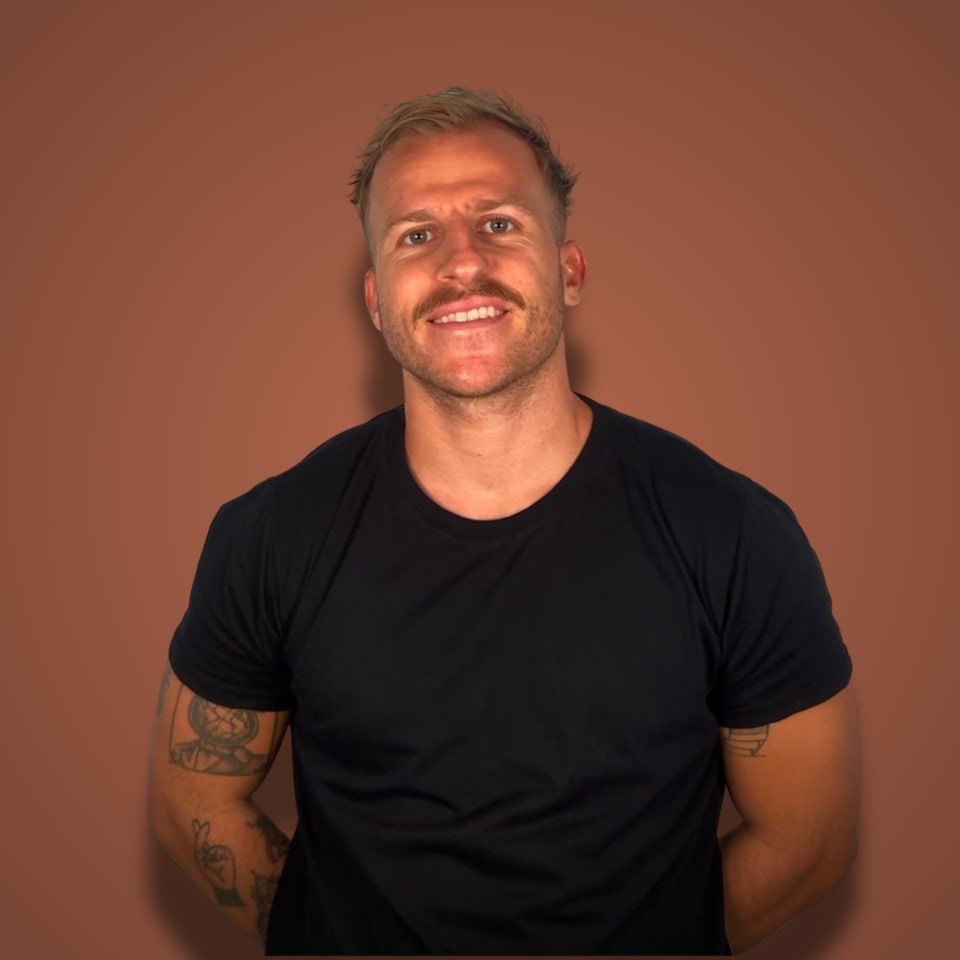
Luca Netz bought a dying NFT project for $2.5 million.
Crypto collapsed the same day. Literally the day the deal closed. The royalty revenue he was banking on to pay the team got ripped away within a week, and he had to put in another $500K of his own money just to keep the lights on.
Two and a half years later, Pudgy Penguins has sold 1.5 million toys in 12 months, sits in 3,500 Walmart stores, and pulls 3 to 4 billion views a month on a $15,000 marketing budget.
Not million. Billion. With a B.
That number broke my brain, so I watched Brett Malinowski's full sit-down with Luca and pulled out the entire underground marketing playbook: the gifting list, the meme page seeding, the GIPHY machine, and the 1,000-person loyalist army that slams algorithms on command.
None of it is theory. It's the same system that took Gel Blaster from $0 to $100 million in sales in about 15 months. Then he ran it again with a penguin.
Who is Luca Netz?
Quick rap sheet, because his track record is the whole point:
- Made his first million at 18. He's 26 now.
- Started in the early Instagram days by finding influencers and rappers with millions of followers but no products, then standing up jewelry stores on Shopify for them.
- Ran marketing at Von Dutch for a year.
- Co-founded Gel Blaster as CMO: $0 to $100 million in sales in roughly 15 months, the fastest growing toy company in North America, Walmart's bestselling product for about a year. He's still the second largest shareholder.
- Bought the Pudgy Penguins NFT project for $2.5 million in the middle of the crypto crash. Now it's a toy, gaming, and IP business he openly calls a future billion-dollar brand.
He's been compounding the same edge for 10 years: distribution channels nobody else takes seriously.
Here are the five weapons, in the order he built them.
1. The gifting list: 10 billion followers on speed dial
Luca's first secret weapon isn't an ad account. It's a spreadsheet.
A gifting list: hundreds of influencers, rappers, and A-list celebrities he can ship free product to, no strings attached. He says the people on it add up to something like 10 billion followers.
He built it in layers. The jewelry years got him every big Instagrammer and TikToker. Von Dutch got him the A-listers, because a hyped 2000s brand was enough clout to walk into any room. Then he cheated his way bigger: "I'll send 20 packs to your friends, on your behalf." Every gift recruited the next name on the list.
Nobody on the list is required to post. That's the trick. With Gel Blaster, the product was so fun that 25% of recipients made a video anyway. With a Von Dutch t-shirt, he only needed 1% to wear it in public.
And then the layer most people miss: the night Drake posted in a Von Dutch hat, Luca was already running single-image ads targeting Drake's followers. No celebrity photo in the ad, just the product they'd seen hours earlier. Subconscious familiarity, then a swipe-up. He says it printed.
→ Free product plus retargeting beats a paid endorsement, at maybe 1% of the cost.
2. Seeding challenges through meme pages
When Gel Blaster needed to blow up, Luca didn't post from the brand account.
He conceptualized the Orbeez challenge (drive-by soaking your friends with a gel blaster), produced one deliberately outrageous hook video, and paid about 10 meme pages and theme pages to run it.
His math: a good challenge seeds with $20K. After that, creators pile in on their own. Not because they care about your product, but because a proven viral format is free views, and views are the real currency of every creator. Your product is just the mechanism.
Sound familiar? It's the same engine Evan runs at his $35K/month clipping agency: small payouts to accounts that already have the attention, and the format does the heavy lifting.
The result compounds at retail too. Kids see the challenge, drag their parents to Target, the shelves clear, and Walmart's reorder algorithm does your B2B sales for you.
3. The GIPHY machine: 3 billion views for $15K a month
This is the one that made me pause the video.
Pudgy Penguins gets 3 to 4 billion views a month from animated GIFs and stickers. The spend behind that is about $15,000 a month, mostly on artists making the animations. The CPM is fractions of fractions of a penny.
The mechanic: GIPHY powers the GIF search inside Instagram, WhatsApp, and basically every messaging platform. Luca spent a year figuring out how to index penguins against the words people actually type: "sad", "love", "good morning". Type one of those and a chubby penguin shows up. Send it, and the brand rides inside a private conversation between two people who trust each other.
Most consumer brands ignore GIFs because there's no swipe-up, no attribution, no dashboard. Luca's answer: LINE in Asia built a multi-billion dollar business that started with viral stickers. A GIF doesn't convert today. It buys mindshare, and marketing closes after about seven touchpoints. This is the cheapest first touchpoint ever invented.
The machine itself is a system, not a hustle: a proprietary pipeline for making and indexing the art, part of it automated with AI. Build the loop once and it compounds while you sleep, which is the whole argument for business automations whatever you sell.
4. Engineering shares on Instagram
Pudgy's Instagram runs on two characters: Pax and Poly, a penguin couple in short animated relationship skits.
Why a couple? Because Luca reverse-engineered the algorithm's favorite metric: shares. A share drags someone back into the app, and Instagram rewards whatever does that. Nothing gets shared like a cute relationship clip sent between boyfriend and girlfriend. (Brett admits in the interview that his girlfriend sends him these constantly. It works.)
Notice what he didn't do: post product shots, launch announcements, discount codes. He picked the single behavior the platform pays for and built the entire content format around it.
5. The synced launch: 1,000 true fans as an algorithm weapon
Walmart turned Pudgy Penguins down the first time. Luca flew to Bentonville, pitched the vision, got a "you're on my radar" and no order.
So he manufactured proof. Pudgy has about 1,000 die-hard NFT holders he describes as a special forces unit. He pointed them at an Amazon toy launch and had everyone buy in the same five minutes.
The sync is the weapon. A thousand purchases at once breaks Amazon's ranking math: number one toy, number one plush, number one figure, number one mystery box, all at the same time. FOMO does the rest. Half a million dollars in sales in two days, and then Walmart called him: how fast can you get a pallet here for Q4?
Center-of-store placement, 2,000 stores, 800,000 toys. The catch: sell through 80% by year-end or you're out. They sold out of every metro city fast, then had to learn radio ads and local news in rural Virginia to clear the rest. They cleared it, and order two went to 3,500 stores.
One more number so nobody romanticizes retail: Walmart pays net 90 to net 180. You can do $100 million in 12 months and have $3 million in the bank. Luca had to take loans against a $60 million purchase order just to finance production.
Why did 1,000 strangers buy toys on command? Aligned incentives. Every holder gets their NFT licensed into real products and earns royalties in perpetuity. His line: "I'll take a thousand of my core community members over 2 million Instagram followers any day of the week."
What this means if you build software, not toys
You're probably not putting a plushie in Walmart. Doesn't matter. The playbook translates almost one to one:
- Build a gifting list. For SaaS that's free lifetime accounts to the 50 people your customers already follow. Ask nothing. Retarget their audience the day they mention you.
- Seed formats, not features. One outrageous hook distributed through accounts that already own the attention beats 100 posts from your brand handle. Rob the Bank runs the same creator-army math in the TikTok Shop playbook: 20 accounts posting daily, 2 going viral pays for all of it.
- Find your GIPHY. Some channel in your niche is absurdly underpriced because it has no attribution dashboard. Free tools, templates, integrations, marketplace listings. Mindshare first, conversion later.
- Optimize for the metric the platform actually rewards. On Instagram it's shares. On X it's replies. Design the content format around that one number.
- Treat your first 1,000 users like the asset. Give them real upside and they'll break an algorithm for you on launch day.
The thread through all five: Luca never fights for attention where everyone else is bidding. He finds the door nobody's watching, builds a system behind it, and lets the product do the heavy lifting. His words, and after 10 years of receipts I believe him.
FAQ
What is underground marketing?
Underground marketing is distribution through channels that don't look like marketing: gifting product to influencers with no posting requirement, seeding challenges through meme pages, GIF and sticker indexing, and community-synced launches. It works because the audience never registers it as an ad, and because those channels are underpriced compared to paid social.
How does Pudgy Penguins get billions of views?
Mostly through GIPHY. Pudgy Penguins indexes animated penguin GIFs against high-volume emotional search terms inside Instagram, WhatsApp, and other messengers, generating 3 to 4 billion views a month on roughly $15,000 of monthly spend. Instagram character skits and a creator gifting list stack on top.
How much did Luca Netz pay for Pudgy Penguins?
$2.5 million for the NFT project, plus another $500K he injected when crypto crashed immediately after the purchase and royalty revenue collapsed. The bet turned into a toy line that sold 1.5 million units in 12 months across Walmart, Target, and Amazon.
What is a gifting list in marketing?
A gifting list is a curated database of influencers, celebrities, and creators you send free product to with zero posting obligation. The economics work at low hit rates: if even 1% post organically, you can retarget their followers with ads while the product is fresh in their feed. Luca Netz credits his list, built over 10 years, as his single biggest edge.
Steal playbooks like this every week
I break down exactly this kind of founder playbook on the Profitable Founder Podcast: bootstrapped operators sharing the real numbers behind how they grew.
No fluff, no "just add value" advice. Actual systems from people who've done it.