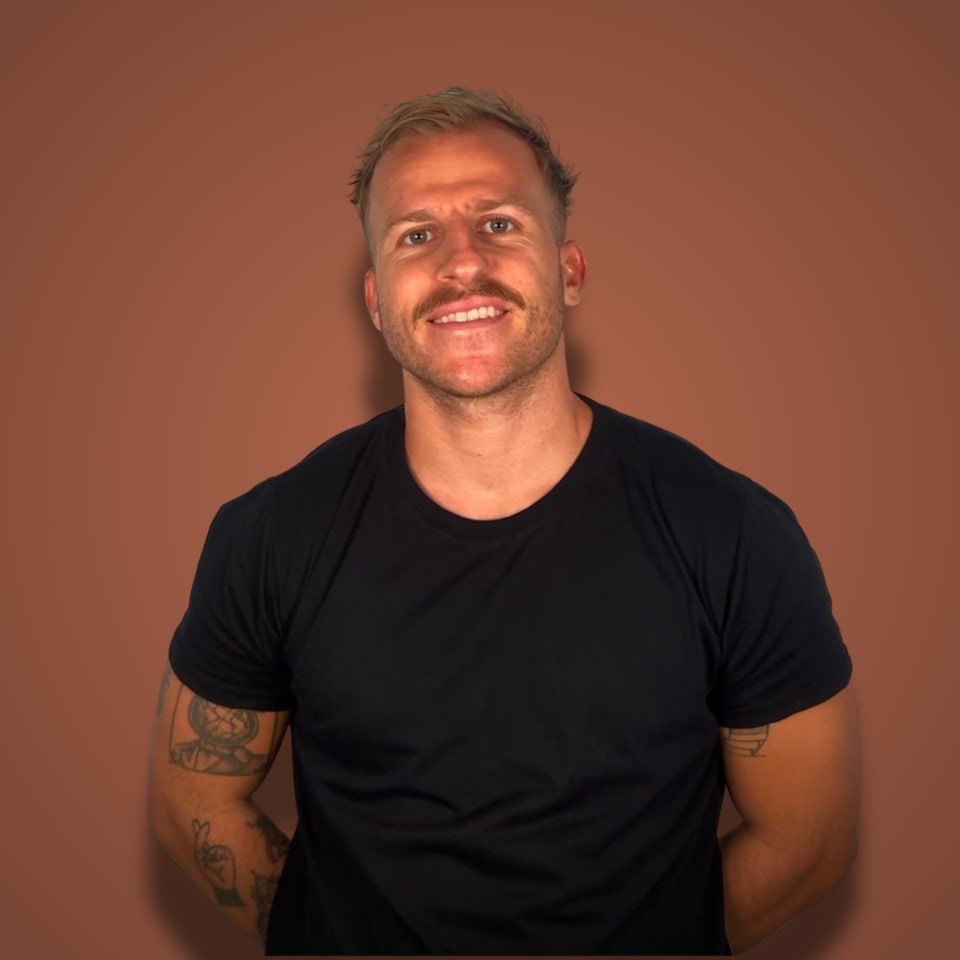
Matt Epstein is 23. This year he'll make about a million dollars.
Not from a SaaS. From launches.
Startups come to him when they want the whole tech world talking about their product for 72 hours. He builds the launch video, lines up 30 to 100 influencers, orchestrates the entire thing end to end, and charges $70,000 to $150,000 per launch.
Some of his campaigns have done 10 million views. One launch filled the founder's calendar with demo calls for three straight weeks. No SDRs. No cold email.
I watched his full breakdown on The Brett Way and took notes like a maniac. This is the twitter launch playbook he uses for companies like Slash, Meridian, and Triple Whale, plus the parts you can steal without a $150K budget.
The business: $70K to $150K per launch
Here's the shape of it.
A startup has something to announce. A fundraise, a new product, a big feature. They want to announce it on X because that's where the tech world lives.
Matt takes over the whole thing:
→ Positioning and script for the launch video
→ Production and post-production
→ 30 to 100 paid influencers, each with custom-written content
→ Live orchestration on launch day, hour by hour
His fee is $70K to $150K. On top of that, clients budget $50K+ just for influencer amplification, at roughly $1,000 per influencer post.
Sounds insane until you see the output. His Meridian launch did around 9 million views across the main video, quote tweets, and influencer posts. That's 9 million people in tech, one of the most expensive B2B audiences on earth, hearing about one product in a few days.
He got here in a weird way, by the way. Before this he scaled an e-com store to $9 million in sales, then ran those viral African dance greeting videos you've seen everywhere. Cost him $10 to make one, sold them for $40 to $60, and his ads returned 20x for months. (Then the niche saturated and he moved on.)
The through line: he's been buying attention cheap and selling it expensive since college.
Step 1: The launch video lives or dies on one bold claim
Matt is blunt about this. No amount of influencer spend saves a weak video.
Every launch video he writes follows the same skeleton:
Open with a bold claim. The boldest claim you can make that's still defensible. For Slash, a banking startup: "We raised $60 million to build the world's first business banking platform that lets you open an account without an LLC or an EIN."
Novel, specific, and it names a real pain (non-US founders can't get an EIN, so they can't bank in the US).
Back it up immediately. Show the product doing the thing, in real time, in present tense. "Right now Meridian is scanning through billions of sites." Not what it can do. What it's doing, on screen, while you watch.
Write at a fifth-grade level. One technical word and you lose the scroll. MrBeast doesn't say "there's currency in a container". He says "there's $5,000 inside this box". Impossible to misunderstand.
One line of social proof, only if you're unknown. Triple Whale doesn't need it, everyone in e-com knows them. A first-time founder does: who's using you, who backs you, one line, move on.
His two favorite AI prompts when he's polishing copy: "make this sound more novel" and "turn up the intensity." "We help your brand get recommended more" became "the world's first AI SEO team to get your brand ranked #1 by ChatGPT." Same product. Completely different launch.
I broke down a similar case in the AI launch video story if you want a second angle on this.
Step 2: The influencer machine (and why influencers can't sell)
Biggest misconception in the game, according to Matt: that influencers will do a good job selling your product.
They won't. They can sell themselves. The moment you pay them to push your thing, they phone it in.
So he doesn't let them write anything.
His content team studies each influencer's page, finds proven viral formats in that niche, and writes every single post for them. Custom visual assets included. The result is that his sponsored posts routinely outperform the influencer's own average content.
The formats he keeps reusing:
→ "5 ways I'm actually using [product] in my business" from a real operator
→ Comparison posts ("Moby vs ChatGPT, I tested 20 prompts")
→ The founder PR story ("This 23-year-old Stanford dropout raised $60M to change banking. Strap in.")
→ Straight giveaways quote-tweeting the main launch
He has 100 to 150 influencers with pre-negotiated rates sitting in a Slack, ready to plug into any campaign. Rates run $500 to $3,000 per person for a thread plus a LinkedIn post.
And the whole operation runs on a fat spreadsheet and a team of VAs. He admits he dreads it. It's the kind of manual coordination work most agencies eventually kill with proper business automations, but he's been too busy printing to fix it. (A good problem.)
Step 3: The X algorithm sauce nobody uses
This part alone is worth the whole video.
Elon open-sourced the X algorithm. It's on GitHub. Matt actually read it, and he plans launches around two mechanics:
Sourcing decides whether your post gets shown on For You pages at all. The biggest signal: retweets.
Ranking decides how high up you appear. The biggest signal: a reply, followed by a reply back from the author.
Read that again. Not just replies. Replies that the author answers.
So when you see a launch with hundreds of comments and the founder replying to none of them, that's a massive miss. Matt's rule: reply to all of them.
Timing matters too. The algorithm serves your post to your core audience first, checks how they engage, then widens the circle in tranches. Dump a huge random audience on the post in the first 10 minutes and you poison the signal. He treats launch day like a video game: gas on, gas off, watching which accounts post when, hour by hour.
Step 4: The giveaway that turns views into a funnel
Every launch ends the same way: a lead magnet.
"Comment this word and retweet, and we'll send you the free guide."
One mechanic, four wins:
→ Comments and retweets are exactly the signals the algorithm rewards
→ You capture emails from people who showed intent
→ The freebie educates them on your product
→ Reciprocity kicks in before they've spent a dollar
For Meridian, they built a free tool that scores how your brand ranks in ChatGPT. Big founders commented on the launch, and Matt's team ran the report for them and replied publicly with their (bad) scores. Public accountability as marketing. Their team sees it, someone panics, a demo gets booked.
One more move he uses on purpose: controlled rage bait. For Meridian he deliberately picked a fight with the SEO community. Hundreds of angry SEOs quote-tweeted the launch to dunk on it, and every dunk was free distribution.
What you can steal without $150K
You're bootstrapped. You're not paying Matt. Fine, neither would I at that stage.
But almost everything above scales down to a solo founder launching to 400 followers:
→ Lead with the boldest defensible claim about your product, not your feature list
→ Demo the wow moment in real time, present tense, fifth-grade words
→ Stack your ammo: revenue numbers, a domain you overpaid for, a weird founder story. Use all of it in one post
→ Ask 10 founder friends to comment (not just like), and reply to every single comment for 24 hours
→ End with a giveaway that captures emails
→ The next day, post again while the algorithm is hot
Matt's own words: every viral tweet you've ever seen had a marketing machine behind it. Whether you like that or not, that's the game. You can run a tiny version of the same machine for free.
And if the launch works, you still need to convert the attention. I wrote about that in how to get customers for your app.
FAQ
How much does a viral Twitter launch cost?
Matt Epstein charges $70,000 to $150,000 per launch for strategy, the launch video, and orchestration. Clients typically add $50,000 or more for influencer amplification, at roughly $1,000 per influencer. A scrappy solo version costs $0 plus a week of preparation.
How many influencers do you need for a product launch on X?
Matt runs 30 to 40 influencers on small launches and up to 100 on big ones, all posting within an hour or two after the main video goes live. At small scale, 10 to 20 engaged founder friends commenting and reposting beats a handful of paid shoutouts from people who don't care.
What makes a launch video go viral?
One bold, defensible claim in the first line, followed by a real-time demonstration of the product's wow moment, written at a fifth-grade reading level. Position the outcome, not the features. Nobody cares that you worked on it for five years. They care what it does for them.
Does the X algorithm really favor replies?
Yes. The open-sourced X algorithm uses retweets as the main signal for showing your post at all (sourcing), and replies that get a reply back from the author as the main signal for how high it ranks. Founders who don't reply to comments on their own launch are leaving reach on the table.
Steal playbooks like this every week
I pull apart stories like Matt's on the Profitable Founder Podcast, plus interviews with bootstrapped SaaS founders doing $100K to $10M a year.
Real numbers, real distribution tactics, zero fluff.