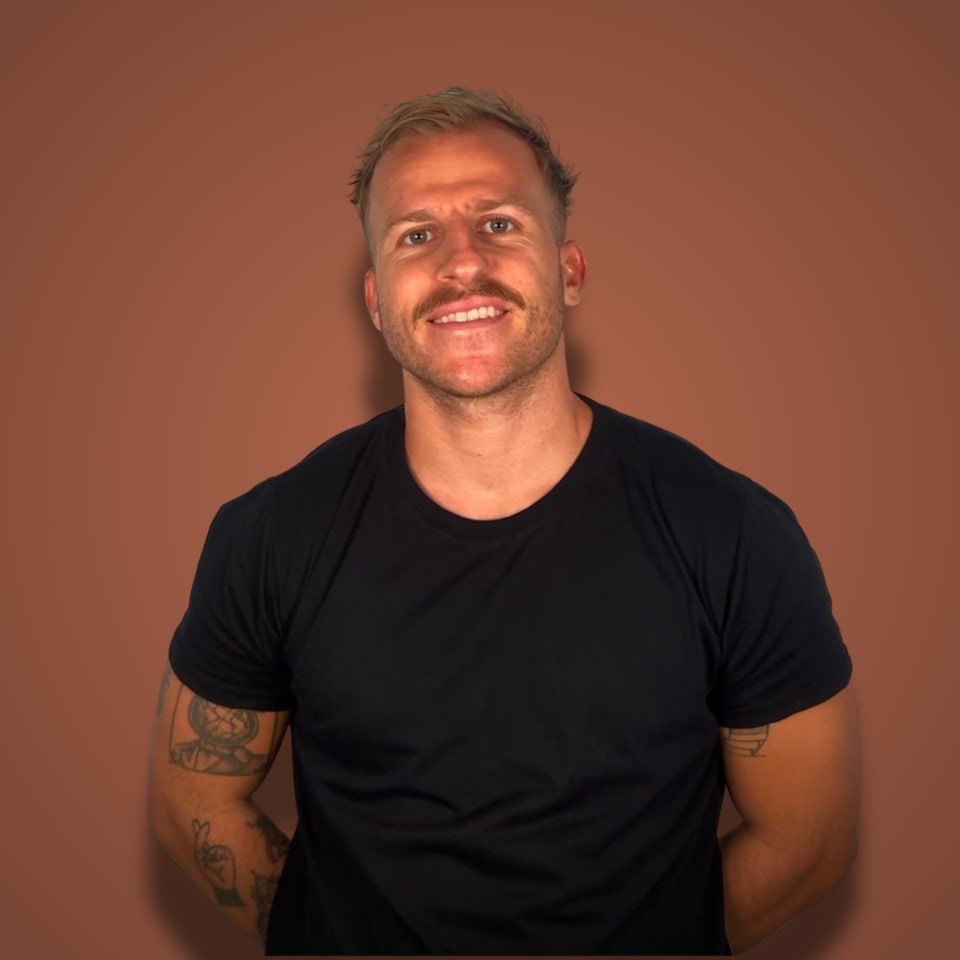
Pat Walls said he would never sell Starter Story.
He posted it publicly. He meant it.
Then on February 23, 2026, HubSpot announced the Starter Story acquisition. Pat flew to New York, signed the deal, and flew home to Florida with what he calls "a life-changing amount of money."
And the part that breaks my brain: five months earlier, he had tweeted "hubspot should acquire starter story" as a half joke.
The joke closed.
Pat filmed the whole thing, the flight, the old apartment, the dead Starbucks where it all started, the 8 minutes before the meeting. Watch it, then let's pull the story apart.
The Tweet That Started a Multi-Million Dollar Deal
September 23, 2025. Pat posts this on X:
"hubspot should acquire starter story. the SEO ship is sinking IMO. hubspot needs to pivot wayyyy harder to video, specifically youtube. i'm biased, but acquiring starter story would take their youtube game to the next level. thank you for coming to my ted talk"
Classic shitpost format. Except this one actually opened an M&A conversation with a public company.
The tweet turned into a conversation. The conversation turned into an offer. On February 23, 2026, exactly five months to the day, HubSpot Media announced it was acquiring Starter Story. Terms undisclosed, but Pat describes the number as life-changing.
Read the tweet again, though. It sounds like a joke, but it carries a real thesis: SEO traffic is dying, video is where attention lives, and HubSpot's media arm had a YouTube-shaped hole. Pat had spent years building exactly the asset that filled it.
That's a pitch wearing a shitpost costume. And because it was framed as a joke, saying it publicly cost him nothing.
From a Dead Starbucks to $79K a Month
Rewind to 2017. Pat is a developer at a small startup in New York City. Six figures, stable, miserable in that quiet way where nothing is technically wrong.
Every morning he'd walk to a Starbucks near his apartment, sit down at 6am, and put in two hours before work. Writing. Coding. Cold emailing founders for interviews. He did that for about a year.
(That Starbucks is closed now. He filmed the empty storefront on his way to sign the deal. Poetic.)
The early numbers were tiny. He watched Stripe crawl from zero to a couple hundred bucks and treated it like a rocket launch. Then he quit his job with $12,000 to his name and went all in.
From there, the receipts stack up:
- March 2019 → Klaviyo becomes a sponsor at $4K a month
- December 2020 → his Lean SEO course does $28,226 in its first week
- September 2022 → he posts $79,342 in monthly revenue on Reddit
- By the acquisition → 800,000+ YouTube subscribers, a 275,000-person newsletter, roughly 1.6 million people across platforms
My favorite hidden number in that run: the newsletter peaked at 245,000 subscribers in 2022, and Pat cut it down to 80,000 on purpose. He deleted two thirds of his own list to keep the engaged readers and let the dead weight go. It grew back healthier, to 275,000 by the sale. Most founders would rather lose a finger than shrink a vanity metric.
His first hire was his sister, Sam. She's Starter Story's COO today and joined HubSpot with him, along with producer Gus Tiffer. If you've watched the Starter Story challenge videos where a builder ships apps for 30 days straight, that's Gus's work.
There is no overnight moment anywhere in that list. It's nine years of mornings, and most of them were unremarkable.
Why He Sold After Swearing He Never Would
This is the part of the video worth rewatching.
Pat built Starter Story for one reason: freedom. No boss, no schedule, full control of his time. And he got it. On paper he was living the exact life every indie hacker says they want.
Then the business became his identity.
"I wasn't just Pat anymore. I was the starter story guy."
Every minute went into keeping the machine growing and perfect. The thing he built to escape a cage slowly became one. His words, walking to the meeting: "Am I still building, or am I just holding on?"
I felt that one in my chest.
I sold my SaaS too. Much smaller exit, same knot in the stomach. I'd checked that revenue chart every morning for years, and signing it away felt like handing a stranger my diary. Nobody warns you about that part when you're grinding toward your first $10K month.
Pat's resolution is the most honest framing of an exit I've heard: Starter Story stopped being about him years ago. It became the team, the process, thousands of founder interviews. If he really wanted it to grow beyond him, he was the bottleneck.
So the "never sell" guy sold. He didn't lie back then. The business just outgrew the promise.
What HubSpot Actually Bought
HubSpot didn't buy software. Starter Story has no proprietary tech worth mentioning. What HubSpot bought is distribution.
Look at HubSpot Media's shopping list over the years: The Hustle in 2021 (reported by Axios at roughly $27 million), the My First Million podcast, Trends. Now Starter Story. Every one of those is an audience of founders and operators, which is exactly who buys HubSpot seats.
A media brand that reaches 1.6 million entrepreneurs is a customer-acquisition machine you can't build with an ads budget. HubSpot ran the math and decided buying nine years of Pat's compounding was cheaper than competing with it.
And Pat's sinking-SEO thesis matters for you, not just for HubSpot. Starter Story itself made the pivot years ago: the site's revenue mix was once 57% sponsorships and ads, 38% subscriptions and courses, 5% affiliate. Then Google's AI answers started eating clicks, and the whole company leaned into YouTube instead. That bet is the thing that got acquired.
The asset in this deal was attention, parked on the one platform where attention still compounds instead of decaying with every algorithm update.
4 Things to Steal From This Exit
You're probably not selling to HubSpot next quarter. Steal the mechanics anyway.
→ Build where a buyer has a hole. Pat's tweet worked because it named a real gap in HubSpot's strategy and positioned Starter Story as the plug. Know which companies your business makes stronger. That list is your future acquirer pool, and it should shape what you build this year.
→ Make the ask in public. A tweet started a multi-million dollar deal. Your version might be a post saying exactly which partner, customer, or acquirer you want. Worst case, silence. Pat's worst case lasted five months.
→ Treat your audience as an asset, because buyers now do. Media companies used to sell for peanuts. AI is changing that math, since owned attention is one of the few things a model can't generate. If your newsletter or channel sits in your head as a marketing expense, reprice it.
→ Make yourself removable. The deal only worked because the team, the process, and the brand ran without Pat at the center. If your company dies when you take two weeks off, you own a job, and jobs don't get acquired. I broke down the fix in how to sell a SaaS business.
FAQ
How much did Starter Story sell for?
Undisclosed. Neither Pat Walls nor HubSpot has shared the number. Pat calls it "a life-changing amount of money" in his video, and coverage of the deal describes Starter Story as a multi-million dollar media business. Given the audience (800K+ YouTube subscribers, 275K newsletter readers) and how neatly it fits HubSpot Media's portfolio, my guess is a healthy multiple on its seven-figure revenue.
Who bought Starter Story?
HubSpot, through its HubSpot Media arm, announced on February 23, 2026. Starter Story joins The Hustle (acquired 2021), the My First Million podcast, and Trends in HubSpot's media portfolio. Pat Walls, COO Sam Walls, and producer Gus Tiffer all joined HubSpot as part of the deal, and the channel keeps its team and format.
Why did Pat Walls sell Starter Story?
Two reasons, by his own account. Personally, the business had become his whole identity and he was carrying it every day. Strategically, he believed Starter Story could grow bigger with HubSpot's resources than it could with him as the bottleneck. He had publicly said he'd never sell, and the video documents him wrestling with exactly that contradiction.
What happens to Starter Story now?
Same team, same mission, more budget. Pat says the plan is bigger interviews, more shows, better production, and more experiments under HubSpot Media. The YouTube channel and site continue as before. Whether the founder-story format survives corporate ownership long-term is the open question, but The Hustle is five years into the same arrangement and still shipping.
The Real Lesson
Eight years before the exit, Pat was a guy in a Starbucks at 6am with a laptop and no idea what he was building.
No lucky break shows up anywhere in this story. He showed up daily for long enough that the compounding got absurd, then told the right buyer exactly why they needed him.
The pitch part is a skill you can practice. The showing up part starts tomorrow at 6am, if you want it to.
Every week on the podcast I sit down with bootstrapped founders somewhere on that same road, from first $5K months to exits like this one, and pull out the playbook while it's still fresh.