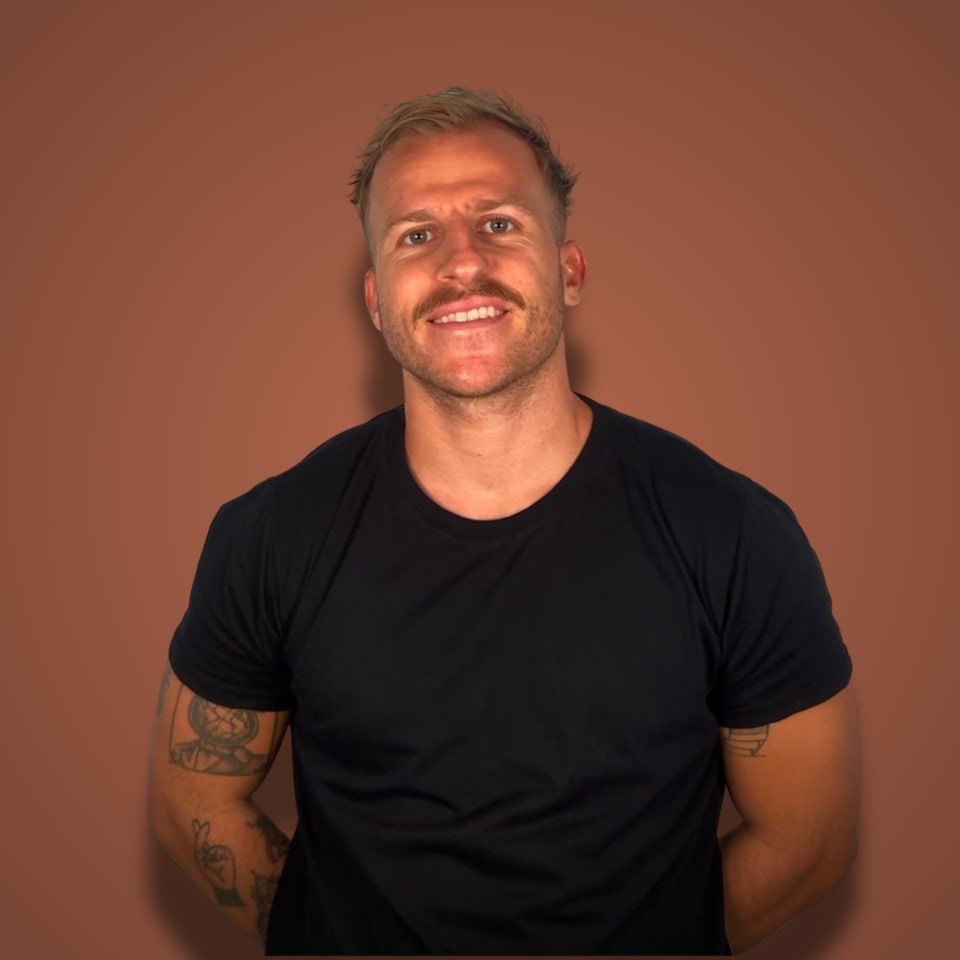
Gaurabh Mathure built 72 apps in 60 days.
Total revenue: $0. Not even one lucky sale.
Then he DM'd Starter Story, Pat Walls gave him one challenge, and 60 days later he was sitting on $6,500 in revenue from two of those "dead" apps.
This is the first episode of the Starter Story challenge, and it's the most useful 14 minutes I've watched this month. Because Gaurabh's problem is YOUR problem. It was mine too.
Here's the full video, then I'll break down exactly what happened, with the real numbers.
Who is Gaurabh, and how do you ship 72 apps with zero sales?
Gaurabh isn't a beginner.
He's a product designer who spent his career building digital products for Nike and Samsung. He'd already been a founder once. The man can design and ship.
So he set himself a challenge: build 100 apps in 60 days. He got to 72.
72 shipped products. Real ones, too. Two of them were genuinely good:
→ Attention.design, an inspiration library for YouTube creators
→ VueMagnet, a QR code platform for video creators
And still: $0.
If that stings to read, it's because most of us have a folder full of side projects that made exactly the same amount.
In 2026, shipping is cheap. AI writes the code, the design tools are absurd, you can go from idea to live product in a weekend. Which means shipping is no longer the hard part, and it's definitely no longer the thing that makes money.
Pat's diagnosis: it was never a product problem
When Gaurabh came on the challenge, he framed his problem like this: "I don't know if I have the right framework to pick the right app to monetize."
Pat's diagnosis was blunt, and it had nothing to do with picking apps:
→ An addiction to building
→ Shiny object syndrome
→ A little bit of fear of rejection
That last one is the real one.
Building app number 47 feels productive and safe. Nobody can reject you while you're in Figma. Asking a stranger to pay $99? That can go badly. So we build instead.
(I've done this. Everyone I interview on the podcast has done this. The 10pm "let me just add one more feature" session is usually avoidance wearing a productivity costume.)
So Pat set the challenge: make $1,000 in 30 days. With two non-negotiables and one ban.
The ban: no new features, no new projects, no new ideas. Cold turkey.
The non-negotiables:
→ Two customer conversations a day, phone or in person. Pat's line: one 15-minute conversation is worth more than the 70 apps you could build instead.
→ Post once a day on ONE platform, documenting the journey.
That's the whole playbook. No growth hacks. Talk to people, show your work, stop hiding in the editor.
The first 30 days: $99 and a lot of noise
Here's where it gets honest, and it's why I trust this format.
Gaurabh broke the "one platform" rule immediately. He posted everywhere: X, LinkedIn, Reddit, YouTube. Spray and pray.
The results:
→ X: barely any response
→ Reddit: high effort, and you can't promote anything without the mods deleting you
→ Customer conversations: hard to even start, he had no network in the creator space
→ Revenue: one single sale of Attention.design at $99
One week in, he had nothing. Thirty days in, he had $99 against a $1,000 goal.
Most people quit right there. The challenge "failed", the video ends, everyone goes back to building.
But Gaurabh said something in the recap that I keep thinking about. The $99 wasn't the win. The win was that he'd gotten into the groove of creating content daily. No revenue yet, but a new muscle.
Signals first, revenue later. That's the actual order, and almost nobody has the patience for it.
The pivot that unlocked everything: wrong platform, wrong customer
In the second 30 days, Gaurabh made two changes. Both came from paying attention to signals instead of shipping features.
Change 1: he picked LinkedIn and went all in.
Not because a guru said so. Because his own data said so. LinkedIn was the one place where interest was building, and it was the platform he'd already leaned on for his whole professional career. He had credibility there.
Then he did something clever: he took vlog-style video, which is everywhere on YouTube and basically nonexistent on LinkedIn, and posted it there. On a feed full of launch announcements and "expert takes", founder vlogs were a pattern break. Anything that was video started pulling serious impressions.
Change 2: he realized he was selling to the wrong person.
Attention.design was positioned as "the attention library for YouTubers". But the people actually engaging with his content weren't YouTubers. They were professionals like him: founders, product managers, experienced operators who wanted to build a personal brand and didn't know how to make content.
So he repositioned. Same product, new line: where experts become creators.
And look at the quality of the audience he was now reading: 250 link clicks from his LinkedIn content, mostly founders, co-founders and PMs in high-paying cities. People who won't blink at $10 a month, or $99, if you solve a painful problem.
This is niching down, the most boring advice in startups, and it worked again. It almost always does.
The second 30 days: $99 to $6,500
With the positioning fixed, Gaurabh finally did the uncomfortable part properly: outreach.
Cold messages, but warm execution. He researched each prospect, offered free mockups, sent personalized demos of the platform, and pulled product feedback from the exact editors and creators who might buy. Classic "do things that don't scale", straight out of the YC gospel, and it converted. That follow-up motion between first touch and paid customer is basically lead nurturing, and doing it manually at small scale is exactly how you learn what your buyers actually respond to.
Then came the surprise. The hero of the story wasn't the app he believed in most.
The numbers after 60 days, $6,500 total:
→ Attention.design became the gateway: free tier for inspiration, then a $99 pro plan. Five paying customers.
→ VueMagnet, the one he "hadn't expected to be the hero", got discovered by agencies. They realized they could use it to manage multiple creators, lead magnets and analytics in one place, so he built a higher-priced agency plan. That's where most of the revenue came from.
And the detail that matters most: the bulk of that $6,500 landed in the back half of the last 30 days.
Day 30: $99. Day 60: $6,500. The graph looked dead for 50 of the 60 days.
If you're mid-challenge on your own thing right now and the graph is flat, this is your reason to not quit in week 4. The spray-and-pray weeks weren't wasted, they were the tuition that paid for the LinkedIn insight.
Gaurabh's 4 lessons (plus the two I'd add)
His own retro, from the video:
1. Live the problem you're solving. He entered the creator space as an outsider and couldn't feel the pain points. The moment his customer looked like him (an expert becoming a creator), everything clicked.
2. Start where you already have a network. He tried every platform that was supposed to work and ended up back on LinkedIn, where he already had a career's worth of credibility.
3. Meet customers where they are. "The attention library for YouTubers" assumed everyone already saw themselves as a creator. They didn't. Repositioning to their actual stage made the product resonate.
4. Video is the language of the internet. Every platform is prioritizing it, and it's the fastest way to demonstrate that your product works, not just claim it.
Two things I'd add from my side of the mic:
5. Revenue hides in the second product. Nobody predicts their hero product correctly. You find it by putting everything in front of buyers, which is one more argument for validating with real people before you build instead of validating in your head.
6. Constraints beat frameworks. Gaurabh didn't need a better framework for picking apps. He needed a ban on building and a $1,000 deadline. If you can't impose that on yourself, borrow someone else's accountability. A challenge, a cohort, a peer group, a public commitment. External pressure is a legitimate growth tool.
And if you're sitting on shipped products with zero users, start with distribution, not code. I wrote up how founders with zero audience grow apps to $10K a month, and the playbooks rhyme hard with what worked here.
FAQ
What is the Starter Story challenge?
It's a new series from Starter Story (Pat Walls' channel) where a viewer gets a concrete money goal, usually $1,000 in 30 days, plus strict rules: no new building, two customer conversations a day, and daily content on one platform. Episode one follows Gaurabh Mathure. You can apply through the form in the video description.
How much money did Gaurabh actually make?
$6,500 in 60 days, after making $0 from 72 apps. Roughly: five customers on Attention.design's $99 pro plan, with the majority coming from VueMagnet's higher-priced agency plan after agencies discovered they could manage multiple creators with it. Only $99 of it came in the first 30 days.
Why did 72 shipped apps make zero dollars?
Because none of them had distribution or customer conversations behind them. Pat Walls' diagnosis was an addiction to building, shiny object syndrome and fear of rejection. Building feels safe, selling risks a no. The fix wasn't a better product, it was a forced 30-day ban on building anything new.
Is "build in public on LinkedIn" a real growth channel?
For B2B and professional audiences, yes, and it's underpriced right now. Gaurabh's vlog-style videos were a pattern break on a feed full of text posts, and his 250 link clicks came disproportionately from founders and PMs in high-paying cities. The catch: it works best on a platform where you already have credibility.
Steal playbooks like this every week
I interview bootstrapped founders doing $100K to $10M a year on the Profitable Founder Podcast, and we go exactly this deep on the numbers: what they charged, what flopped, what the graph looked like right before it bent.
If Gaurabh's story got you off Figma and into your DMs, the podcast will keep you there.