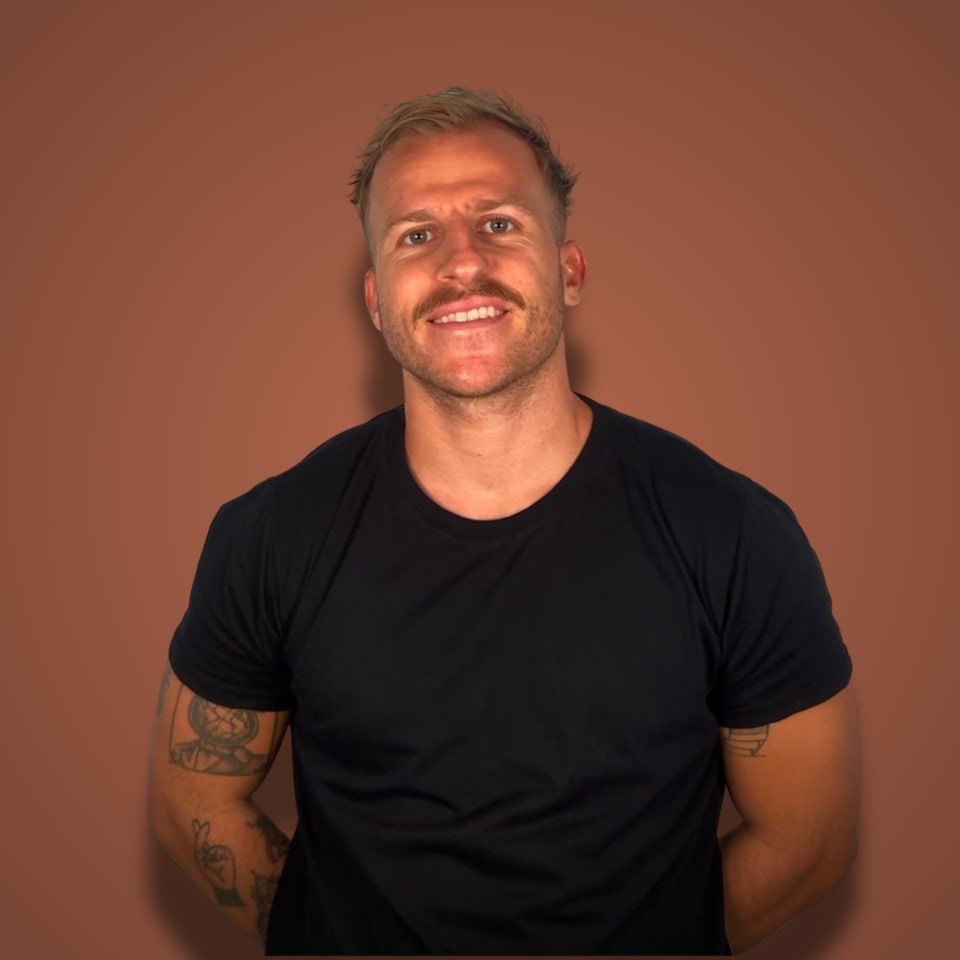
Brett opens the episode with one question: "How much money do you make?"
"Like, over a million a month."
"How old are you?"
"21."
I watch a lot of young founder interviews and most of them are ecom kids renting Lambos. Musa Mustafa is a different animal. His whole operation (a clipping agency, a $40 a month course, and Crayo, an AI video tool with 1.5 million users) runs on a single short form content strategy he has been sharpening since he was 13.
He ran zero paid ads until a few weeks before the interview, and he has never put a product link in his bio. One skill, stacked into three businesses that feed each other.
Here's the full episode:
From $20 edits to stream-sniping his first real client
Musa started editing at 13 because he wanted to be a YouTuber. Like every kid.
At 14 he noticed the better trade: every YouTuber needs an editor. So he sold $20 one-off edits. Then $30, then $40. By 15 he was calling it an agency.
The break came at 17. Sneako, a YouTuber Musa had followed for years, went live on his tiny second channel and started matching with random people on Omegle. Musa typed in the tag, got matched with him on stream, and pitched him live: give me a shot, I'll blow you up, I promise I know how to do it.
That recorded Omegle call closed his first retainer. $2,000 a month. His first real money, at 18.
Then he made himself impossible to fire. Sneako streamed late, so Musa slept through it (time zones), woke up when the stream ended, and got on a 90-minute call to plan the next one. While Sneako slept, Musa cut everything. "He'd wake up to like eight videos on the channel, all titled, all thumbnails done, all edited. All the TikTok clips already done."
The results from that one summer:
- 14 billion views across all platforms in one year
- 800,000 followers in 30 days on one account, off 17 posts and 150M+ views
- Sneako's live viewership went from 600 to 40,000
All for $2,000 a month. (Underpriced? Massively. It was also the tuition for everything that came after.)
The three-part story formula behind 14 billion views
Ask Musa why a clip goes viral and he gives you one word: story.
"There's a storytelling element in every single clip. And if there isn't, then there should be."
His formula has three beats:
→ The prompt. A question opens the clip ("Can you name three countries in Europe?").
→ The answer. Someone gets it wrong in a spectacular way.
→ The reaction. The streamer's face closes the story.
Setup, payoff, punchline. He still runs the exact same formula for agency clients like Love Live Serve, JiDion, and Dean Harding (40 million TikTok views for Dean last month).
The smarter move sits underneath it: he stopped waiting for clippable moments and started manufacturing them. Before each stream he queued up reaction videos so the viral clips were pre-planned. He and Sneako invented a word for the mindset: clip conscious. You already know the meme version ("bro is clip farming"). Every big streamer now walks into a 10-hour stream hunting for the 30 seconds that will travel.
The founder translation: decide what the clip is before you press record. Don't record an hour of content and pray.
One viral clip is never one clip
This part of the episode changed how I think about my own distribution.
A clip that went viral once will go viral again. Musa treats every winner as an asset to re-run:
- Repost it on Instagram after it pops on TikTok (Instagram barely polices reposts)
- Swap the GTA gameplay underneath, change the subtitle font and color, and post it to TikTok again (their pixel-matching can't catch it)
- Cycle it across five or six themed fan pages per client
One Jordan Welch clip did 18 million views. Musa recycled it with new gameplay and new subtitles and pulled another 15 million out of it. One of his own Sneako clips got banned at 3 million views, so he reposted it on his personal Instagram. Eight times. It did around 10 million views every single time.
Most founders make a piece of content, post it once, and move on. Musa milks one winner for months. The winner already proved itself; the fresh idea is the riskier bet.
The ladder: agency, then course, then software
None of Musa's businesses was a leap. Each one grew out of the last, in the same niche, selling to the same audience.
The agency scaled off the Sneako case study and still does six figures a month. His time investment today: about one hour every two weeks, because he hired a CEO to run it.
The course exists for a reason I had never heard before: recruiting. He recorded his internal training, priced it at $40 a month, and now hires his best students into the agency. In his words, "people pay me to learn how to work for me." His comparison: a friend joined Gary Vee's media company and the onboarding was literally a two-day course. Musa just charges for his.
Then the personal brand. 700K followers on Instagram, over 1.3 million collected across TikTok pages (they keep getting banned, he keeps rebuilding). His format is a fisheye day-in-the-life with a voiceover: the hook shows the money ("one of my pages made over $125,000 last month"), then coffee, then a fast work montage, then the payoff. Direct about the offer, disguised as a vlog. TikTok itself pays him now too: one page did 14 million views last month and paid out about $15,000 directly.
And when enough of his audience wanted to clip but couldn't edit, the next rung was sitting right there: software.
How Crayo got 1.5 million users with zero ad spend
Crayo automates Musa's editing workflow. Pick a clip, pick the background gameplay, and it assembles the finished video in minutes instead of the hour or two it takes in a normal editor. He built it with Daniel, whose side of the story I covered in how a 17-year-old built a $600K a month SaaS with zero paid ads.
The distribution is the part worth stealing. Two moves got Crayo to 1.5 million active users.
First, his own content. He has never put a Crayo link in his bio. People watch his videos, see crayo.ai on screen for two seconds, Google it, and subscribe. Commenters warn each other ("don't fall for it, he owns Crayo") and Musa replies in the comments: yeah, you're right, I did make this. It doesn't slow anything down.
Second, he weaponized his copycats. Dozens of creators clone his video style to sell their own clipping courses. Instead of getting mad, he approached every single one with an offer: we'll pay you $2,000 a month to show Crayo in your videos instead of CapCut. "CapCut is never going to pay you. Adobe is never going to pay you. Crayo will." Hit 10 million views and the bonus jumps to $5,000. Every one of them signed a contract.
They have already turned down eight-figure acquisition offers. Brett pegs Crayo at $30 to $50 million if they sold today.
"Make the delusion logical"
My favorite part of the episode is not a tactic.
A friend told Musa his SaaS made $50K a month off 10 million views. Musa's reaction: only 10 million? I can get 100 million. Run the multiplication and 100 million views is $500K a month. Suddenly $50K stopped sounding like a lot of money to a kid with less than £10K in the bank.
He calls it making the delusion logical. Repeating "I'm going to make $100K" in the mirror does nothing because you don't believe it. A calculation you can defend is different. Find someone's real numbers, find the input you know you can beat, and the target stops being a fantasy.
The other half of his edge is even less sexy. He's Muslim, has never drunk or smoked, still lives with his dad in a tiny city, and is in bed by midnight. Gym at 8, eggs, work, FIFA with the kids he grew up with. His friends stopped inviting him out years ago because the answer is always no. He was grinding in that vacuum while everyone else was at the club.
The end goal surprised me most. He wants to make £100 million so he can give £90 million away: hospitals, mosques, trees. And he wants to go lay bricks himself, because writing the check doesn't feel like charity to him.
What I'd steal from this playbook
You're probably not going to clip streamers for a living. Steal the structure anyway:
→ Master one distribution skill until people pay you for it. Musa's is short form video. (Evan built a $35K a month agency on the same skill; I broke his numbers down in the clipping culture story.)
→ Turn the skill into a service, the service into training, the training into software. The same audience pays you three times, and one piece of content markets all three at once.
→ When content wins, re-run it until it stops working. You are sitting on proven winners you posted exactly once.
Near the end, Brett asked what Musa would do if social media disappeared and he had to make $10K fast. His honest answer: no idea. (His actual answer involved gambling on Solana coins. Don't copy that part.) Everything he owns came from one skill, fully mastered, with the rest delegated to a funnel builder and a sales manager who each keep 10% of profit.
That's the whole strategy. Get world-class at one thing people can see, then stack businesses behind it.
FAQ
What is a short form content strategy?
A short form content strategy is a repeatable plan for creating and distributing videos under 60 seconds on TikTok, Reels, and YouTube Shorts. Musa's version has three parts: cut clips as three-beat stories (prompt, answer, reaction), spread each one across multiple theme pages and platforms, and recycle proven winners with new gameplay and subtitles instead of always making new bets.
How does Musa Mustafa actually make his money?
Three businesses in the same niche: a clipping agency doing six figures a month, a $40 a month course that teaches TikTok clipping (and doubles as his hiring pipeline), and Crayo, an AI clipping tool with 1.5 million active users. Combined, over $1 million a month. Brett says on camera that he has seen the back end of the accounts, so these aren't just claims on a thumbnail.
How much do TikTok clippers really make?
TikTok's creator rewards program pays roughly $1,000 per million views on eligible content, per Musa's numbers (he made about $15,000 from 14 million views on one page in a month). He's blunt about the range: his course teaches people to get to $10K to $20K a month, and he tells buyers straight up not to expect his numbers, because "that's actually hard."
Does reposting the same clip still work in 2026?
On Instagram, yes, straight reposts of the same file keep working (Musa reposted one clip eight times at around 10 million views each). On TikTok you have to beat pixel matching: swap the background gameplay, change the subtitle font and color, then post. His Jordan Welch clip went from 18 million views to 33 million total with that one trick.
Every week I sit down with bootstrapped founders making $100K to $10M a year and make them show the real numbers behind stories exactly like this one.