Most app founders build for side income.
Then one day someone offers them money for the thing, and they realize they built it wrong.
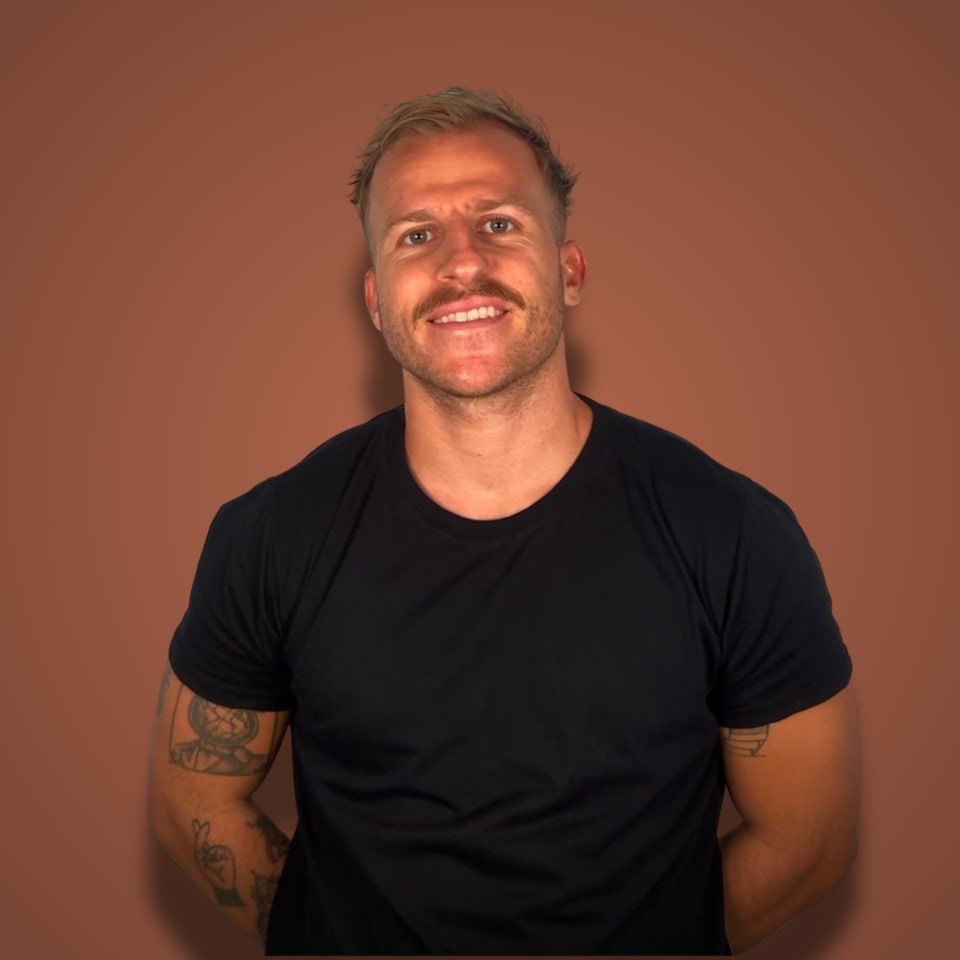
Josh is the guy on the other side of that table. He's spent five years writing million-dollar checks for mobile apps. In gaming he had a budget of up to $150 million. In consumer apps he's deployed over $23 million into founders, and he talks to about 10 of them every week. Close to 2,000 app builders total.
Pat Walls had him on Starter Story Build to answer one question: what separates the apps that sell for seven figures from the apps that never sell at all?
Here's the full episode. Watch it, then read my breakdown of the 7 rules below.
Rule 1: Value proposition beats category. Every time.
The most common question Josh gets from new builders: "What category should I build in to hit my first $5K MRR?"
His honest answer: it doesn't matter.
You can make serious money with a PDF scanner. You can make serious money with a step counter. The category isn't the thing. The pain you solve is the thing.
His tactical tip is the one I'd tattoo on every indie hacker's arm: launch with a premium tier from day one.
Don't wait for the "right" number of downloads. Don't wait for product market fit. The only question that matters early is: do people see enough value to pay?
If the answer is no, you have three moves:
→ Increase the value of your premium tier.
→ Lower the price.
→ Pivot completely.
Josh watched a founder last month who had never touched his pricing. Never tested it once. Pricing has one of the biggest impacts on revenue and most builders set it once and forget it exists.
Rule 2: Go Han Solo
If you're waiting for the perfect co-founder before you start, stop waiting.
To go from zero to $10K, $50K, even $1M ARR, you don't need the best designer. You don't need the best product person. You don't need a beautiful codebase.
You need two things: an app that solves a real problem, and one proven distribution channel.
Josh even names the "co-founding team" he'd give a solo builder in 2026: screendesign.com to design it, Claude to build it, TikTok to market it, RevenueCat to monetize it.
His example: a 22-year-old who built an app in the religion niche, went viral on TikTok, and hit $2 million ARR within 6 months. Solo. No design team, no backend engineer.
One founder. One problem. One channel. That's the whole org chart.
(If distribution is your weak spot, I broke down the exact playbook a PlayKit founder used to get 1,000 app downloads in 30 days for free. Same philosophy: one channel, worked hard.)
Rule 3: Think beyond the MRR
MRR pays your bills. It does not sell your app.
When someone writes a seven-figure check, they're not buying your revenue. They're buying what's behind the revenue: the product metrics. Retention. Conversion. Resubscribe rate. The health of the machine.
A buyer pays millions because they believe they can build on the blocks you created. Shaky blocks, no check.
Josh's fixes, metric by metric:
→ Bad retention? Build gamification. Streaks, daily login rewards, social features.
→ Low conversion? Run seasonal events. Halloween offers, Christmas one-time deals, more price points.
→ People churning after resubscribing? Bad news. You can't fake this one. Your product has to actually solve the problem at a price that feels fair.
That last one is the tell. Gamification can patch retention. Nothing patches a product people regret paying for.
Rule 4: Keep a clean house
When a buyer shows up with a seven or eight-figure check, they expect clean, organized documentation. Your technicals, your financials, your roadmap.
Why? Because after the deal closes, the risk is theirs. They're adopting your baby.
If you're just starting: document everything now. Keep a P&L. Track your tools and infrastructure in a Google Doc. Track where every marketing dollar goes.
Already doing a few thousand a month with zero records? Take one morning and rebuild your P&L backwards. It won't be perfect. Be honest about that. Sloppy-but-honest doesn't kill deals. Hidden does.
Pat added something here from his own exit that stuck with me: don't vibe code your internal tools. Use industry standard software for payroll, contractors, and taxes, because the buyer has to be comfortable owning that stack after closing. This is exactly where business automations built on boring, standard tools beat clever custom scripts. A buyer can inherit Stripe and QuickBooks. They can't inherit the spaghetti you duct-taped together at 2am.
Rule 5: Marketing miles per gallon
Josh's favorite metaphor. Your app is a car. Revenue is the distance. Marketing dollars are the gasoline. You want maximum miles per gallon.
Quick gut check: if you're doing $5K MRR but spending $5K a month on marketing, do you have a business? You have a treadmill.
So track spend by channel, find the one that performs, and double down on it. One channel is enough in the early days.
The benchmark that jumped out at me: Josh just bought an education app for seven figures, and the thing that sealed the deal was payback speed. Every marketing dollar came back within 7 days.
That's elite. His bar for the rest of us: anything under 60 days early on is really good.
Know your payback period. If you can't answer it today, that's this week's homework.
Rule 6: Build buyer relationships early
Josh has signed multiple seven and eight-figure deals. The common denominator that got every single one over the line: relationship.
His framing: would you rather write an $8 million check to a founder who's kept you updated for nine months, shared the highs and lows, or to someone you met last week?
He even gives you the exact message to send. Copy this:
"Hey Josh, I've been building this app for X months. We've grown Y% month over month, but not without some challenges. Right now I'm having a lot of fun growing it, but I know someday I'll sell it. I'd love to connect and build a relationship for when that time comes."
Send that to a few mobile app buyers. Today, not when you want to sell.
Pat's proof: when HubSpot acquired Starter Story, that deal started as a sponsorship. HubSpot advertised on the channel, both sides enjoyed working together, and the relationship compounded over years before it became an exit.
Nine months of updates beats one week of pitching. The clock only starts when you send the first message.
Rule 7: Nobody's perfect (every business has a sewer)
"The sewer" is Josh's name for the parts of your business you want to hide. Bad retention. High churn. A messy co-founder situation.
Every buyer will find your sewer in due diligence. Every single one. The only variable is whether you told them first.
His story: end of last year, two weeks from signing on an app he loved, the founder asked for a call. Looked rough. Admitted his co-founder relationship was messy and might complicate the deal.
Because he raised it early, they worked through it together and closed. If it had surfaced in diligence instead, the deal blows up at the finish line.
Pat added the extra rule I'd underline twice: be very careful giving out equity. He's heard too many off-camera stories of "this guy from the early days thinks he owns 50%" turning into legal battles. Have the hard co-founder conversations at the start, not at the exit.
Josh's quick-fire tips for maximizing your exit
Pat closed by asking what a builder should do right now to maximize their odds of selling for millions. Josh's rapid answers:
→ You don't need an original idea. Copy 90% of an app that works, add your 10%.
→ Monetize from day one. Prove people will pay.
→ One marketing channel is enough. Find it, make it work, double down.
And the kicker from Pat: right before this episode they filmed with a founder running a million-dollar app that was purely Android, purely Google Ads. One platform, one channel, life-changing business.
If you're earlier than all of this and still not sure your idea holds up, start with how to validate your app idea before building anything. Rules 1 and 2 assume you picked a real problem.
FAQ
How much revenue does an app need to sell for seven figures?
There's no fixed line, because buyers price the metrics behind the MRR, not the MRR alone. An app with strong retention, fast marketing payback (Josh's benchmark: under 60 days, elite is 7) and clean books can command a multiple a bigger but leakier app never will. Product health and documentation matter more than top-line revenue.
Do I need a co-founder to build a sellable app?
No. Josh's rule 2 is literally "go Han Solo." You need an app that solves a real problem and one proven distribution channel. His example founder hit $2M ARR in 6 months alone, using off-the-shelf tools for design, code, and monetization. A solo cap table can actually make the sale cleaner.
When should I start talking to potential buyers?
Months or years before you want to sell. Josh says relationship is the common denominator in every seven and eight-figure deal he's signed. Send buyers a short intro message now, share updates through the highs and lows, and you'll be a known quantity when it's time to transact.
Should I hide my app's weak metrics from a buyer?
Never. Due diligence will surface every weakness anyway. Josh closed a deal specifically because the founder flagged a messy co-founder situation two weeks before signing instead of letting it explode later. Being upfront about imperfections builds the trust that gets checks written.
I interview bootstrapped founders every week about exactly this stuff: pricing tests, churn fixes, and the deals that changed their lives, with the real numbers attached.