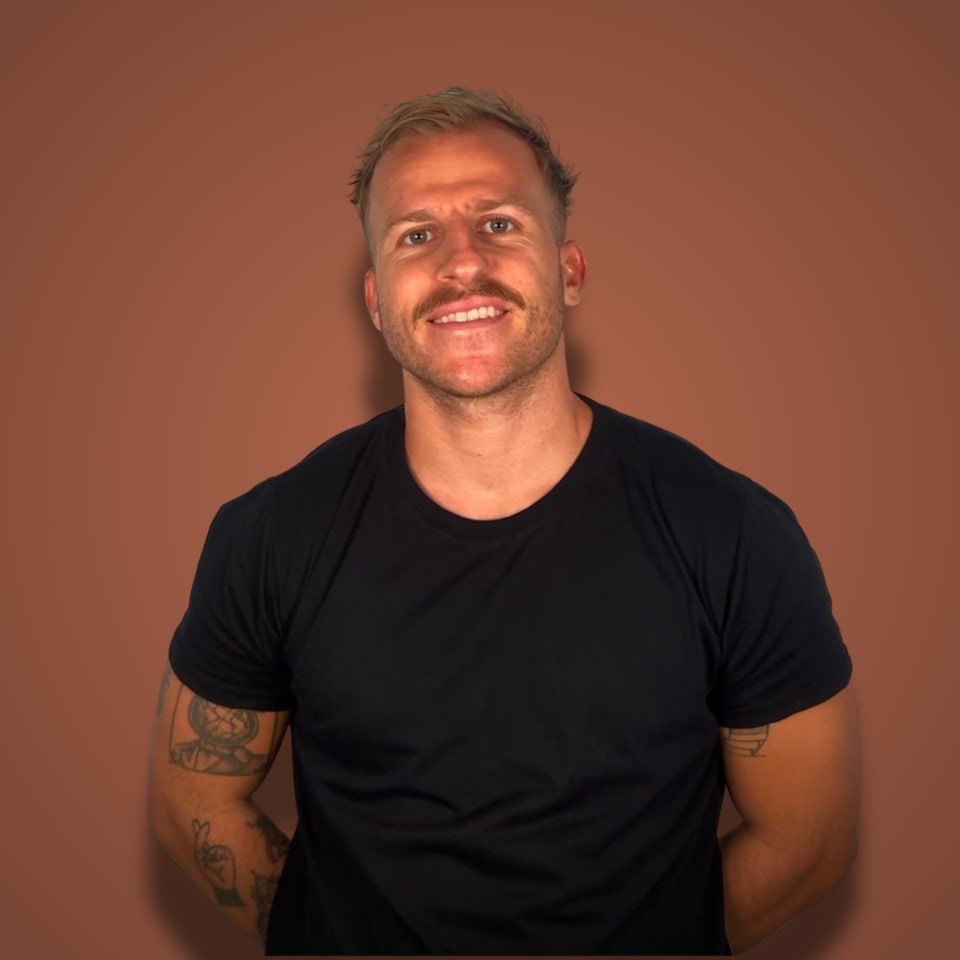
Rob Hollum made $0 for 11 months.
Not $0 in a slow month. $0 across his whole runway. He got laid off, he traveled, he shipped products that got 100,000 impressions, and his bank account still said zero.
Then it clicked. Today he runs SuperX, an X app he built with Tibo, doing $1,600 in monthly recurring revenue out of a private beta and growing.
I watched his full interview on the Starter Story podcast and there is so much in here for anyone stuck in the "I keep building and nothing makes money" loop. Most overnight successes are 11 months of silence first.
Here is the whole thing, with the real numbers.
The layoff that started everything
September 2023. Rob's company is going under. They pay him two months to leave.
For most people that is a panic moment. For Rob it was a runway.
"Basically paid to leave two months in, which for me was perfect," he said. He had a few months of cash and a simple question: what do I actually do now?
So he did the thing nobody recommends. He flew to Egypt with his friend Mustafa and joined a crypto startup. He worked on it for nine months. It went bust.
Normal version of this story: I got laid off, I joined a startup, it failed, I went back to a job.
Rob's version kept going.
The guy who lit the fuse
Around the same time, end of 2023, Rob is doom-scrolling X and keeps seeing this guy, Mark Lou.
Mark had maybe 10,000 followers. Then he launched a ship-fast starter kit and a course called codefast, and seemingly overnight he was making hundreds of thousands of dollars.
It wasn't overnight. It never is. But it lit something in Rob.
"I was so inspired by Mark and I was posting and I was seeing that there was actually quite a big community," he said.
So he started posting on X about what he was building. Getting 20, 30 views a post. Then one day he tweeted an idea, "what would you think about somewhere to see all the indie hackers," and it got 2,000 views.
For a guy getting 30 views, 2,000 felt like a stadium. That tweet was validation. If you want a cleaner way to test demand before you write a line of code, I broke that down here: how to validate a SaaS idea.
Eleven months. Zero dollars.
Here is where most people would have quit.
Rob took a couple months off and traveled. Bangkok, Bali, Cambodia, Vietnam. He admits he got carried away.
Then March 2024 he got back to it and shipped Index to Product Hunt. Index was a directory of indie hackers. The launch numbers looked incredible:
- 100,000 impressions on launch day
- 250 users
- $0 in revenue. No monetization at all.
He tried again with Pentest List. That one got 10,000 SEO impressions in two months and 600 followers on its X account.
Revenue? Still $0.
Add it up. "In the last 11 months, I've made a whopping $0 off savings," he said.
Eleven months. Two launches. Six-figure impression counts. Nothing in the bank. He was burning through the layoff money with nothing to show a spreadsheet.
This is the part nobody posts about. The honest founder loneliness of watching the metrics go up while the money stays at zero. I have been there. It feels like you are doing everything right and the scoreboard refuses to move.
The pivot that finally paid
So Rob made a decision. "That was the last time I was shipping something and spending weeks on it and not making any money."
Instead of building another free product, he sold a service. Build me an MVP for $2,000 to $5,000, with an optional monthly retainer. He spun up a simple site called Liftoff.
Then he did the only marketing he knew: he tweeted.
One tweet converted into his first client. About a week later he signed an MVP deal for $3,000.
Then it compounded. And the numbers here are worth slowing down for:
- First client: $3,000
- Next: $5,000
- A couple more at $5,000
- Then $6,000
- Then two clients back to back worth $18,000 combined
"Four months from signing my first client for $3,000, I was signing $18,000 of clients back to back," he said. "And you're just driving it from Twitter posts? 100%."
Read that again. The same posting habit that made him $0 for 11 months was now closing $18,000 deals. Nothing about the channel changed. What changed was the offer. Free product to paid service.
The posts compounded because he never stopped. He posted when he hired his first contractor. He posted every single step. Eleven months of "wasted" tweets had quietly built the audience that bought.
That slow drip of staying visible until someone is ready to buy is the whole game. If you want the structured version of turning attention into clients, this is a solid primer on lead nurturing strategies that applies whether you are selling MVPs or SaaS seats.
From client work to his own product
By December 2024, Rob's client projects wrapped and the final payments landed.
He made another call: no more clients. He had cash now, and he wanted to build something that was his.
He started on an app he called Brancast. Around Christmas and New Year's into January 2025, he also made a resolution to start vlogging, so he shipped a basic gym vlog to YouTube and X.
Then came the move that mattered. He noticed Tibo was building something in the same space, an X analytics tool. Most people would have seen a competitor and backed off.
Rob reached out. "I've been building this thing that basically does what you're doing for the last two months," he told him.
He was probably the only person who DM'd a competitor to propose teaming up instead of racing them. That message became the start of SuperX.
SuperX, by the numbers
From January 2025, Rob and Tibo built together for six months.
A lot of people know SuperX as a Chrome extension that tracks your X analytics. The new thing is the SuperX web app, and the growth happened quietly in private beta:
- About 30 active users (confirmed in PostHog)
- $1,600 in monthly recurring revenue
- And those private beta users were paying, not freeloading
Then in July 2025 they soft-launched the web app. Rob's launch strategy was deliberately low-key. One launch tweet.
That tweet did about 30,000 views and 100 likes. The result: 50 free-trial signups, each into a $29-a-month plan.
"We're calling it soft launch because we have a lot more planned," he said. Product Hunt, videos, a hard launch, all still ahead.
So the real arc looks like this. Layoff. Failed crypto startup. Two products at $0. Eleven months broke. A service pivot to $18,000 in client deals. A partnership born from a cold DM to a competitor. And now a product crossing into real recurring revenue.
What I'd actually steal from Rob's story
Four things stood out to me as a founder.
1. Find ideas by building, not by searching. Rob did not find SuperX by brainstorming. He found it by shipping Index, Pentest List, client MVPs, and Brancast, and bumping into the real problem along the way. You can read every "best startup ideas" list on the internet and still have nothing. Build, hit a wall, and the wall is your idea.
2. Posting compounds even when it pays nothing. The 11 months of tweets that made $0 are exactly what made the $18,000 of clients possible. You are not wasting the early posts. You are loading the spring.
3. When the product won't pay, sell the skill. Rob's escape from broke was not a better product. It was a service offer pointed at the same audience. Services fund the runway that lets you build the product later.
4. Two months of doing beats two years of watching. "I've learned way more in the last two months of trying to build something than tutorials or videos or comments on Twitter," he said. He spent years watching people online. The progress only came when he was in the arena.
If you want to see who Rob learned this from in public, I keep a running list of the best build in public creators to follow. That habit of posting the messy middle is the thread running through every one of them.
FAQ
Who is Rob Hollum?
A solo founder who got laid off in 2023, spent about a year shipping products that made no money, pivoted to building MVPs for clients off Twitter, and then partnered with Tibo to build SuperX, an X analytics and tweeting app.
What is SuperX?
SuperX started as a Chrome extension that tracks your X analytics and grew into a web app that helps creators ship better tweets. It runs on a $29-a-month plan and hit $1,600 MRR in private beta before its July 2025 soft launch.
How did Rob make money after 11 months of $0?
He stopped building free products and started selling MVP builds for $2,000 to $5,000. His first client came from a single tweet at $3,000, and within four months he was signing clients worth $18,000 back to back, all sourced from posting on X.
How long did it take SuperX to get traction?
About six months from the January 2025 partnership with Tibo to a $1,600 MRR private beta, then a soft launch in July 2025 that pulled 50 free-trial signups from one launch tweet.
What is the biggest lesson from his story?
Overnight success is usually a year of invisible work first. Keep shipping, keep posting, and switch your offer (free product to paid service) when the money won't come.
Want stories like this every week?
Rob's story is the kind of thing I dig into on the Profitable Founder Podcast. Real bootstrapped founders, real numbers, no overnight-success fairy tales.
If you are grinding through your own version of the 11 broke months, this is the company you want.