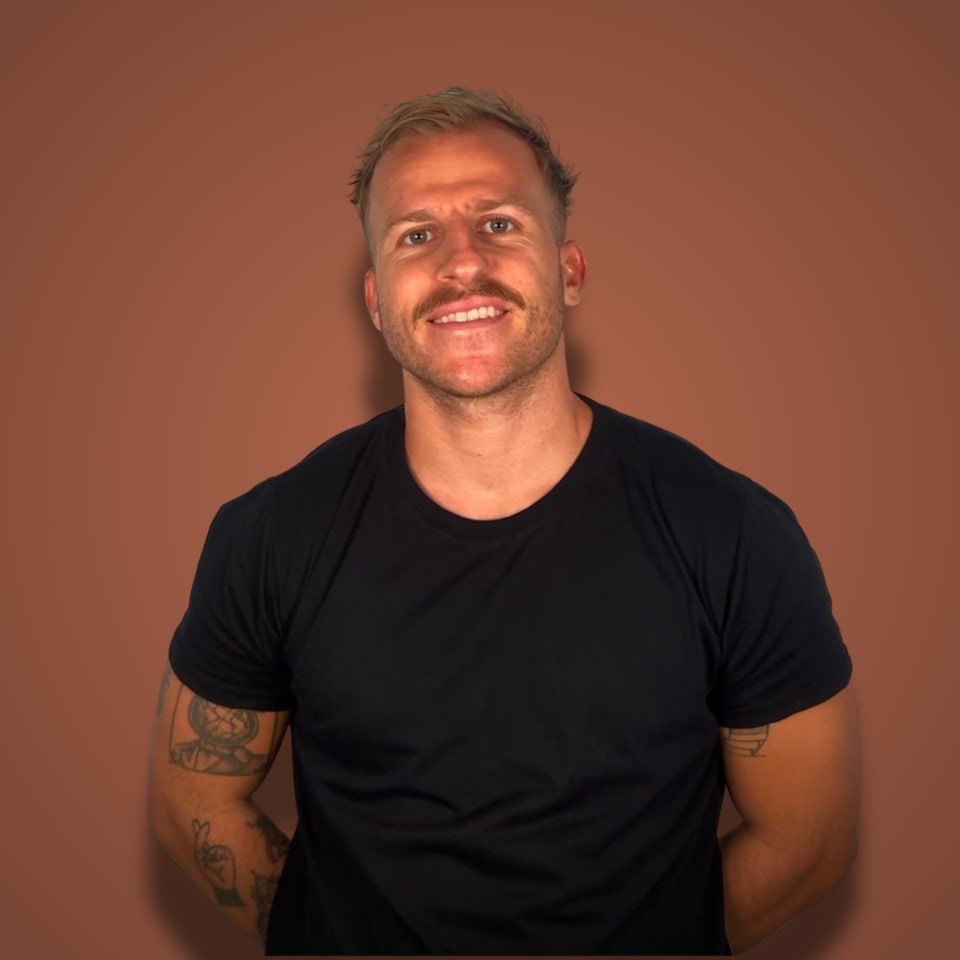
Most founders pick subscriptions because everyone else does.
Pat didn't. He charged $19 once, for lifetime access, and watched his conversion rate jump 7x overnight.
I love this story because it goes against the gospel every SaaS guru preaches. "Recurring revenue or bust." And yet here's a solo builder, using nothing but AI tools, breaking the rule and getting more traction than he ever did with a $9/month plan.
This is episode 11 of his $100K build challenge from the Starter Story Build channel. I watched it twice. Here's the full breakdown, plus what it actually means for you if you're sitting on a half-built product right now wondering how to price it.
The 0.1% that broke his brain
Pat's first app in the challenge was an AI thumbnail generator. Priced at $9 a month. Cheap.
Then he opened the dashboard.
2% of people who landed on the site clicked through to the signup page. Already rough. But the real gut punch was the paid conversion: 0.1%. Not 1%. One tenth of one percent.
For every 1,000 people who showed up, one person paid him nine bucks.
He said the dashboards gave him PTSD. I believe him. I've stared at numbers like that. You start questioning everything. Is the product bad? Is the price wrong? Is the whole idea garbage? You have no idea which lever to pull, so you freeze.
Lowering the price feels desperate. Raising it feels insane. Yearly plans feel like a band-aid. Pat had no answer, and he says it was genuinely demotivating.
One phone call changed the plan
Here's the part I want you to underline.
Pat was interviewing a founder named Devon for the main Starter Story channel. Devon runs a business doing over $20,000 a month. And the whole call, Devon kept circling back to one idea: lifetime deals.
That's it. One conversation with someone a few steps ahead, and Pat's whole pricing strategy flipped.
This is why I bang the drum about getting around other founders constantly. You can read 50 blog posts about pricing (yes, including this one) and stay stuck. Then one founder says one offhand thing on a call and the fog clears. The leverage is in the conversation, not the content.
It's the exact reason I built the Profitable Founder Club. I paid $13K for a mastermind back when I was doing $15-20K/month, and six months later I was at $75K/month. Not because of a course. Because of the people in the room casually dropping the things they'd already figured out.
Pat's three real fears (and why they were wrong)
He didn't just flip the switch. He was scared. Three specific fears, and I think most of you have the exact same ones. So let's go through them.
Fear 1: "What if a customer costs me more in API fees than they paid?"
His product runs on LLM APIs, which cost real money per use. So what if someone pays $19 once and then hammers the tool forever?
Reality: almost nobody uses a tool at 100% capacity forever. Most lifetime buyers tinker, try it, use it for one project, and drift off. Devon told him only a tiny fraction of his lifetime customers are still active. That's not failure. That's just how it works. Pat started thinking of a lifetime deal as a one-month subscription paid upfront, with a few people sticking around longer. The math balances out.
Fear 2: "I'll lose all the future subscription revenue."
True, if you think the model is permanent. It's not.
Pat's plan: start with lifetime deals to get momentum and validation. As he ships more features, slowly raise the lifetime price. Then eventually, when it feels right, flip to subscriptions. Early buyers get grandfathered in, because without them the product never gets off the ground in the first place. Right now he's not optimizing lifetime value. He's optimizing for getting unstuck.
Fear 3: "Support will eat me alive. I'm a one-man show."
This was his biggest one, and his reframe is the best part of the whole video.
"Can I afford to spend 20 hours supporting one customer who paid $19?" Wrong question. If someone buys your product and actually uses it enough to need 20 hours of your time, that's gold. You're not losing 20 hours. You're investing 20 hours into learning exactly what people need and pushing toward product-market fit.
The scary outcome is the opposite: someone pays (or never pays), never uses it, and quietly disappears. No feedback. No retention. No growth. Early on, you want customers who need you so badly they're blowing up your inbox.
What actually happened
He went for a long walk with his dog, weighed it all, and landed on "screw it, what's the worst that could happen."
He priced the new app (called moat, a database of proven social media templates) at $19 for lifetime access.
Within hours, people started buying. The conversion rate compared to the $9/month thumbnails app was 7x higher. That's over a 1,000% increase. The app crossed $2,500.
And the thing he keeps repeating: the cash isn't even the point right now. The feedback is. Customers are telling him what they like, what's broken, what they want next. That feedback is worth way more than the few thousand dollars, because it's what gets him to a product people actually pay subscriptions for later.
Those first paying users are also the ones worth keeping close. Whether you eventually move them to a subscription or upsell a bigger plan, the early buyers who give you feedback are your warmest list. If you want a simple way to keep them engaged and convert the next tier, this breakdown of lead nurturing strategies is a decent starting point.
My honest take
A lifetime deal is not a forever pricing strategy. It's a momentum hack for the zero-to-one phase.
When you have no users, no social proof, and no feedback, your enemy isn't lost LTV. It's silence. A $19 no-brainer offer buys you paying users who care, and paying users who care give you the only thing that matters early: signal.
I've watched founders sit on a product for months, terrified to launch because the pricing page isn't perfect. Meanwhile Pat shipped a $19 lifetime deal on a walk-induced "screw it" and got more learning in a week than they got in a quarter.
If you're stuck on pricing right now, here's the move. Get a few people to pay you something. Anything. Use that momentum to keep building. The model can change later. The momentum can't come from nowhere.
If you want the deeper version of this, the same logic applies to getting your first 100 SaaS customers and to validating a SaaS idea before you build the whole thing.
FAQ
Is a lifetime deal a bad idea for SaaS?
Not at the start. It's a bad long-term model if your costs scale with usage and you never raise prices. But as a way to get your first paying users, social proof, and feedback, it's one of the fastest tools you have. Treat it as a phase, not a forever.
Won't I lose money if customers use my AI tool forever?
Very few people use any tool at full capacity forever. Usage drops off naturally. Most lifetime buyers try it, use it for a project, and fade. Price the deal like a one-month subscription paid upfront and you'll usually be fine. Watch your heaviest users, not the average.
How do I price a lifetime deal?
Start low enough to be a no-brainer compared to a monthly competitor. Pat used $19 when rivals charged more than that per month. Then raise the price as you add features. Early buyers get grandfathered in as a thank-you for the risk they took on you.
When should I switch from lifetime to subscription?
When you have enough features, traction, and confidence that people will pay monthly. There's no exact number. The signal is when new buyers stop hesitating at the price and your product clearly delivers ongoing value, not one-time value.
What's better, lots of cheap users or fewer expensive ones early on?
Early on, you want users who actually use the product, even if they pay little. Engaged users give feedback and push you toward product-market fit. A silent customer who never logs in teaches you nothing, no matter what they paid.
Want more stories like this?
This is the kind of decision I dig into every week on the Profitable Founder Podcast. Real founders, real numbers, real "here's the dumb thing I did and what I'd do differently."
Listen to the Profitable Founder Podcast →
Now go price something. You can fix it on the next walk.