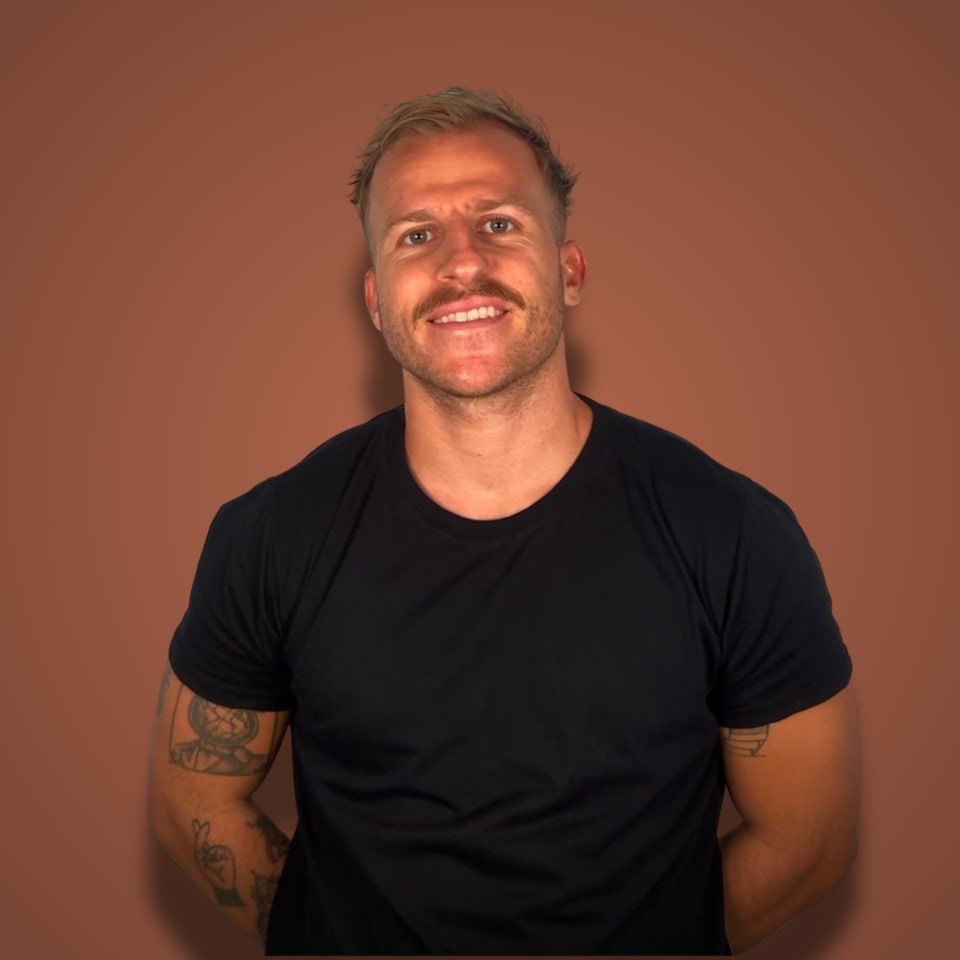
Every productivity guru on the internet tells you the same thing.
Wake up at 5am. Cold shower. Journal. Lock in before the world wakes up.
Rob Hallam wakes up at noon.
He makes $22,000 a month from a SaaS he runs completely alone, while living out of a suitcase across 13+ countries.
Starter Story just followed him for a "How I Work" episode, and it is the most honest founder routine video I've seen this year. Not because the routine is impressive. Because it breaks every rule you've been told, and it works anyway.
Here's the full breakdown, with the parts worth stealing.
Who is Rob Hallam?
Quick recap if you missed him the first time.
Rob is the solo founder of SuperX, an analytics and growth tool for X (Twitter). I covered his early journey in how Rob built SuperX to $14K a month. That was June. He's at $22K a month now.
No team. No office. No funding.
Just one guy, a laptop, and a Rubik's Cube he scrambles between prompts.
Before SuperX, he spent about a year as a backpacker trying to build startups on the move. Loads of failures. No money for a year. His words, not mine.
What changed wasn't the idea. It was the routine. And the routine is the interesting part.
The night owl entrepreneur routine, hour by hour
Rob calls it "the reverse typical guru advice lifestyle." Here's what a normal day looks like for him:
- 11am to 12pm: Wake up. In his words, "in a total blur." He's the opposite of a morning person and has stopped pretending otherwise.
- Early afternoon: Breakfast, sunlight, a couple of customer support emails. Small stuff only.
- 2 to 3pm: Gym. Weights plus some cardio. Then a shower and another coffee.
- Evening to late night: One solid 8-hour deep work block. No texts, no calls, nobody awake. This is where SuperX actually gets built.
- 1 hour before bed: Everything off. A book, some YouTube, phone off for 30 minutes.
- Sleep: 9 hours, protected above everything. He sets his alarm for bedtime plus 9.5 hours.
The design principle behind it is simple: front-load the chores.
Food, gym, errands, admin. All done before the work block starts. So when he sits down at night, there is nothing left to do except the work. That's how he gets into flow state, and he rides it for 8 hours straight.
He spent years feeling guilty about the noon wake-up. Every piece of self-help content told him the gap between what he had and what he wanted was discipline. Wake up earlier. Plan better. Lock in harder.
Then he noticed something in his own data. More on that below.
Travel slower: the 2 to 3 month base rule
Rob's first attempt at the digital nomad thing was the Instagram version. New city every few days. New hostel every week.
He got, in his words, "bits and bobs" done. Nothing shipped.
The fix came in July 2025 when he parked himself in Colombia for 3 months straight. That stretch is when SuperX actually started moving.
So now his rule is: set up a base for 2 to 3 months, ideally 3. Then move to the next place.
Long enough to build a routine and ship deep work. Short enough that he still gets what he actually travels for: seeing how other people live, how money moves in different places, where the opportunities are.
If you've read Jack Friks' $40K/month solopreneur routine, you'll notice the same pattern showing up: the routine itself matters less than removing everything that competes with the work block.
How he decides what to build (the boring stuff wins)
Rob keeps one big list, refreshed every month or two. Top 3 or 4 features he wants to build, then improvements, then bugs.
When he sits down at night, he either continues yesterday's work or picks off the list by feel.
Two filters make this work.
Filter 1: the boring stuff moves the business. Rob admits he always wants to build the flashy, visual features. But "99% of the time the stuff that moves the business forward the most is the boring stuff." Billing edge cases, onboarding, activation emails, follow-up. The unsexy work that turns signups into paying customers. If you want a concrete framework for that side, this guide to lead nurturing strategies maps out the follow-up systems most solo founders skip.
Filter 2: let customers vote with repetition. When a customer raises a small issue, Rob notes it. If nobody ever mentions it again, it wasn't important, and it dies on an old list. If something is critical, he says, "you'll get five emails." The inbox is the priority queue.
Is it the optimal system? Probably not. But it's a system a single human can actually run for years without a product manager, and that's the constraint that matters at his stage.
The surfing analogy (why winners keep winning)
The best 90 seconds of the episode is Rob's surfing analogy.
Building a business is like surfing. You have to spend a lot of time in the water, watching waves, before you can tell which one will break properly. There's no shortcut. The read comes from time in the water.
The hardest part isn't catching a wave. It's getting in the water the first time. The board is new, you're fumbling with the leash, everything is overstimulating.
That's why people who win once keep winning. Once you've learned to read the water, catching the next wave is no longer the hard part.
I felt this one personally. My first SaaS took years of flailing. The stuff I've built since moves 10x faster, not because I got smarter, but because I already know what a breaking wave looks like.
If you're pre-revenue and everything feels overwhelming: that's not a sign you're failing. That's just what the first paddle out feels like.
"Productivity follows happiness"
Here's the observation that reorganized Rob's whole life.
He's lived in more than 13 countries over the last few years. In some of them he barely opened his laptop. In others he shipped more in weeks than he had in months.
The variable was never discipline. It was how happy he was in that place. Every single time, no exception: the places where he shipped the most were the places where he was happiest.
So his operating motto is "productivity follows happiness."
In practice that means he engineers his environment for enjoyment first. He does the things he loved as a kid. Travel. Play. The Rubik's Cube between prompts isn't a quirk, it's a deliberate way to stay in a state of play while working.
Most founders run the equation the other way: grind now, be happy later, and treat misery as proof of effort. Rob's numbers argue that's backwards. The output showed up when the enjoyment did.
What to steal from Rob's routine
You don't need to move to Colombia. Here's the transferable core:
- Find your real hours. Rob's are 6pm to 2am. Yours might be 5am to 9am. The guru schedule is irrelevant; the protected block is everything.
- Front-load the chores. Gym, food, errands, email before the block. Nothing left to compete with the work.
- Protect sleep like revenue. 9 hours if that's what you need. Everything is downstream of it: creativity, motivation, mood.
- Keep one list, refreshed monthly. 3 or 4 features, improvements, bugs. Recopy only what still matters.
- Let repetition prioritize. One mention is noise. Five emails is a roadmap item.
- Do the boring work. The follow-up systems and billing flows move revenue more than the flashy feature you want to build.
- Audit your environment. Look at where and when you've shipped the most in the past 2 years. Do more of whatever that was.
FAQ
Who is Rob Hallam?
Rob Hallam is the solo founder of SuperX, an analytics and growth tool for X (Twitter). He makes about $22,000 a month and runs the entire business himself while traveling, featured on Starter Story's "How I Work" series.
Can a night owl entrepreneur really be successful?
Yes. Rob wakes up between 11am and noon and still ships an 8-hour deep work block daily, just at night. The evidence from his 13+ countries of data: output tracked happiness and protected focus time, not wake-up time.
How does Rob Hallam make money?
SuperX subscriptions. The tool helps X (Twitter) creators analyze and grow their accounts. He was at $14K a month in June 2026 and is at $22K a month now, with no team and no funding.
Is the digital nomad lifestyle bad for building a startup?
Fast travel is. Rob got almost nothing done moving every few days. His fix was slow travel: a 2 to 3 month base in each place, which gave him routine for deep work plus the upside of seeing new markets.
What does "productivity follows happiness" mean?
It's Rob's core principle: he ships the most in places and seasons where he's happiest, without exception. So instead of forcing discipline, he engineers his environment for enjoyment first and lets the output follow.
Hear more stories like this
Rob's episode is a 10-minute watch. If you want the longer version of stories like this, I interview bootstrapped SaaS founders making $100K to $10M a year every week on the Profitable Founder Podcast. Real numbers, real routines, no highlight reel.