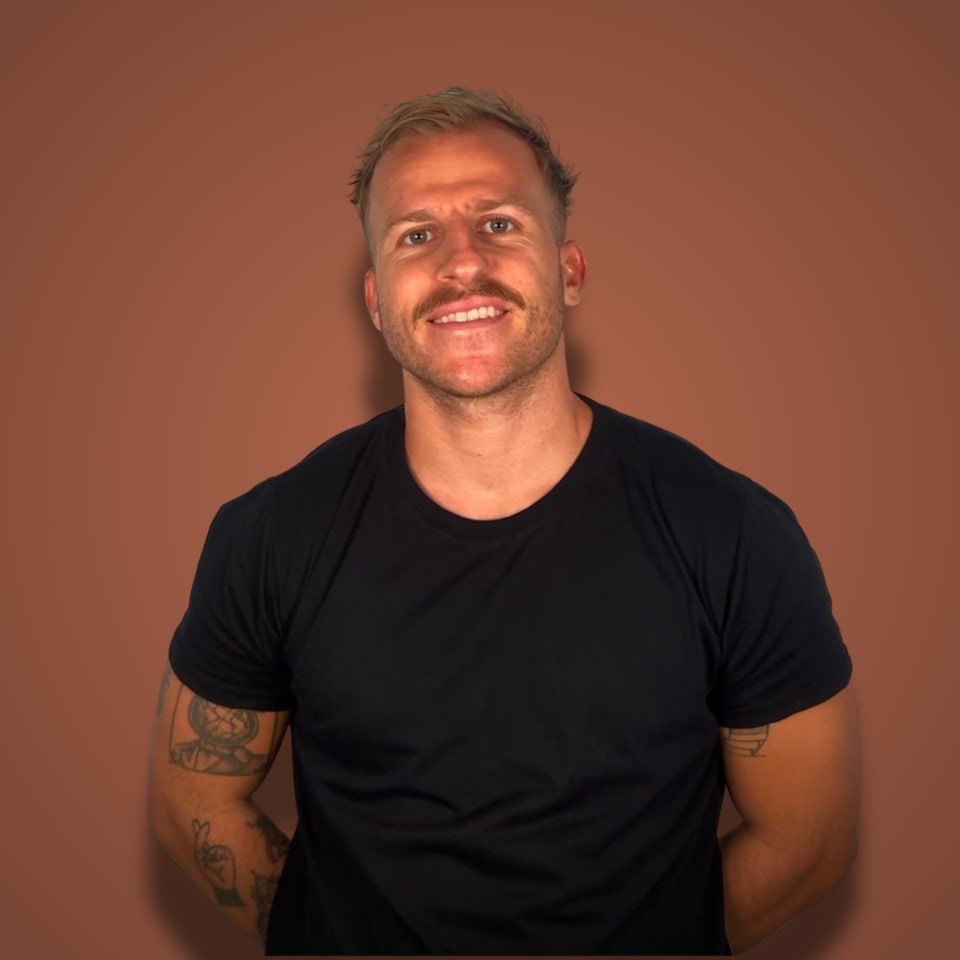
Everyone I talk to is building the same three apps.
An AI note taker. A habit tracker. Something with "copilot" in the name.
Jordan built an app for people in prison.
It has made $1.5 million. He runs it solo. It was profitable in month one, with 200 paying users before most founders would have finished their landing page.
If you're hunting for niche SaaS ideas, this story will change where you look. The best markets aren't the ones everyone is fighting over on Product Hunt. They're the ones you can't even see.
Pat Walls had Jordan on Starter Story to tell the whole thing. Watch it, then let's pull the playbook apart.
A Zoom call, a missing client, and an idea nobody wanted
Jordan wanted to be an astronaut as a kid. Got a master's degree, worked on a moon rover in grad school, then took a researcher job at a Fortune 100 company. Got bored. Taught himself to code, moved to San Francisco, went freelance.
One of his clients hired him to build a mobile app. Near the end of the project, Jordan joined the wrap-up Zoom call. The client wasn't there.
His girlfriend was. And she was in tears.
The client had been sent to prison.
"One day he's here, and you're talking, and you're working with him. And the next day he's gone."
Jordan stayed in touch. Paper letters, for years. (His words: "very high-tech.")
Through those letters, one theme kept coming back: the services available inside prisons are terrible and wildly overpriced. Jordan calls them "a massive scam." Low quality, high price, captive audience.
Most people would shake their heads and move on. Jordan had a decade of software experience and something rarer: a direct line into a market almost no founder ever talks to.
What Parakeet Chat actually is
Parakeet Chat is an AI learning and communication app for incarcerated people.
There's no mobile app. Nothing on the App Store. You cannot download it on your phone.
Federal inmates already have access to an internal prison email system. Parakeet Chat plugs into that. From the user's side, they just email a specific address. A bot processes the message and replies.
Through that one email thread, they can talk to ChatGPT, look up sports stats, and do legal research. The number one use case: studying case law to understand their own rights. Resources inside are so limited that an AI research assistant over email is a lifeline.
The second use case hits harder. Family communication.
One user message Jordan shared: "Thanks to your system, I was able to talk to my daughter. I haven't been able to talk to her in years, and she sent me a hello message. It means the world to me."
Around 100,000 family connections exist because this product does.
And here's the business model detail most founders miss: the users and the customers are different people.
The users are inside. The customers are their families outside, paying $15 to $20 a month like any other subscription (discount if you go yearly). Whoever feels the pain isn't always the one holding the credit card. Build for the user, charge the payer.
Profitable in month one: the real numbers
Jordan validated and built at the same time, because in this market there was no other way. The timeline:
- 1 month to build the prototype
- 1 month to build the payment system
- 200 paying users in the first month. Profitable immediately.
- A little over $300K revenue in 2025
- $1.5 million lifetime, verified live on TrustMRR
- Around 30,000 people have tried it. That's 20% of the entire US federal prison population.
- 9 million messages sent
Solo founder. No funding. No growth team.
The stack, for the curious: TypeScript, React, Postgres, Redis, Auth0, Prisma, Zod, a pile of Docker containers. But Jordan says he hasn't opened his code editor in 3 to 6 months. AI writes the code now.
His take on the "which language should I use" question: it doesn't matter. "The tech stack is not that important. Sheer speed is."
Why niche SaaS ideas win in markets you can't advertise to
Think about what Jordan could NOT do.
No Facebook ads. No landing page link. No cold email. No waitlist. Prison is a closed ecosystem, and you can't market your way in from the outside.
Sounds like a nightmare. It's actually a moat.
Growth was 100% word of mouth. A few contacts on the inside showed the product to other people. Those people showed it to more people. When a good product lands in a starved market, users become zealots. Jordan's comparison: "Apple doesn't have customers, they have cult members."
He added one mechanical boost: an internal referral system. Recruit someone who becomes a paying customer, get about a month of free credits.
That's it. That's the whole growth playbook behind 20% market penetration.
→ The harder a market is to reach, the fewer competitors you will ever face. Distribution difficulty filters out everyone who needs an ads dashboard to grow.
I keep seeing this pattern with founders on the podcast. The ones printing money are rarely in the obvious markets. They're in the weird ones, like the founder building for underserved markets nobody else respects or the people running boring businesses that quietly make money.
Crowded markets feel safe because you can copy the leader. Closed markets feel scary because you're alone. Being alone is the point.
"You must be willing to let your idea die"
My favorite part of the interview is Jordan's take on validation, because it's the opposite of the usual advice.
He couldn't validate the normal way. No smoke tests, no email capture. So validating and building the MVP were the same act: describe the tool to his contacts inside, build it in a month, get it in front of them, listen.
People responded. They told other people. 200 users in a month was his validation.
But his bigger point applies to every founder reading this:
"Validation is not a specific strategy. It's: do you WANT to validate? Because as soon as you validate, your idea goes from a protected little thing in your head out into the world. And the world is probably going to spit on it."
Most people skip validation on purpose. Not because they don't know how (you can Google any validation tactic in 5 minutes). Because invalidating the idea would hurt. They're emotionally invested in being an entrepreneur, not in finding the truth.
"Accept that you must validate, and you must be willing to let your idea die."
Cheap to say. Expensive to actually do.
How to find your own version of Parakeet Chat
You probably can't build for prisons. That's fine. The playbook transfers:
1. Mine your weird proximity. Jordan didn't brainstorm this idea. It found him through a client, a Zoom call, and years of paper letters. Your unfair advantage is the markets you touch that other founders don't: the industry your parents work in, the job you had at 22, the community you're already inside.
2. Hunt for closed ecosystems. Anywhere distribution is hard (regulated industries, institutions, offline trades), software is usually a decade behind and competition is thin.
3. Look for captive spend on bad tools. Jordan's wedge was incumbents charging high prices for garbage quality. Angry users of overpriced tools are the easiest first customers you will ever get.
4. Separate the user from the payer. Ask who feels the pain AND who holds the wallet. They don't have to be the same person. Parakeet's users can't even open a browser.
5. Ship the stupid idea now. Jordan's final advice: everything you think about business is wrong until you've done it. There's no overnight success ("it doesn't exist"). Parakeet worked because he'd spent 10 years making mistakes first. So start the idea everyone says won't work, in a controlled way, and let the mess teach you more than 20 books would.
FAQ
What is Parakeet Chat?
Parakeet Chat is an AI learning and communication service for incarcerated people. It works through the existing prison email system: users email a bot that lets them chat with AI, research case law, check sports stats, and message family. There's no downloadable app.
How much money does Parakeet Chat make?
Parakeet Chat has made over $1.5 million lifetime, including a little over $300,000 in 2025. It charges families of incarcerated users $15 to $20 per month, was profitable in its first month with 200 paying users, and is run by one person.
What makes a good niche SaaS idea?
The strongest niche SaaS ideas combine three things: a market you have unusual access to, an ecosystem competitors find hard to enter, and existing spend on bad or overpriced tools. Small, hard-to-reach markets sound limiting, but Parakeet reached 20% of its entire addressable market through word of mouth alone.
How do you validate a niche SaaS idea?
Talk to real people in the niche before and while you build. Jordan described the product to contacts inside prison, built a prototype in one month, and treated 200 paying users as validation. The tactic matters less than the mindset: be willing to let the idea die if the market shrugs.
Steal playbooks like this every week
I break down founder stories like Jordan's on the Profitable Founder Podcast: bootstrapped operators sharing the real numbers behind how they grew.
No fluff, no "just add value" advice. Actual systems from people who've done it.