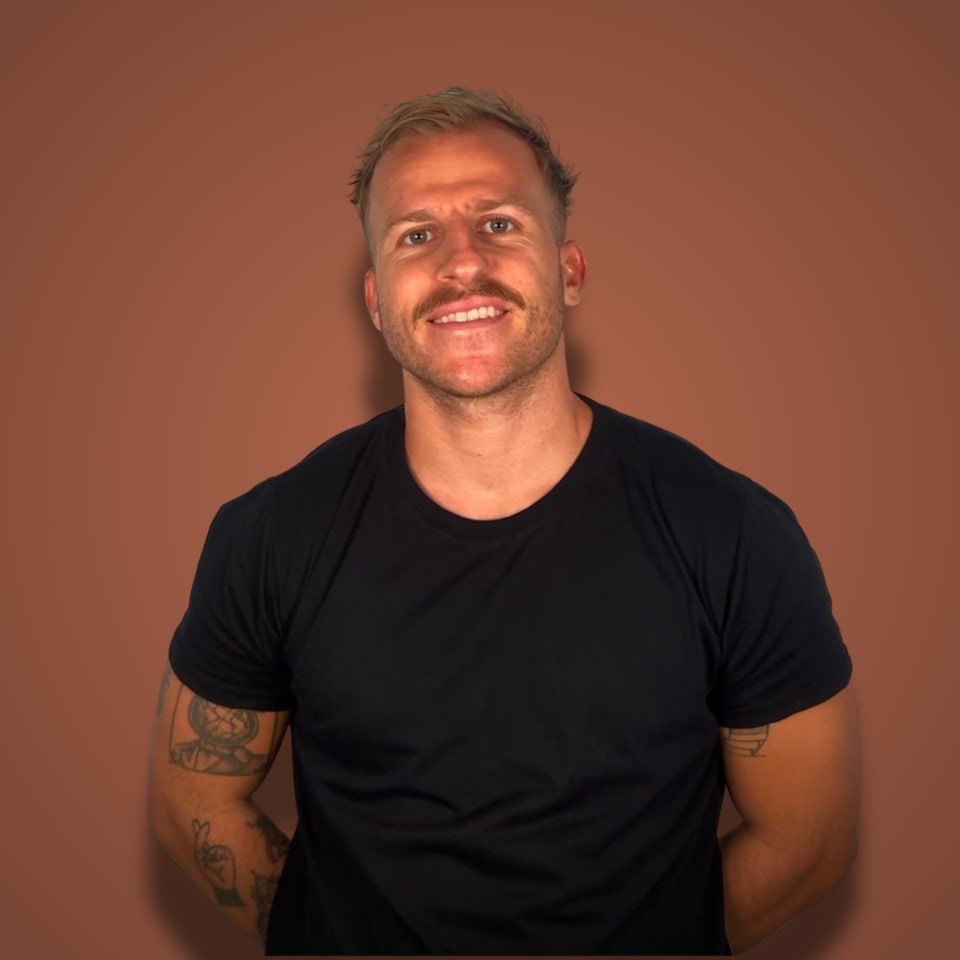
Reza had never written a line of code in his life.
One year later, his first app is doing close to $30,000 a month.
Not his third idea after two painful failures. His first swing.
And the part most people get wrong: the app itself isn't the impressive bit. It's how he found the idea. Reza went hunting for underserved markets on TikTok with a simple 3-filter checklist, and one niche kept showing up over and over: manifestation.
So he built Wakes, an AI manifestation app for iOS. It's done over $140K in net subscription revenue this year, and Pat Walls had him on Starter Story to break down the whole playbook.
Watch the full interview here, then I'll pull out the parts worth stealing:
The numbers behind Wakes
Quick reality check first, because "manifestation app" sounds like a joke business until you see the dashboard.
Reza pulled up his Superwall numbers on camera:
- $34,000 in the last 30 days
- 16% conversion on the paywall
- 7,000+ downloads in the same window
- Close to $140K net subscription revenue year to date
- Best month so far: $44K in May
Pricing is $40 a year or $20 a month, and most users pick yearly. Partly the math, partly psychology: they're committing to a goal, so they commit to the app too.
His customers are 18 to 35 year olds who are deep into manifestation content on TikTok. They come in wanting to manifest something specific (money, a relationship, confidence) and Wakes generates personalized audio and affirmations for exactly that.
One founder, zero code written by hand, in a market most builders would laugh at.
That last part is the lesson.
How Reza finds underserved markets on TikTok
A year ago Reza was in grad school in Toronto. He'd worked on startups and growth before, but never shipped anything of his own.
Instead of brainstorming ideas in a notebook, he scrolled TikTok looking for underserved markets with three filters:
→ What's getting a lot of views right now
→ Where there's obvious buyer intent, not just entertainment
→ Where the existing product experience is still bad
Manifestation passed all three. Massive views, an audience that already spends money on courses and audios, and app store competitors stuck on generic affirmation lists.
That third filter is where his edge came from. Everyone in the space was shipping the same canned "I am abundant" quotes. Reza's insight from actually consuming the content: people don't want generic affirmations, they want something customized to their exact situation.
His bet was that AI had just reached the point where you could generate personalized audio content at scale, for almost nothing, and people would pay for it.
He was right. But he didn't trust the bet blindly.
He validated the idea before the app existed
This is my favorite part of the story.
While building version one on the side, Reza launched a TikTok page testing the core concept: AI audio with personalized manifestation content, presented the way the app would present it.
He wasn't looking for customers yet. He was looking for a signal from TikTok's algorithm that this type of content gets views.
There was no landing page with a fake waitlist, and no 40-question survey nobody answers honestly. He posted the actual thing and watched whether the market leaned in.
Pat's commentary on this is worth repeating. Most first-time founders pick what he calls tarpit ideas: a marketplace, a recipe generator, a social network. Ideas that sound obvious, that everyone tries, and that quietly eat years. Reza skipped that entire graveyard by validating demand first and building second.
I've seen the same pattern with other founders on this blog. Cedric used almost the identical trend-spotting approach to make $51K in 7 weeks, and I broke his version down in my post on trending app ideas. Different niche, same discipline: let demand pick the product.
Built in 4 weeks, no code, shipped in August
Reza started building in July of last year. Four weeks later, version one was on the App Store.
The build had three parts: the design, the app itself, and the audio pipeline (the core feature the whole bet rested on).
His stack, if you want to copy it:
- Claude Max for the heavy lifting: content pipelines, analytics, and most of what would normally need an engineer
- Superwall for paywalls, payment tracking, and conversion data
- User Studio for running and testing content, and understanding why videos work or flop
- Railway for deploying anything backend, so he never touches the AWS nightmare
Remember: this is someone who had never written a line of code. In 2026 that's not the barrier anymore. I covered the wider toolkit in how to build apps without coding if you want the full menu.
The timeline after launch matters just as much as the build:
→ August: version one live, marketing starts
→ October to December: zero product updates. All his energy went into finding the distribution angle.
→ January onward: angle found, so he went back to shipping features based on real user requests and support emails
Most first-time builders do the exact opposite. They polish the product for six months and treat marketing as the thing you do "after." Reza froze the product for a full quarter to figure out distribution.
Almost nobody has the discipline to do that on their first app. It's why he's at $30K a month and most first apps die at $0.
The 25-account TikTok machine
Wakes grows on TikTok, and the operation is bigger than you'd guess for a solo founder.
He started last year with simple slideshows. Today he runs close to 25 TikTok accounts posting daily, each with its own persona and strategy.
The system: when one account finds a hook or format that performs, he applies the same persona or hook across 10 more accounts to amplify it. One winner becomes ten distribution channels.
He also kept experimenting sideways. The app's audio pipeline was already generating content, so he launched a Spotify page with it. It got traction, so he cloned it to YouTube and TikTok. That channel cluster was "basically nothing" when he launched it in February. Today it brings in close to 20% of monthly revenue.
His content process for anyone starting from zero:
→ Find 20 videos or slideshows in your niche that you genuinely like and could put your own twist on
→ Write the hooks yourself, then use ChatGPT or Claude to refine and organize them into repeatable formats
→ Repeat winning formats across accounts, and keep pulling new angles from TikTok and Reddit
Note the order. AI refines and analyzes. The taste, the hooks, the first accounts? 100% him. Gus (Starter Story's producer) called this out specifically: everyone's chasing shortcuts, and the guy actually winning did the first three accounts entirely by hand.
The same principle applies if you're running a service business instead of an app: automate the repetitive backend so your hours go into distribution, not admin. TwiLead has a solid breakdown of business automations that covers exactly that side.
The advice: don't quit before you know what isn't working
Pat asks every founder the same closing question, and Reza's answer was better than most.
His whole first year came down to persistence. In the beginning, he said, it's really hard to tell the difference between "this is not working" and "I haven't figured out the angle yet."
Those two feel identical from the inside: same flat graphs, same silence.
His rule: don't quit before you actually know what isn't working. Everything is workable, everything is fixable, and if you stay in the game long enough and study why things fail, the market and the algorithm will teach you where to go.
Three months of dead TikTok accounts would have killed most people's motivation. For Reza it was tuition. October to December looked like failure. It was actually the search that made May a $44K month.
The takeaways, compressed:
→ Hunt underserved markets where views, buyer intent, and bad products overlap
→ Validate with real content before you build anything
→ Ship the simplest version in a month, then spend a quarter on distribution
→ Clone what works across accounts instead of reinventing daily
→ Persist until the data tells you what's broken, not until your mood does
FAQ
What is an underserved market?
An underserved market is a group of buyers with proven demand but weak products serving them. The demand signal is already visible (views, spending, engaged communities) but the existing options are generic, outdated, or badly built. Wakes is a textbook case: manifestation content had massive TikTok demand, but every app served the same canned affirmations.
How do you find underserved markets on TikTok?
Use Reza's three filters. Look for content getting heavy views right now, check whether the audience shows real buyer intent (they already pay for courses, tools, or products in the niche), and then try the existing apps. If the products feel lazy or generic while the content is exploding, you've found a gap. Then validate by posting the content your product would create and watching how the algorithm responds.
Can you really build an app without knowing how to code?
Yes. Reza had never written a line of code and shipped Wakes in 4 weeks using Claude for the build, Superwall for payments, and Railway for the backend. The tools have gotten good enough that the build is no longer the hard part. Distribution is. Plan to spend more time on marketing than you spent building, because that's the half that actually decides revenue.
How much do manifestation apps make?
Wakes has done about $140K in net subscription revenue this year, currently around $30K a month, with a $44K peak in May. Pricing sits at $40 a year or $20 a month. The niche monetizes because the audience is emotionally invested and already used to paying for content. Pat's take: manifestation is a timeless concept (Think and Grow Rich has sold on the same idea for nearly a century), which makes it a durable category rather than a fad.
Steal playbooks like this every week
Reza found one underserved market and it changed his life in 12 months.
Every week on the Profitable Founder Podcast, I sit down with bootstrapped founders doing $100K to $10M a year and pull apart exactly how they did it. Real numbers, real playbooks, no fluff.