Most people building an app right now are making the same quiet mistake.
They ship it. Then they sit back and hope someone finds it.
Nobody finds it.
Not because the app is bad. Because the App Store listing was never set up to be found in the first place. You can build the best habit tracker on earth and still sit at position 34, where exactly zero humans scroll.
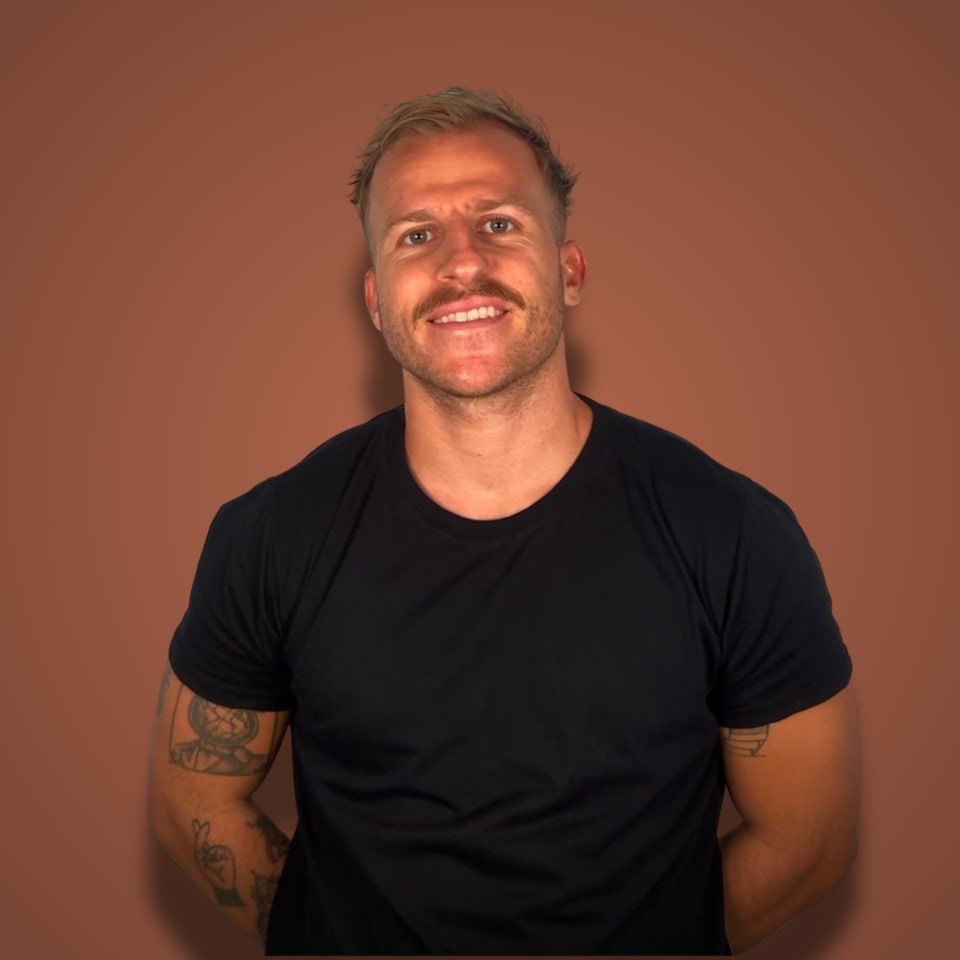
Sebastian figured this out the hard way, then turned it into a machine. He builds four iOS apps that together do over $50,000 a month. His main one, Habit Kit, crossed $500,000 in total revenue in 2025 — and he had a single month, January, where he pulled in over $100,000.
Here's the part that made me sit up: 98% of his users come from App Store and Google Play search. No Twitter. No TikTok. No paid ads. People open the store, type "habit tracker", and there he is in the top three.
He broke the whole thing down on Starter Story Build. I watched it twice and pulled out the parts that actually matter for founders. Here's the playbook.
What ASO actually is (and why it's basically free distribution)
ASO = App Store Optimization. Think SEO, but for the App Store and Google Play.
When someone types "habit tracker" or "meditation app" or "fitness app" into the store, ASO is what decides whether your app shows up at the top — or buried on page four where it dies.
And the scale here is wild. Hundreds of millions of people browse the App Store looking for apps every single day. They already have their wallet out. They're not skeptical strangers you dragged off Twitter — they're searching for the exact thing you built.
Sebastian's apps make six figures a month and he does, in his words, "no marketing at all." He just nailed three things. Let's go through them in order of impact.
Foundation 1: Keywords live in your app name, not your imagination
This is the one people get the most wrong.
The single biggest ASO factor is the strategic placement of keywords in your app's metadata — specifically your app name and subtitle. Nothing else comes close. This is what Apple and Google read to understand what your app even is.
So here's the trick that took me a second to clock: his app is called "Habit Tracker - Habit Kit."
His brand is Habit Kit. But "Habit Tracker" is the keyword people actually search. So he put the keyword first and the brand second. Genius, and most indie devs would never do it because their ego wants the brand name up front.
Duolingo can afford to just say "Duolingo." You can't. Not yet.
The order of operations matters here. Don't name the app and then figure out keywords. Do it backwards:
→ Step 1: Research the keyword landscape first. What do people actually type into the store? ChatGPT and Claude are great for brainstorming the list.
→ Step 2: Validate it. Use an ASO tool that shows you popularity (how often people search it) and difficulty (how hard it is to rank). The sweet spot is high popularity, manageable difficulty.
→ Step 3: His contrarian take — for your primary keyword, he'd rather compete for a hard, high-value term than dominate an easy, low-volume one. Aim up.
→ Step 4: Now name the app. Primary keyword goes in the name.
Then there's the subtitle — another 30 characters Apple lets you use for secondary keywords. His is "streaks and accountability." And one rule people miss: don't repeat keywords across the name and subtitle. Apple stitches them into one combined string for indexing, so a repeat is a wasted slot.
Last piece is the hidden keyword field in App Store Connect — 100 characters that users never see but Apple indexes. The rules are oddly specific:
- Separate with commas, no spaces.
- Don't repeat words already in your name or subtitle.
- No plurals if you already used the singular.
- No competitor app names (Apple can reject you for it).
- Use all 100 characters. Don't leave any on the table.
None of this takes more than an afternoon. You just have to do it right the first time.
Foundation 2: Your screenshots have 3 seconds to do their job
Keywords get you seen. Screenshots get you installed. They affect your conversion rate more than anything else on the page.
The brutal math: you've got about 3 to 5 seconds to convince someone to tap download. People scroll through screenshots like maniacs. So Sebastian has rules.
→ Lead with your best feature. First screenshot = your single most visually impressive, differentiating thing. For Habit Kit that's the grid-based habit view — colorful, unique, instantly different from every other tracker. Do not waste slot one on a generic welcome or onboarding screen. Nobody downloads a welcome screen.
→ Show real UI. People want to see what they're actually getting. Skip the abstract graphics and lifestyle stock photos. They look fancy and they convert worse.
→ AB test everything. This is the part that humbled him. He paid a designer to make beautiful new screenshots — way slicker than his own self-made ones. He was certain they'd win. He ran Apple's product page optimization test anyway.
His ugly, self-made originals beat the polished designer versions.
Stupid lesson, right? But that's the whole point — authentic sometimes beats professional, and you will never know which until you test it. Assume nothing.
If you want the wider playbook for actually getting eyeballs once your listing is dialed in, I broke down a full UGC distribution system in how to get your first 1,000 app downloads for free. ASO and distribution are two halves of the same coin.
Foundation 3: Reviews are the flywheel everyone underrates
This might be the biggest one, and it's the slowest.
Ratings and reviews do three jobs at once: they're social proof, they boost your search ranking (Apple and Google bake them into the algorithm), and they lift your conversion rate. Rank well with bad reviews and your downloads still tank.
Habit Kit has over 7,400 ratings on iOS at a 4.8 average, and over 10,000 on Google Play at 4.6. That took years. It's also a moat newer apps simply can't buy.
Getting reviews is hard. Here's exactly what worked for him:
→ Ask at the happy moment. Not during onboarding. Not when something breaks. Sebastian shows the review prompt right after someone completes their first habit — peak dopamine, peak goodwill. Timing is the whole game.
→ Don't be annoying. If someone dismisses the prompt, don't show it again for a while. Respect the user.
→ Reply to every review. Every single one since day one. He thanks the good ones and tries to fix the bad ones — and people regularly flip their 1-star to 5-star after he solves their problem.
→ The email signature trick. He gets a lot of support emails. After every reply he adds: "Hey, if you're enjoying the app, I'd be grateful for a review." The user just got fast, kind help from the actual developer — that's the perfect moment to ask. It quietly stacks up into a pile of five-stars.
→ Mine reviews for your roadmap. If 20 people ask for the same feature, that's not noise, that's a signal. He's prioritized entire features off review patterns.
The thread running through all of it is care. The founders I see actually winning treat every user like a person they're grateful for. It's not a growth hack. It just happens to grow.
The part nobody wants to hear: it's a marathon
Here's the timeline Sebastian gave, and I think it's the most important thing in the whole interview.
He launched Habit Kit in November 2022. He was invisible. He'd search "habit tracker" and scroll through pages without finding his own app — despite doing all the right things. Keyword research, done. Good screenshots, done. Collecting reviews, done. Still not ranking.
He kept shipping anyway. And it moved, slowly:
- ~6 months in: cracked the top 10 in some non-US markets (UK, Germany).
- ~1 year in: started appearing in the US top 10 occasionally — not consistently, but there.
- ~3 years in: consistently top five.
That's the catch with ASO. The actions you take today might not pay out for months. Which is exactly why most people quit — and exactly why the ones who don't end up owning the keyword.
It's the same lesson I keep seeing in every founder story we cover. The boring, compounding stuff wins. If you want another version of it, look at how Benji built Snag to $30K a month after shipping 45 apps — same energy, different game.
FAQ
Is ASO really enough to grow an app with no marketing?
For Sebastian, yes — 98% of Habit Kit's users come straight from App Store and Google Play search, with no paid ads or social. It works best in categories where people actively search the store for a solution (habits, fitness, productivity, finance). If your category isn't searched much, you'll need distribution on top.
What's the single most important ASO factor?
Your app name and subtitle. That's where your keywords have to live, and nothing else comes close. Put your primary keyword in the name, secondary keywords in the subtitle, and never repeat across the two.
Should I use my brand name or a keyword in my app title?
As an indie, lead with the keyword. Habit Kit is literally titled "Habit Tracker - Habit Kit." Big brands like Duolingo can run on brand alone; you can't afford to yet.
How many screenshots and reviews do I actually need?
There's no magic number, but lead with your best feature on screenshot one, show real UI, and AB test. For reviews, prompt at a happy moment (after a win, never during onboarding), reply to every review, and ask in your support email replies. Habit Kit's 7,400+ iOS ratings took years.
How long does ASO take to work?
Months, not days. Habit Kit was invisible for the first chunk of its life, hit top 10 in smaller markets around 6 months, top 10 US around a year, and consistent top five after ~3 years. It's a marathon — the payoff compounds.
One last thing
The reason I love stories like Sebastian's is that there's no trick. He picked the right keyword, made honest screenshots, answered every review, and refused to quit for three years.
That's it. That's the whole "growth hack."
If you want more breakdowns like this — real bootstrapped founders, real numbers, the boring stuff that actually works — that's the entire point of the Profitable Founder Podcast. Go listen to an episode, steal one tactic, ship it this week.