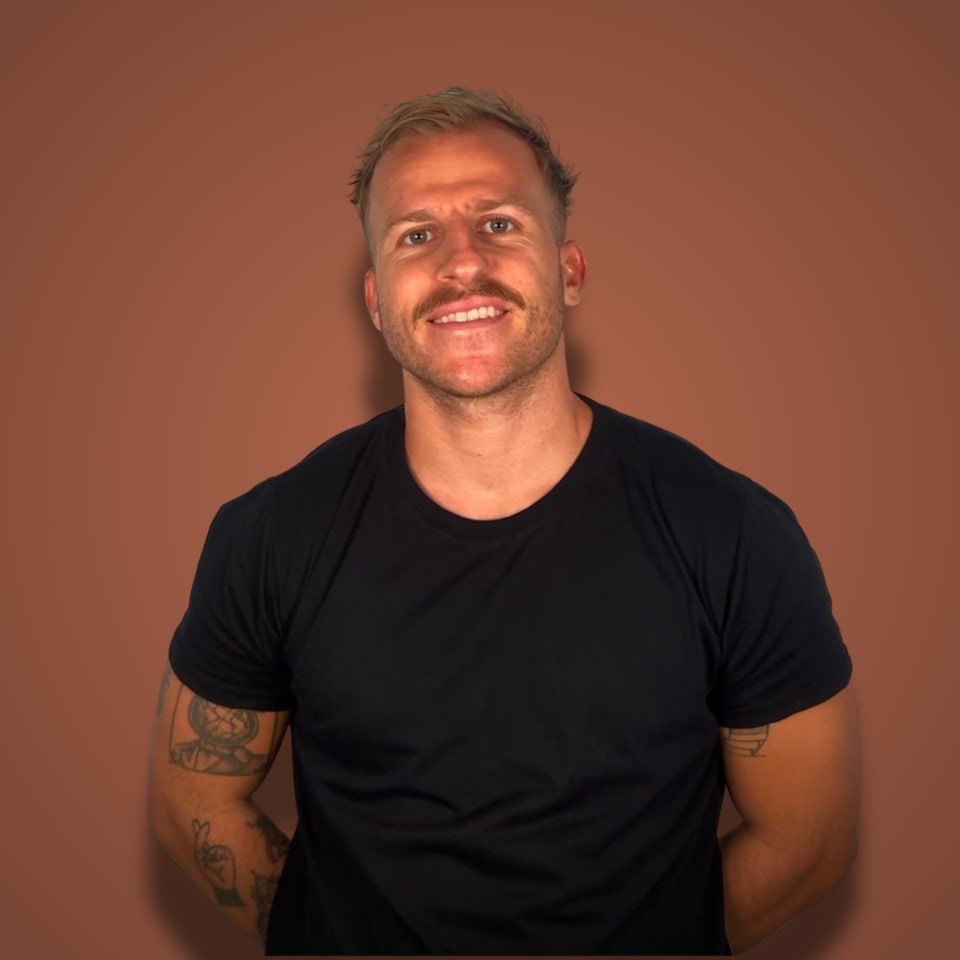
A 23-year-old just told a podcast host he’s personally sold $300 million worth of software.
No ads. No SDR army cold-calling a list of 10,000 names. No “book a demo” funnel.
His name is Hunter Dickinson. He goes by Grunkwiz online. And the thing he did to scale Whop from $2 million a month to hundreds of millions a month is something you can copy this week with zero budget.
I watched the whole interview on The Brett Way and took notes like it was a paid course. Here’s the playbook — plus the parts most people will get wrong.
The kid who stayed up on American hours from Australia
Hunter didn’t start in SaaS.
He started as an 18-year-old in Australia, awake all night to overlap with US time zones, grinding NFTs. Taboo, sure. But that’s where he learned to sell to strangers on the internet.
The numbers from that era:
→ Scaled to 80,000 followers.
→ Launched one project and made $3 million.
→ Ran an agency on the side doing $200K a month.
That agency is how he found Whop — they were a client. He scaled their thing for himself, then went all-in. Today he sits on a team of 15+ people: 11 sales reps, four full-time account managers. He was solo for about a year before any of that existed.
So when he talks about getting your first customers, this isn’t theory. It’s the exact thing he did with no name, no followers, no logo.
The whole strategy is one idea: peer groups
Here’s the mental model.
Every market is a cluster of people who already know each other. They follow each other. They retweet each other. They compare themselves to each other.
Hunter doesn’t think about “leads.” He thinks about who is friends with who.
His move when entering a new market:
→ Open one influential person’s Twitter profile.
→ Go to their mutuals. Follow all of them.
→ Note who keeps showing up across profiles.
→ Build a mind map: “If I get this one person, who else comes with them?”
That’s it. He’s mapping the social graph of a market before he sells a single thing.
And here’s why it works. When you reach out to a big account cold, you’re a stranger. But if 40 of their mutuals already follow you, you show up in their inbox with borrowed status. Perception is reality. You look like one of them.
Step one is never the pitch. It’s the compliment.
This is the part people skip, and it’s the whole engine.
Before Hunter sells anyone, he just gives value. A genuine, specific compliment. The only goal of that first message is to earn a follow back.
His best example is brutal and brilliant. When he was selling in the sports-picks world, he’d find guys with ugly logos — “some of the worst logos I’ve ever seen” — remake them with AI, and DM:
“Hey, our internal designer just made you a brand new logo. I love everything you’re doing. Use it for free.”
The reply, every time: “Oh my god, this changed my business.” Follow. Follow. Follow.
Now he’s built social proof inside the peer group. He’s an insider. And when he finally speaks up, his opinion carries weight he didn’t have a week earlier.
If you’re a solo founder staring at an empty CRM, this is the lesson: your first job isn’t to sell. It’s to become recognizable.
When he finally pitches, it doesn’t sound like a pitch
Say he’s got 40 mutuals following him and he’s posting content. People deem him valuable. Now he moves.
But he never says “I built this platform, want to buy it?”
He says: “I’m experimenting with an MVP. Here’s the idea. I’m targeting people doing cold email. What do you think if I did this?”
Read that again. He’s asking for advice, not money.
Why it lands:
→ You’re already in their inbox from the compliment.
→ “I want your advice” flips the dynamic — now they’re the big brother, not the mark.
→ Their feedback actually makes the product better.
And then the magic loop: they tell him to fix his landing page. He fixes it. He comes back — “Hey, I improved this based on what you said.” Now there’s a relationship. Now he can ask, “Want to try it?”
This is the same instinct behind validating before you build. If you want the full version of that, I broke it down here: how to validate a SaaS idea before you write code.
The counterintuitive part: segment by platform, not by industry
Most founders segment customers by business model or vertical. Hunter does too — but the one that actually predicts who knows who is the distribution platform.
His logic, and it’s sharp:
A real-estate coach on YouTube does not automatically know a real-estate coach on Instagram. But that same YouTube coach? They’re obsessively comparing themselves to other YouTubers.
So he parks one person on a single tight segment: business model + vertical + platform. “Real estate coach, on YouTube.” Then he owns that entire slice. As he put it — “I know all the YouTubers. I have zero clue who does software on Instagram.”
That ownership is what turns a sales process into a referral machine, which I’ll get to in a second.
Entertainment or value — pick one, every message
Hunter described himself as a 6’4” skinny dude who hates networking events and thinks they’re a waste of time. He’s not a macho closer running talk tracks.
His entire sales heuristic is two questions he asks before sending anything:
→ Am I providing value?
→ Am I being entertaining?
If the answer to both is no — he moves on. No “just circling back.” No “hey, following up.” No question marks into the void.
In the early Discord days he’d open conversations with a Patrick Bateman gif. Brett said it out loud: every time a message from Hunter popped up, he’d laugh and think “I want to talk to this guy again.”
That’s the whole point. People reply to people they enjoy hearing from. Building real relationships beats blasting templates — it’s the same reason one founder grew to $25K a month leaning on a single channel instead of spraying ten.
If you want to nurture those early relationships without turning into a spam machine, there’s a solid breakdown of practical lead nurturing strategies worth stealing from.
The CRM nobody wants to build
Here’s the unglamorous secret.
Back in his NFT days — making $200K a month from the agency alone — Hunter built himself a Notion CRM of every influential person in his market. About 200 accounts. And every single day, or every other day, he hit them up. “Yo, what’s good” or “saw you did this, really interesting.”
He called it “probably very autistic.” I’d call it the reason he won.
Because he was in constant contact with 200 insiders, he knew what was launching, what people were talking about, what the market sentiment was — before anyone else. Whop now productizes that exact behavior across every segment.
The referral ask itself is laughably simple. After closing someone, he says: “Who else is up and coming that’s crushing in real estate? You know them — can you introduce us?”
Most of the business today is referral-based. Because when you own a segment, the introductions never stop. This is the same flywheel that turns a service business into recurring revenue — I wrote about that transition turning an agency into a B2B SaaS.
What he tried that didn’t work (so you don’t)
He was honest about the failures too:
→ Paid ads — didn’t work for his ICP.
→ Cold calling — “never really worked” for modern internet businesses.
→ Networking events — a waste of time, in his words.
What did work, beyond the peer-group play: gift giving. They’d look up a target’s registered address and send an edible arrangement with a note. For founders drowning in “I’ll get you 100 leads” DMs, a physical gift is differentiation that cuts through.
That word — differentiation — is the real lesson. Hunter studies what already floods his target’s inbox, then does the opposite. If everyone sends a pitch, he sends a compliment. If everyone sends a DM, he sends a gift. Stand where no one else is standing.
FAQ
Who is Hunter Dickinson?
A 23-year-old Australian salesperson who scaled Whop’s software sales from $2 million a month to hundreds of millions a month, personally selling around $300 million. He started as an 18-year-old doing NFTs, made $3 million on one project, and ran a $200K/month agency before going all-in on SaaS. Online he goes by Grunkwiz.
What is the “peer groups” sales strategy?
Instead of treating prospects as a flat list, you map the social graph of a market — who follows who, who’s friends with who. You infiltrate the most influential cluster by giving value (compliments, free work), earn their follows, and gain borrowed status so the rest of the group trusts you faster.
How do you get your first SaaS customers with no audience?
Pick the 40–200 most influential people in your exact niche. Compliment them or do free work first — no pitch. Once they follow and engage, approach them asking for advice on your MVP, not a sale. Their feedback improves the product and the relationship turns into your first customers and referrals.
Why segment by platform instead of industry?
People compare themselves to others on the same distribution channel. A YouTuber knows other YouTubers, not the Instagram crowd in the same niche. Segmenting by platform means your referrals actually know each other, so introductions compound.
Does cold outreach still work in 2026?
Generic cold outreach — “I’ll get you 100 leads” — is dead because every inbox is drowning in it. What works is differentiation: be the one message that’s either genuinely valuable or genuinely entertaining. Compliments, free work, and physical gifts cut through where templates don’t.
Want more breakdowns like this?
I interview bootstrapped founders making $100K to $10M a year and pull out the exact playbooks they used — the stuff above, every week. No fluff, real numbers.
Listen to the Profitable Founder Podcast →Source: Hunter Dickinson on The Brett Way. Numbers are his, stated in the interview above.