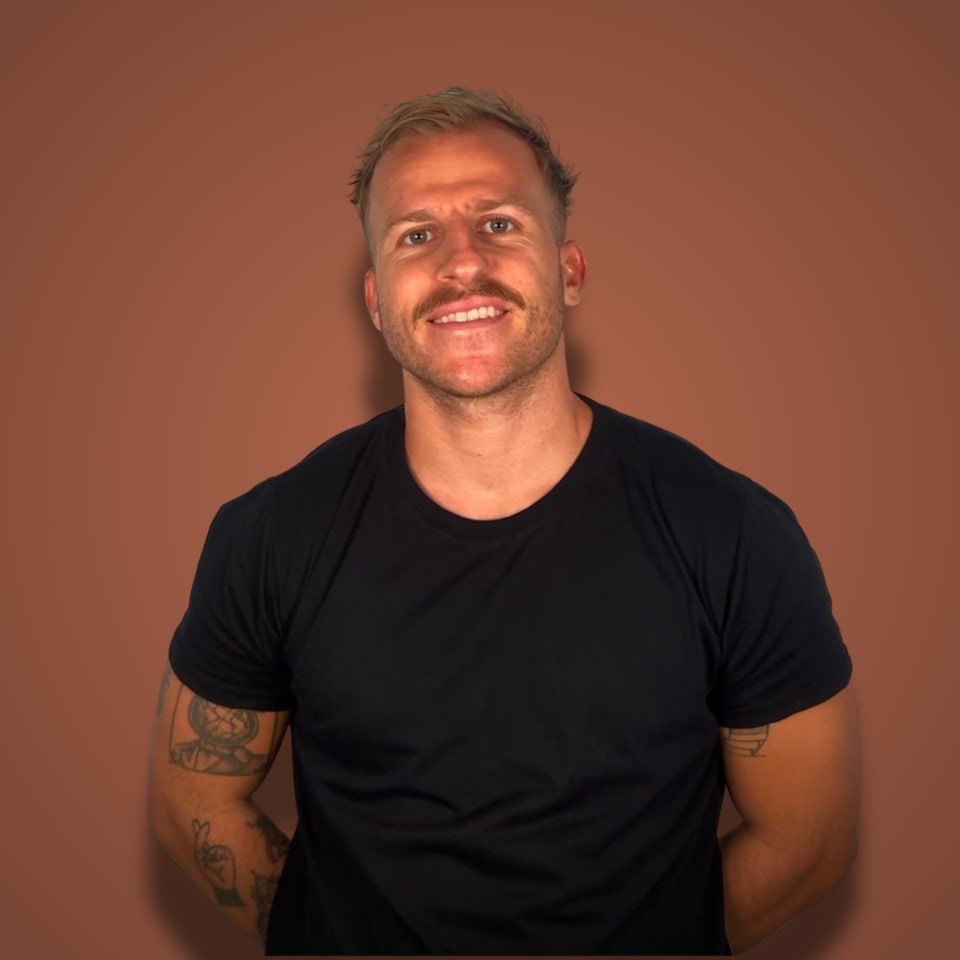
A 22-year-old sits across from a camera and gets asked how much money he makes.
"Within the last year, I've done about $1.5 million."
Then, without blinking: "Over the next 10 years, I'll do a billion."
His name is Kelechi Onyeama. He's a solo founder. And less than two years ago he was sleeping wherever he could, broke, on a tourist visa, after his own aunt called the police on him twice.
I watched the whole interview on Brett's channel and I had to write about it.
Not because of the billion-dollar line. Founders say that stuff all the time.
I'm writing about it because the gap between "homeless in Maryland" and "$1.5M a year" closed in about 12 months — and the playbook he used is stupidly repeatable if you stop romanticizing it.
Here's the full story, with the real numbers.
The app that prints money: Social Wizard
Let's get the awkward part out of the way.
His biggest app is called Social Wizard. It's a "rizz" app.
You've seen them on TikTok — a guy stares at his phone, unsure what to text a girl back, and an app feeds him a line.
Kelechi owns one of the largest ones.
You take a screenshot of a conversation (or just type the message in), add a little context, and the app gives you something to say. Three features under the hood: start a conversation, reply to a message, and handle the awkward "I don't know what to say" moments.
Every time he tells people about it, they say "that's impossible" or "that's a dumb idea."
Meanwhile the app is about to cross 1 million screenshots uploaded and has generated close to 5 million AI replies.
His take on why it works is the cleanest market thesis I've heard in a while:
Every consumer app that's ever made real money helps people do one of three things —
→ make more money
→ find love
→ have fun
That's it. Break down any app that's gone viral and it's solving one of those. Social Wizard is squarely in "find love," and that market is enormous and weirdly under-served because everyone's too embarrassed to build for it.
The timing nobody else caught
Here's the part most people miss when they look at an overnight winner.
Rizz apps existed before Social Wizard. But the old ones used OCR — basically scanning text out of a screenshot. Clunky. Inaccurate.
Then GPT-4 Vision shipped. Suddenly an LLM could actually look at a screenshot and understand the conversation in it.
Kelechi built right into that window. Same app idea, dramatically better engine, at the exact moment the technology made it possible.
His word for it: "inherently viral." Which he defines as — "show me something I haven't seen before."
Taking a screenshot of someone's Instagram story and getting a reply back was something people genuinely hadn't seen. So it spread.
Timing plus grit. That was his answer for why it blew up. And honestly, after watching dozens of these stories, timing is the most underrated variable in the whole game.
How he actually marketed it (this is the cheap part)
No ad budget. He didn't have one.
In his words: "I was poor, bro."
So marketing was just him. On TikTok. Making content every single day. Alone.
Most of it died. None of the early videos went viral. But one stood out — the one demoing the photo/screenshot feature.
That feature clip eventually pulled around 2 million views, and that's when the downloads started compounding.
The mechanic he obsessed over: when someone downloads the app, you don't get two chances. You get one. So he engineered the onboarding to put new users straight through a test — screenshot a story, get a reply — so within seconds they feel what the app does instead of reading about it.
If you want to go deeper on that exact move, I broke down a similar onboarding-to-revenue playbook in the App Store optimization strategy behind a $50K/month app — naming, first-session value, and ASO all stack here.
Speaking of names: Social Wizard wasn't even the original name. He renamed it for ASO. Search "wizard" in the App Store and it's the first result. He always pairs the name with a dash and a descriptor — "Social Wizard – Up Your Game" — so the algorithm knows it's a social-skills app.
Tiny detail. Massive compounding effect on free installs.
Later he did pay one creator — $5K for six videos with a 2-million-view guarantee clause baked into the deal. She didn't hit the clause, so she had to keep making clips. That's how you de-risk influencer spend when you're not rich: pay for outcomes, not posts.
The pricing decision that pays the bills
Social Wizard has weekly, monthly, and yearly plans.
He pushes the weekly hard. On purpose.
The reason is payback period. When you're acquiring users through unpredictable viral spikes, a weekly subscription means you recover your cost almost immediately instead of waiting a year to find out if a cohort was profitable.
It's not the "nice" pricing. It's the survivable pricing for a solo founder with no runway.
Now the part that actually matters: he built this homeless
Rewind.
Kelechi grew up in Nigeria. Finished high school at 16. His parents didn't have money, but they scraped to send him to a school where he rubbed shoulders with rich kids — enough to make him ask, "why don't we have this?"
He wanted to study in the US. No money for college. So he gave himself a gap year to win a full scholarship. Didn't happen.
In 2022 he saw a tweet — a guy in his early 20s claiming he made a million dollars a month from an app. NGL was going viral. Paparazzi was going viral. Peak consumer-social.
Kelechi, on his phone in Nigeria, decided: I'm getting into apps.
First app was called Caspid. He built it on a broken Dell laptop. It failed.
He flew to the US to give it one last shot — as a tourist, broke, with a return flight to Nigeria three months out.
Then it got dark.
He bounced between relatives. You can't overstay in someone's home in America the way you can back home, he learned. The last aunt he stayed with took his key and tried to throw him out.
Maryland has a squatter law — live somewhere long enough and they can't just remove you, they have to go through court. So legally she couldn't kick him out. Physically, by taking his key and his food, she could.
She called the police. Twice. On a guy who was here on a tourist visa and could've been deported on the spot.
He was, in his words, "homeless for a while."
Eventually another aunt — who had equity in a house — let him move in. The deal: five months. Get something going or you're out.
"This was around the time I started working on Social Wizard. So I had to succeed."
One week after he got kicked out, Social Wizard made its first $2,000.
He didn't stay the full five months. Four months in, it was working well enough that he flew to San Francisco, spent a month plugged into the early-stage scene, sold another app he'd built along the way, and his whole trajectory flipped.
Tourist → student → dropped out after one semester → O-1 visa (the "extraordinary ability" one) → now transitioning to a green card.
Price tag on the immigration journey alone: around $70,000.
He calls it "migrating through suffering." And here's the line that stuck with me:
"You can't control where you start on the track. Some people are born in the US, 300 yards ahead. Some are born into war, a thousand yards behind. You can't complain — no one cares. The only thing you can control is how fast you run."
What I'd actually steal from this
Strip away the drama and there's a real playbook here.
→ Build into a technology shift, not against one. Old rizz apps used OCR. He used GPT-4 Vision the week it became viable. Same idea, new engine, perfect timing.
→ Pick a market people are too embarrassed to serve. "Help guys text girls" sounds dumb. It also prints money because it's one of the three things humans actually pay for.
→ Be your own first marketing channel. No budget meant daily TikToks until one feature clip hit 2M views. You don't need ad spend, you need reps.
→ Engineer the first 30 seconds. One shot to show value on download. He turned onboarding into an instant demo.
→ Price for survival, not vanity. Weekly subs because payback period keeps a no-runway founder alive.
→ Use the deadline. His aunt's five-month ultimatum is the reason the app exists. Urgency isn't your enemy. Comfort is.
Most of us reading this started a lot further up the track than a broke 22-year-old on a tourist visa with a broken Dell. That's exactly why the story should bother you a little.
If you want more of these — real founders, real numbers, no fluff — that's the entire reason I run the Profitable Founder Podcast. Same energy as this one, every week.
And if you liked this, you'll like how an 18-year-old built Cal AI to $50M ARR and sold it to MyFitnessPal — another young solo founder who caught the timing wave at exactly the right moment.
FAQ
Who is Kelechi Onyeama?
A 22-year-old solo founder originally from Nigeria who builds mobile consumer apps. His biggest app, Social Wizard, helped him do roughly $1.5 million in revenue in a single year after he came to the US broke and spent time homeless.
What is Social Wizard?
A "rizz" app that helps people reply to dating and social messages. You upload a screenshot of a conversation (or type the message in), add context, and an AI suggests a reply. It's generated close to 5 million replies and is approaching 1 million screenshots uploaded.
How did Social Wizard go viral with no ad budget?
Kelechi posted daily on TikTok himself. Most videos flopped, but one clip demoing the screenshot feature hit around 2 million views and kicked off compounding downloads. He later paid one creator $5K for six videos with a built-in 2-million-view guarantee.
Why did he build it when he did?
GPT-4 Vision. Earlier rizz apps relied on OCR, which was clunky. The moment an LLM could actually read and understand a screenshot, the app got dramatically better — and he was building right into that window.
What's the biggest lesson for other founders?
Timing plus urgency. He shipped into a fresh technology shift, served a market everyone else found embarrassing, and treated a five-month eviction deadline as fuel instead of a tragedy.