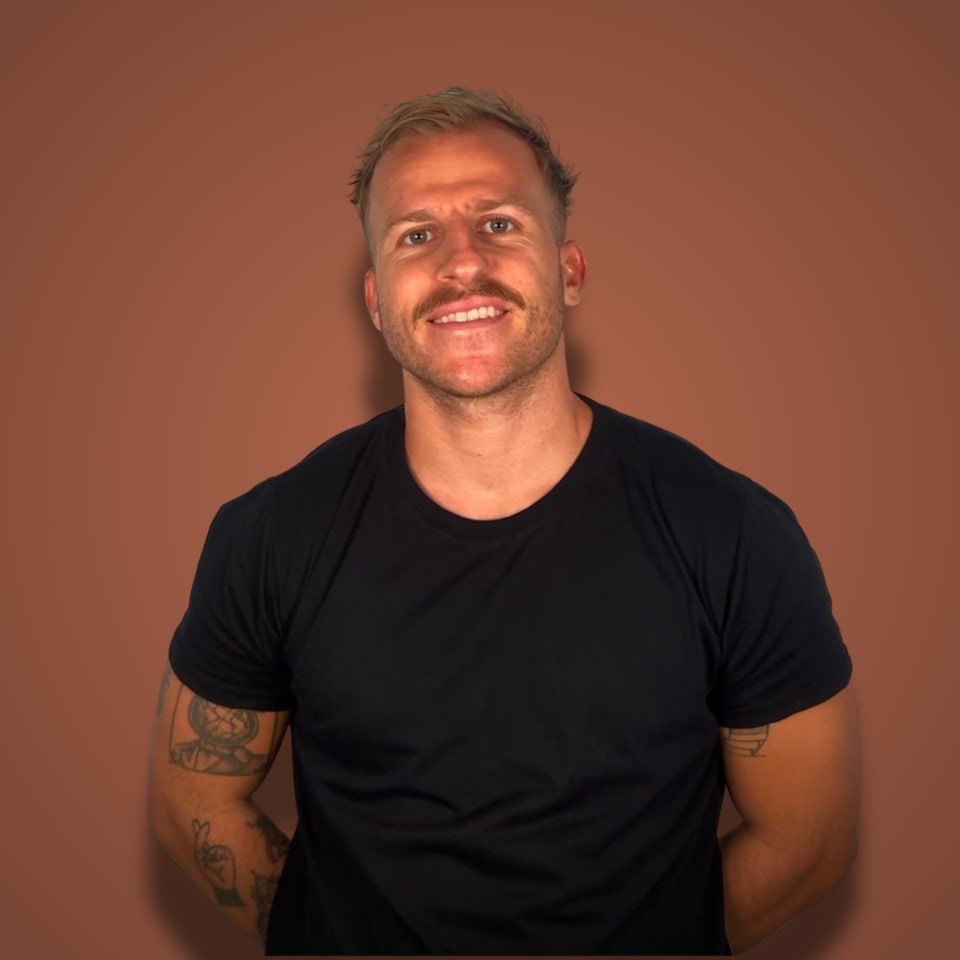
A 25-year-old built an app that got 250 million downloads.
Zero dollars on marketing. 100% organic. His companies have done over $50 million in revenue.
His name is Hunter Isaacson. The app is NGL, the anonymous Q&A thing your little cousin probably posted on their Instagram story in 2022.
Here's the part nobody tells you: NGL was his eighth app. The first one failed completely. And the night the whole thing finally went viral, Hunter and his co-founder were so broke they almost deleted the video that made them.
I watched the full breakdown on Brett Malinowski's channel and I had to write this up, because the actual story is way more useful than the headline number. Watch it first, then let's pull out what actually matters.
Eight apps before the one that worked
Let's kill the "overnight success" myth right now.
NGL was app number eight.
App number one was called Leader. A Gen Z version of Foursquare. Go to locations, pick up points, rank on leaderboards. Hunter built it at 18, called it "overengineered," then COVID hit and you literally couldn't go anywhere. The whole premise died.
Stupid timing, right? He didn't quit. He said: "Okay, this is not the app for me, but I love building apps."
Six weeks later he shipped Zoom University. A live-video double-dating app for bored college kids stuck at home in 2020. You and a friend in one room, a girl and her friend in another, rooms merge into a four-way chat. It went viral for a moment. A couple hundred thousand downloads. Top 10 in social.
It had a 7-to-1 girl-to-guy ratio, which is a hilarious problem to have on a dating app.
That one taught him the most important lesson of his career: "This is possible. I can actually do this."
Then he got recruited at 21 by the former president of Musical.ly (the guy who led the ByteDance acquisition). They built half a dozen apps together. The biggest was Wink, a make-new-friends app that did 60 to 70 million downloads.
So by the time NGL existed, Hunter had already shipped seven apps and racked up tens of millions of downloads. The "250 million in one app" thing didn't come from luck. It came from reps.
If you're sitting on app number one or number two right now and it's not working, read that paragraph again.
The idea came from a random Instagram update
Here's the origin, and it's a great lesson in paying attention.
October 2021. Instagram quietly changed a setting. You used to need 10,000 followers to post a link on your story. One day they opened it up to everyone.
Hunter and his app friends saw it immediately. "We have to build this."
The concept was simple: post a link on your story, people tap it, send you anonymous messages, you get them in the app. An anonymous Q&A layer on top of Instagram. The Ask.fm and Yik Yak idea, rebuilt for the new generation and the new distribution channel.
They thought it was the most obvious play in the world. Everyone would build this.
Then for six months, nobody used it. Almost zero traction. Nobody even cloned them.
Sit with that. The biggest social app of 2022 did basically nothing for half a year.
The $50 bet that cracked it
April/May 2022. Still flat.
They paid an influencer about $50 to post the NGL link on her story. She had a follower in New Zealand who was popular in her high school. That girl posted it, and it activated her entire school.
Hunter sat there watching the Firebase graphs. New Zealand. A little Australia. Back to New Zealand. It was moving, but it wasn't spreading the way he knew it could.
So he went back to the data and found the bottleneck: New Zealand and Australia are Android-heavy. NGL was iOS only. Half the people who wanted the app physically could not download it.
"I was in an iOS bubble. I'll be honest with you."
He called a friend: "We need an Android app. How fast can you do it?" Three weeks later it was live.
That Android app was the key that unlocked everything. Not because Android is magic, but because it removed the wall stopping the friend graph from fully spreading inside each school.
This is the whole game with consumer apps, and it's the same game with any product where one user pulls in the next. Get the loop tight, then remove every bit of friction that stops it from running. If you're thinking about how to engineer that kind of pull into a business, this breakdown on lead nurturing strategies is a good companion read, because the mechanics of moving one person to the next are the same whether it's a teenager forwarding an app or a buyer moving down a funnel.
The night they almost took down the video that made them
This is my favorite part, because it's the part that makes Hunter a real founder and not a LinkedIn highlight reel.
Android app shipped. They pushed five or ten TikToks total. One of them hit a million views.
Problem: it was a CPM deal with the creator. A million views meant they suddenly owed her about $3,000.
They were both still working day jobs. They didn't have $3,000.
So his co-founder said the very logical thing: "We should take the video down."
And Hunter, being broke, agreed. "Well, we don't have the money to pay her, so sure, take it down."
They took it down.
It didn't matter. It had already activated. They later paid her a lot more for her help. But here's the curve from that one TikTok:
About 1,000 downloads in a day. Then within a few days: 1.5 million downloads in a single day. Roughly 90,000 downloads an hour. "Every time you blink there's hundreds of people coming in."
Total expenses to get there: around $10,000, and a few thousand of that was a domain they never even used. Real marketing spend was maybe $5,000 to $7,000 of small tests.
$5K to $7K in testing. 250 million downloads. That's the whole budget.
Why it spread by itself: the viral loop
Once it hit critical mass, NGL grew with no marketing at all. That wasn't luck either. Hunter designed the loop on purpose.
Walk through it:
→ Your first experience with NGL is seeing a friend post it on their story. That's a built-in stamp of approval. Your friend thinks it's cool, so it's cool. That's exactly how young people decide what's acceptable.
→ You tap the link. Maybe you ignore it the first time. But you see it five more times on five other friends' stories.
→ Eventually you tap and send an anonymous message.
→ Right after you send it, there's a big button: "get your own messages."
→ You already know what it feels like to be on the sending side, so posting your own link feels safe. So you post it. And now you're the friend showing it to the next person.
That's the entire engine. See it from friends, use it, become the source for the next batch of friends.
The hard part wasn't the loop. The hard part was getting 1,000 real users inside a single friend graph (one school) fast enough that the story permeated everyone, then letting it spread school by school. Crack it small, prove it once, and it scales globally on its own.
If you can't get the loop to fire at a tiny scale with people who actually know each other, more spend won't save you. That's the lesson hiding under the 250 million number.
What this means for you as a founder
Pull it all together:
→ Hunter shipped seven apps before the one that printed. Reps compound. Your "failures" are tuition.
→ The idea came from noticing a tiny platform change before everyone else acted on it. Pay attention to the boring product updates.
→ Six months of zero traction did not mean the idea was wrong. It meant the distribution wasn't solved yet.
→ The unlock was a data observation (Android-heavy region), not a genius marketing campaign.
→ Total spend was under $10K. You do not need a war chest. You need a loop that works at small scale.
I bang this drum constantly because I lived a version of it. I paid $13,000 for a mastermind when I was making $15K to $20K a month, scaled to $75K a month six months later, then sold that SaaS. The thing that moved the needle was never a big budget. It was getting around people who'd already cracked the exact problem I was stuck on, and copying the mechanics that worked.
That's the same reason Hunter's story is so clean. He'd built apps next to the right people for years. He knew the school-by-school activation tactic because friends of his had used it. The "secret" was proximity to people who'd done it.
If you're a SaaS founder past $5K MRR trying to get to $100K, that's literally what I built the Profitable Founder Club for. Bi-weekly calls where we solve three real member problems live, a monthly Q&A with founders past $100K, capped at 20 people so it stays real. Stop guessing in isolation.
For the tactical app side, I've also written up how to get your first 1,000 app downloads and a breakdown of mobile app onboarding that pair well with everything above.
FAQ
Who is Hunter Isaacson?
Hunter Isaacson is a 25-year-old app designer and founder. He's best known for NGL, the anonymous Q&A app that passed 250 million downloads. His companies have done over $50 million in revenue. He's now building Bags (bags.fm).
How many downloads does NGL have?
Over 250 million since 2022, with effectively zero paid marketing. It hit number one in the App Store in over 150 countries.
How much did Hunter spend to grow NGL?
Around $10,000 total, and a few thousand of that was a domain they never used. Real marketing spend was roughly $5,000 to $7,000 of small influencer tests.
Why did NGL go viral when earlier attempts didn't?
Two reasons. First, they shipped an Android app after realizing their target regions were Android-heavy, which let the friend graph fully spread. Second, the product had a tight viral loop: you see a friend post it, you send an anonymous message, then you're prompted to post your own link.
Was NGL Hunter's first app?
No. It was his eighth. His first app, Leader, failed during COVID. He also built Zoom University and Wink (60 to 70 million downloads) before NGL.
What's the takeaway for a bootstrapped founder?
You don't need a big budget. You need reps, a viral loop that fires at small scale, and the discipline to fix the real bottleneck instead of throwing money at marketing.
Want the real founder breakdowns?
I interview bootstrapped founders making $100K to $10M a year on the Profitable Founder Podcast. Real numbers, real mistakes, no fluff. If this story was useful, go listen to a few episodes.